MindMap Gallery English grammar tenses
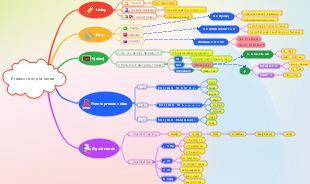
This is a mind map about English grammatical tenses. English grammatical tenses are a very important part of English learning. It indicates the time when an action occurs or the form of state. The following is a summary and explanation of several common tenses in English.
Edited at 2024-11-26 15:26:51Rumi: 10 dimensions of spiritual awakening. When you stop looking for yourself, you will find the entire universe because what you are looking for is also looking for you. Anything you do persevere every day can open a door to the depths of your spirit. In silence, I slipped into the secret realm, and I enjoyed everything to observe the magic around me, and didn't make any noise. Why do you like to crawl when you are born with wings? The soul has its own ears and can hear things that the mind cannot understand. Seek inward for the answer to everything, everything in the universe is in you. Lovers do not end up meeting somewhere, and there is no parting in this world. A wound is where light enters your heart.
Chronic heart failure is not just a problem of the speed of heart rate! It is caused by the decrease in myocardial contraction and diastolic function, which leads to insufficient cardiac output, which in turn causes congestion in the pulmonary circulation and congestion in the systemic circulation. From causes, inducement to compensation mechanisms, the pathophysiological processes of heart failure are complex and diverse. By controlling edema, reducing the heart's front and afterload, improving cardiac comfort function, and preventing and treating basic causes, we can effectively respond to this challenge. Only by understanding the mechanisms and clinical manifestations of heart failure and mastering prevention and treatment strategies can we better protect heart health.
Ischemia-reperfusion injury is a phenomenon that cellular function and metabolic disorders and structural damage will worsen after organs or tissues restore blood supply. Its main mechanisms include increased free radical generation, calcium overload, and the role of microvascular and leukocytes. The heart and brain are common damaged organs, manifested as changes in myocardial metabolism and ultrastructural changes, decreased cardiac function, etc. Prevention and control measures include removing free radicals, reducing calcium overload, improving metabolism and controlling reperfusion conditions, such as low sodium, low temperature, low pressure, etc. Understanding these mechanisms can help develop effective treatment options and alleviate ischemic injury.
Rumi: 10 dimensions of spiritual awakening. When you stop looking for yourself, you will find the entire universe because what you are looking for is also looking for you. Anything you do persevere every day can open a door to the depths of your spirit. In silence, I slipped into the secret realm, and I enjoyed everything to observe the magic around me, and didn't make any noise. Why do you like to crawl when you are born with wings? The soul has its own ears and can hear things that the mind cannot understand. Seek inward for the answer to everything, everything in the universe is in you. Lovers do not end up meeting somewhere, and there is no parting in this world. A wound is where light enters your heart.
Chronic heart failure is not just a problem of the speed of heart rate! It is caused by the decrease in myocardial contraction and diastolic function, which leads to insufficient cardiac output, which in turn causes congestion in the pulmonary circulation and congestion in the systemic circulation. From causes, inducement to compensation mechanisms, the pathophysiological processes of heart failure are complex and diverse. By controlling edema, reducing the heart's front and afterload, improving cardiac comfort function, and preventing and treating basic causes, we can effectively respond to this challenge. Only by understanding the mechanisms and clinical manifestations of heart failure and mastering prevention and treatment strategies can we better protect heart health.
Ischemia-reperfusion injury is a phenomenon that cellular function and metabolic disorders and structural damage will worsen after organs or tissues restore blood supply. Its main mechanisms include increased free radical generation, calcium overload, and the role of microvascular and leukocytes. The heart and brain are common damaged organs, manifested as changes in myocardial metabolism and ultrastructural changes, decreased cardiac function, etc. Prevention and control measures include removing free radicals, reducing calcium overload, improving metabolism and controlling reperfusion conditions, such as low sodium, low temperature, low pressure, etc. Understanding these mechanisms can help develop effective treatment options and alleviate ischemic injury.
tense
present perfect tense
Occurrence time
1 occurred in the past and continues to the present
2 happened in the past, ended, and has an impact on the present
tense structure
affirmative sentence
S have/has P.P.…
negative sentence
S have/has not P.P. ……
General questions
have/has S P.P.……?
affim
Yes,S have/has
negative
No,S haven’t/hasn’t
Special questions
Question word have/has S P.P.……?
changing form
General situation
ed
silent e ending
d
Auxiliary ending in y
Change y to i ed
Yuan auxiliary ending, the syllable is stressed
double word ending ed
tense markers
time adverbial
What happened in the past continues to the present: since, so far, for time period, in these yesrs
Happened in the past, ended, and has an impact on the present (one more sentence): already, ever, never, yet, three time
Similar phrases
have/has gone to
have/has been to been to
have/has been in stay in
Continuity V. Instantaneity V.
When long action and short action appear in the options at the same time, select long action
The difference between since and for
since point in time; present perfect tense of the main clause since simple past tense (time period ago)
for time period
other
have bought→have had;
have borrowed→have keep;
have begun→have been on
have left→have been away
have died→have been dead
have joined→have been in
have come→have been
past perfect tense
Occurrence time
happened in the past 1 past 2
tense structure
affirmative sentence
S had P.P.…
negative sentence
S had not P.P.…
General questions
had S P.P.…?
affim
Yes,S had
negative
No,S hadn’t
Special questions
Question word had S P.P.…?
changing form
General situation
ed
silent e ending
d
Auxiliary ending in y
Change y to i ed
Yuan auxiliary ending, the syllable is stressed
double word ending ed
tense markers
time adverbial
by the end of simple past tense time adverbial
clause
One action happened in the past and another action happened in the past past
other
P.P.=past participle of verb
Time adverbial: By the end of last year, I had played piano for the years.
Clause: When I arrived at the station, the train had left.
past continuous tense
Occurrence time
occurred at some point in the past
tense structure
affirmative sentence
S was/were doing…
negative sentence
S was/were not doing…
General questions
was/were S doing…?
affim
Yes,S was/were
negative
No,S wasn’t/weren’t
Special questions
Question word was/were S doing…?
changing form
General situation
ing
silent e ending
go e ing
Yuan Fu Yuan, the syllable is stressed
Double writing the ending ing
special ie ending
ie changes to y
tense markers
Two people or things cannot do two things at the same time.
1. I called you yesterday evening but you didn’t answer.
2. I was watching a movie with my father.
when/while
Two actions occur simultaneously
Long action: past continuous tense
Short action: simple past tense
when: long and short
while: long, two long actions
other
was:three singular and countable noun singular
were: plural countable nouns and uncountable nouns
past future tense
Occurrence time
Stand in the past and look at the future
tense structure
affirmative sentence
will do something
S would V.original…
Plan to do something and judge based on the phenomenon
S be(was/were) going to V. original…
negative sentence
S would not V.original…
S be(was/were) not going to V. original
General questions
Would S V.Original…?
affim
Yes,S would.
negative
No,S wouldn’t.
Be(was/were) S going to V original…?
affim
Yes,S be(was/were).
negative
No,S be not(wasn’t/weren’t)
Special questions
Question word would S V. Original…?
Question word be(was/were) S going to V original…?
tense markers
clause
Object clause, the main clause is simple past tense, and the subordinate clause expresses the meaning of the future (or has a time adverbial of simple future tense)
other
wourl not=wouldn’t
Tense: The tenses of the main clause and the subordinate clause can be shifted at the same time
simple future tense
Occurrence time
Things that happen in the future and haven’t happened yet
tense structure
affirmative sentence
Do something in the future: S will V. Original…
Intend to do something: S be going to V. Original
negative sentence
S will not V.original…
S be not going to V. original
General questions
will S V.Original…?
affim
Yes,S will
negative
No,S won’t
be S going to V. original…?
affim
Yes,S be
negative
No, S be not
Special questions
Question word will S V. Original…?
Question word be S going to V. Original…?
tense markers
time adverbial
tomorrow, next, in time period, someday, in the future soon, etc.
There be sentence pattern
There is/are going to be
There will be (You can't change it if you beat it to death)
express intention to do
be to do
be about to do
The commander appears
Use the future tense for the main clause and the present tense for the subordinate clause.
other
will not=won’t
Add the present tense after as soon as; when; if; these three words are followed by clauses. In addition, the simple future tense is generally used.
simple past tense
Occurrence time
happened in the past and is different from the present
tense structure
affirmative sentence
beV.Class:S was/were…
Behavior V. Class: S V. Past …
negative sentence
S was/were not…
S did not V original…
General questions
was/were S…?
affim
Yes,S was/were.
negative
No,S wasn’t/weren’n
did S did V original…?
affim
Yes,S did
negative
No,S didn’t
Special questions
Question word was/were S…?
Question word did S did V original…?
changing form
General situation
ed
silent e ending
d
Auxiliary ending in y
Change y to i ed
Yuan auxiliary ending, the syllable is stressed
double word ending ed
tense markers
time adverbial
yesterday, last, ago, just now
Sentence pattern
Questions and answers, parallel sentences
used to
used to do
other
was: countable noun singular, uncountable noun
subtopic
were: plural countable noun
subtopic
simple present tense
Occurrence time
Repeat, repeat, repeat
tense structure
affirmative sentence
Main department (be) table
S be(am/is/are)…
Subject and predicate (not V.)
S V original/V triple single…
negative sentence
S am/is/are not…
S don’t/dosen’t V original…
General questions
Be(is/are) S…?
affim
Yes,S is/are.
negative
No,S isn’t/aren’n
do/dose S Vhara…?
affim
Yes,S do/dose
negative
No,S don’t/dosen’t
Special questions
Question word is/are S…?
Question word do/dose S V original…?
changing form
General situation
s
Verbs ending in s/x/ch/sh
es
Auxiliary ending in y
Change y to i es
auxiliary o ending
es
tense markers
time adverbial
every, usually, often, sometimes, seldom, on Sundays
three verbs
Third person singular, countable noun singular, uncountable noun
Sentence conversion
Use be if there is be, use qing if there is emotion, use auxiliary if there is no be, you ask and I answer, whoever asks, who answers, use the original form of the auxiliary verb
The commander appears
Use the future tense for the main clause and the present tense for the subordinate clause.
as soon as; when; if; unless;
The latter part is in present tense, and the other half of the sentence is in simple future tense.
other
be=am/is/are
have=has
present continuous tense
Occurrence time
at this moment, being, at the moment
tense structure
affirmative sentence
S be(am/is/are) doing…
negative sentence
S be(am/is/are) not doing …
General questions
Be(is/are) S doing…?
Yes,S is/are. You ask and I answer
No,S isn’t/aren’n
Special questions
Question word be(is/are) S doing…?
changing form
General situation
ing
silent e ending
go e ing
Yuan Fu Yuan, the syllable is stressed
Double writing the ending ing
ie ending
ie changes to y ing
tense markers
Now
now, at the moment, at this moment, at present
See and listen to the Imperative
Look, Licten, be careful
Looking for someone
Where is……、May I speak to……
present continuous means future
Come: come, arrive, return
Go: go, leave, move
other
I am am, you are, is connected with him, she, it,
is: countable noun singular, uncountable noun
are: plural countable nouns
Vowels: A E I O U