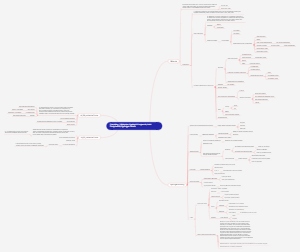
MindMap Gallery Classification of Biochemistry
The Classification of Biochemistry mind map begins with an overview of the classification of biomolecules, including proteins, nucleic acids, carbohydrates, and lipids, and briefly introduces their functions and characteristics. It then elaborates on the classification of metabolic pathways, such as carbohydrate metabolism, lipid metabolism, and protein metabolism, and their interconnections and regulations within organisms. Finally, it focuses on enzymology, including the classification of enzymes, their catalytic mechanisms, and their significant roles in biochemical reactions, which collectively constitute the core knowledge system of biochemical classification.
Edited at 2024-12-22 10:14:09In the introduction section, elastin is a protein that plays a crucial role in the body, endowing tissues with elasticity and toughness. Its properties include high elasticity and good ductility. Elastin has a wide range of sources and is commonly found in animal connective tissues such as skin and blood vessels. When using elastin in products, the amount and method of addition should be determined based on the characteristics of the product. It has many uses and can be added to skincare products to enhance skin elasticity and reduce wrinkles; Improving food texture and enhancing taste in the food industry; In the medical field, it can be used to make elastic scaffolds such as artificial blood vessels, providing support for tissue repair. Reasonable use can play its unique value.
This document aims to guide the proper use of proteins. Proteins are the fundamental substances that make up life and are essential for maintaining normal physiological functions in the body, with a wide variety of types. When using protein, daily diet is an important source, such as meat, eggs, etc., which are rich in high-quality protein. Measuring protein intake can be done using professional tools or methods to ensure that the intake meets the body's needs. When mixing protein powder, it should be prepared according to the recommended ratio, and the water temperature should not be too high to avoid damaging the protein activity. Different groups of people have different protein requirements, such as athletes and fitness enthusiasts who can increase their intake appropriately to meet the needs of body repair and muscle growth.
Introduction to Unsaturated Polyester Resin: It is an important thermosetting resin with various excellent properties. It has a wide range of applications and is used in the construction industry to produce fiberglass products such as doors, windows, decorative panels, etc; Used in the automotive industry for manufacturing body components. The advantages of use include simple molding process, low cost, and chemical corrosion resistance. However, it also faces challenges and limitations, such as relatively poor heat resistance and susceptibility to aging. During use, corresponding protective measures should be taken according to specific application scenarios, such as adding heat-resistant agents, antioxidants, etc., to extend their service life and fully leverage their advantages.
In the introduction section, elastin is a protein that plays a crucial role in the body, endowing tissues with elasticity and toughness. Its properties include high elasticity and good ductility. Elastin has a wide range of sources and is commonly found in animal connective tissues such as skin and blood vessels. When using elastin in products, the amount and method of addition should be determined based on the characteristics of the product. It has many uses and can be added to skincare products to enhance skin elasticity and reduce wrinkles; Improving food texture and enhancing taste in the food industry; In the medical field, it can be used to make elastic scaffolds such as artificial blood vessels, providing support for tissue repair. Reasonable use can play its unique value.
This document aims to guide the proper use of proteins. Proteins are the fundamental substances that make up life and are essential for maintaining normal physiological functions in the body, with a wide variety of types. When using protein, daily diet is an important source, such as meat, eggs, etc., which are rich in high-quality protein. Measuring protein intake can be done using professional tools or methods to ensure that the intake meets the body's needs. When mixing protein powder, it should be prepared according to the recommended ratio, and the water temperature should not be too high to avoid damaging the protein activity. Different groups of people have different protein requirements, such as athletes and fitness enthusiasts who can increase their intake appropriately to meet the needs of body repair and muscle growth.
Introduction to Unsaturated Polyester Resin: It is an important thermosetting resin with various excellent properties. It has a wide range of applications and is used in the construction industry to produce fiberglass products such as doors, windows, decorative panels, etc; Used in the automotive industry for manufacturing body components. The advantages of use include simple molding process, low cost, and chemical corrosion resistance. However, it also faces challenges and limitations, such as relatively poor heat resistance and susceptibility to aging. During use, corresponding protective measures should be taken according to specific application scenarios, such as adding heat-resistant agents, antioxidants, etc., to extend their service life and fully leverage their advantages.
Classification of Biochemistry
Introduction to Biochemistry
Definition of Biochemistry
Study of chemical processes within and related to living organisms
Interdisciplinary science combining biology and chemistry
Importance of Biochemistry
Understanding life at the molecular level
Basis for medical research and drug development
Biomolecules
Carbohydrates
Structure and function
Energy storage (e.g., glycogen)
Structural components (e.g., cellulose)
Classification
Monosaccharides (e.g., glucose)
Disaccharides (e.g., sucrose)
Polysaccharides (e.g., starch)
Lipids
Structure and function
Energy storage (e.g., triglycerides)
Cell membrane components (e.g., phospholipids)
Classification
Fatty acids
Glycerides
Steroids (e.g., cholesterol)
Proteins
Structure and function
Enzymes catalyzing biochemical reactions
Structural support (e.g., collagen)
Transport and storage (e.g., hemoglobin)
Levels of protein structure
Primary structure (amino acid sequence)
Secondary structure (alphahelices, betasheets)
Tertiary structure (3D conformation)
Quaternary structure (multimeric proteins)
Nucleic Acids
Structure and function
DNA (storage of genetic information)
RNA (transcription and translation of genetic information)
Components
Nucleotides (e.g., ATP, GTP)
Nitrogenous bases (e.g., adenine, cytosine)
Metabolism
Anabolism
Synthesis of complex molecules from simpler ones
Energyconsuming processes
Examples
Biosynthesis of proteins
Synthesis of fatty acids
Catabolism
Breakdown of complex molecules into simpler ones
Energyreleasing processes
Examples
Glycolysis
Betaoxidation of fatty acids
Enzymology
Enzyme properties
Specificity and catalysis
Regulation (e.g., allosteric regulation)
Enzyme kinetics
MichaelisMenten kinetics
Enzyme inhibition (competitive, noncompetitive)
Bioenergetics
Thermodynamics in biochemistry
Laws of thermodynamics
Free energy and biochemical reactions
ATP and energy transfer
Role of ATP as an energy currency
Coupled reactions
Molecular Biology
DNA replication
Semiconservative mechanism
Enzymes involved (e.g., DNA polymerase)
Transcription
RNA synthesis from DNA template
Types of RNA (mRNA, tRNA, rRNA)
Translation
Protein synthesis on ribosomes
Role of tRNA and aminoacyltRNA synthetases
Cell Signaling
Signal transduction pathways
Receptors and ligand binding
Intracellular signaling cascades
Gprotein coupled receptors (GPCRs)
Mechanism of action
Examples of signaling molecules (e.g., hormones)
Immunology
The immune system
Innate and adaptive immunity
Antigen recognition by antibodies
Major histocompatibility complex (MHC)
Presentation of antigens to T cells
Role in immune response and tissue compatibility
Techniques in Biochemistry
Chromatography
Separation of biomolecules based on physical properties
Types (e.g., gas, liquid, affinity)
Spectroscopy
Analysis of biomolecules using light absorption and emission
Types (e.g., UV/Vis, fluorescence, NMR)
Xray crystallography
Determination of 3D structures of biomolecules
Importance in drug design
Genetic engineering
Recombinant DNA technology
Applications (e.g., gene cloning, CRISPRCas9)