MindMap Gallery composition of matter
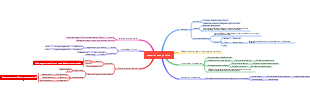
This is a mind map about the composition of matter, which summarizes detailed knowledge points such as particles, elements, classification of matter, chemical formulas, solid substances, etc. that constitute matter.
Edited at 2024-12-14 08:37:31Find a streamlined guide created using EdrawMind, showcasing the Lemon 8 registration and login flow chart. This visual tool facilitates an effortless journey for American users to switch from TikTok to Lemon 8, making the transition both intuitive and rapid. Ideal for those looking for a user-centric route to Lemon 8's offerings, our flow chart demystifies the registration procedure and emphasizes crucial steps for a hassle-free login.
これは稲盛和夫に関するマインドマップです。私のこれまでの人生のすべての経験は、ビジネスの明確な目的と意味、強い意志、売上の最大化、業務の最小化、そして運営は強い意志に依存することを主な内容としています。
かんばんボードのデザインはシンプルかつ明確で、計画が一目で明確になります。毎日の進捗状況を簡単に記録し、月末に要約を作成して成長と成果を確認することができます。 実用性が高い:読書、早起き、運動など、さまざまなプランをカバーします。 操作簡単:シンプルなデザイン、便利な記録、いつでも進捗状況を確認できます。 明確な概要: 毎月の概要により、成長を明確に確認できます。 小さい まとめ、今月の振り返り掲示板、今月の習慣掲示板、今月のまとめ掲示板。
Find a streamlined guide created using EdrawMind, showcasing the Lemon 8 registration and login flow chart. This visual tool facilitates an effortless journey for American users to switch from TikTok to Lemon 8, making the transition both intuitive and rapid. Ideal for those looking for a user-centric route to Lemon 8's offerings, our flow chart demystifies the registration procedure and emphasizes crucial steps for a hassle-free login.
これは稲盛和夫に関するマインドマップです。私のこれまでの人生のすべての経験は、ビジネスの明確な目的と意味、強い意志、売上の最大化、業務の最小化、そして運営は強い意志に依存することを主な内容としています。
かんばんボードのデザインはシンプルかつ明確で、計画が一目で明確になります。毎日の進捗状況を簡単に記録し、月末に要約を作成して成長と成果を確認することができます。 実用性が高い:読書、早起き、運動など、さまざまなプランをカバーします。 操作簡単:シンプルなデザイン、便利な記録、いつでも進捗状況を確認できます。 明確な概要: 毎月の概要により、成長を明確に確認できます。 小さい まとめ、今月の振り返り掲示板、今月の習慣掲示板、今月のまとめ掲示板。
composition of matter
1.1 Particles constituting matter
Type of particles
molecular atom molecular
Characteristics of particles
1. Invisible to the naked eye 2. There are interactive forces, repulsion and attraction between particles 3. The particles of matter make endless and irregular movements, and the intensity of the movement is related to the temperature. (The higher the temperature, the more intense the exercise)
Rutherford's alpha particle scattering experiment
1. The inside of an atom is very empty, and the nucleus only occupies a very small part. 2. The atomic nucleus concentrates almost all the mass of the atom and the mass of the external electrons is very small and can be ignored. 3. The nucleus is positively charged and the electrons outside the nucleus are negatively charged.
Characteristics of atoms
1. Atoms can form molecules or directly form substances (metals) 2. Atoms are the smallest particles in chemical changes
1.2 Elements
Definition of elements
A general term for atoms of the same type with the same nuclear charge (that is, the number of protons)
Elements are extremely unevenly distributed in nature
The sun contains the most hydrogen, followed by helium
Oxygen is the most abundant in the earth's crust, followed by silicon and aluminum
The core of the Earth is mainly composed of iron and nickel
Nitrogen is the most abundant in the air, followed by oxygen
relative atomic mass
1. Number of protons Number of neutrons = relative atomic mass 2. The mass number of an atom = the number of protons in the atom and the number of neutrons in the atom 3. Number of protons = number of neutrons
1.3 Classification of substances
substance
(a mixture of two or more substances)
Pure substance (a substance)
Elemental (composed of one element)
Metal element
Non-metallic elements
compound (composed of two elements)
Oxides are made of two elements, one of which is oxygen.
Pure substances and mixtures
Pure substances have precise compositions and thus precise properties; mixtures have no fixed combinations and no definite properties.
The various components in the mixture still retain their properties; they simply mix with each other and do not react.
separation of matter
Purify
introduce
Filtration: Suitable for separation of liquids and solids.
Crystallization and evaporation; crystallization is suitable for the purification of dissolved solid substances that do not change much due to temperature. Cooling crystallization is suitable for the purification of solid substances whose solubility changes greatly due to temperature.
Coarse salt purification
Principle: Solubility in water is different from other magazines
The function of the glass rod: 1. Dissolve and stir to speed up the dissolution 2. Drain and stir to heat evenly and prevent liquid from splashing. 3. Crystallization, transfer of salt crystals
Chromatography
Principle: Filter paper has different adsorption capabilities for various components of the species to be separated. (Capillarity of filter paper)
Trim the filter paper: Cut along the grain of the filter paper, and trim the edges of the paper to even fingertips.
1.4 Chemical formula
concept
Formulas representing the composition of substances using element symbols and numbers
Note: Chemical formulas that can be expressed directly with element symbols include (noble gases, non-metallic solid elements, non-metallic solid elements.)
significance
Macro: 1. Which substance; 2. Express what elements the substance is composed of
Microscopic: 1. The chemical formula of a substance composed of molecules expresses one molecule of the substance; 2. The number of atoms contained in a molecule 3. For a substance composed of atoms, the chemical formula represents one atom of the substance.
Others: 1. Quality of the substance 2. Mass The sum of the relative atomic masses of each atom in the chemical formula 3. If it is the ratio of the number of atoms in the composition of a compound
Valence
Definition: The number of atoms gained and lost when atoms of different elements form compounds.
Expression method: The compound price can be divided into positive price and negative price. Negatively charged electrons show a negative valence; missing electrons and a positive charge show a positive valence.
atomic group
concept
Features
Common ions and radicals.
How to write and read compound formulas
1.5 Solid substances
Crystal/Amorphous
allotrope