MindMap Gallery Innovation and Entrepreneurship (Peter Drucker) reading notes
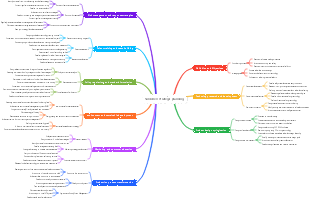
Drucker proposed: 1. Entrepreneurship is a behavior that is reflected in two dimensions: practices and strategies within the enterprise - entrepreneurial management, and practices and strategies outside the enterprise - developing entrepreneurial strategies in the market; 2. There are 7 aspects of enterprise innovation source of opportunity.
Edited at 2024-12-17 19:47:56Find a streamlined guide created using EdrawMind, showcasing the Lemon 8 registration and login flow chart. This visual tool facilitates an effortless journey for American users to switch from TikTok to Lemon 8, making the transition both intuitive and rapid. Ideal for those looking for a user-centric route to Lemon 8's offerings, our flow chart demystifies the registration procedure and emphasizes crucial steps for a hassle-free login.
これは稲盛和夫に関するマインドマップです。私のこれまでの人生のすべての経験は、ビジネスの明確な目的と意味、強い意志、売上の最大化、業務の最小化、そして運営は強い意志に依存することを主な内容としています。
かんばんボードのデザインはシンプルかつ明確で、計画が一目で明確になります。毎日の進捗状況を簡単に記録し、月末に要約を作成して成長と成果を確認することができます。 実用性が高い:読書、早起き、運動など、さまざまなプランをカバーします。 操作簡単:シンプルなデザイン、便利な記録、いつでも進捗状況を確認できます。 明確な概要: 毎月の概要により、成長を明確に確認できます。 小さい まとめ、今月の振り返り掲示板、今月の習慣掲示板、今月のまとめ掲示板。
Find a streamlined guide created using EdrawMind, showcasing the Lemon 8 registration and login flow chart. This visual tool facilitates an effortless journey for American users to switch from TikTok to Lemon 8, making the transition both intuitive and rapid. Ideal for those looking for a user-centric route to Lemon 8's offerings, our flow chart demystifies the registration procedure and emphasizes crucial steps for a hassle-free login.
これは稲盛和夫に関するマインドマップです。私のこれまでの人生のすべての経験は、ビジネスの明確な目的と意味、強い意志、売上の最大化、業務の最小化、そして運営は強い意志に依存することを主な内容としています。
かんばんボードのデザインはシンプルかつ明確で、計画が一目で明確になります。毎日の進捗状況を簡単に記録し、月末に要約を作成して成長と成果を確認することができます。 実用性が高い:読書、早起き、運動など、さまざまなプランをカバーします。 操作簡単:シンプルなデザイン、便利な記録、いつでも進捗状況を確認できます。 明確な概要: 毎月の概要により、成長を明確に確認できます。 小さい まとめ、今月の振り返り掲示板、今月の習慣掲示板、今月のまとめ掲示板。
"Innovation and Entrepreneurship" (Peter Drucker) reading notes
Part One: Innovation Practice
Chapter 1: Systematic Entrepreneurship
Entrepreneurship is a behavior, not a personality trait. It is based on concepts and theories rather than direct
All practice is based on theory, even if the practitioner himself is not aware of it. Entrepreneurship is based on economic and social theory. This theory treats change as the norm. It believes that in society, especially in the economy, people's main task is to innovate rather than optimize existing things
Entrepreneurs view change as a measure of health. Typically, entrepreneurs do not initiate change. But they always actively look for changes and respond to changes, seeing them as opportunities and taking advantage of them. This is also the definition of entrepreneurs and entrepreneurship.
Chapter 2: Purposeful Innovation and Seven Sources of Innovation Opportunities
Four sources of innovation opportunities exist within organizations
Unexpected events: unexpected success, unexpected failure, unexpected external events
Chapter 3
Unexpected success: It requires people to treat it carefully. It requires the deployment of the best and most capable personnel instead of randomly removing people. It requires managers to give attention and support that match the opportunity.
unexpected failure
unexpected external events
Incongruous event: an event that is inconsistent with assumptions or speculations
Chapter 4
Dissonance refers to the gap between the current situation and expectations, or the discrepancy between the current situation and assumptions.
Uncoordinated incident situations
Dissonance between the economic status of industry (or public services)
Dissonance between industry (or public service) reality and assumptions
Dissonance between industry (or public service sector) efforts and customer values and expectations
Internal dissonance in the rhythm or logic of the process
Innovation based on process needs
Chapter 5
Successful innovation based on process requirements must have five basic elements
a separate process
a weak or missing link
a clear goal
clearly defined solutions
Recognize the existence of better ways, that is, have higher acceptability
special attention
Requirements must be clearly understood
We may understand the process but still lack the knowledge to solve the problem
The solution must fit the way people do things and people want to do it
Does it meet the three restrictions?
Do we understand what the requirements are?
Do we have the knowledge to solve the problem, or can the latest technology solve the problem?
Does this solution fit the habits and values of the target users?
Changes in industrial structure and market structure
Chapter 6
Market structures and industrial structures are quite fragile, and a small disturbance can quickly cause them to collapse. At the same time, changes in market structure and industrial structure are also an important opportunity for innovation.
Chance
When does the industrial structure change?
The most reliable and easily detectable indicator is rapid industry growth
When an industry doubles in growth, its way of perceiving the market and serving it may no longer be appropriate.
The integration of independent technologies will also lead to sudden changes in the industrial structure
Rapid changes in industrial operation methods indicate that the time is ripe for changes in industrial structure
Important reminder: In the field of industrial structure and market structure, innovation must remain simple.
car story
Volkswagen Case: Smart innovation strategies often fail, especially when they aim to exploit opportunities arising from changes in industry structure. Only simple, clear strategies will succeed.
Three sources of innovation opportunities exist outside the organization's changes
Demographic Characteristics (Population Change)
Chapter 7
Demographic characteristics refer to population size, population size, age structure, population composition, employment status, education status and income level
Changes in cognition, emotion, and meaning
Chapter 8
“The glass is half full”
Mathematically, there is no difference between "the glass is half full" and "the glass is half empty." But these two statements convey completely different meanings and have completely different impacts. If general perception shifts from seeing the glass as "half full" to seeing it as "half empty," there will be many opportunities for innovation
Timing issue
Most successful innovators in any field are close to the field in which they innovate. The only thing that sets them apart is their alertness to opportunity
Innovators must seize the opportunity. Considering that it is difficult to determine whether a cognitive change is a temporary craze or a permanent change, and the impact of such a change is also difficult to determine, so cognitive-based innovations should be small and specific at first.
New knowledge, including scientific and non-scientific knowledge
Chapter 9
Knowledge is not all scientific or technical. Social innovation based on knowledge is equally important, or even more important.
Characteristics of knowledge-based innovation
Long lead time
It takes a long time from the generation of knowledge to becoming an applicable technology; and it also takes a long time for new technologies to be transformed into products, processes or services in the market
Not only innovations based on scientific knowledge and technical knowledge take a longer time, but also those based on non-scientific knowledge and non-technical knowledge.
Fusion
Knowledge-based innovation is rarely based on just one kind of knowledge, but on the fusion of several different kinds of knowledge, not all of which is scientific or technical knowledge.
If a piece of required knowledge is not in place, then knowledge-based innovation is immature and will fail.
Requirements for knowledge-based innovation
Knowledge-based innovation requires the analysis of all necessary elements, whether knowledge itself or social, economic or cognitive elements
The analysis must be able to identify missing elements so that the entrepreneur can decide whether to find ways to manufacture them or to postpone innovation because the conditions are not yet available.
Knowledge-based innovation must have a clear strategic positioning and cannot be tentative
Requirement 1: A complete system
Requirement 2: Market Focus
Requirement 3: Occupy a strategic position
Knowledge-based innovators, especially those based on scientific knowledge or technical knowledge, need to learn entrepreneurial management and put it into practice
Knowledge-based innovation carries higher risks and therefore requires greater emphasis on financial and managerial foresight as well as market-leading and market-driven strategies
unique risks
By nature he is turbulent
Two characteristics of knowledge-based innovation, namely long lead time and knowledge integration, give it a unique rhythm
For a long time, people thought innovation was going to happen, but it didn’t. Then all of a sudden, there's a blast period, and then there's a couple of extremely exciting years with a lot of entrepreneurial activity and media coverage. Five years later, the market was reshuffled and only a few companies survived.
Science or technology-based innovators may find that time is working against them
In knowledge-based innovation, the window is extremely limited and the innovator must succeed in one fell swoop, with no chance of trying again. The external environment is severe. Once the window is closed, the opportunity will disappear.
As the window becomes more crowded, knowledge-based innovators have less chance of survival.
When an industry enters a mature or stable period, the number of surviving knowledge-based innovators is no higher than in traditional periods. With the advent of world markets and global communications, there will be a significant increase in new entrants during the window period. When the elimination period comes, the failure rate of enterprises will be higher than before. The elimination period usually occurs and is inevitable
elimination period
Once the window closes, the elimination period will begin. Most companies founded during the window period cannot survive the elimination period
accept gambling
To be successful, knowledge-based innovation must be mature and acceptable
The higher the risk, the higher the potential reward
Innovators in other fields may create wealth, but knowledge-based innovation may also reap accolades.
Chapter 10: Smart Entrepreneurship
Smart ideas are the source of innovation opportunities with the highest risk and the lowest probability of success.
Chapter 11: Principles of Innovation
Innovation with purpose is what the practice of innovation is all about, and it comes from analysis, systems and hard work
It contains at least 90% effective innovation
things to do
Purposeful and systematic innovation starts with the analysis of opportunities
It starts with a comprehensive consideration of the sources of innovation opportunities. In different fields, different sources of innovation opportunities have different importance at different times.
Innovation is both conceptual and perceptual
The second necessary thing for innovation is to go out, look, ask, and listen
Successful innovators use both their left and right brains, and they look at numbers and people at the same time. They analyze the innovations needed to meet an opportunity, and then they go out and observe customers and understand their expectations, values, and needs
Innovation must be focused simply to be effective
Innovation should focus on one thing, otherwise it will easily cause confusion
It should focus on the specific needs it can meet and the specific end results it can produce
If it is not simple enough, it will be difficult to operate
Even innovations that create new uses and markets must have a specific, clear and designed application
Effective innovation starts small
Innovation is best started small, with just a handful of people and money committed to a small, limited market.
Successful innovation aims to achieve leadership status
There is a big difference between strategies that aim to gain a dominant position in an industry or market and those that aim to find and occupy an ecological niche in a process or market.
But in all entrepreneurial strategies (i.e., strategies aimed at exploiting innovation), leadership must be achieved in a given scenario. Otherwise, it will just create opportunities for competitors.
things not to do
Don’t be too smart, innovation must be run by ordinary people
Don’t be too diverse, don’t be fragmented, don’t try to do too many things at once
Don’t try to innovate for the future, innovate for the present
three conditions
Innovation is work
Innovation requires knowledge and great creativity
Innovators are more intelligent than ordinary people. Innovators rarely work in two or more fields.
Innovation requires talent, ingenuity and qualifications. Once everything is in place, innovation becomes hard, focused, and purposeful work that requires extreme diligence, perseverance, and commitment, without which talent, ingenuity, and qualifications will become ineffective.
To succeed, innovators must build on their strengths
Considering the inherent risks of innovation and the unique advantages of knowledge and work ability, innovation based on one's own advantages is particularly important.
Innovators and entrepreneurial opportunities must also be aligned
For innovators, this innovation opportunity must be important and meaningful. Otherwise, it will be difficult for them to continue to invest in the hard and difficult work necessary for successful innovation.
Innovation is the joint function of economy and society
It is a change in the behavior of ordinary people such as customers, teachers, farmers or ophthalmologists
Or changes in processes, that is, changes in people's work and production
Therefore, innovation should be closely integrated with the market and focus on the market. In fact, innovation is market-driven.
conservative innovator
In fact, "defending yesterday" (that is, not innovating) is more risky than "creating tomorrow"
Successful innovators are conservative, they have to be, they are not risk-oriented, they are opportunity-oriented
Part Two: Entrepreneurship in Practice
Chapter 12: Entrepreneurial Management
Startups first need to learn how to manage, and then learn how to be an entrepreneur and innovator
Existing enterprises and individual entrepreneurs face different problems, limitations and constraints, and have different things to learn.
For example, existing companies already know how to manage, but what they need to learn is how to become entrepreneurs and innovators
Non-commercial public service agencies also face different problems, have different learning needs, and are prone to making different mistakes
Chapter 13: Entrepreneurial Enterprises
Misunderstanding
The real impediment to innovation and entrepreneurship is not the size of the business, but the way the business itself operates, especially successful existing operations
It is easier for medium and large companies to overcome this obstacle than for small businesses
True new ventures or projects require a longer lead time to launch new products
For companies that are currently successful in providing the right products and services in the right market, 10 years from now, 3/4 of their revenue may still come from existing products or services, or their derivatives.
In fact, if the existing product or service cannot continue to generate large amounts of cash flow, the company will not be able to afford the large investment required for innovative activities.
Enterprises usually use production resources to develop existing businesses, cope with daily crises, and increase the profits of existing businesses.
This temptation makes existing companies always provide resources to satisfy the past and then abandon the future.
The success of an existing business makes it seem so "healthy" that decline caused by bureaucracy, red tape, or complacency is completely ignored
Entrepreneurship is not “born” or “creative” but the result of hard work
Businesses need to develop strategies for four main areas and put them into practice
Organizations must be open to innovation and view change as an opportunity rather than a threat
They must bear the hardships that entrepreneurs should bear
They should also develop strategies and put them into practice to create an entrepreneurial climate
The performance of enterprises as entrepreneurs and innovators must be systematically measured and evaluated, while internal learning mechanisms must be established to improve performance
Carrying out entrepreneurial management requires formulating specific measures for organizational structure, personnel appointment and management, compensation, incentives and rewards.
There are several taboos in entrepreneurial management, that is, things that should not be done
Entrepreneurial Strategy
Require
Innovation, rather than sticking to what’s already there, must appeal to managers and make them feel rewarded
The entire organization must clearly understand that innovation is the best way for the organization to achieve long-term development, and it is also the basis for managers to obtain a stable and successful career.
The importance of innovation and its timeframe must be defined and articulated
A clearly targeted innovation plan must be developed
Strategy One: Shape a Healthy Organization
The only way to keep managers interested in innovation is to develop a systematic strategy that discards everything that is old, obsolete, and unproductive as well as misguided, failed, and misleading efforts.
Approximately every three years, companies must conduct a comprehensive review of each product, process, technology, market, distribution channel, and even the work of each employee.
Innovation requires a lot of effort and the hard work of capable people (which is an organization's scarcest resource).
If the entire organization knows that if it doesn’t innovate, it will die, then only the “survivors” today will be willing and even eager to innovate.
To innovate, a company must free high performers from unproductive work to meet the challenge of innovation; it must also invest adequately in innovation
To achieve these two points, companies must put aside their past successes and failures.
If executives know that quitting is the company's strategy, they will actively seek new things, encourage entrepreneurship, and push themselves to become entrepreneurs
Strategy 2: Let companies face reality
Make existing businesses "hungry for new things"
The development of existing products, services, markets, distribution channels, processes, and technologies has very limited health and life expectancy, and is often short-lived
Michael Cammy's method, companies need to list each product or service, along with their target markets and distribution channels, to estimate where they are in the product life cycle
The analytical approach used in Managing for Results is called "corporate X-ray" and is used primarily to find the right questions rather than to give the right answers.
Enterprise X-ray perspective can help enterprises clarify the degree of innovation, innovation areas and innovation deadlines
Strategy Three: Systematically Abandon (Outdated Products and Services)
Use enterprise X-ray to analyze existing enterprises and their products, services, markets and technologies, and identify innovation gaps and innovation needs
Based on this, companies can formulate entrepreneurial plans with innovative goals and deadlines
Entrepreneurship Practice
Management should focus on finding opportunities
For business results, companies that value entrepreneurship usually hold two meetings
Focus on problem solving one at a time
Another exploration focused on new opportunities
In order to cultivate the entrepreneurial spirit of management, the company also carried out the following activities
Every six months, a two-day management meeting is held. The participants are senior managers of each business department, marketing department and major product lines.
On the morning of the first day of the meeting, three or four senior executives reported on the outstanding performance of their departments as entrepreneurs and innovators in the past year.
They also need to report and succeed: What efforts did we make that proved successful afterwards? How do we spot opportunities? What did we learn? What plans do we have now for innovation and entrepreneurial prudence?
It is especially important for large companies to assign a senior manager to participate in the discussion with lower-level personnel in departments such as R&D, engineering, production, marketing, and accounting.
Measuring innovation performance
For each innovation project, establish a feedback system to compare the gap between results and goals
This reflects the quality and reliability of innovation programs and innovation efforts
The first purpose of the feedback system is to identify our areas of strength, and the second purpose is to identify limitations.
Conduct systematic evaluation of all innovative work
Innovation management requires that the company's comprehensive innovation performance be judged based on its innovation goals, innovation performance, market position and overall performance of the company.
structure
Require
Strategies, practices and measurement of innovation performance that make innovation and entrepreneurship possible
They can remove or reduce existing obstacles
They also foster the right attitudes and provide the right tools
However, innovation depends on people, and people are part of the organizational structure
In order to realize the innovative ability of existing enterprises, enterprises must design an organizational structure to cultivate the entrepreneurial spirit of employees.
This structure should design relationships with entrepreneurship at the center. It must ensure that all rewards and incentives, compensation packages, personnel decisions and strategies encourage rather than punish entrepreneurial behavior.
suggests that we should differentiate entrepreneurial projects from existing projects and organize them differently
Existing businesses can only expand, improve and adapt to existing things
New things don’t do this
The organization needs to pay special attention to new projects, which must be held accountable by senior managers
There is another reason why innovation projects should be managed individually: to avoid overloading them.
In different fields, innovation work and the strategies, rules and evaluations required by its execution departments are also different.
A reasonable solution is to let people in the innovation department participate in future profit dividends, rather than including them in a pension plan when the project has not yet generated revenue and cannot provide pensions.
It is particularly important to distinguish innovative business from existing business when it comes to remuneration of key personnel.
A risk-taking mechanism needs to be established
If the innovation fails, the person in charge of the innovation project has the right to return to his or her original job and enjoy the original remuneration.
As mentioned when discussing personal compensation, the benefits of an innovative business are different from those of an existing business and need to be measured in a different way
Clarify individual or group responsibilities
Taboo
Don’t confuse operating and entrepreneurial departments
It is unwise for a business to attempt to become entrepreneurial without changing its fundamental strategies and practices and, in fact, is doomed to fail.
Innovative work beyond existing business areas is difficult to succeed
Existing businesses must innovate within their area of expertise, whether that is market or technology
"Buying," that is, acquiring small entrepreneurial businesses in order to make them entrepreneurial, often has no effect
Acquisitions rarely work unless the acquirer is willing and able to manage the acquiree in a very short period of time
Entrepreneurial businesses rarely become entrepreneurial by “buying” them
Chapter 14: Entrepreneurship in Service Organizations
Compared with ordinary enterprises, existing public service agencies face more obstacles when innovating. There are three main reasons:
Public services are paid based on "budget" rather than "outcomes"
Public service institutions are affected by many factors
The purpose of public service agencies is to "do good things"
Entrepreneurial Strategy
Public service agencies must have a clear mission
Public service agencies need to set realistic goals
If the goal is unachievable, it indicates that the goal is wrong, or at least its definition is wrong
Public service agencies need to incorporate continued search for innovative opportunities into their strategies and practices
The need for innovation
Chapter 15: New Ventures
core and obstacles
For existing enterprises, whether they are commercial enterprises or public service institutions, the core of "entrepreneurship management" is "entrepreneurship"
In existing enterprises, "having" is an obstacle to entrepreneurship
For new ventures, the core of "entrepreneurial management" is "management"
In new ventures, the main obstacle is “not having it”
There are four requirements for entrepreneurial management of new ventures
Pay attention to the market
The need for market focus
When a new venture succeeds, typically its market is very different from the intended market; its products and services are different from those originally envisioned; its customer base is unexpected; and its end use is different than originally designed. many
If a new venture does not foresee these differences, if it cannot take advantage of these unanticipated and unnoticed markets and organize them, if it is not completely market-centric and not market-oriented, then it will only create opportunities for competitors. That’s all
Innovators’ vision has certain limitations
In fact, innovators have a narrow vision. They tend to focus only on familiar areas and ignore other areas.
Without requiring large amounts of capital, start-ups can discover whether an unexpected market emerged by pure chance or because of the potential of the product.
This requires new start-ups to have keen market insights and carry out some systematic work
New business operators need to go out of the business and into the market, communicate with customers and sales staff, and listen to outside voices.
New start-ups also need to establish a systematic practice to realize that products or services are defined by customers, not by producers.
The biggest danger for a new business is thinking that it “knows better” than its customers what a product or service is or should be, how it should be purchased, and how it can be applied.
Innovative companies also need to continuously improve their products or services to bring greater utility and value to customers.
Startups should view unexpected successes as opportunities, not as infringements on their expertise
It also needs to bear in mind a marketing motto: Enterprises are not about changing customers, but about satisfying customers.
Lack of attention to the market is a common problem among “newborn” enterprises (i.e. new start-ups)
This is also the most serious problem faced by new startups in their early stages, and even if the startup survives, it may hinder its long-term development.
Have financial foresight
In particular, plan your cash flow and funding needs in advance
Financial crises can be effectively prevented
New entrepreneurs rarely ignore money and pay more attention to profits, but for new companies, profits should not be the focus. Rather, startups should put profits last, not first; they should focus on cash flow, capital, and money management.
Growth requires nourishment
From a financial perspective, this means that if new ventures want to grow, they need to increase financial resources, not reduce supply. Growth requires more cash and capital.
New businesses need cash flow analysis, cash flow forecasting and cash management
If cash flow forecasts are reliable, cash management is fairly easy
"Reliable" here means based on "worst case scenario", not "hope"
New start-ups need to establish a complete financial system to accommodate business growth
Managers of new ventures should pay attention to key areas and keep them in mind
Lack of financial attention and lack of financial strategy are the biggest threats to new ventures in the second stage of growth
Establish a senior management team as early as possible
Establish a top management team before the start-up actually needs and can afford it
When objective economic indicators, such as market research or demographic analysis, indicate that the startup's business will double within three to five years, the founder should build a top management team.
The founders and other key people in the business should jointly consider the key activities of the business: What are the specific areas in which the business depends on survival and success?
Key areas considered by team members should be included in the final list
Key activities are derived from analysis of specific businesses
There are only two key activities common to all organizations, people management and money management
Other activities are determined by people within the company based on the company, their own work, values and goals
All key activities should be matched with responsible key competencies
If an enterprise needs a management team but cannot have such a top management team, the enterprise may have two situations:
The first possibility is that the founders focus on one or two areas based on their own abilities and interests.
These areas are indeed critical, but not all critical areas, and other critical areas will be left unattended
Another possibility is that the founder is responsible, which is even worse
Founders clearly understand that people and funding are critical elements that require more attention. But due to lack of corresponding abilities, he performed poorly in both areas. He neglects the areas in which he is truly good and on which the business depends.
Startups should start building a senior management team before they need it
Before personal management fails and management chaos occurs, founders should learn to collaborate with colleagues, trust others, and let others take responsibility.
Founders must learn to be a team leader rather than a “star” with many “helpers”
Establishing a top management team may be the most important step in entrepreneurial management for new ventures
Founders of new ventures need to clarify their roles, scope of work and relationships with others
For founders, they also have to think about their future. Founders must also ask themselves: Where will I contribute my talents?
What am I good at?
What unique contribution can I make among all the needs of the business?
Only after thinking carefully about these two questions should founders ask:
What do I really want to do?
What is my belief?
If not all the rest of my life, what do I most want to do in the next few years?
Is this what the business really needs?
Is this an important, necessary, indispensable contribution?
Once a new venture shows signs of success, the founder needs to think: "Where do I belong?"
The need for outsider advice
Founders need to discuss basic decisions with others and get advice
Just because a new venture must maintain and strengthen the entrepreneurial spirit, it must have vision and planning
If a new venture wants to succeed, it must meet the conditions required for success.
It requires people to have a sense of responsibility, which is what entrepreneurial management gives new ventures
Summary: Entrepreneurial Society
Ineffective strategy
When discussing the public strategies and government initiatives needed for an entrepreneurial society, it is important to first clarify which strategies are ineffective, especially in today's era where ineffective strategies are prevalent
The need for social innovation
Develop strategies to accommodate surplus labor
The organized and systematic abandonment of outdated social strategies and public service institutions is unprecedented, more radical, and more difficult for social innovation
new tasks
Individuals in an Entrepreneurial Society
Part Three: Entrepreneurial Strategy
Two dimensions of entrepreneurship
Entrepreneurship requires entrepreneurial management
That is: practices and strategies within the enterprise
Entrepreneurship requires entrepreneurial strategies in the market
That is: practices and strategies outside the enterprise
There are four main entrepreneurial strategies
These four strategies are not mutually exclusive
Entrepreneurs often combine elements of two, and sometimes even three, strategies into one
Moreover, these four strategies are not always clearly defined
Chapter 16: All in all
The strategy was designed from the outset to secure a permanent leadership position
The goal of entrepreneurs using this strategy is to achieve leadership (lead), if not dominance (domination) in a new market or industry
When using an "all or nothing" strategy, you only have one chance, and if it doesn't work in time, it will fail miserably.
Among all entrepreneurial strategies, this strategy carries the highest risk, like a gamble.
Because it does not allow for any mistakes and no chance for a repeat
Once the strategy is successfully implemented, the "all-or-nothing" will bring very considerable returns to the company.
An “all or nothing” strategy must hit the target in one fell swoop or else everything will be lost
Adopting this strategy requires careful thinking and careful analysis: for this strategy to be successful, innovation must fully tap an important innovation opportunity based on careful consideration.
Requires sustained effort from innovators to maintain leadership
must systematically lower the prices of its products and processes
Chapter 17: Attack its weakness
creative imitation
It is essentially an "imitation" strategy: what the entrepreneur does is what others have already done.
Compared with the original innovators, entrepreneurs who use "creative imitation" have a better understanding of the significance of the innovation.
By the time creative imitators get going, the market has already formed and demand has been created
Requirements for creative imitation strategies
Pioneers must be successful
Creative imitators exploit the success of others
They don’t invent a product or service, they refine and reposition it
a rapidly growing market
Creative imitation starts with the market, not the product, with the customer, not the manufacturer
It is market-centered and market-driven
Creative imitators look at the product or service from the customer's perspective
There are risks inherent in this strategy, and the risks are significant
Creative imitation strategies may be more effective in high-tech fields
Because high-tech innovators tend to be more technology- or product-centered and least likely to be market-centered
Because the creative imitation strategy aims to dominate a market, it works best with mainstream products, processes, or services: the market for personal computers, the global market for watches, or a huge market like painkillers
Compared with "all-or-nothing", this strategy has fewer market requirements and is less risky
In order to compensate for risks, when implementing creative imitation strategies, one must be highly vigilant and flexible, and be willing to accept feedback from the market.
More importantly, you have to work hard and put in a lot of effort
Entrepreneurial Judo
Five common bad habits: areas where new entrants can employ entrepreneurial judo strategies to compete with paranoid incumbents and seize industry leadership
American slang for "not invented by me"
If a new thing is not invented by myself, it has no value
Skimming the market, i.e. focusing only on high-margin areas
The practice of “skimming” violates basic principles of management and economics and is ultimately punished by loss of market
"Gross skimming" attempts to profit from past achievements
Superstitious "quality"
The “quality” of a product or service is determined not by the supplier’s input but by what the customer can take advantage of and pay for
The close connection with "skimming" and "quality" is the illusion of "high price". "High price" can easily create competitors.
Although "high prices" will provide opportunities for competitors to adopt "entrepreneurial judo", it is still a common behavior to be obsessed with "high prices" in order to obtain high profits.
Strive to maximize rather than optimize
As markets develop, they try to meet the needs of every customer with the same product or service
For three situations: Adopting "judo entrepreneurship" is particularly successful
Leading companies ignore surprises, whether unexpected successes or unexpected failures
This situation is relatively common
A new technology appears and develops rapidly, but the innovator of the new technology (or new service) is like a traditional "monopoly": using its leadership position to "skim" from the market and set "high prices"
When the market or industry structure changes rapidly
"Entrepreneurial Judo" aims to capture a "beachhead" first, that is, a link that leading companies ignore or despise.
First, we need to analyze the industry we are in, and analyze the habits, especially bad habits, of manufacturers and suppliers, as well as their strategies.
Then, after paying attention to the entire market, try to find a breakthrough so that the alternative strategy can achieve the greatest success and encounter the least resistance.
requires a degree of real innovation
Generally speaking, it is not enough to simply offer the same product or service at a lower price; they must be different from what is already available.
Chapter 18: Ecological Niche (Finding and Occupying an Ecological Niche)
Ecological niches aim to gain control, aim to achieve monopoly status in a small area, and strive to enable companies to avoid competition and challenges
Three different niche strategies
toll plaza strategy
Strict location requirements for toll stations
First of all, the product must be a necessary part of a certain process. If the product is not used, the risks will be far higher than the cost of the product.
Secondly, the market size of this product is limited, and the first occupier can monopolize it
Finally, it must be a true "eco-niche", where one product is enough to meet the need, and at the same time, the market must be small and low-profile enough to not attract competitors
The location of this toll station is difficult to find
Typically, they only appear in incongruous situations
Toll plaza locations also present serious limitations and risks
Basically, this position is static. Once an ecological niche is occupied, it is difficult to develop. It is difficult for a business that is in a toll booth position to increase or control its business. A "toll booth" product is part of a product or process. No matter how good its quality or how low its price, its demand depends on the demand of the product or process.
Once a company that adopts a toll booth strategy achieves its goals, the company is "mature"
It can only evolve as fast as the end user. However, it can also decay quickly, becoming obsolete overnight if a certain method also meets the final need.
A toll booth location may be indestructible, or nearly indestructible, however, it can only control a narrow area
expertise strategy
There are three key points in the expertise strategy
In the early stages of the formation of a new industry, new market or new trend, identify opportunities to develop specialized technology through systematic research, so that there is enough time to develop this unique technology
The expertise strategy requires that the technology must be unique and different
Without exception, the early automotive pioneers were mechanics
Companies with specialized technical niches must continuously improve their capabilities
It must maintain its leading position in technology and constantly surpass itself.
While expertise strategies have unique advantages, they also have serious limitations
It can cause companies to suffer from “tunnel vision”
A business with a specialized technology niche that relies on others to bring its product or service to market is just one component
The biggest danger faced by companies with specialized technical niches is that the specialized technology ceases to be unique and becomes generic.
Like other ecological niches, specialized technology niches are limited in scope and time
Biology tells us that for species occupying a certain niche, it is difficult for them to adapt to slight changes in the external environment.
Specialized market strategy
Specialized technology strategies are based on products or services, and specialized market strategies are based on market expertise.
To discover a specialized market, examine a new development with questions
What opportunities exist with this new development to provide a unique niche?
What do we need to do to capture this niche?
Like a specialized technology strategy, a specialized market strategy has the same requirements
Conduct systematic analysis of new trends, new industries, and new markets
The specific innovation may be just a "transformation", such as transforming a traditional letter of credit into a modern traveler's check
Continuously improve products, especially services, in order to maintain acquired leadership positions
Specialized market strategies also have the same limitations as specialized technology strategies
For companies occupying specialized market positions, the greatest threat is the success of the market, that is, the development of the specialized market into a mass market
Chapter 19: Changing Values and Characteristics (Changing the Economic Characteristics of a Product, Market, or Industry)
Creating customers is the ultimate purpose of enterprises and economic activities. They achieve this purpose in four different ways.
Create utility
Pricing
Adapt to customers’ social and economic values
Provide customers with the value they need
The more it starts from the user (considering the user's utility, value and actual situation), the easier it is for the entrepreneurial strategy to succeed
The so-called innovation refers to changes in the market or markets. It creates benefits for users, creates wealth for society, and creates better value and satisfaction.
The test standard for innovation is always: what it brings to users
Therefore, entrepreneurship must be market-centered and market-oriented
Entrepreneurial strategy belongs to the category of entrepreneurial decision-making, it is a kind of judgment