 Wondershare EdrawMind
MindMap Gallery Hegel's Philosophical Thoughts
- 144
- 2
Hegel's Philosophical Thoughts
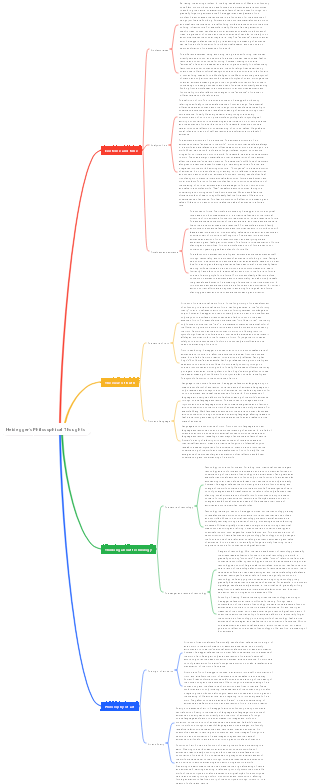
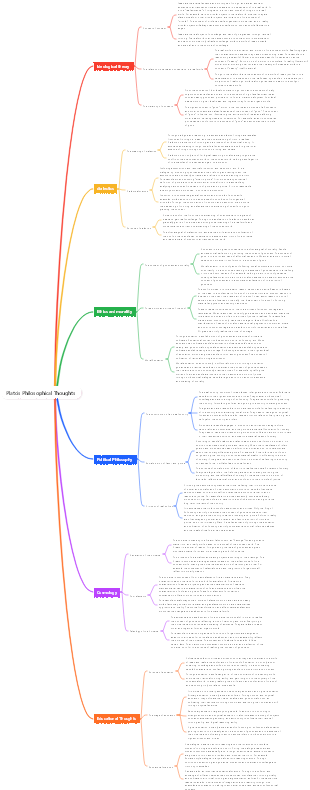
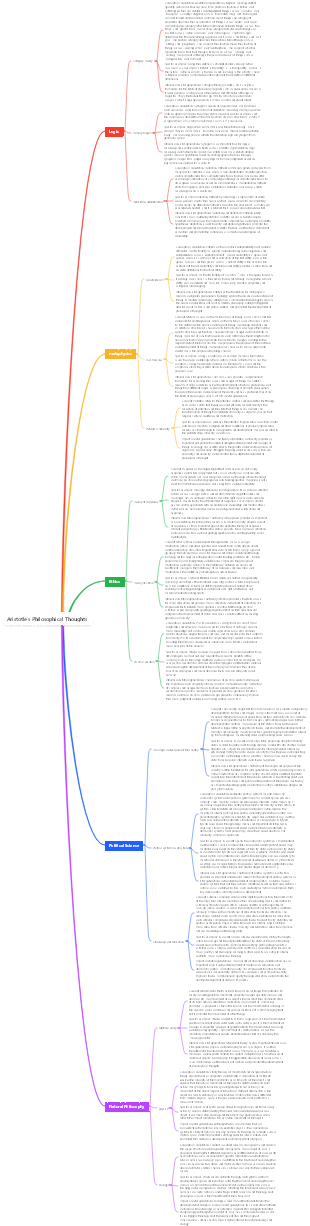
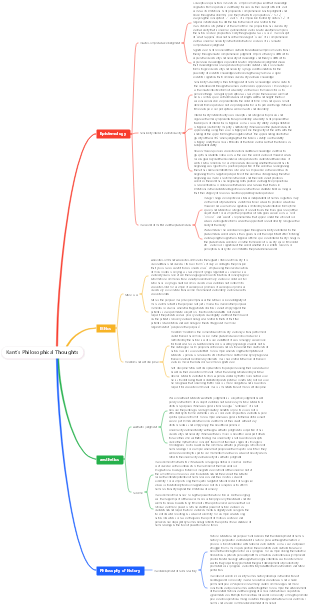
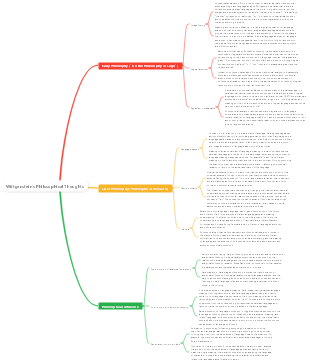
This is a mind map about Hegel's philosophical thought. Hegel's philosophical thought is an important milestone in German classical philosophy and has had a profound impact on later generations. The main contents include: legal philosophy, logic, spiritual phenomenology, and dialectics.
Edited at 2025-02-11 17:38:29
- DeepSeek User Guide Collection
In order to help everyone use DeepSeek more efficiently, a collection of DeepSeek guide mind map was specially compiled! This mind map summarizes the main contents: Yitu related links, DS profile analysis, comparison of DeepSeek and ChatGPT technology routes, DeepSeek and Qwen model deployment guide, how to make more money with DeepSeek, how to play DeepSeek, DeepSeek scientific research Application, how to import text from DeepSeek into MindMaster, the official recommendation of DeepSeek Wait, allowing you to quickly grasp the essence of AI interaction. Whether it is content creation, plan planning, code generation, or learning improvement, DeepSeek can help you achieve twice the result with half the effort!
- DeepSeek 30 feeding level instructions
This is a mind map about DeepSeek's 30 feeding-level instructions. The main contents include: professional field enhancement instructions, interaction enhancement instructions, content production instructions, decision support instructions, information processing instructions, and basic instructions.
- Voice recognition commercial solution
This is a mind map about a commercial solution for task speech recognition. The main content includes: text file content format:, providing text files according to the same file name as the voice file.
Hegel's Philosophical Thoughts
- DeepSeek User Guide Collection
In order to help everyone use DeepSeek more efficiently, a collection of DeepSeek guide mind map was specially compiled! This mind map summarizes the main contents: Yitu related links, DS profile analysis, comparison of DeepSeek and ChatGPT technology routes, DeepSeek and Qwen model deployment guide, how to make more money with DeepSeek, how to play DeepSeek, DeepSeek scientific research Application, how to import text from DeepSeek into MindMaster, the official recommendation of DeepSeek Wait, allowing you to quickly grasp the essence of AI interaction. Whether it is content creation, plan planning, code generation, or learning improvement, DeepSeek can help you achieve twice the result with half the effort!
- DeepSeek 30 feeding level instructions
This is a mind map about DeepSeek's 30 feeding-level instructions. The main contents include: professional field enhancement instructions, interaction enhancement instructions, content production instructions, decision support instructions, information processing instructions, and basic instructions.
- Voice recognition commercial solution
This is a mind map about a commercial solution for task speech recognition. The main content includes: text file content format:, providing text files according to the same file name as the voice file.
- Recommended to you
- Outline



Hegel's Philosophical Thoughts
dialectics
The basic concept of dialectics
Topic, anti-question and combination: The core of Hegel's dialectics lies in revealing the internal logic of the development of things through the dynamic evolution of the topic, anti-question and combination. The topic is the initial and direct determination of things, which is a positive and one-sided state of existence. For example, in the early stages of philosophy development, Parmenides proposed that "existence is the only unchanging", which is a topic. The anti-topic is a negation of the topic. It reveals the limitations of the topic and promotes the transformation of things into opposites. Taking Parmenides' view as an example, Heraclitus proposed that "everything flows, nothing is permanent", which is the antonym of Parmenides' "existence remains unchanged". Combination questions are the unity of the topic and the antonym. It does not simply add the two, but transcend and fusion of the two at a higher level. In this example, Hegel believes that "existence" and "change" are unified, "existence" is abstract and unpredictable, while "change" is the unity of "existence" and "non-existence". A unified type is a combination of questions. At the level of social development, feudal system, as the subject, has a stable social structure and hierarchical order, but there is serious class oppression. The bourgeois revolution's denial of feudal system became an antagonism, and the bourgeoisie pursued freedom, equality and democracy, breaking the feudal class shackles. As a combination of issues, the new capitalist social order not only retains the stable social structure part of the feudal system such as the bureaucratic system, but also integrates the concept of freedom and equality advocated by the bourgeoisie and builds a new social form.
The law of negation: The development of things is achieved through self-negation. The first negation is the negation of its own directness by things, the criticism and transcendence of the original things, and the acquisition of new prescriptiveness by things. For example, in the development of human cognition, people's initial understanding of the world was based on simple cognition of sensory experience, believing that the world is what we see, hear, and touch, which is the main topic. With the development of science, people have discovered that sensory experience has limitations. Scientific experiments and theories have revealed deeper laws behind things and negated simple cognition. This is the anti-proposition. The second negation is a renegation of negation, and it is a return to itself at a higher level. When science and philosophy are integrated, people not only recognize the objective laws of things, but also understand the relativity and limitations of cognition from the philosophical level, forming a more comprehensive and profound cognition. This is the combination of the problem. Taking the development of mathematics as an example, Euclidean geometry is a mathematical system based on intuitive experience, which is the main topic. The emergence of non-Euclidean geometry negates some axioms of Euclidean geometry, such as the sum of inner angles of a triangle of 180 degrees does not hold true in non-Euclidean geometry, which is an antonym. Modern mathematics unifies Euclidean geometry and non-Euclidean geometry under a broader geometric theoretical framework, achieving negation and achieving a higher level of cognition.
Application of dialectics
Field of thinking: In philosophical thinking, the development of abstract concepts to concrete concepts strictly follows dialectics. Taking the understanding of the concept of "freedom" as an example, at first people's understanding of freedom was abstract, believing that freedom is to break free from all constraints and act as they wish. This is the main topic. But as the thinking deepens, people gradually realize that this abstract freedom cannot be realized in reality, because everyone's freedom is related to the freedom of others, and freedom needs to be truly realized in certain rules and social relations. , this is a negation of abstract freedom, that is, an annotation. Ultimately, people understand that true freedom is to achieve harmonious unity between individuals and society under the premise of following objective laws and moral norms. For example, in a society ruled by law, people enjoy full freedom within the scope prescribed by law, and at the same time respect the freedom of others, this specific concept of freedom is a comprehensive topic. From abstract concepts to specific concepts, it is a process of continuous enrichment and deepening, and every negation makes the concept more concrete and comprehensive.
Historical field: The development of history is a dialectical process, and social systems, cultural concepts, etc. in different historical periods are constantly changing. Ancient slavery society, as a social form, was the main topic of historical development. There is cruel exploitation and oppression in slave society, and slaves are regarded as the property of slave owners and have no personal freedom. With the development of productivity and the intensification of social contradictions, feudal society denied the cruel form of exploitation of slavery, and peasants had a certain degree of personal freedom compared to slaves. This is the anti-proposition. However, feudal society retained the social hierarchy and the basis of agricultural economy as the main body, and at the same time created new class contradictions. The emergence of capitalist society broke the feudal hierarchy and emphasized free competition and individual rights, which was a negation of feudal society. However, capitalist society has brought new problems, such as the gap between the rich and the poor, class opposition, etc. Socialist society pursues social fairness and common prosperity on the basis of criticizing and inheriting capitalist society, and realizes a higher level of social form, which is a joint issue of historical development. The development of history is such a process of constant denial and transcendence, and each stage lays the foundation for the development of the next stage.
Phenomenology
The stage of consciousness development
Sensitive certainty: The initial stage of consciousness is sensory certainty. At this time, consciousness directly perceives things through the senses, believing that what is perceived at the moment is the real existence of things, which are direct and individual. For example, when you see an apple, your consciousness only focuses on the specific appearance of "this apple" at this moment, such as the red appearance, the round shape, etc., and thinks that this is the entire essence of the apple. At this stage, consciousness has not conducted in-depth analysis and understanding of things, but simply accepts the information given by the senses. Sensitive certainty seems to be the richest and most realistic knowledge, but in fact it is the most abstract and empty because it does not grasp the universality and essence of things.
Perception: With the development of consciousness, it enters the stage of perception. At this stage, consciousness begins to realize that things have multiple attributes, no longer limited to the direct certainty of sensibility. Taking apples as an example, perception not only recognizes that apples have red and round appearances, but also recognizes that they have properties such as sweet and crispness. These properties are related to each other to form an overall understanding of apples. Consciousness begins to penetrate from the appearance of individual things to the grasp of the attributes of things, and realizes that things are the unity of multiple attributes. At the same time, consciousness also began to distinguish between the essential attributes of things and the non-essential attributes of things, as well as the mutual relationship between things. For example, recognizing that the sweetness of an apple is one of its essential properties, while the spots on the surface of an apple are non-essential properties. The consciousness in the perceptual stage has transcended the simple and intuitive nature of sensory certainty, but it still remains at the level of understanding of things and phenomena.
Intellectuality: Intellectuality tries to find the laws and essence behind things, and understands the world through concepts such as causality, entity and contingency. Regarding the growth of apples, Intellectual will explore the causal conditions such as sunlight, moisture, soil, etc. required for its growth, as well as the general laws of the plant category to which apples belong. Consciousness has risen from the understanding of the attributes of things to the exploration of the essence and laws of things, and has begun to use abstract thinking and concepts to grasp things. For example, through scientific research, Intellectuals realize that the growth of apples is a complex physiological process, involving a series of causal relationships such as photosynthesis, absorption and transformation of nutrients. At the same time, Zhili also recognizes that as a type of plant, apples have common essential characteristics of plants, such as cell structure, growth and development laws, etc. The consciousness in the intellectual stage is able to grasp the inner essence and laws of things, but still regards things as isolated and still.
Development of self-awareness
Awakening of self-awareness: The awakening of self-awareness is to shift from focusing on the external world to understanding oneself, and to realize the difference between oneself and object. When a person begins to think about "Who am I" and "My meaning of existence", self-awareness begins to awaken. For example, in childhood, children mainly focus on things in the outside world. As they grow older and develop cognition, they begin to reflect on their identity, personality, values, etc., and gradually realize that they are an independent individual and around them. The world is different. The awakening of self-consciousness is an important stage in the development of human consciousness. It enables humans to actively understand themselves, shape themselves, and pursue self-realization.
Master-slave Dialectics: Self-consciousness develops in the relationship with others, and Master-slave Dialectics profoundly reveals the process of self-consciousness development. The master confirms his existence and power by enslaving slaves. The master regards slaves as his property and tools, and demonstrates his superiority through his domination of slaves. Slaves recognize their own power and value in labor. Although slaves are in oppressed positions, in the process of labor, slaves recognize their own abilities by transforming natural objects and integrating their will and creativity into them. For example, in history, the oppressed classes gradually awakened and overthrew the oppressed classes in the long-term labor and struggle, and achieved their own liberation and development. The self-awareness of slaves continues to grow in labor, and may eventually transcend the master and achieve self-liberation. The master-slave dialectics is not only applicable to social class relations, but also to the power relationship and the development of self-consciousness between individuals.
Free self-awareness: Self-awareness has developed through a series of developments to reach the state of freedom, that is, to recognize the unity of the self and others and the world, and to achieve true freedom in this unity. In a harmonious society, everyone can realize their own freedom while respecting the freedom of others, and personal freedom and social freedom promote each other. For example, in democratic societies, people enjoy equal rights and freedoms, and everyone can pursue their goals and ideals within the scope permitted by law. At the same time, people also realize that their freedom is interdependent with the freedom of others. Only by respecting the freedom of others can their freedom be guaranteed. Free self-awareness is not isolated, absolute freedom, but freedom achieved in relationships with others and society.
Logic
Ontology
Quality, quantity, and degree: Quality is the internal determination that distinguishes things from other things. The reason why something is something is determined by its quality. For example, the quality of an apple determines its difference from other things such as bananas. Apples have unique qualities such as shape, color, and taste. Quality is the basis of the existence of things. Without quality, things are no longer themselves. Quantity is the predicate that the scale, degree, speed, etc. of things can be expressed in quantity, such as the size, weight, sweetness, etc. of an apple. Changes in quantity will not change the quality of things within a certain range, but exceeding a certain limit will cause changes in quality. Degree is the unity of quality and quantity, and is the quantitative boundary for things to maintain their qualitative stability. Within a certain degree, the quality of things remains unchanged. If beyond this degree, things will undergo qualitative changes. For example, when water is at a standard atmospheric pressure and the temperature is between 0°C and 100°C, the quality of the liquid remains unchanged. This temperature range is the degree to which water remains liquid. When the temperature is lower than 0℃, water will turn into ice and undergo a qualitative change; when the temperature is higher than 100℃, water will turn into water vapor and undergo a qualitative change. The concept of degree reminds us that when we understand and deal with things, we must grasp the quantitative boundaries of things and be moderate.
Essence Theory
Essence and phenomenon: Essence is the inner connection and fundamental nature of things, and is the basis for the existence of things. Phenomenon is the external manifestation of essence, the surface characteristics and external connections of things. For example, the sun rises and sets every day is a phenomenon, and the essence behind it is the earth's orbit around the sun and the rotation of the earth. The essence is hidden behind the phenomenon and cannot be directly perceived. It needs to be grasped through rational thinking and scientific research. Phenomenon is the manifestation of essence. Through observation and analysis of phenomena, we can reveal the essence of things. The essence and phenomena are interdependent and mutually transforming relationships. The essence determines the phenomenon, and the phenomenon reflects the essence. At the same time, phenomena also contain essential factors. Through in-depth research on phenomena, the essence of things can be discovered. For example, through observations and experiments on various physical phenomena, scientists have revealed the essential structure and motion laws of matter.
Causality: Cause and result are interdependent and mutually transforming relationships. One phenomenon is the cause of another phenomenon, and it may itself be the result of other phenomena. For example, because it is raining (cause), the ground is wet (result), and the wet ground can be the reason why people slip (new results). Cause and effect are an inevitable connection between things, and it reflects the regularity of the development of things. In cognition and practice, we must be good at grasping the causal relationship between things, predict the results through analysis of causes, and trace the causes through research on results. At the same time, causality is not absolute, but relative and conditional. Under different conditions, the same reason may produce different results, and the same result may also be caused by different reasons.
Conceptual Theory
Subjectivity: Subjectivity includes concepts, judgments and reasoning. Concepts are the generalization and reflection of the essence of things and are the basic form of thinking. For example, the concept of "animal" summarizes all creatures with animal characteristics, which abandons individual differences in specific animals and retains only their common essential characteristics. Judgment is a determination of the relationship between concepts and a form of thinking that affirms or denies the situation of things. For example, "cats are animals" is a judgment, which determines the subordinate relationship between the concept of "cats" and the concept of "animals". Reasoning is a thinking process that deduces new judgments from known judgments, and is a thinking form that deduces conclusions from premises based on certain logical rules. For example, from the introduction of "All mammals breathe with their lungs, cats are mammals" to "Cats breathe with their lungs", this is a deductive reasoning. Subjectivity is the embodiment of the subjective initiative of human thinking. Through concepts, judgments and reasoning, we can deeply understand the essence and laws of things.
Objectivity: Objectivity is an external manifestation of concepts, including mechanical, chemical and purposefulness. Mechanicity is a simple, external interaction between things, such as collisions of objects, movement of positions, etc. In the mechanical stage, the relationship between things is external, accidental, and has no internal connection. Chemistry is the internal and essential interaction between things, such as the recombination between atoms in chemical reactions. In the chemical stage, the relationship between things is internal and inevitable, reflecting the essential properties of things. Purpose is the characteristic of things developing towards certain goals. For example, the growth and development of organisms have their own internal purpose, and human practical activities also have clear purpose. Purpose is the internal driving force for the development of things, which makes the development of things directional and conscious. Objectivity is the realistic basis of subjectivity, and subjectivity achieves its own goals through objectivity.
Concept: Concept is the unity of concepts and objectivity, and is an absolute truth. Ideas are the ideal state and ultimate goal of things, and everything in the world is developing in the direction of realizing ideas. For example, human society continues to pursue concepts such as fairness, justice, and harmony, which guide the development and progress of society. Ideas are not abstract or empty concepts, but with realistic content and practical significance. It is the highest understanding of the essence and laws of the world and the highest goal of human practical activities. The realization of concepts is a historical process that requires continuous efforts and exploration by mankind. In this process, concepts constantly guide human practical activities and promote the development and progress of society.
Philosophy of law
Abstract method
Property Right: Property Right is the right to possess and control over things by people, and is the core content of abstract law. Property is an external manifestation of personal freedom. By owning property, people can realize their will and freedom. For example, if a person owns his own house, he can decorate, use, rent or sell the house according to his own wishes, and these behaviors reflect his free will on property. The existence of property rights not only protects individual material interests, but also provides a material basis for individual free development. In a market economy, the clear definition and protection of property rights are the prerequisite for the normal operation of economic activities. It encourages people to acquire and accumulate property through labor and creation, and promote social economic development.
Contract: Contract is an agreement reached between people through free will and is a legal form of property transfer and exchange. The contract embodies the principles of equality and freedom, and both parties sign a contract on a voluntary basis to achieve their respective goals. For example, in the contract for buying and selling a house, the buyer and seller determine the house price, delivery time, quality standards and other terms based on equal negotiation to complete the transfer of house ownership. A contract is not only an economic act, but also a legal act, and it is protected and bound by the law. In a contractual relationship, both parties have rights and obligations, and they will bear corresponding legal responsibilities for violating the contract. The existence of contract promotes social division of labor and cooperation, improves resource allocation efficiency, and is an important part of the market economy.
Morality
Intentional and responsibility: Moral behavior is based on people's intentional and free choice, and people bear moral responsibility for their own behavior. For example, if a person deliberately helps others, his behavior has moral value because he makes a choice out of his own free will. At the same time, he should also be responsible for his helping behavior and ensure that the expected moral effect is achieved. If he neglects or intentionally harms the interests of others in the process of helping others, he should bear the corresponding moral responsibility. Intention and responsibility are two important aspects of moral behavior. Only when a person's behavior is intentional and he is responsible for his own behavior can his behavior have real moral significance.
Conscience and obligations: Conscience is the moral code of an individual’s heart, a judgment and moral evaluation of the good and evil of one’s own behavior. Obligation is a moral responsibility recognized by conscience and a moral requirement that an individual should fulfill. When a person faces a moral choice, he will perform corresponding moral obligations based on his own conscience. For example, when seeing others in trouble, conscience drives people to fulfill their obligations to help others. Conscience and obligations are inherent constraints of morality, which guide people to make correct moral choices and abide by moral norms. Conscience is a subjective moral consciousness, while obligations are objective moral requirements. The two interact and form the basis of morality.
ethics
Family: Family is the initial form of ethics and is a natural community based on love and family affection. Family members care for and support each other. In the family, individual personality and freedom are limited by certain restrictions, but they also gain emotional satisfaction and a sense of belonging in family relationships, achieving harmonious unity between individuals and families. For example, parents' care and support for their children, children's respect and support for their parents, and mutual understanding and support between husband and wife are all manifestations of family ethics. The family is not only the cradle of personal growth, but also the foundation of social stability. In the family, people learn to care for others, take responsibility, and respect the rights and freedoms of others, which lay the foundation for the development of individuals in society.
Civil society: Civil society is a battlefield for personal interests, and people meet their needs through labor and exchange. In civil society, there are various social division of labor and economic relations, such as competition and cooperation between enterprises, individuals obtain income through work, and purchase goods to meet their living needs. Civil society is a product of the market economy. It emphasizes individual freedom and rights, and there are also conflicts of interest and contradictions. For example, in a market economy, companies will engage in fierce competition in order to maximize profits, which may lead to some companies going bankrupt and workers being unemployed. At the same time, civil society also has problems such as the gap between the rich and the poor and social injustice. In order to solve these problems, it is necessary to establish corresponding laws and systems to ensure market order and fair competition. At the same time, through moral and ethical guidance, people can pursue personal interests while taking into account the overall interests of society. For example, the government formulates anti-monopoly laws to prevent enterprises from monopolizing the market and maintain a fair and competitive environment; the society advocates moral concepts such as integrity and mutual assistance to alleviate social conflicts.
Country: The state is the highest realization of ethics and the unity of family and civil society. The state represents universal interests. It integrates the emotional bonds in the family and economic activities in civil society and the pursuit of personal freedom, and ensures social fairness, justice and order through laws, systems and other means. The state formulates the Constitution and various laws and regulations, clarifys the rights and obligations of citizens, regulates the behavior of members of society, and ensures the stability of social order. For example, the Constitution protects citizens' basic rights, such as freedom of speech, right to vote, etc.; the Criminal Law punishes criminal acts and maintains social security. The state also implements policies through administrative agencies to promote social development, such as investing in infrastructure construction, and promoting the progress of public utilities such as education and medical care. The existence of the state has achieved the unity of personal freedom and overall social freedom. Under the framework of the state, individuals can fully utilize their talents and pursue their personal goals, while contributing to the development of the country. The state also provides individuals with the realization of freedom and development. guarantee.