 Wondershare EdrawMind
MindMap Gallery Socrates' Philosophical Thoughts
- 45
Socrates' Philosophical Thoughts
This is a mind map about Socrates' philosophical thought, the main contents include: educational thought, political philosophy, methodology, epistemology, and ethical thought.
Edited at 2025-02-11 16:50:23
- DeepSeek User Guide Collection
In order to help everyone use DeepSeek more efficiently, a collection of DeepSeek guide mind map was specially compiled! This mind map summarizes the main contents: Yitu related links, DS profile analysis, comparison of DeepSeek and ChatGPT technology routes, DeepSeek and Qwen model deployment guide, how to make more money with DeepSeek, how to play DeepSeek, DeepSeek scientific research Application, how to import text from DeepSeek into MindMaster, the official recommendation of DeepSeek Wait, allowing you to quickly grasp the essence of AI interaction. Whether it is content creation, plan planning, code generation, or learning improvement, DeepSeek can help you achieve twice the result with half the effort!
- DeepSeek 30 feeding level instructions
This is a mind map about DeepSeek's 30 feeding-level instructions. The main contents include: professional field enhancement instructions, interaction enhancement instructions, content production instructions, decision support instructions, information processing instructions, and basic instructions.
- Voice recognition commercial solution
This is a mind map about a commercial solution for task speech recognition. The main content includes: text file content format:, providing text files according to the same file name as the voice file.
Socrates' Philosophical Thoughts
- DeepSeek User Guide Collection
In order to help everyone use DeepSeek more efficiently, a collection of DeepSeek guide mind map was specially compiled! This mind map summarizes the main contents: Yitu related links, DS profile analysis, comparison of DeepSeek and ChatGPT technology routes, DeepSeek and Qwen model deployment guide, how to make more money with DeepSeek, how to play DeepSeek, DeepSeek scientific research Application, how to import text from DeepSeek into MindMaster, the official recommendation of DeepSeek Wait, allowing you to quickly grasp the essence of AI interaction. Whether it is content creation, plan planning, code generation, or learning improvement, DeepSeek can help you achieve twice the result with half the effort!
- DeepSeek 30 feeding level instructions
This is a mind map about DeepSeek's 30 feeding-level instructions. The main contents include: professional field enhancement instructions, interaction enhancement instructions, content production instructions, decision support instructions, information processing instructions, and basic instructions.
- Voice recognition commercial solution
This is a mind map about a commercial solution for task speech recognition. The main content includes: text file content format:, providing text files according to the same file name as the voice file.
- Recommended to you
- Outline

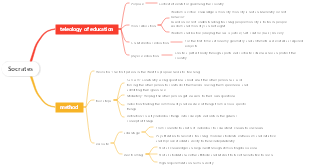


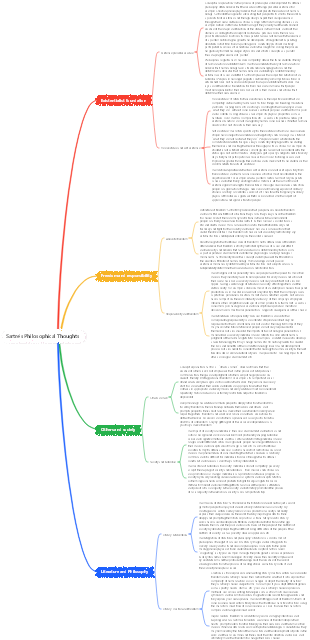
Socrates' Philosophical Thoughts
Ethical Thoughts
Virtue is knowledge
Conceptual explanation: Socrates believes that virtue is not an isolated code of conduct, but is based on rational perception of goodness. True virtue is a deep understanding of moral principles. Only by mastering knowledge about good can one perform moral behavior. This means that if a person wants to possess virtue, he must first understand what true good is through thinking and learning, rather than just following customs or instincts.
Specific examples: For example, in a war scene, the bravery of a soldier cannot be simply reflected in fearless charges. True courage lies in the fact that soldiers are clearly aware of the justice of war, knowing why they fight, and how to make ethical and strategic decisions in battle. For example, when facing the enemy's strong firepower, you can calmly judge the situation and choose the right time to attack or defend, rather than blindly and impulsively sending death. This courage based on the understanding of the just cause is the true virtue of courage advocated by Socrates.
Influence on later generations: This idea laid a solid foundation for the development of ethics and emphasized the close connection between morality and knowledge. It inspired countless philosophers in later generations to think about the roots and judgment standards of moral behavior, and prompted people to shift from simple following behavioral norms to in-depth exploration of the rational basis behind morality. For example, Plato inherited and developed this idea and constructed his ideological and moral philosophy system; on this basis, Aristotle further explored the essence and implementation of virtues, forming his unique ethical theory.
Goodness is the highest value
Concept explanation: Goodness is the ultimate goal of all behaviors and pursuits, and it is the absolute value that transcends utilitarian and secular interests. All virtues, such as justice, courage, and moderation, are centered on goodness and are the concrete manifestations of goodness. In Socrates's view, there is nothing right or wrong in people's pursuit of wealth, honor, power, etc., but if these pursuits deviate from the direction of goodness, they will lose their true meaning. Only when these pursuits are for achieving higher levels of goodness, such as promoting social harmony and helping others' happiness, can they have real value.
Specific examples: Taking business activities as an example, a businessman pursues wealth. If his purpose is to provide high-quality products and services to society through legal operations, create jobs and promote economic prosperity, then his pursuit of wealth is in line with good things. . On the contrary, if he uses any means to gain wealth, such as fraudulent consumers and undermining fair competition in the market, then his behavior deviates from the direction of goodness. For example, if a politician pursues power, if it is to use power to seek welfare for the people and promote social progress and development, then this pursuit of power is worthy of recognition; but if it is to abuse power only to satisfy individual selfish desires, then Violating the principle of goodness.
Influence on future generations: It provides an important reference for future generations' moral philosophy and value theory, and guides people to think about the true meaning of life and value pursuit. In Christian philosophy, God's good is regarded as the highest value, and all human behaviors should be guided by God's will, and pursue unity with God. This is to a certain extent Socrates said that "good is the highest value". ” The influence of thought. In modern society, this idea still has an important inspirational role, prompting people to pay attention to spiritual value while pursuing material interests and think about how to achieve the unity of personal value and social value.
The relativity and absoluteness of morality
Conceptual explanation: Moral concepts differ in different cultural, era and social contexts, which reflects the relativity of morality. For example, there are great differences in moral norms in different ethnic groups regarding marriage, family, etiquette, etc. But Socrates believes that there are absolute moral codes that transcend these differences, which are eternal and unchanging and are the ultimate basis for judging moral behavior. For example, no matter what cultural background, basic moral qualities such as honesty, kindness, and justice are regarded as noble.
Specific examples: In ancient Sparta, in order to cultivate brave and tenacious warriors, children were encouraged to undergo cruel survival training, and even allowed them to steal food, and they would be punished if they were found. In other cultures, theft is generally regarded as immoral. This reflects the relativity of moral concepts in different cultural contexts. However, in any culture, basic moral principles such as respecting the lives and dignity of others and not harming others for no reason are recognized. Even during war times, there are some internationally recognized war ethical norms, such as not killing innocent civilians and not using cruel weapons, which reflects the absoluteness of morality.
Influence on later generations: It triggered a long-term discussion on the nature of morality and the standards of moral judgment, and promoted the development of moral philosophy. It prompts people to look for universal moral consensus while respecting cultural diversity. This discussion is particularly important in the context of contemporary globalization. Different countries and cultures need to seek a common moral bottom line on the basis of respecting each other's differences to promote harmonious coexistence in human society. For example, the Universal Declaration of Human Rights formulated by the United Nations is an attempt to seek universal moral consensus globally, which embodies respect for the basic rights and dignity of human beings, which are regarded as moral norms with absolute value. .
Epistemology
Knowing that he is ignorant
Conceptual explanation: Socrates constantly reveals people's intellectual limitations and self-righteous cognitive misunderstandings through dialogue with others, thus emphasizing the importance of acknowledging his own ignorance. He believes that only by recognizing one's own ignorance can one truly embark on the journey of pursuing truth. This recognition of one's own ignorance is not a negative self-depreciation, but a positive, critical-thinking attitude. It requires people to constantly reflect on their own views and beliefs, and be brave to question and challenge the existing knowledge system.
Specific examples: When debating with the wise men at that time, Socrates found that although they were gorgeous in words and good at sophistry, their understanding of many basic concepts was very superficial. For example, when discussing "what is beauty", wise men often give some one-sided definitions based on superficial phenomena, such as beauty is a beautiful appearance, beauty is a pleasant feeling, etc. Socrates revealed the loopholes and contradictions of these definitions through constant questioning, allowing the wise to realize how limited their understanding of beauty is. For example, when discussing "what is justice", people often give simple answers based on their own experience and prejudice, such as justice means obeying the law, justice means helping friends punish enemies, etc. Through in-depth questioning, Socrates made people realize that these answers cannot cover the full meaning of justice, thereby guiding people to reflect on their own perception of justice.
Influence on future generations: It inspires people's humble attitude towards knowledge and the spirit of constant exploration, reminds people to maintain an open mind, constantly reflect and correct their cognition. In the process of scientific development, many great scientists have adhered to this attitude of knowing themselves and ignorance, and have continuously promoted the progress of science. For example, after great scientific achievements, Newton still modestly said: "I am like a child playing by the sea, and from time to time I am excited to pick up smoother stones or more beautiful shells than usual, and show them to me In front of you is a completely unexplored sea of truth. "This awe and humility of knowledge enables scientists to continuously break through existing cognitive limitations and explore unknown fields.
Pursuing truth
Conceptual explanation: Truth exists objectively and does not depend on human subjective will and sensory experience. The pursuit of truth requires revealing the essence of things from phenomena through rational thinking, logical reasoning and constant doubt and exploration. Socrates believed that truth is not obtained directly through the senses, but requires in-depth thinking and analysis to see the essence through phenomena. Through in-depth discussions on various moral, ethical and political issues, he attempts to find the universal truth behind them.
Specific examples: When exploring moral issues, Socrates was not satisfied with superficial moral norms and codes of conduct, but delved into the essence and roots of morality. For example, he tried to find the essence of justice through dialogue with different people, constantly analyzing and summarizing. He found that it is not enough to define justice from the surface of the behavior, and it must go deep into the motivations and purposes behind the behavior, as well as the impact of the behavior on society and others. For example, when exploring natural phenomena, he was not satisfied with a simple observation and description of natural phenomena, but tried to find the laws and causes behind natural phenomena. Although his explorations remained more at the philosophical level, his methods and spirit laid the foundation for later scientific research.
Impact on future generations: It provides spiritual motivation for the development of science and philosophy, encourages people to get rid of superstition and prejudice, and understand the world in a rational way. In the field of philosophy, Plato inherited Socrates' spirit of pursuing truth and constructed his ideological philosophy system, believing that ideas are the essence and truth of the world. Only by understanding and pursuing ideas can people gain true knowledge. In the field of science, this spirit of pursuing truth prompts scientists to constantly put forward hypotheses, conduct experimental verification, and promote the continuous development and improvement of scientific theories. For example, through long-term observation and rational thinking on astronomical phenomena, Copernicus proposed heliocentric theory, breaking the traditional geocentric concept and promoting major changes in astronomy.
Source of knowledge
Conceptual explanation: The information provided by the senses is superficial and variable and cannot be used as a reliable source of knowledge. True knowledge comes from rational thinking, and through in-depth analysis and summary of phenomena, we can grasp the essence and laws of things. Socrates believes that our senses are susceptible to external environments, creating illusions and misunderstandings. For example, the sun we see seems to be orbiting the earth, but it is just a visual illusion. Only through rational thinking and scientific research can we reveal the true nature of things.
Specific examples: In daily life, the things we feel through our senses are often one-sided and inaccurate. For example, when we see a chopstick inserted into the water, we will feel that the chopsticks have become bent, but in fact the chopsticks have not become bent. This is a visual illusion caused by the refraction of light. For example, the colors, sounds, tastes, etc. we feel through our senses are subjective feelings, and different people may have different sensory feelings about the same thing. True knowledge is the understanding of the essence of things, which needs to be grasped through rational thinking. For example, scientists have revealed the essence of light and the principle of refractive power through in-depth research on physical phenomena, thus explaining the phenomenon of chopsticks turning in water.
Influence on later generations: It has had a profound impact on the epistemological development of Western philosophy, prompting philosophers to constantly think about the essence, source and method of obtaining knowledge. In Plato's philosophy, he further developed Socrates's view, dividing knowledge into two levels: opinion and truth, believing that opinions are based on sensory experience, and truth is obtained through rational thinking. On the basis of inheriting and criticizing Plato, Aristotle proposed an epistemology that combines empiricism and rationalism, emphasizing that knowledge comes from sensory experience and needs to be processed and organized through rational thinking. In modern philosophy, epistemology is still an important field of research, and Socrates' thoughts provided an important starting point for later philosophers.
Methodology
Socrates question and answer
Conceptual explanation: Through continuous questions and rebuttals, the interlocutors are guided to gradually think deeply about the problem, reveal the contradictions and unreasonable aspects in their views, thereby prompting the other party to correct and improve their views, and ultimately achieve a deeper understanding of the problem. The core of this method is to inspire the interlocutors to think through constant questioning, allowing them to discover and solve problems by themselves, rather than telling them the answers directly.
Implementation steps: First, ask a general question, such as "what is justice"; then ask the other party's answers to find out the loopholes and contradictions. For example, if the other party answers "justice is obeying the law", Socrates will ask: "If the law itself is unfair, is it still justice to abide by such a law?" Then guide the other party to rethink, put forward a new point of view, and then ask questions , this cycle. In this process, Socrates will constantly guide the other party to think about the problem from different angles and explore the deep connotation of the problem.
Specific examples: When discussing the issues of justice and injustice with Ottimus, Socrates kept asking questions to make Ottimus realize that his initial definition of justice was too simple and one-sided. Ottimus initially believed that deception, theft and other behaviors were unjust. Socrates gave an example, if a general deceived the enemy in war and stole the enemy's food and grass, would it be unjust? Aware of the problem with his definition, Ottimus rethinks and proposes a new point of view. Socrates continued to ask questions, constantly guiding him to think deeply about the essence of justice, and ultimately gave Ottimus a deeper understanding of justice.
Influence on later generations: It has become an important teaching and thinking method in the fields of philosophy and education, and has cultivated people's critical thinking and logical reasoning skills. In philosophical research, this method is widely used in argumentation and debate, helping philosophers to explore issues in depth and reveal the truth. In the field of education, it inspires modern heuristic teaching methods, emphasizes students' active thinking and exploration, and cultivates students' independent thinking ability and innovative spirit. For example, in modern classroom teaching, teachers are no longer simply teach-in knowledge, but instead stimulate students' interest in learning and thinking ability through asking questions and guiding students to discuss, allowing students to master knowledge and skills in independent learning.
Inductive argument
Conceptual explanation: Find commonalities from many specific examples, and summarize general definitions and principles through analysis and summary of these commonalities. This method emphasizes the thinking process from concrete to abstract, from special to general, and finds out their common characteristics through observation and analysis of a large number of specific examples, thereby drawing general conclusions.
Implementation steps: First, collect a large number of relevant specific examples, which must be representative and diverse; then compare and analyze these examples to find out their common characteristics. For example, when studying the concept of "brave", Socrates collected examples of various brave behaviors such as soldiers on the battlefield, ordinary people facing difficulties, and people who stick to principles in the face of temptation; based on these common characteristics, they summarized them The general conclusion is the essential characteristics of courage. In this process, it is necessary to conduct in-depth analysis and thinking on various cases, eliminate accidental and non-essential factors, and grasp the essential characteristics of things.
Specific examples: In order to define "brave", Socrates collected examples of various brave behaviors such as soldiers on the battlefield and ordinary people facing difficulties. He found that although these brave behaviors are manifested in different forms, they all share some common characteristics, such as being able to maintain firm beliefs, not retreat, not give up, and be able to achieve higher goals when facing dangers, difficulties or temptations action. Through the analysis and induction of these cases, Socrates draws the essential characteristics of courage: courage is the quality of being able to maintain rationality and firmness in the face of fear and danger, and act for justice and noble goals.
Impact on future generations: It provides important methods for scientific research and philosophical thinking, helping people abstract universal laws from specific phenomena. In scientific research, induction argumentation is a commonly used method. Scientists summarize scientific theories and laws through the analysis and induction of a large amount of experimental data and observation results. For example, Newton summarized the law of universal gravitation through observation and analysis of a large number of specific phenomena such as apple landing and celestial movement. In philosophical research, inductive arguments are also used to construct philosophical theories and argue philosophical views, helping philosophers abstract general philosophical principles from specific philosophical problems.
Political Philosophy
A just country
Conceptual explanation: A just country should be a harmonious and orderly whole, in which all classes perform their duties and serve the interests of the country together. Rulers should have wisdom and virtues to govern the country in a fair manner; guardians should bravely defend the country; producers should focus on production and meet the material needs of society. The justice of this country is not simply the maintenance of law and order, but is based on harmony and balance between various classes and the pursuit of common interests.
Specific examples: In an ideal country, the ruler is like a captain, leading the country forward with wisdom and experience. They need to have deep knowledge and noble character, be able to make wise decisions, and point out the direction for the development of the country. The guardian is like a loyal guardian, protecting the security of the country. They must be brave and fearless, have good combat skills and discipline, and be ready to fight for the interests of the country at any time. Producers are like hardworking craftsmen, providing the country with a material foundation. They focus on production activities such as agriculture, handicrafts, and commerce to meet the material needs of society. For example, in ancient Greek city-states, the rulers were responsible for formulating laws and managing public affairs; the guards were responsible for defending the security of the city-state; the producers were engaged in various production labor to provide material guarantees for the prosperity of the city-state.
Influence on future generations: It provides an important reference for future generations' political theory and national governance, and inspires people to think about how to build a fair, just and harmonious society. In Plato's "The Ideal Country", Socrates' idea was further developed, and the composition and operating mechanism of the ideal country was elaborated in detail. In his political philosophy, Aristotle also conducted in-depth discussions on the justice and governance of the country and proposed different political systems and governance principles. In modern society, this idea still has an important enlightening role, prompting people to think about how to reasonably allocate social resources, safeguard citizens' rights and freedoms, and achieve social fairness and justice.
Citizen's Responsibility
Conceptual explanation: Citizens are an important part of the country and bear unshirkable responsibilities to the country. Citizens should actively participate in public affairs, abide by the country's laws and moral norms, and contribute their own strength to the country's prosperity and development. This responsibility is reflected not only in political participation, but also in behavioral norms and moral norms in daily life.
Specific examples: Citizens exercise their political rights by participating in elections and choosing leaders who can represent their own interests and wishes; by making suggestions and participating in the formulation and discussion of national policies, they provide advice for the development of the country. In daily life, citizens abide by the law and maintain social order and stability; abide by moral norms, respect the rights and dignity of others, actively participate in social welfare activities, and contribute to the harmonious development of society. For example, in the democratic city-states of ancient Greece, citizens actively participated in the civic conference and voted on major affairs of the city-state; in modern society, citizens contributed their own strength to the development of society by participating in volunteer activities and participating in community construction, etc. .
Impact on future generations: Emphasizes the importance of civic consciousness and social responsibility, inspires people to actively participate in social affairs, and promotes social progress. In modern democratic countries, citizens' participation and sense of responsibility are the basis for the effective operation of democratic systems. Only when citizens actively participate in political and social affairs can they ensure the healthy development of the democratic system and achieve social fairness and justice. At the same time, this idea also prompts people to pay attention to the public interests of society, cultivate public spirit, and promote social harmony and progress.
Views on democracy
Conceptual explanation: Socrates was cautious about the democratic system in Athens at that time. He believed that democratic elections might lead to power being mastered by people who lack professional knowledge and moral qualities, and the opinions of the majority do not necessarily represent truth and justice. He was worried that democratic systems might be used by some people with ulterior motives to achieve personal interests by manipulating people's emotions, thus making decisions deviate from rationality and justice. For example, in a citizen convention, speakers can influence the people's judgment by relying on excellent eloquence rather than correct propositions.
Specific examples: After the famous Aji Nuosi Sea victory, the generals were tried because the storm failed to salvage the bodies of the dead soldiers in time. The Citizens' Congress was influenced by emotions, and without fully understanding the facts, many generals were sentenced to death. This incident fully exposed the disadvantages of the people's susceptibility to emotions and lack of rational judgment under the democratic system. Socrates refused to participate in this unjust trial, which he believed was contrary to the principle of justice.
Influence on future generations: It triggered in-depth reflection on the democratic system, prompting people to think about how to ensure the scientificity and impartiality of decision-making under the democratic framework. When designing democratic systems, later thinkers began to pay attention to checks and balances of power and the cultivation of civic qualities, and avoid abuse of power and the tyranny of the majority. For example, modern democratic countries optimize the democratic system by establishing a system of separation of powers, improving the electoral system, and strengthening citizen education to prevent the emergence of problems that Socrates was worried about.
Discussion on limitations: Although Socrates's view has profound points, it also has limitations. He overemphasized the role of knowledge and elites in politics and ignored the right and wisdom of ordinary people to participate in politics. To a certain extent, this reflects the elitist tendency of his time. However, modern democratic practice has proved that under good institutional design and education, ordinary people can effectively participate in politics and promote social progress.
Educational Thoughts
Purpose of education
Concept explanation: The fundamental purpose of education is not simply to impart knowledge and skills, but to shape human virtues and wisdom and cultivate a sound personality. Through education, guide educated people to distinguish right from wrong, good from evil, establish correct values and moral values, and become people who are beneficial to society. This means that education is not only the transmission of knowledge, but also the shaping of the soul and the cultivation of the spirit.
Specific examples: Socrates' dialogue with young people often revolves around moral and ethical issues, such as what courage is and what justice is. He guides young people to think about these questions, not to give answers directly, but to ask questions and guidance, allowing them to understand the true meaning of morality through thinking and cultivate independent thinking and moral judgment skills.
Influence on future generations: It provides important inspiration for modern educational concepts, emphasizing that education should focus on the all-round development of people, especially the cultivation of morality and thinking ability. The later education system gradually shifted from simple knowledge indoctrination to focusing on improving students' comprehensive quality, such as cultivating critical thinking, innovative ability and social responsibility.
Educational Methods
Conceptual explanation: Adopt a heuristic education method and abandon traditional indoctrination teaching. Through asking questions, guidance and discussion, teachers stimulate students' desire for thinking and exploration, allowing students to cultivate independent thinking ability and innovative spirit in the process of independent thinking and solving problems. This method respects students' subjective status and encourages students to actively participate in the learning process.
Specific examples: When teaching geometry knowledge, Socrates does not directly tell students the theorems and conclusions, but guides students to deduce by themselves through practical problems. For example, he would raise questions such as how to measure the land area and build buildings that meet proportions, so that students can discover and understand the principles of geometrical in the process of solving these practical problems.
Influence on future generations: It has become an important theoretical basis for modern educational methods and promoted the reform and innovation of educational methods. Modern education emphasizes student-centeredness, and through group discussions, project-based learning, inquiry-based learning, etc., it stimulates students' interest and initiative in learning, and cultivates their practical ability and innovative thinking.
The role of a teacher
Concept explanation: In the education process, teachers are not simply conveyors of knowledge, but guides and inspirators on the path of students' growth. Teachers should be good at discovering students' potential and problems, inspire students in appropriate ways, help them explore their own wisdom and find the truth. Teachers should become midwives of students' thoughts and guide students to think and grow independently.
Specific examples: Socrates talks with students equally and respects students' views. Even if there are mistakes in students' views, he will not directly deny them. Instead, he helps students discover problems and correct mistakes by constantly asking and guiding. For example, when a student has a wrong understanding of a certain philosophical concept, he will guide the student to reflect on his own understanding through a series of questions, thereby achieving a correct understanding.
Impact on future generations: Redefining the role and responsibilities of teachers in education, emphasizing that teachers should pay attention to students' individual differences and stimulate students' internal potential. Modern education requires teachers to have good communication skills, guidance skills and educational wisdom, teach students according to their aptitude, meet the learning needs of different students, and promote students' personalized development.