MindMap Gallery A Brief History of Today The Great Issues of the Destiny of Mankind
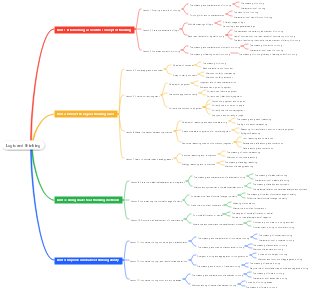
This is a mind map about "A Brief History of Today: The Great Issues of the Destiny of Mankind", which mainly includes: Part 3: Despair and Hope, Part 2: Political Challenges, Part 5: Survival, Part 4: The truth, part one: technological subversion.
Edited at 2025-02-09 14:54:03In order to help everyone use DeepSeek more efficiently, a collection of DeepSeek guide mind map was specially compiled! This mind map summarizes the main contents: Yitu related links, DS profile analysis, comparison of DeepSeek and ChatGPT technology routes, DeepSeek and Qwen model deployment guide, how to make more money with DeepSeek, how to play DeepSeek, DeepSeek scientific research Application, how to import text from DeepSeek into MindMaster, the official recommendation of DeepSeek Wait, allowing you to quickly grasp the essence of AI interaction. Whether it is content creation, plan planning, code generation, or learning improvement, DeepSeek can help you achieve twice the result with half the effort!
This is a mind map about DeepSeek's 30 feeding-level instructions. The main contents include: professional field enhancement instructions, interaction enhancement instructions, content production instructions, decision support instructions, information processing instructions, and basic instructions.
This is a mind map about a commercial solution for task speech recognition. The main content includes: text file content format:, providing text files according to the same file name as the voice file.
In order to help everyone use DeepSeek more efficiently, a collection of DeepSeek guide mind map was specially compiled! This mind map summarizes the main contents: Yitu related links, DS profile analysis, comparison of DeepSeek and ChatGPT technology routes, DeepSeek and Qwen model deployment guide, how to make more money with DeepSeek, how to play DeepSeek, DeepSeek scientific research Application, how to import text from DeepSeek into MindMaster, the official recommendation of DeepSeek Wait, allowing you to quickly grasp the essence of AI interaction. Whether it is content creation, plan planning, code generation, or learning improvement, DeepSeek can help you achieve twice the result with half the effort!
This is a mind map about DeepSeek's 30 feeding-level instructions. The main contents include: professional field enhancement instructions, interaction enhancement instructions, content production instructions, decision support instructions, information processing instructions, and basic instructions.
This is a mind map about a commercial solution for task speech recognition. The main content includes: text file content format:, providing text files according to the same file name as the voice file.
"A Brief History of Today: The Great Issues of the Destiny of Mankind"
Part One: Technology disruption
Disillusionment of ideals: From old stories to new stories
Human beings organize according to stories: explains that human society relies on various fictional stories to condense. These stories build social order and values, and are the foundation of social operation. For example, concepts such as state, religion, and nation are essentially stories, giving people identity and codes of conduct.
The rise and fall of liberalism: In the 20th century, liberalism became the mainstream global thoughts by advocating individual freedom and equal rights. It promotes the development of democratic politics and market economy and takes root in many countries. But at present, the gap between the rich and the poor is widening, the society is shattered, and the external faces the impact of emerging forces, and their influence is gradually declining.
The impact of emerging stories: Nationalism uses culture and historical traditions to unite the people, and has emerged in some countries, emphasizing the supremacy of its own interests, which is often contrary to the concept of globalization and international cooperation. Religious stories have also revived in some areas, using faith as a bond to shape unique communities, but may trigger conflicts among different belief groups.
The impact of technology on liberalism: Biotechnology has gradually revealed that human decision-making is influenced by genes and physiological mechanisms through gene editing and neuroscientific research, and impacts the concept of liberalism's "autonomous individuals". With its powerful data processing and learning ability, artificial intelligence can predict and make decisions more accurately than humans, shake the political cornerstone of liberalism's "personal value is above everything else".
Employment: When you grow up, you may not have a job
Comparison of human and AI capabilities: In terms of physical capabilities, robots are far superior to humans in terms of strength, endurance, accuracy, etc., and can undertake high-intensity and repetitive physical labor. In terms of cognitive ability, AI is amazingly efficient in data analysis, pattern recognition, and complex computing. For example, in medical imaging diagnosis, it can quickly and accurately identify diseases, far exceeding that of human doctors.
The impact of AI on employment: With the development of AI and automation technology, a large number of repetitive and regular work has been replaced by machines. In the manufacturing industry, there are fewer jobs for online workers; in the service industry, customer service, cashier and other positions are also facing the risk of being replaced by smart customer service and self-service cashier equipment.
Plans for employment change: First, avoid the disappearance of work. The government encourages enterprises to retain some human positions through policies or provide subsidies to labor-intensive industries; second, create new jobs, increase support for emerging industries such as green energy and creative industries, and promote the birth of New employment opportunities; third is to protect humanity, promote national basic income, ensure people's basic lives, and give people time to explore interests and develop creativity.
Freedom: Data hegemony and social equity
The impact of data on decision-making: Big data algorithms analyze people's preferences and behavior patterns based on massive personal data, thereby predicting needs and guiding decision-making. In shopping and entertainment recommendations, precise pushing content in line with personal preferences creates choices that seem "autonomous" but are actually guided by data.
Challenges for personal freedom: With the development of data collection and analysis technology, personal privacy space has narrowed. In the digital world, every move is recorded and may be used to manipulate individual behavior. If the algorithm is improperly used by commercial giants or governments, individuals' decision-making power in political, economic and social affairs will be weakened and become a vassal of data.
Digital hegemony and monitoring risks: Enterprises or organizations that master a large amount of data and advanced algorithms may appear, forming digital hegemony, controlling information dissemination and resource allocation. At the same time, it is not out of reach for the entire society. With the help of facial recognition, Internet of Things and other technologies, personal life is monitored in all aspects, and free will is difficult to exert.
Equality: Who should own the data
Inequality tendencies will solidify in the future: As data becomes a key resource, the gap between the group who masters data and those who do not master it will continue to widen. In the economic field, data-driven companies can accurately market, optimize production, and obtain huge profits, while companies that rely on traditional models face difficulties, and the gap between the rich and the poor has further intensified.
Discussion on data ownership: Nationalization of data can be unifiedly managed by the government to protect public interests and prevent data abuse, but it may lead to inefficient data utilization and lack of innovative vitality. Personal data mastery can enhance individuals' control over their own information and promote market-oriented data transactions, but individuals are unable to effectively defend their data rights and interests when facing powerful enterprises and institutions.
Part Two: Political Challenges
Community: The Value of the Human Body
The connection between the body and the community: Humans interact with the real world through the body, establish emotional connections, and form a close community. The expressions, tone and body language of face-to-face communication convey rich information, which is incomparable to online communication. This real interaction builds a community relationship of trust and mutual assistance.
The impact of technology on the body and the community: Although technology allows people to communicate across space, it also makes people and the body and the real environment farther away. Excessive addiction to virtual socialization reduces real social time and weakens social cohesion. For example, young people spend a lot of time on online social platforms but ignore relatives and friends around them, resulting in a weak interpersonal relationship.
The importance of a real community: The real community provides a network of belonging, security and support. In difficult times, the actual help between neighbors and relatives is irreplaceable to online communities. It also inherits culture and values, and strengthens group identity by participating in traditional activities.
Civilization: The Big Scene of the World
Definition and integration of civilization: Civilization is not divided by species, but a group formed based on common values, behavioral patterns, and social systems. In human history, different civilizations have been constantly exchanged and integrated. The Silk Road has promoted cultural and trade exchanges between the East and the West, allowing different civilizations to learn from each other and develop together.
The commonality of modern civilization: politically, most countries pursue democracy and the rule of law to protect civil rights; economically, the global trade system is closely linked and follows the rules of the market economy; scientific knowledge is shared globally, and research methods and theoretical systems are common Sex, there is no "subject science" unique to a certain civilization.
Nationalism: Cannot solve global problems
The formation and development of a country: The country is born because mankind responds to common challenges, such as resisting foreign invasions and building large-scale infrastructure. By building a common history, culture and language, form national identity and gather national strength.
Global issues and challenges: Nuclear war threatens global security, and once it breaks out, it will bring a catastrophe to all mankind; ecological collapse, such as climate change and sharp decline in biodiversity, affects the earth's ecological balance and endangers all countries and regions; Science and Technology There is no distinction between unemployment, privacy and security caused by subversion.
Limitations of nationalism: Nationalism emphasizes the priority of national interests, and when dealing with global issues, it is easy to cause conflicts and confrontations between countries. For example, in response to climate change, some countries refuse to assume responsibility for emission reduction in order to safeguard their economic interests, which hinders the process of global cooperation.
Religion: Gods only serve the country
Changes in the influence of religion in modern society: In the field of technology, the development of modern science and technology is mainly based on empirical research and scientific methods, and religious doctrines have almost no guiding role in technological innovation. In the economic field, modern economic theory and operating model are centered on market laws and financial mechanisms, and religion's explanation and intervention on economic activities are gradually weakening.
The relationship between religion and state identity: Religion is often used to maintain state identity and become part of the state ideology. For example, some countries define specific religions as state religions, strengthen the people's loyalty and sense of belonging to the country through religious rituals and doctrines, and incorporate religious elements into national celebrations and major events.
Cultural Identity: Development and Tolerance
Three clauses of the immigration agreement: In cultural exchanges, immigration-related issues must follow three clauses. First, the host country respects immigrant culture and protects its basic rights; second, immigrants accept the host country's core values and laws; third, the two sides work together to promote cultural integration and avoid cultural conflicts.
The difference between culturalism and racism: Culturalism emphasizes cultural differences and believes that culture can be changed through communication and learning; racism divides people based on racial characteristics, and believes that racial differences cannot be changed, and that a certain race has superiority. Culturalism advocates openness and inclusion, while racism is prone to discrimination and conflict.
Extensibility and openness of culture: Culture is not fixed and has ductility. Historically, many cultures have absorbed foreign elements and continuously enriched themselves. For example, Japanese culture integrates Chinese culture and Western cultural elements to form a unique style. Culture should uphold an open attitude towards the “other” and promote the development of cultural diversity.
Part 3: Despair and Hope
Terrorism: Don't overreact
Logical conditions of terrorism: Terrorism causes public panic by creating extreme violence to achieve specific political, religious or ideological purposes. Its success relies on media communication, amplifying violence, attracting widespread social attention, and forcing the government to overreact.
The correct way to deal with terrorism: First, secretly combat terrorist organization networks, accurately destroy the core structure of terrorist organizations through intelligence collection and special operations; second, the media remain objective, avoid excessive exaggeration of terrorist incidents, and reduce the attention expected by terrorists; third; It is the public that curbs excessive fear, maintains rationality, and is not influenced by the panic atmosphere created by terrorists.
War: Never underestimate the stupidity of humanity
Comparison of economics between ancient and modern wars: In ancient wars, plundering of land and resources was an important purpose, and the winners gained economic benefits by occupying land and robbing property. In modern warfare, the global economy is highly integrated, and war has great damage to the economy. It not only destroys the country's economy, but also affects the global industrial chain. The cost of plundering war is far higher than the benefits.
Irrational factors of war: Although the economic benefits of modern war are low, nationalist sentiment, misjudgment of leaders, geopolitical conflicts and other factors may still trigger war. For example, before World War I, countries were involved in war based on misjudgment and alliance system, which brought huge disasters to the world and highlighted the irrationality of human beings in war decision-making.
Humility: The earth is not about you
Criticism of Cultural Centerism: Cultural Centerism uses its own culture as the standard to judge other cultures and regards its own culture as superior. This is a narrow concept. Historically, the West once colonized and transformed other cultures with its own culture as the center, causing cultural destruction and conflict.
Looking at the world and yourself objectively: we need to realize that human beings are insignificant in the universe, and all cultures and countries have unique values. We should respect different cultural differences, learn other cultural strengths with a humble attitude, promote cultural exchanges and cooperation, and jointly promote human progress.
Part 4: The Truth
Ignorance: You know less than you think
Information explosion and cognitive limitations: In the era of information explosion, massive information floods the Internet, and it is difficult to distinguish between true and false. Although people have increased their exposure to information, they are limited by time and energy, and it is difficult to understand and identify in-depth, resulting in cognitive limitations. For example, online rumors often spread quickly and mislead the public.
Avoid being misled by false information: cultivate critical thinking and analyze the source of information and content logic. Obtain information through multiple channels, compare different opinions, and do not easily believe in single source information. Improve media literacy and learn to identify fake news and false advertising.
Justice: The moral dilemma of human beings
Complexity of moral judgment: Different cultures, religions, and social classes have different moral standards. When dealing with ethical issues, such as abortion and euthanasia, all parties have different positions based on their own moral concepts, making it difficult to reach a consensus.
Conflict between culture and values: In the context of globalization, the collision of different cultures has intensified. For example, in terms of human rights concepts, there are differences between the West and some Eastern countries. The West emphasizes individualistic human rights concepts, and some Eastern countries pay more attention to collective human rights and social harmony. This conflict increases the difficulty of moral judgment in international affairs.
Post-truth era: lies last forever
Characteristics of the post-truth era: emotions and personal beliefs have more influence than facts themselves in the dissemination of information. On social media, emotional speech and false information are more likely to resonate and spread widely, and people are more concerned about whether the information is in line with its own position rather than its authenticity.
Ways to find the truth: rely on professional fact verification agencies to verify the information. The media should adhere to professional ethics, spread real information, and conduct in-depth reports. The public should improve their discernment ability and not blindly disseminate unproven information.
The future is not a science fiction novel: an inescapable mother
Get rid of excessive dependence on science fiction: Science fiction novels often imaginatively depict the future, but the future of reality is complex and changeable, and we cannot rely solely on science fiction settings. For example, interstellar travel, which often appears in science fiction, faces many technical and energy problems in reality.
Face real challenges: We need to pay attention to real issues such as climate change, the gap between the rich and the poor, social inequality, etc., and actively respond through scientific research, policy formulation, and social actions to create a good foundation for the future.
Part 5: Survive
Education: Change is the only thing that remains unchanged
Education needs in the era of rapid change: rapid development of science and technology, accelerated knowledge updates, and education needs to cultivate students' ability to adapt to changes. Traditional education focuses on knowledge memory and is difficult to meet needs. It should turn to cultivating innovative thinking, critical thinking and lifelong learning abilities.
Direction of education reform: Add practical teaching links to allow students to exercise their problem-solving abilities in actual projects. Promote interdisciplinary education, break down discipline barriers, and cultivate students' ability to comprehensively apply knowledge. Use online education resources to provide personalized learning solutions to meet the needs of different students.
Meaning: Life is not a fictional story
The wavering of the source of traditional meaning: In the past, stories such as religion, country, and nation gave meaning to life. But in modern society, the influence of these stories has declined, and people have doubts about their authenticity and rationality, and need to find the meaning of life again.
Explore personal life goals: Encourage people to find things they love based on their own interests and values. You can broaden your horizons and understand yourself by traveling and trying new things, and find your life goals and meaning in activities such as helping others, pursuing art, and devote yourself to scientific research.
Meditation: Know yourself
Methods and functions of meditation: Meditation helps people relax their body and mind and eliminate distracting thoughts by focusing on breathing, body sensations or specific images. Long-term persistence can improve concentration, reduce stress, and enhance emotional management skills.
Meditation and Self-cognition: During the meditation process, people can have a deeper understanding of their thinking patterns and emotional changes, understand their true inner needs, improve their self-cognition, and achieve inner peace and spiritual growth.