MindMap Gallery AUDIT method Advanced quality management and control method to ensure product quality
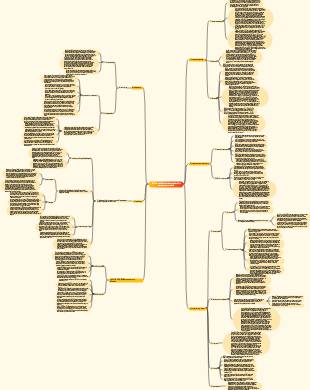
This is a mind map about AUDIT method: an advanced quality management control method to ensure product quality. The main contents include: 5. Example analysis, 4. The difference from quality inspection, 3. Application analysis, 2. Function and characteristics, 1. Conceptual meaning.
Edited at 2025-02-04 13:03:22In order to help everyone use DeepSeek more efficiently, a collection of DeepSeek guide mind map was specially compiled! This mind map summarizes the main contents: Yitu related links, DS profile analysis, comparison of DeepSeek and ChatGPT technology routes, DeepSeek and Qwen model deployment guide, how to make more money with DeepSeek, how to play DeepSeek, DeepSeek scientific research Application, how to import text from DeepSeek into MindMaster, the official recommendation of DeepSeek Wait, allowing you to quickly grasp the essence of AI interaction. Whether it is content creation, plan planning, code generation, or learning improvement, DeepSeek can help you achieve twice the result with half the effort!
This is a mind map about DeepSeek's 30 feeding-level instructions. The main contents include: professional field enhancement instructions, interaction enhancement instructions, content production instructions, decision support instructions, information processing instructions, and basic instructions.
This is a mind map about a commercial solution for task speech recognition. The main content includes: text file content format:, providing text files according to the same file name as the voice file.
In order to help everyone use DeepSeek more efficiently, a collection of DeepSeek guide mind map was specially compiled! This mind map summarizes the main contents: Yitu related links, DS profile analysis, comparison of DeepSeek and ChatGPT technology routes, DeepSeek and Qwen model deployment guide, how to make more money with DeepSeek, how to play DeepSeek, DeepSeek scientific research Application, how to import text from DeepSeek into MindMaster, the official recommendation of DeepSeek Wait, allowing you to quickly grasp the essence of AI interaction. Whether it is content creation, plan planning, code generation, or learning improvement, DeepSeek can help you achieve twice the result with half the effort!
This is a mind map about DeepSeek's 30 feeding-level instructions. The main contents include: professional field enhancement instructions, interaction enhancement instructions, content production instructions, decision support instructions, information processing instructions, and basic instructions.
This is a mind map about a commercial solution for task speech recognition. The main content includes: text file content format:, providing text files according to the same file name as the voice file.
AUDIT method: Advanced quality management and control method to ensure product quality
1. Conceptual meaning
1.1. Basic Concept
The AUDIT quality evaluation method is an advanced quality management method proposed by Volkswagen Germany in the 1970s. It is a quality supervision and inspection method. "AUDIT" is a transliteration of Latin, which means "inspection", "review", "inspection tracking" and "review". The reviewer stands from the user's standpoint and inspects and reviews the product quality from the user's perspective and requirements. He will implement the responsibility for the quality defects found, analyzes the reasons and takes rectification measures to improve product quality. The target of this method is products that have issued certificates of qualification and are widely used in large enterprises in the United States, Japan and Europe.
1.2. Main meaning
Purpose: To make the product satisfy users, stand on the user's standpoint, inspect the product's compliance quality and appearance quality according to the user's vision and requirements, check the gap between product standards, specifications and user's applicability needs, provide a basis for revision, and promote the satisfaction of users Requirements, while eliminating and improving quality problems and improving product quality grades.
Evaluation criteria
The basis for establishing standards: refer to quality inspection and acceptance standards, draw on existing materials, including standards used by domestic and foreign enterprises and relevant standards released by the state and industry, as well as users' feedback on product quality.
Calculation of quality index: Calculate the product quality index $QZ$ according to the formula $QZ=(1-\sum1/\sum2)\times100%$, where $\sum1$ is the number of evaluations corresponding to the cumulative defects found during the inspection process. $\sum2$ is the sum of the total evaluation numbers corresponding to the total defect number. After continuous review, a quality trend curve can be drawn to predict product quality.
2. Functions and characteristics
2.1. Main functions
Reflect the change in quality concept
Changes in the concept of quality: In the era of shortage economy, products that meet technical standards are qualified; and in the buyer's market, only products that meet user needs can become commodities. AUDIT takes "satisfied customers" as its ideological purpose and is a "revolution of the concept of quality management ”.
It is an advanced quality management control method
Difference from quality audit: Quality audit is to determine whether the quality activities and results of physical products comply with the planning and arrangements. AUDIT is a systematic inspection of the ability level of physical products that meet the specified requirements. The two are different.
Difference from quality inspection
Different inspection purposes: Quality inspection determines whether the product is qualified, which is a compliance inspection; AUDIT determines whether it meets user needs, which is an adaptive inspection and is based on compliance inspection.
According to different standards: Quality inspection is based on product drawings, process documents and other standards, and AUDIT is based on user's vision and requirements.
Different conclusions: The quality inspection conclusion is whether the product quality is qualified or not, and the AUDIT conclusion is user satisfaction.
Objectively reflect the product quality status
Feedback quality information: AUDIT is carried out frequently, and can promptly discover quality problems, feedback product quality information, and implement a full-staff quality management responsibility system.
Reflect quality status: After the development of developed countries, it has become a scientific and standardized quality management system, and objectively reflects product quality status based on user satisfaction.
2.2. Main features
Timely and intuitively reflect defects
Comprehensively and objectively grasp the quality status
Regularly carry out to form a atmosphere of paying attention to quality
Evaluate customer complaints
Inexpensive implementation costs
3. Application analysis
3.1. Establishment of Audit Quality Review System
Organizational structure: Establish an authoritative permanent working organization, responsible for formulating inspection projects, preparing review instructions, and organizing review and rewards and punishments.
Formulate review projects and guidance: Based on user feedback and product defects, refer to national standards and enterprise standards, determine inspection projects, prepare review guidelines, and clarify responsible departments, points deductions and defect categories.
Defect severity classification: According to the degree of impact on product suitability, quality defects are divided into five levels and given different scores. 【Table 1: Quality defect severity grading】
Determine product quality grade and limit defect score
Quality level classification: Audit's quality level is divided into 6 levels, 0 is the best and 5 is the worst.
Calculation of limit defect score: The product limit defect score is the sum of the weighted scores of various defects divided by the total number of reviewed products. The Audit quality grade of the product qualified corresponds to the limit defect score. [Formula] Product limit defect score = sum of weighted scores of various defects ÷ total number of reviewed products
Assess the actual quality level of the product
Calculate the lifting amplitude: Calculate based on the formula $ defect score = (sum of actual defect scores - limit defect scores)\div limit defect score\times100%$.
Determine the quality level: Product quality level = Qualified quality level Lifting amplitude ÷ Conversion standard amplitude × 0.1.
Determine the added and impairment standards for Audit quality levels: Determine the added and impairment standards based on the quality of each work, such as the increase in the passing rate of the quality control point, the corresponding Audit quality level can be subtracted.
3.2. Implementation procedures for Audit Quality Review
Sampling samples: Randomly select a certain number of samples from the products that pass the inspection to check whether there are any defects in the appearance.
Inspection and review: While keeping the sample in its original state, carefully review according to the content of the review card and keep records.
Defense discussion: The review team summarizes the situation. If the defective department has any objection, it can defend itself, otherwise it will be deemed to recognize the review results.
Calculate the comprehensive quality level: calculate the weighted average of Audit quality levels of each unit product at the end of each month, and obtain the comprehensive quality level based on the work quality and other conditions.
Convene an assessment meeting and provide rewards and punishments: hold regular assessment meetings to evaluate the comprehensive quality level of each unit, and reward and punish the heads of relevant departments.
Implement project management for quality defects: analyze the quality defects exposed during the review, formulate countermeasures and measures to solve quality problems.
3.3. Application Scope
The AUDIT method can be used in all aspects of customer relationships, and conducts quality review of products and services that customers have requirements in terms of safety, reliability, price, comfort, etc., and has a wide range of applications.
4. Difference from quality inspection
Times vary: The products evaluated by "AUDIT" are products that have passed the inspection and acceptance, and quality inspection is the inspection of the products during the production process.
Different positions: Quality inspectors inspect product quality on behalf of the country, users and enterprises, and AUDIT reviewers inspect and review products completely from the user's standpoint.
Different standards: the basis for quality inspection is product drawings, process documents, technical standards and relevant national regulations, and the basis for AUDIT is the user's requirements.
Different conclusions: The conclusion of quality inspection is whether the product quality is qualified or not, and a certificate of qualification is issued, which is a compliance judgment; the conclusion of AUDIT is that the user's satisfaction, the higher the evaluation score, the more the user's requirements are, which is a suitability judgment.
5. Case Study
5.1. Case: The practice of Audit Review of Changan Company
Company development brief: Changan Company has successively reviewed the Changan micro van, Alto vehicle and truck series.
Composition of the review agency
Leading Group: Responsible for leading the comprehensive promotion of Audit quality evaluation work.
Inspection and implementation team: Responsible for daily work, including random evaluation and rectification implementation.
Evaluation standards formulation
Inspection items: It is divided into static inspection and dynamic inspection, including seven categories: electrical appliances, internal, external, surface, chassis, rain, and road tests. There are 781 inspection items in total, and the responsible departments, points deductions and defect categories are clarified.
Defect properties are divided into Class A1 (fatal defect), Class A (major defect), Class B (general defect), and Class C (minor defect).
Defect score determination [Table 2: Defect score determination]
Five steps for review
Draw the vehicle: Pump the vehicle in the assembly workshop at a fixed or irregular time every day, check the appearance and main assembly parts.
Inspection and review: Carry out chassis, electrical appliances, driving operations, road tests, rain sealing, internal, external, and surface inspections.
Defense discussion: All units and departments understand the inspection results and can defend if they have any objections.
Computer data input and printing: Enter the inspection results into the computer and print them after review.
Release results: Release the review results the next afternoon, hold a release meeting to study measures and plans.