MindMap Gallery hot
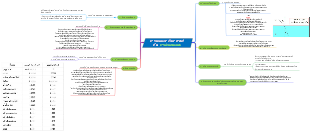
This is a mind map about heat, mainly including: object state changes, heat engine, internal energy, heat specific heat capacity, and temperature scale. The introduction is detailed and the description is comprehensive. I hope it will be helpful to interested friends!
Edited at 2025-01-31 21:05:30Rumi: 10 dimensions of spiritual awakening. When you stop looking for yourself, you will find the entire universe because what you are looking for is also looking for you. Anything you do persevere every day can open a door to the depths of your spirit. In silence, I slipped into the secret realm, and I enjoyed everything to observe the magic around me, and didn't make any noise. Why do you like to crawl when you are born with wings? The soul has its own ears and can hear things that the mind cannot understand. Seek inward for the answer to everything, everything in the universe is in you. Lovers do not end up meeting somewhere, and there is no parting in this world. A wound is where light enters your heart.
Chronic heart failure is not just a problem of the speed of heart rate! It is caused by the decrease in myocardial contraction and diastolic function, which leads to insufficient cardiac output, which in turn causes congestion in the pulmonary circulation and congestion in the systemic circulation. From causes, inducement to compensation mechanisms, the pathophysiological processes of heart failure are complex and diverse. By controlling edema, reducing the heart's front and afterload, improving cardiac comfort function, and preventing and treating basic causes, we can effectively respond to this challenge. Only by understanding the mechanisms and clinical manifestations of heart failure and mastering prevention and treatment strategies can we better protect heart health.
Ischemia-reperfusion injury is a phenomenon that cellular function and metabolic disorders and structural damage will worsen after organs or tissues restore blood supply. Its main mechanisms include increased free radical generation, calcium overload, and the role of microvascular and leukocytes. The heart and brain are common damaged organs, manifested as changes in myocardial metabolism and ultrastructural changes, decreased cardiac function, etc. Prevention and control measures include removing free radicals, reducing calcium overload, improving metabolism and controlling reperfusion conditions, such as low sodium, low temperature, low pressure, etc. Understanding these mechanisms can help develop effective treatment options and alleviate ischemic injury.
Rumi: 10 dimensions of spiritual awakening. When you stop looking for yourself, you will find the entire universe because what you are looking for is also looking for you. Anything you do persevere every day can open a door to the depths of your spirit. In silence, I slipped into the secret realm, and I enjoyed everything to observe the magic around me, and didn't make any noise. Why do you like to crawl when you are born with wings? The soul has its own ears and can hear things that the mind cannot understand. Seek inward for the answer to everything, everything in the universe is in you. Lovers do not end up meeting somewhere, and there is no parting in this world. A wound is where light enters your heart.
Chronic heart failure is not just a problem of the speed of heart rate! It is caused by the decrease in myocardial contraction and diastolic function, which leads to insufficient cardiac output, which in turn causes congestion in the pulmonary circulation and congestion in the systemic circulation. From causes, inducement to compensation mechanisms, the pathophysiological processes of heart failure are complex and diverse. By controlling edema, reducing the heart's front and afterload, improving cardiac comfort function, and preventing and treating basic causes, we can effectively respond to this challenge. Only by understanding the mechanisms and clinical manifestations of heart failure and mastering prevention and treatment strategies can we better protect heart health.
Ischemia-reperfusion injury is a phenomenon that cellular function and metabolic disorders and structural damage will worsen after organs or tissues restore blood supply. Its main mechanisms include increased free radical generation, calcium overload, and the role of microvascular and leukocytes. The heart and brain are common damaged organs, manifested as changes in myocardial metabolism and ultrastructural changes, decreased cardiac function, etc. Prevention and control measures include removing free radicals, reducing calcium overload, improving metabolism and controlling reperfusion conditions, such as low sodium, low temperature, low pressure, etc. Understanding these mechanisms can help develop effective treatment options and alleviate ischemic injury.
Light
1. The propagation of light
light source
Definition: an object that can emit light.
Category: Natural light sources (such as sun, fireflies) and artificial light sources (such as electric lights, candles)
Note: The moon and stars are not sources of light
The linear propagation of light
Condition: Light travels in a straight line in the same, uniform, transparent medium
Phenomenon: solar eclipse, lunar eclipse, shadow, laser boring machine, small hole imaging, light spots under trees, etc.
Application: laser collimation, shadow formation, etc.
Speed of light
The velocity in vacuum is about 3.0×10⁸m/s
The speed in water is 3/4 of the vacuum, and the speed in glass is 2/3 of the vacuum
2. Reflection of light
definition
The phenomenon of light hitting the surface of the medium and being reflected back to the original medium
The law of reflection
Reflected light, incident light and normal are in the same plane
Reflected light and incident light are separated on both sides of the normal
The reflection angle is equal to the incident angle (it cannot be said that the incident angle is equal to the reflection angle, because there is the incident angle first, and then the reflection angle)
Reflection classification
Specular reflection: the reflection surface is smooth, such as a flat mirror, a calm lake surface
Diffuse reflection: the reflection surface is uneven, such as blackboard, curtain, and furry glass
Planar mirror imaging
Features: The image formed is a vertical virtual image, the size of the image and object is equal, the connection between the image and object is perpendicular to the mirror, and the distance between the image and object and the mirror is equal.
Application: Imaging, changing the optical path (such as periscope)
3. Refraction of light
definition
When light is shot obliquely into another substance, the direction of propagation usually deviates.
Refractive law
Refracted light, incident light and normal in the same plane
Refracted and incident light are separated on both sides of the normal
The refractive angle increases with the increase of the incident angle and decreases with the decrease of the incident angle.
When light is inclined into transparent substances such as water or glass, the refractive angle is smaller than the incident angle; when light is inclined into transparent substances such as water or glass, the refractive angle is greater than the incident angle
Phenomenon
From the shore to the water, the water seems to be very shallow; from the water, the things on the shore seem to be getting higher
The chopsticks seem to be "folded" in the water
Mirage.
Rainbow (also a dispersion phenomenon of light)
4. The dispersion of light
definition
The phenomenon of sunlight decomposing into seven colors of red, orange, yellow, green, blue, indigo and purple through prisms
The three basic colors of light
Red, green, blue
5. Lens and their applications
Lens type
Convex lens: thick in the middle and thin edges, which converge light
Concave lens: thin middle and thick edges, which have a divergent effect on light
Basic concepts
Spindle: A straight line passing through two sphere centers on the lens.
Light center: A special point on the main axis, and the propagation direction of any light passing through this point remains unchanged.
Focus: A convex lens can converge light parallel to the spindle at a point, which is called the real focus of the convex lens; a concave lens can converge the reverse extension line of the refracted light ray of the light parallel to the spindle at a point, which is called the virtual focus of the concave lens.
Focal length: The distance from the focus to the center of light.
Imaging rules
Convex lens imaging rules (the relationship between object distance u, image distance v and focal length f):
When u>2f, it becomes an inverted and reduced real image (such as a camera)
When u=2f, it becomes an inverted or equal-sized real image.
When f<u<2f, it becomes an inverted and enlarged real image (such as a projector)
When u=f, no image is formed
When u<f, it becomes a positive and magnified virtual image (such as a magnifying glass)
Eyes and glasses
The principle of the eye's visual object: similar to camera convex lens imaging.
Vision correction: Use concave lens to correct myopia, and use convex lens to correct hyperopia
hot
Temperature Temperature Scale
temperature
Definition: The degree of hot and cold of an object
Temperature scale
Definition: Temperature measurement standard
Celsius temperature scale
Under the specified air pressure, the temperature of the ice-water mixture is 0°C and the boiling water is 100°C. The temperature between 0°C and 100°C is 100 equal parts, and each portion represents 1°C. This method can be extended to above 100°C and below 0°C.
Symbol: ℃
Normal temperature of the human body: 37℃; Sun surface temperature: 6000℃; energized filament temperature: 2500℃; natural low temperature limit: -273.15℃
thermometer
Function: Measure object temperature
Working principle: made according to the principle of thermal expansion and contraction of liquids
Structure: consists of a glass bubble containing temperature measurement liquid and a thin glass tube with uniform inner diameter
thermometer
Function: Measuring the temperature of the human body, also known as a medical thermometer
Similarities and similarities with thermometers
Molecular dynamic theory
molecular
Objects are constructed of molecules
Characteristics of molecules: small, many
The molecule keeps doing irregular exercises
Diffusion phenomenon
The phenomenon of different substances entering each other when they come into contact is called diffusion phenomenon
The molecule keeps doing irregular exercises
There are gaps between molecules
The speed of the irregular motion of molecules is related to temperature. The higher the temperature, the more intense the movement
Molecular irregular movement is also called molecular thermal movement
Three molecular dynamic theory
Matter is made of molecules
The molecule keeps doing irregular exercises
There is interaction force between molecules
Gravity, repulsion
When gravity and repulsion are balanced, the distance between molecules is l0; When l>l0, F leads >F repulses, which is manifested as gravity; otherwise, it is repulsive
Heat specific heat capacity
Heat transfer
Definition: Energy can be transmitted from high-temperature objects to low-temperature objects, or the high-temperature part of the object to low-temperature part. This phenomenon is called heat transfer
Essence: Transfer of energy
Generation conditions: There is a temperature difference
The result of heat transfer: the same temperature
Direction: High temperature → Low temperature
Methods: heat conduction, heat convection, heat radiation
Calories
Definition: The amount of energy absorbed or released by an object during reheat transfer is called heat, which is expressed in Q.
Unit: Joule
Heat corresponds to the heat transfer process. Heat cannot be discussed without heat transfer, so we can only say that the object absorbs or releases heat, but we cannot say how much heat the object has.
Specific heat capacity
Definition: The heat absorbed by a certain substance with a unit mass when the temperature rises by 1℃ is called the specific heat capacity of this object, referred to as C for short
Physical significance: The strength of the object's ability to absorb heat and release heat
Calculation formula: c=Q/(m*Δt)
Unit: J/(kg·℃), read as kettle per kilogram of Celsius
C water=4.2*103J/(kg·℃)
1kg of water increases (or decreases) and absorbs (or releases) heat at 1 ℃ of 4.2*103 joules
Specific heat capacity is a characteristic of substances, and the specific heat capacity of different substances is generally different.
Internal energy
Definition: The sum of the kinetic energy and molecular potential energy of all molecules in an object
Unit: Joule
All objects have internal energy
Factors
Mass, volume, state, temperature
How to change the internal energy of an object
Heat transfer
Objects absorb heat, increase internal energy, and increase temperature
Objects emit heat, reduce internal energy, and reduce temperature
acting
Do work on objects, increase internal energy and increase temperature
Mechanical energy → Internal energy
The object does work externally, reduces internal energy and reduces temperature
Internal energy → Mechanical energy
Work and heat transfer are equivalent to changing the internal energy of an object
Heater
Definition: The engine that converts internal energy into mechanical energy
internal combustion engine
The fuel is burned in the cylinder to generate high-temperature and high-pressure gas. The gas pushes the piston to do work and converts internal energy into mechanical energy.
Working process
Stroke: The piston moves from one end of the cylinder to the other end of the cylinder called a stroke
Working process of gasoline engine
Inhalation stroke
Compression stroke
Work stroke
Exhaust stroke
diesel engine
Diesel-fueled internal combustion mechanism
Way
Gasoline engine: ignition type
Diesel engine: compression ignition
Changes in matter states
The change of matter in one state to another is called the change of matter state
Crystals and amorphous
Crystal: solid with a certain melting temperature, that is, melting point
Amorphous: solid with no certain melting temperature, that is, melting point
Changes in matter states
Melting: solid state → liquid state
Solidification: liquid → solid
Vaporization: liquid → gaseous
Liquefaction: gaseous → liquid
Sublimation: solid state → gas state
Heat absorption
Ninghua: Gas → Solid
Exhaust heat