 Wondershare EdrawMind
MindMap Gallery Mind map of the trilogy The Three-Body Problem
- 91
Mind map of the trilogy The Three-Body Problem
Brain-burning science fiction "Three-Body" trilogy mind map, combing clues and refining key points to help understand the grand world view and various ideas of the Three-Body World. Please save it if you need it.
Edited at 2021-06-15 08:52:19
Mind map of the trilogy The Three-Body Problem
- Recommended to you
- Outline

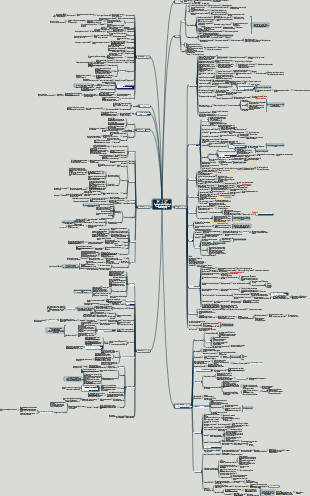
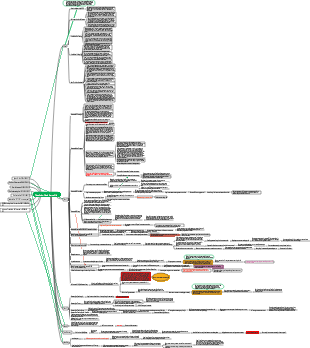
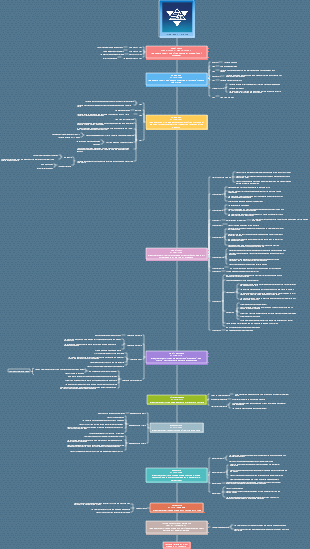

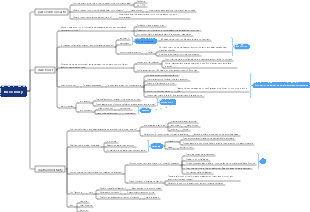
Three body series
Three-body 3 Death God Eternal Life
The euthanasia law was implemented, and the terminally ill Yun Tianming decided to perform euthanasia
As Yun Tianming's death approaches, he thinks of Cheng Xin, whom he had a crush on in college.
Because of Yun Tianming's creativity, his college classmates made a lot of money. In return, Yun Tianming received a million-dollar check.
UN sells stars from universe to raise funds
Yun Tianming decided to buy Cheng Xin a star and give it to her anonymously
ladder plan
It was proposed by Cheng Xin and finally implemented by department chief Wade.
Purpose: Send detectors to the Trisolaran fleet for internal undercover investigation
Difficulty: Due to technical difficulties, extremely small size is required to achieve. After discussion, it was decided to send only human brains and then live among the Trisolarans as undercover agents. It is possible that Trisolarans will maintain their human brain state for various studies, or use their more advanced technology to completely replicate an identical person using a large amount of information in the human brain. But it is undoubtedly painful for those who are sent there.
Cheng Xin began to recruit volunteers from around the world for the Ladder Project, with the main targets being people who were terminally ill and dying.
After selection, Yun Tianming was determined to be the final candidate.
After Yun Tianming's head was removed, Cheng Xin realized that the person who gave her the star was Yun Tianming, and she had buried him with her own hands.
While continuously monitoring the launch of the probe, the rope was broken, making it impossible to track the orbital parameters of subsequent probes. The probe carrying Yun Tianming's brain was lost in the vast space.
At the same time, the Gravity rover discovered the four-dimensional space in space
The crew began to feel uneasy
The three-body water droplet detector that followed Gravity in pursuit of Blue Space also entered the blind spot.
The Gravitation caught up with the Blue Space. At the same time that the Trisolaris launched an attack on the Earth, the water droplets following the Gravitation also launched an attack on the two warships.
But in the end, the water droplet was successfully destroyed by the Blue Space crew with the advantage of four-dimensional space, and the two battleships successfully survived.
The two battleships gathered together to vote on whether to publish the coordinates of the Three-Body Problem and the Earth to the universe, and finally successfully sent it. Afterwards, they explored the four-dimensional space together
They discovered many cemeteries in the four-dimensional space, and discovered the darkness of the universe through conversations with the Lord of the Rings and the collapse of low dimensions.
Cheng Xin was in pain and did not want to work for Vader anymore, but Vader asked her to go to the future through hibernation. The future may need a scientist with knowledge of the Team Ladder Project.
In the future, the solar system will successfully enable Trisolaran to transmit more advanced technologies to the earth in Luo Ji's wall-facing project.
Cheng Xin came to the future and became the richest person. The United Nations decided to buy her star.
Ai AA, the liaison with the United Nations, resigned and decided to help it operate this large asset.
Luo Ji has been the swordsman for many years, and during his tenure the two worlds have been at peace with each other.
However, the public and the United Nations' concerns about Luo Ji's rights made them decide to replace Luo Ji and choose a new sword holder. Cheng Xin, who owns a world, became the best choice.
Wade, who came from BC and was also awakened from dormancy, shot Cheng Xin in order to be elected as the sword bearer, and was later found and arrested.
Cheng Xin, who was not hit in the brain, regained consciousness through modern medical technology.
Just after Cheng Xin and Luo Ji handed over the power of the sword holders, the Trisolaran water droplet detector hidden in space launched an attack on the earth.
Faced with the invasion, Cheng Xin chose to give up resistance.
The radio transmitter was destroyed, and the Trisolaran Second Fleet began to advance rapidly towards the earth. The earth became a Trisolaran colony, and the end of mankind has come.
Under Sophon's arrangement, humans began to immigrate to Australia, a divided place of residence.
After months of immigration, human society has become chaotic
And then after learning that the positions of the Trisolaran and the Earth were announced, the Trisolaran gave up on the Earth and began escaping into outer space. Human beings began to return to their homes from the immigration places.
Cheng Xin and Ai AA began to sleep
After waking up, they witnessed the destruction of the Trisolaran world under the attack of light particles. Sophon invited Cheng Xin and Luo Ji to meet. At the meeting, they learned the whole process of the attack on the Trisolaran world and gained a few tips on avoiding the attack. method
Zhizi also informed Yun Tianming that he was still alive and wanted to see Cheng Xin
The meeting was arranged at the Lagrange point between the Earth and Jupiter. After the meeting, Sophon left the Earth to follow the Trisolaran fleet.
From Yun Tianming's meeting, the earth obtained a large amount of metaphorical information and began to analyze it in large quantities
the conclusion
low light speed black hole
space curvature drive engine spacecraft
bunker project
During a bunker engineering experiment, Cheng Xin and Vader met, and Vader and Cheng Xin reached a deal.
When Cheng Xin and Ai AA wake up from hibernation many years later, the bunker project has been completed.
And Star Ring City, where Star Ring Company is located, is about to clash with other bunkers.
Cheng Xin entered Star Ring City, and Vader showed her the research results of space curvature drive.
At Cheng Xin's request, Vader ordered Star Ring City to give up resistance.
Vader was subsequently arrested and sentenced to death, and Halo Corporation ceased to exist.
The light particle impact detection station in space discovered an anomaly, but reported an emergency to the earth, causing a spacecraft tragedy that killed many people.
When observing the anomaly in space at close range, we discovered that it turned out to be a two-way foil dimensionality reduction strike targeting the solar system.
The solar system was slowly reduced to a two-dimensional picture under the impact. Cheng Xin and Ai AA came to Neptune and met Luo Ji.
When the attack was about to approach Neptune, Luo Ji chose to stay, allowing the two of them to escape from the solar system in the only spacecraft driven by a space curvature engine.
The two came to her star. It turned out that Guan Yifan of the Blue Space was already waiting here, and the Gravity and the Blue Space also found a new livable place.
Guan Yifan's spacecraft in orbit detected anomalies in another satellite, and decided to go take a look with Cheng Xin
It turned out to be a dead line left by another spacecraft. Due to its terrifying nature, the two decided to return immediately and leave the planet.
On the way, Ai AA informed Yun Tianming that he had also come to this planet.
Due to the disturbance of Yun Tianming's spacecraft, the dead line spread, Guan Yifan and Cheng Xin were trapped in this small black hole with low light speed, and the time and space where Ai AA and Yun Tianming were located passed much faster than them.
By the time the two came out of the low-light-speed black hole, the planet had already changed, and Ai AA and Yun Tianming had been dead together for many years.
After landing, the two discovered the gift left by Ai AA and Yun Tianming: a small universe that could meet their daily needs and avoid the big collapse of the universe to reach the new universe.
In this small universe, they discovered that Sophon was also here. Through her, the two learned the language and knowledge of the Trisolaran civilization and learned the dark truth of the universe.
The total mass of the universe becomes unstable due to the existence of various small universes, which may collapse to form new universes or may continue to expand.
So advanced civilizations broadcast to the entire universe, demanding the return of the mass of the universe that they took away, ensuring the normal collapse of the universe, leaving only the memories of their respective civilizations in the new universe, which is called the return movement.
After unanimously deciding what to do, Guan Yifan and Cheng Xin began to return the mass. In the end, only the memories of Trisolaris and Earth civilization and a small ecological sphere were left in the empty universe.
Guan Yifan, Cheng Xin and Zhizi left the small universe and returned to the collapsed large universe to wait for death and the collapse of the universe.
three body
Earth scientists commit collective suicide
Cause: Earth’s technology is locked
Key figures: Yang Dong, Ding Yi
Insider detective of key organization 'Science Frontier'
Key figures: Wang Miao, Shi Qiang, Chang Weisi
Relationship: Wang Miao and Yang Dong were members of the organization
Mysterious Number Countdown and Villa Murder Case
Key figures: Shen Yufei, husband Wei Cheng, Pan Han
accelerator stopped
Characters: Wang Miao, Shen Yufei
The first three-body game
Characters: King Wen of Zhou, Wang Miao, King Zhou, Fuxi
Cause of death: Three flying stars, severe cold weather
cosmic twinkle
Characters: Wang Miao, Shen Yufei, Sha Ruishan (Ye Wenjie’s student)
Ye Wenjie before the Cultural Revolution
event
My father was criticized to death and my mother rebelled.
Consequences: Xiao Ye Wenjie, who witnessed everything in the crowd, despaired of people's hearts
Deforestation in Daxinganling
Characters: Ye Wenjie, Bai Mulin
Consequences: Wretched destruction of the environment and ecology, making Ye Wenjie disappointed again
"Silent Spring" book borrowing incident
Consequences: Ye Wenjie realized the evil of human beings
Write a letter for Bai Mulin to report the consequences of vegetation destruction
Result: Under investigation, Bai Mulin sacrificed Ye Wenjie to protect himself
Consequences: Ye Wenjie was once again betrayed by her innocence
Hard and soft interrogation by representatives of the Intermediate Court
Result: Ye Wenjie abandoned her innocence, became too pretentious, and refused to sign
Consequences: The words and actions of the military representative made Ye Wenjie see through what people of that era did.
Radar Peak Red Bank Project
Characters: Ye Wenjie, Yang Weining, Lei Zhicheng
Result: Ye Wenjie’s destination for the rest of her life
Lei Zhicheng explains that the Red Bank Project is for enemy detection (deception)
Result: Yang Weining reported to his superiors
Consequences: Ye Wenjie was transferred from the launch department to the monitoring department (Yang Weining knew that Lei had deceived Ye, and Ye felt that Lei regarded him as a comrade)
Yang Weining told Ye Wenjie the true role of Hong'an
Result: Due to the limitation of signal transmission, the development of Red Bank was ineffective and slowly abandoned. Yang and Ye formed a family. Later, both Yang and Lei were killed. Ye left after the cancellation of the Radar Peak Red Bank project and took his daughter Yang Dong back to his alma mater to rehabilitate himself. teach
The second three-body game
Characters: Mozi, King Zhou
Result: Preliminary explanation of the shape of the universe, but civilization died in the flames of the giant sun
The third three-body game
Characters: Copernicus (Wang Miao), Aristotle, Galileo, Pope, Leonardo da Vinci
Result: Three days of volley, civilization destroyed. But Wang Miao explained the three-day operating rules of the Three-Body Game, and the game entered a more advanced stage.
Three-Body Game Offline Party
Result: Testing attitudes and recruiting new people who are disillusioned with the planet
Shen Yufei was killed
Result: Wei Cheng revealed the conversations between Shen Yufei and Pan Han during his lifetime, thus revealing the internal power and purpose of the Earth Boundary Organization.
Wei Chenghe's three-body problem
Characters: Shen Yufei, Wei Cheng
The fourth three-body game
Characters: Newton, von Neumann, Qin Shihuang
Result: An attempt was made to use a human wall computer to calculate the laws of the three-body universe, but it was destroyed by the gravitational superposition of three consecutive days.
The fifth three-body game
Character: Einstein
Result: Perished in the double-sun volley, revealing the irregularity of the operating laws of the Trisolaran universe. The goal of the Trisolaris has changed from measuring the laws of the universe to finding a new home outside the Trisolaran world. The Trisolaran server is about to be shut down.
The sixth three-body game
Aftermath: Wang Miao watched the Trisolaran fleet set sail. At the end of the game, Wang Miao was invited to attend the gathering of the Earth Trisolaran Organization
Earth Trisolaris Organization (Earth Elite) Gathering
faction
Rescue Faction: Ye Wenjie
Program: Prevent the Trisolaran invasion of the Earth, allow it to survive in nearby galaxies, and transform the Earth
Adventist: Evans
Program: Three-body invades the earth and transforms it
Survivor: Low social class, hoping to survive the Trisolaran invasion and serve the Trisolarans
Content: Debate over the organization’s program and Pan Han’s execution
Result: Shi Qiang led his team to control the scene and arrested members of the organization, including Ye Wenjie
Ye Wenjie in the late period of Red Bank
Event: Ye Wenjie secretly sent a message to the universe using the sun through the Hong'an transmitter
Result: Received a "don't answer" warning message from another civilization, and Ye Wenjie replied out of despair for mankind. At this point, the position of the earth was exposed, and the Trisolaran fleet began to sail towards the solar system.
The interrogation of the Trisolaris organization
Ye Wenjie
kill
Because Lei Zhicheng knew that Ye had received the three-body response and Yang Weining suddenly appeared at the scene of Ye's murder plan for Lei, Ye cut off the rope and killed the two.
Meet the Red Guards who killed my father during the Cultural Revolution
Result: The three people's unrepentance made Ye Wenjie completely despair
Evans
As a biologist, a foreigner planted trees on the high loess slopes of China, but later became desperate when faced with people's behavior. Human madness made him eager to find hope in life.
Result: Ye Wenjie and Evans revealed the communication with Trisolaris, and Evans set out to prove the feasibility
Other communications between Trisolaris and the Trisolaran Earth Organization
The Three-body information intercepted by the Second Red Bank Base was not known to Ye Wenjie
The truth behind locking down Earth’s technology: two protons
Second Red Coast Base
Evans established the Second Red Bank Sea Base and confirmed receipt of the news that the Trisolaran Fleet was heading towards the solar system.
Result: The Earth Trisolaran Movement organization was established, with Ye Wenjie as its commander-in-chief
Slogan: Eliminate human tyranny, the world belongs to the Three-Body Problem
Operation Guzheng
Purpose: To seize the Three-Body information intercepted by the Earth organization without destroying it
Method: Cutting the hull with nanowires in the Panama Canal waterway to obtain information
Result: Evans died, there is a huge amount of information about the three-body system
Three body information content
Three body information listener
Low-dimensional manufacturing of sophons
Three body 2 dark forest
Main line: Luo Ji
Luo Ji and Ye Wenjie’s conversation in front of Yang Dong’s tomb
Significance: To realize the exchange of protagonists in the first and second parts, the law of the dark forest in the conversation becomes a clue that runs through all the plots in the second part.
The girl who was dating Luo Ji suffered a serious car accident, but Luo Ji escaped unhurt
The Wallfacer Conference confirms Luo Ji as the fourth Wallfacer
Reason: Luo Ji is the target of the Trisolaran Earth Organization and the Trisolarans who are eager to get rid of him because of his conversation with Ye Wenjie
wall plan
Basis: Trisolarans have completely transparent thinking, while Earthlings are just the opposite. As long as people on Earth don't take the initiative to reveal their thoughts and hide them in their hearts, Trisolarans will not be able to know about it, including the sophons who have arrived on Earth. The Wall-Facing Project gives the Wall-Facing the supreme power to use any resources without explanation, thereby achieving a strategic counterattack against the Trisolarans. From the moment the Wallfacer is announced, everything he does may be part of his plan, and the Wallfacer has no right to choose.
The wall-breaking plan: The Earth's Trisolaran organization and the Trisolarans' counterattack against the Earth's wall-breaking plan. Designate wallbreakers to monitor and analyze the strategic intentions of wallbreakers to derive their true strategic plans.
Taylor
Fake plan: Form a suicide squad to sacrifice themselves and perish together with the Trisolaran fleet
Reality: When the war started, the death squads used quantum weapons to turn the Earth fleet where they were into souls (immortal) in space, and resisted the Trisolaran fleet with huge combat numbers.
Result: The wall was broken successfully, and Tomoko announced it to the earth society. However, due to the regulations of the Wall-Facing Project, no one knew whether this was part of the plan. Therefore, Taylor's crimes against humanity could not be determined, and he ultimately chose to commit suicide.
Ray Diaz
False: Create a hydrogen bomb with a huge yield to destroy the Trisolaran fleet
True: The millions of hydrogen bombs deployed on Mercury caused Mercury to lose its orbital speed and fall into the sun, triggering a series of chain reactions that eventually caused the earth to fall into the sun, and the Trisolaran dream of finding a new home was shattered.
Result: Successfully broke through the wall. When he was accused, he used the heartbeat hydrogen bomb in the center of New York as a threat to escape back to the country. However, he was stoned to death by the people who knew the truth.
Hines
False: In-depth research on human brain technology, aiming to promote the progress of human brain development in the future to counter the technological blockade of sophons
True: Escape from the earth by imprinting the idea of human defeat with the steel stamp of thought.
Result: Successfully broken into by his wife Keiko Yamasugi
Luo Ji
Zhen: Announce the cosmic position of Trisolaran World and the solar system to the Dark Forest, and use the laws to destroy Trisolaran World and the Earth.
Result: Sophon blocked the propagation channel of the sun so that it could not release its position, and then successfully negotiated with Trisolaris using the cradle system of nuclear bombs with precise positions deployed in space (the precise positions after the explosion will transmit the positions of the two worlds). By causing the Trisolaran fleet to turn around and change course, Luo Ji became the true savior.
Earth monitoring station observes the wake of the Trisolaran fleet passing through the dust cloud
It was observed that the Trisolaran fleet launched a probe to the solar system that arrived before it.
Luo Ji used the wall-facing plan to ask Shi Qiang to help find Zhuang Yan
Due to the deterioration of his condition, Shi Qiang decided to hibernate into the future and use future medical developments to cure the disease.
The United Nations forced Zhuang Yan's mother and daughter to hibernate, forcing Luo Ji to start working on the Wall-Facing Project
Discover the truth of the universe through thinking about Ye Wenjie's Dark Forest Laws
dark forest law
Survival is the first need of civilization
Civilizations continue to grow and expand, but the total amount of matter in the universe remains the same
Chains of Suspicion and Technological Explosion
Luo Ji announced the location of the star 187J3X1 in the universe (to verify the law of the dark forest) and cast a spell
Since the impact experiment on star 187J3X1 would take time to produce results, Luo Ji immediately decided to hibernate until the results came out.
Due to the slow development of modern technology, Hines decided to hibernate until the future when brain technology research can be carried out, while his wife Yamasugi Keiko hibernated later.
After waking up, Hines discovered the thought stamp in a brain experiment.
Through discussions with the United Nations meeting, it was decided to apply the belief that mankind will win to the Space Force soldiers with ideological stamp.
Hines' Thought Seal Faith Center is only open to members of the Space Force and requires voluntary engraving, and has quite strict engraving regulations.
The number of people coming to engrave began to increase
Hines's brain research also encountered Sophon's blockade and could no longer proceed. He finally decided to go to the Trisolaran fleet with Yamasugi Keiko to reach the end of the earth to meet the doomsday battle.
The future world is divided into different political systems, the Earth International, the Space Fleet International, etc., and the Earth has also developed and expanded from the ground to the underground due to the Great Depression. The buildings on the ground are empty. Except for the awakened AD people who are not adapted to modern life, modern people live underground. Houses are hung on different trees. There are electronic windows everywhere that are connected to the Internet and can be clicked out at any time.
The three major fleets affiliated with the Space Force have separated from the earth and formed a new political system. They have a large number of space battleships and are the main combat forces in the Doomsday War.
Luo Ji woke up in the modern world and met the awakened Shi Qiang. He learned that the Wall-Facing Project had not been taken seriously and had even been forgotten and abolished.
Hines and Keiko Yamasugi also woke up and participated in the final Wall Plan meeting at Space Fleet International with Luo Ji.
The meeting abolished Hines and Luo Ji's status as Wallfacers and abolished the Wallfacer Project.
The huge modern warship strength of Fleet International has made modern people no longer afraid of the invasion of the Trisolaran Fleet, and even believes that victory is far away.
After the last wall-facing meeting, Keiko Yamasugi, who was the wall breaker of Hines, revealed Hines' true strategic intentions. In fact, the ideological stamp he asked to lay down at that time was actually the belief that mankind will be defeated, and the current space fleet It is no longer possible to know the number of people who have given up their faith in failure.
Luo Ji encountered many attacks in modern times, and it was eventually discovered that they were cyberattack viruses that were used to attack Luo Ji before the demise of the Earth Trisolaran organization many years ago.
After the incident was resolved, Luo Ji, Shi Qiang and Shi Qiang's son, who also went into hibernation in modern times, returned to life on the ground.
The picture of the complete destruction of the Earth's fleet was transmitted back to the Earth, shocking the world. Only then did people discover that only one detector could wipe out all human resistance, and society began to fall into chaos.
After the fleet was completely destroyed, the Earth began to look for another way to save itself, but accidentally discovered that the star that Luo Ji had cast a spell on had been completely wiped out, and the spell worked.
People who heard the news began to rush to the ground and worship Luo Ji as their savior.
At the same time, the water droplets reaching the Earth began to block the sun, cutting off the way for radio waves to be emitted to the universe through the sun.
Luo Ji's plan to announce the world of Trisolaris via radio waves could not be realized. Luo Ji gradually lost his prestige among the people, and people began to hate him and drive him away.
On a rainy night, Luo Ji brought a shovel to Yang Dong's tomb to negotiate with Trisolaris using the cradle system deployed in space.
Afterwards, he handed over the cradle system to the United Nations, and he and Zhuang Yan's mother and daughter lived a happy life together.
Branch line: Zhang Beihai
Form the Earth Space Force to fight the Trisolaran Fleet at the end of the Earth
Zhang Beihai chose to enter the First Strategic Research Department
Defeatism in the Space Force
Guidance for space-driven approaches to future space fleets
Zhang Beihai used meteorite bullets to kill the conservatives in the space drive method in space, thus making the drive method develop from fuel power to nuclear radiation power.
Future reinforcement plan for the Space Force
Proposed by Zhang Beihai and used as the first batch of reinforcements, the collective stayed dormant for a long time until the future space fleet period. Chang Weisi finally bid farewell to it.
After Zhang Beihai wakes up from hibernation, the Trisolaran fleet probe is about to reach the outer reaches of the solar system
Due to the existence of the Steel Seal Tribe, the fleet chose Zhang Beihai and other AD people as fleet executive officers.
The Trisolaran probe is about to arrive in the solar system, and Fleet International has decided to send all warships to intercept it to also demonstrate the powerful strength of the solar system.
As the most authoritative physicist, Ding Yi was selected as the first person to observe and study the detector at close range, and went with the fleet to intercept it.
Zhang Beihai, who obtained executive officer authority, put the "Natural Selection" into deep-sea state before departure, hijacked all the people on board to escape from the solar system and headed for outer space.
The Earth fleet that captured the Trisolaran water droplet detector is waiting for Ding Yi's close observation results.
After Ding Yi understood the horror of the three-body detector, she could no longer save herself.
The massacre of water droplets wiped out all millions of warships in the Earth fleet in a few minutes, except for the two warships that escaped, the "Natural Selection" and the warships chasing it.
The four warships that fled into space began to unite into a national government.
Due to the insufficient resources and power of the warships, they could not be effectively maintained before finding a new home, so a space battle broke out between the four fleets and began to snatch resources. In the end, the Natural Selection and another warship where Zhang Beihai was located were eliminated, and the blue The Spaceship and another battleship became survivors
Many years later, a surviving battleship returned and was captured under deceptive information from the Earth. When the battleship was recovered, a message was sent to warn Blue Space not to return.
After receiving the message, Blue Space accelerated its escape and headed into the vast space.
The Earth sends the Gravity to pursue the Blue Space