MindMap Gallery How to report work in the workplace
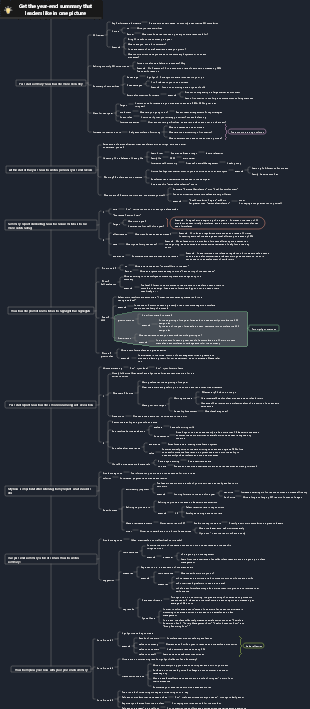
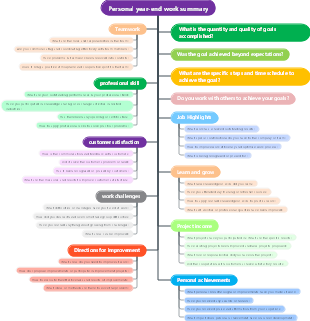
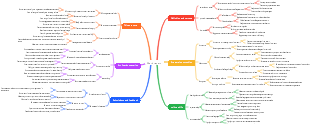
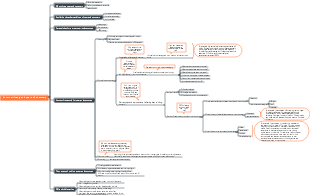
This is a mind map on how to report work in the workplace. The main contents include: four reporting scenarios that are guided by factual explanation, decision support, results display, and problem-solving. Work reports can not only show personal achievements, help performance evaluation and promotion, and make efforts recognized; at the same time, it helps us to promptly feedback problems and seek resources and support; it can also promote teamwork, make information flow smoother and avoid duplicate work; finally prepare a report The process can sort out ideas, summarize experience, and help improve personal abilities.
Edited at 2025-01-14 11:26:28Rumi: 10 dimensions of spiritual awakening. When you stop looking for yourself, you will find the entire universe because what you are looking for is also looking for you. Anything you do persevere every day can open a door to the depths of your spirit. In silence, I slipped into the secret realm, and I enjoyed everything to observe the magic around me, and didn't make any noise. Why do you like to crawl when you are born with wings? The soul has its own ears and can hear things that the mind cannot understand. Seek inward for the answer to everything, everything in the universe is in you. Lovers do not end up meeting somewhere, and there is no parting in this world. A wound is where light enters your heart.
Chronic heart failure is not just a problem of the speed of heart rate! It is caused by the decrease in myocardial contraction and diastolic function, which leads to insufficient cardiac output, which in turn causes congestion in the pulmonary circulation and congestion in the systemic circulation. From causes, inducement to compensation mechanisms, the pathophysiological processes of heart failure are complex and diverse. By controlling edema, reducing the heart's front and afterload, improving cardiac comfort function, and preventing and treating basic causes, we can effectively respond to this challenge. Only by understanding the mechanisms and clinical manifestations of heart failure and mastering prevention and treatment strategies can we better protect heart health.
Ischemia-reperfusion injury is a phenomenon that cellular function and metabolic disorders and structural damage will worsen after organs or tissues restore blood supply. Its main mechanisms include increased free radical generation, calcium overload, and the role of microvascular and leukocytes. The heart and brain are common damaged organs, manifested as changes in myocardial metabolism and ultrastructural changes, decreased cardiac function, etc. Prevention and control measures include removing free radicals, reducing calcium overload, improving metabolism and controlling reperfusion conditions, such as low sodium, low temperature, low pressure, etc. Understanding these mechanisms can help develop effective treatment options and alleviate ischemic injury.
Rumi: 10 dimensions of spiritual awakening. When you stop looking for yourself, you will find the entire universe because what you are looking for is also looking for you. Anything you do persevere every day can open a door to the depths of your spirit. In silence, I slipped into the secret realm, and I enjoyed everything to observe the magic around me, and didn't make any noise. Why do you like to crawl when you are born with wings? The soul has its own ears and can hear things that the mind cannot understand. Seek inward for the answer to everything, everything in the universe is in you. Lovers do not end up meeting somewhere, and there is no parting in this world. A wound is where light enters your heart.
Chronic heart failure is not just a problem of the speed of heart rate! It is caused by the decrease in myocardial contraction and diastolic function, which leads to insufficient cardiac output, which in turn causes congestion in the pulmonary circulation and congestion in the systemic circulation. From causes, inducement to compensation mechanisms, the pathophysiological processes of heart failure are complex and diverse. By controlling edema, reducing the heart's front and afterload, improving cardiac comfort function, and preventing and treating basic causes, we can effectively respond to this challenge. Only by understanding the mechanisms and clinical manifestations of heart failure and mastering prevention and treatment strategies can we better protect heart health.
Ischemia-reperfusion injury is a phenomenon that cellular function and metabolic disorders and structural damage will worsen after organs or tissues restore blood supply. Its main mechanisms include increased free radical generation, calcium overload, and the role of microvascular and leukocytes. The heart and brain are common damaged organs, manifested as changes in myocardial metabolism and ultrastructural changes, decreased cardiac function, etc. Prevention and control measures include removing free radicals, reducing calcium overload, improving metabolism and controlling reperfusion conditions, such as low sodium, low temperature, low pressure, etc. Understanding these mechanisms can help develop effective treatment options and alleviate ischemic injury.
How to report work in the workplace?
Problem-oriented
1. Purpose and function
Focus on problems arising in work, and promote the proper resolution of problems and improve work quality and efficiency by analyzing problems, proposing solutions and demonstrating implementation results.
For example, the follow-up department reports on the problem of excessive product defect rate, and the core is to solve this problem to ensure product quality.
2. Operation method
Have a problem
Clearly point out the problems encountered during the work progress, so that the boss can understand the obstacles to work as soon as possible.
There is a solution
In response to the problems and causes, propose effective solutions and solutions to demonstrate the ability to solve problems.
There is a reason
Deeply analyze the causes of problems, explore the root causes from multiple dimensions, and lay the foundation for solving problems.
3. Content focus
Focus on the issue
Describe the specific manifestations, impacts and severity of the problem in detail.
It explains the negative impact of the increase in product defect rate on cost, delivery time and customer satisfaction.
Dig deeper the reason
Use a variety of analysis methods to explore the root cause of the problem from multiple dimensions and distinguish the main and secondary reasons.
For example, it is analyzed through the fishbone diagram that equipment aging and irregular personnel operation are the main reasons for the increase in defective rate, and fluctuations in raw material quality are the secondary reasons.
Solution and Effect
Focus on explaining the specific content, implementation steps and expected results of the solution, as well as the actual results of problem solving after implementation.
For example, the specific data on the reduction in defective rate after replacing the equipment and standardizing the operating procedures.
IV. Structural framework
The structure of "problem presentation - cause analysis - solution - implementation effect - summary and reflection" is usually adopted.
First point out the problem, then analyze the reasons in depth, then propose and explain the plan, report the implementation results, and finally summarize the experience and lessons.
5. Application scenarios
I'll give you a chestnut
Customer service department customer complaint handling report
Report on the issue of high returns rate
Monthly/quarterly quality report of the production department
Report on the unreached data rate/price optimization of the procurement department
Some dry goods
Follow order
Orders are frequently delayed, there is quality, and the shipment quantity is not enough
purchase
Fabric quality issues
Development
The problem of poor sales of new models
6. Things to note
Describe the problem accurately and clearly
Elaborate on the performance of the problem in detail, including key information such as the time, place, and frequency of the problem.
For example: "Since the third quarter of last year, the C production line in the production workshop will have a short shutdown of 5-8 times per shift, which seriously affects production efficiency."
Analyze the impact of problems, such as negative effects on business processes, costs, quality, customer satisfaction, etc.
For example: “Equipment downtime resulted in a 10% reduction in output per shift, production costs increased by 15% due to additional repairs and delays, and product delivery delays, and customer complaint rates increased by 20%.
Comprehensive and in-depth analysis of the reasons
Use scientific analysis methods, such as fish bone diagram, 5Why analysis method, etc. to explore the root cause of the problem from multiple dimensions.
For example, through the 5Why analysis method, it was found that the equipment was shut down because of wear of parts, while wear of parts was due to the quality of purchased parts, and the quality was due to loopholes in the supplier screening process.
Distinguish between the main reasons and the secondary reasons and focus on explaining the main reasons.
For example: "After analysis, vulnerabilities in the supplier screening process are the main reasons for equipment downtime, while insufficient daily maintenance is the secondary reason."
Propose specific feasible solutions
Propose specific solutions to the root cause of the problem and clarify responsible persons, time nodes and resource needs.
For example: “Develop new supplier screening criteria and the revision is completed within two weeks by the head of the procurement department;
Re-evaluation of existing suppliers and the quality control department completes within one month;
The production department will complete the replacement of parts that do not meet the standards within next week and is expected to invest 50,000 yuan. ”
Explain the expected results of the solution
For example: “After implementing these measures, the number of equipment downtime is expected to be reduced to less than 1-2 times per shift, with production efficiency increased by more than 15%, and product delivery punctuality rate increased to more than 95%.
Show outstanding results
Compare the changes in key indicators before and after problem solving, such as output, cost, quality, etc.
For example: “After taking measures, the number of equipment downtimes was reduced to 1 shift per shift, output increased by 20%, production costs decreased by 10%, and customer complaint rates dropped below 5%.
Emphasize the positive impact of problem solving on overall business
For example: "Effectively solving the problem of equipment downtime not only ensures the stable operation of production, but also enhances the company's reputation among customers, laying the foundation for obtaining more orders."
Result display-oriented
1. Purpose and function
Focus on presenting positive results achieved in work, highlighting the contribution and value of the team or individual by demonstrating performance and performance, and strengthening the recognition of the value of the work.
For example, the sales volume achieved by the sales team, the number of newly expanded customers, etc., will be displayed at the end of the quarter.
2. Operation method
Have a goal
Explain the clear goals set before the work is carried out, let the boss understand the work direction, and lay the foundation for the comparison of results.
Have action
Details the specific actions and measures taken to achieve the goals and highlights the implementation process.
Have fruitful results
Focus on reporting the final achievements, displaying work results, and echoing goals.
3. Content focus
List of results
Highlight the work results and quantify them as much as possible
Such as specific data on sales growth, market share improvement, and cost reduction.
Impact of results
Explain the positive impact of results on business development, team, company image, etc.
For example, new product releases enhance brand awareness and attract high-end customers.
Brief description of the process
Briefly mention the key processes and strategies for achieving results, demonstrating efforts and wisdom.
For example, emphasize the promotion of results by marketing strategies and technological innovation means.
IV. Structural framework
The common structure is "goals - outcomes - strategy - impact".
The work goals are explained at the beginning, the main body shows the results, explain the strategies for achieving results, and finally emphasize the impact of results.
5. Application scenarios
Give a chestnut
Project R&D Results Report
Report on improving store operation indicators
Sales team monthly/quarterly/annual performance report
Some dry goods
Follow order
Improved shipping time
purchase
Cost optimization results
Development
Hot design results
5. Things to note
Report structure layout
Pre-key results
Abandon the method of listing results step by step, and put key results in a prominent position at the beginning.
For example, “In the past 2024, we have successfully achieved the key goal of 15% performance growth, which has brought new market opportunities and competitive advantages to the company. I will report in detail the achievement process below.”
Let your boss focus on key achievements as soon as possible.
Set up independent chapters
If there is a lot of reporting content, set up special and independent chapters or sections for key results.
For example, "Core Achievements Analysis" distinguishes it from other general achievements and highlights its importance through structural division.
Content presentation skills
Quantitative results data
Speak with specific and precise data to enhance the persuasiveness of results.
For example, “By optimizing the production process, the product defect rate has dropped from 8% to 3%, and this alone has increased monthly sales by 10%.
Compared with fuzzy expressions, precise data makes the results more intuitive and measurable.
Comparatively outstanding results
Using vertical comparison, presenting differences from past stages
For example, “Sales increased by 23% compared with the same period last year” and a 36% month-on-month increase compared with the previous quarter.
Conduct horizontal comparisons to show the advantages of competitors and industry averages.
For example, “The industry average of the 3-minute response rate is 90%, and we have reached 95%, leading the industry by 5%
Comparison can highlight the value and significance of the results.
Emphasize the scope of influence
Explain the positive impact of key achievements on different levels of the company
For example, "The project results not only increase the work efficiency of the department by 40%, but also optimize the cross-departmental collaboration process, improve overall operational efficiency, and lay a solid foundation for the promotion of the company's strategic goals", showing the wide influence of the results.
"After optimizing supply chain management, it not only reduces the current procurement costs, but also ensures the stability of the quality and efficiency of procurement sources, laying a solid foundation for future product cost control and quality improvement."
Visual assisted enhancement
Make a chart
Use histograms, line charts, pie charts, etc. to intuitively present the relationship between the changing trends and proportions of key results.
For example, using a bar chart to compare sales in different periods, or using a pie chart to display market share, so that the data relationship is clear at a glance.
Use special formats
In the document, the data and titles related to key results are highlighted by bolding, changing color, and enlarging the font size;
In the report PPT, set a unique background, color matching or animation effect for the key achievement page to attract attention.
Decision support-oriented
1. Purpose and function
It mainly provides comprehensive and accurate information to superiors or relevant decision makers, and assists them in making scientific and reasonable decisions through analysis and evaluation of different plans.
If a company plans to open up new markets, report on the research and analysis of each potential market and enter the plan to assist in decision-making on whether to enter and how to enter.
2. Operation method
Have insight
Based on in-depth analysis of the current work situation or market conditions, put forward your own opinions and discoveries, and provide decision-making reference information for your boss.
Have suggestions
Based on the insight results, give targeted solution suggestions or optimization strategies and clarify the direction.
Planned
Focusing on the suggestions, formulate detailed follow-up work plans and arrangements, clarify future action paths, and facilitate the boss’ decision-making progress.
3. Content focus
Comprehensive information
Provide all-round information related to decision-making, including market environment, competitive situation, internal resources, etc. For example, decisions for developing new markets cover the target market size, competitor layout, and own advantages and disadvantages.
Program evaluation
A number of feasible solutions are proposed, and the advantages and disadvantages, cost-effectiveness and risk levels of each solution are analyzed and compared in detail.
Clarify suggestions
Based on the analysis, clear tendency suggestions and reasons are given based on the decision-making goals.
IV. Structural framework
Generally, it is "decision background—information analysis—program list—program evaluation—proposal proposals.”
First introduce the decision-making background, analyze relevant information, list plans, evaluate each plan, and finally give suggestions
IV. Application scenarios
Give a chestnut
Report on whether to expand new women's clothing categories
Decision-making report on whether to expand new platforms
Whether to launch a private brand
Some dry goods
Follow order
Whether to replace the cooperative factory
purchase
Decision on expanding fabric procurement channel
Development
Design direction decisions for next season
5. Things to note
Clarify decision-making background goals
Clearly explain the background situation faced by decision-making, including market environment, industry trends, company status, etc.
For example: "As the industry competition intensifies, competitors launch new products one after another, and the market share is gradually being divided. The company's current market sales of product B are on a downward trend. In this context, we need to decide whether to upgrade product B."
Determine the goals to be achieved in decision-making, such as increasing market share, increasing profits, reducing costs, etc.
For example: “The goal of this decision is to increase its market share by 10% and sales by 20% in the next year through the upgrade of Product B.”
Provide comprehensive and objective information
Collect and present various information related to decision-making, including market research data, competitor analysis, technical feasibility reports, financial budgets, etc.
For example: "Market research shows that consumers' demand for product B's functional improvements is concentrated in three aspects; competitors' similar upgraded products responded well after the launch, with market share increasing by 8-12%; technical department evaluation, product B The upgrade is technically feasible, with an estimated R&D cycle of 6 months; the financial department budgeted that the upgrade project would require RMB 1 million, and the estimated return cycle would be 18 months."
Ensure the authenticity, accuracy and timeliness of information and explain the source of information.
For example: the market research data comes from the professional research institution XX Company, whose samples cover YY major cities across the country and are widely representative;
Competitor information comes from public information and industry exhibition collection.
Comparative analysis of multiple solutions to show advantages and disadvantages
Propose multiple feasible decision-making plans to avoid single solutions leading to decision-making limitations.
For example: "For the upgrade of product B, we have proposed three solutions. The first is to optimize functions on the existing basis, the second is to comprehensively upgrade appearance and functions, and the third is to launch a new product in combination with new technologies. ”
Each plan is analyzed and compared in detail in terms of advantages, disadvantages, risks, costs, benefits, etc.
For example: "The advantages of plan one are low costs and short R&D cycle, but limited improvement in market competitiveness;
Solution 2 can significantly improve product competitiveness, but the cost is high, and the risk is that it may exceed the budget;
Solution 3 is innovative, but it is technically difficult and has a high risk of failure.
From the perspective of revenue forecast, Plan 2 expects market share to grow by 15%, sales to grow by 30%, and Plan 3 expects market share to grow by 20%, sales to grow by 40%, but the investment cost is also higher. ”
Give clear and feasible suggestions
Based on the comparison and analysis results of the plan, and combined with the decision-making goals, a clear recommended plan is given.
For example: "Considering all factors, Plan 2 has achieved a good balance between cost, risk and benefit, which is more in line with our decision-making goals of increasing market share and sales. It is recommended to use Plan 2 to upgrade Product B. ”
Briefly explain the possible problems and response measures that may be encountered during the implementation of the proposed plan to enhance the feasibility of the proposal.
For example: "Using Plan 2 may face the risk of budget overspending. We recommend strengthening cost monitoring during the project implementation process and establishing a budget early warning mechanism. Once signs of cost overspending are found, the project plan will be adjusted in a timely manner."
Guided by factual explanation
1. Purpose and function
It aims to objectively and accurately present the actual situation in the work, provide comprehensive and real information to superiors, colleagues, etc. so that they can understand the progress and current situation of the work, and assist them in making relevant judgments or decisions.
For example, the financial department regularly reports to the management the revenue and expenditure of the company's business segments to let the management grasp the company's financial status.
2. Operation method
Have data
Use specific data to support the work content, make the report more convincing and provide an objective factual basis.
Have analysis
Carry out in-depth analysis of the data, explore the problems and trends reflected behind the data, and extract key information from facts.
There is a countermeasure
Based on the analyzed situation, formulate practical response strategies and methods to complete the process from discovery to resolution.
3. Content focus
Objective facts
Accurately state all kinds of facts in the work, including events, data, time, location, etc., without subjective evaluation.
For example, record the meeting time, location, participants and discussion content.
Detailed and appropriate
Focusing on the theme of the report, the key facts are elaborated in detail and the secondary facts are briefly mentioned.
For example, in the project report, the progress of key tasks is focused on, and the secondary tasks are mentioned.
IV. Structural framework
Structures are mostly divided according to chronological order, importance or category.
For example, report project progress according to time, or report different business situations according to the importance.
"Abstract - Partial Description - Summary".
The beginning summarizes the theme and key points of the report, describes various facts in the middle, and emphasizes important content at the end.
IV. Application scenarios
Give a chestnut
Sales and delivery report
Daily store operation report
Feedback on warehouse inventory turnover
Order follow-up/sales/procurement/development daily work report
Some dry goods
Follow order
Daily order status report
purchase
Fabric procurement progress report
Development
Style progress report
5. Things to note
Ensure the facts are accurate
Accurate data
Indicate the source of facts to enhance credibility.
For example: "According to the latest data provided by the company's financial department, the company's net profit in the third quarter was RMB 5 million;
According to on-site statistics from the production department, the defective rate in September will reach 4.8%. ”
The event is true
Strictly verify all facts involved in the report to ensure that data, events, time, location and other information are accurate.
For example, the referenced data must be repeatedly checked and the event description must be consistent with the actual occurrence.
Highlight the key core facts
Screening key facts
Focusing on the topic of reporting, filter out the most important and representative facts.
For example, when reporting on the progress of the project, the completion of key milestones is focused on, "The project has completed core technology research and development and product prototypes, entering the testing phase two weeks ahead of schedule."
Use contrast, cause and effect and other relationships to highlight the importance of key facts.
For example: "Sales increased by 30% in the quarter compared to the same period last year, mainly because the company devoted its resources to Shein and TK and opened two new stores."
Avoid irrelevant information
Remove the details that are not related to the topic and keep the report concise and clear.
If you report on product sales, don’t elaborate on trivial improvements that do not affect sales in the production process.
Logically express the facts
Choose a reasonable structure
Choose the appropriate logical order to organize facts, such as time order, order of importance, order of causality, etc.
For example, when reporting the development process of the event, the chronological sequence can be adopted, "Project 1 is launched, team formation is completed on the 8th, market research is carried out on the 15th, and preliminary plans are formulated on the 20th."
Use connection words
Use conjunctions and transitional words to make the logical relationship between facts clearer.
For example, "first... second... last", "because... so", "on the one hand... on the other hand", etc., help the audience keep up with the reporting ideas.
Demonstrate objectively and neutrally
Avoid subjective judgment
Avoid adding too much subjective evaluation and personal emotional colors to the report and only state objective facts.
For example, instead of saying “this project is progressing badly”, it should be said that “the project is currently lagging behind by 10 days and has a budget of 15% overspending.”
Distinguish factual perspectives
If you need to express your opinions, you should conduct objective analysis based on facts and distinguish them from facts.
For example: "From the recent sales data, the sales volume of products in a certain region continues to decline. Based on this, I think it may be necessary to adjust the marketing strategy of the region."