 Wondershare EdrawMind
MindMap Gallery Hegel - 《Small Logic》
- 27
Hegel - 《Small Logic》
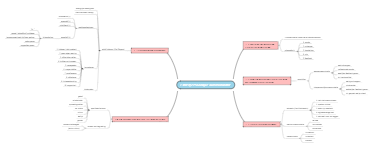
This is a mind map about Hegel's "Small Logic", which mainly includes: the third concept theory, the second essential theory, the first ontology, and the preliminary provisions of the concept of logic.
Edited at 2025-01-11 18:00:47
- Rumi 10 spiritual high-dimensional awakenings
Rumi: 10 dimensions of spiritual awakening. When you stop looking for yourself, you will find the entire universe because what you are looking for is also looking for you. Anything you do persevere every day can open a door to the depths of your spirit. In silence, I slipped into the secret realm, and I enjoyed everything to observe the magic around me, and didn't make any noise. Why do you like to crawl when you are born with wings? The soul has its own ears and can hear things that the mind cannot understand. Seek inward for the answer to everything, everything in the universe is in you. Lovers do not end up meeting somewhere, and there is no parting in this world. A wound is where light enters your heart.
- Pathophysiology - Heart failure
Chronic heart failure is not just a problem of the speed of heart rate! It is caused by the decrease in myocardial contraction and diastolic function, which leads to insufficient cardiac output, which in turn causes congestion in the pulmonary circulation and congestion in the systemic circulation. From causes, inducement to compensation mechanisms, the pathophysiological processes of heart failure are complex and diverse. By controlling edema, reducing the heart's front and afterload, improving cardiac comfort function, and preventing and treating basic causes, we can effectively respond to this challenge. Only by understanding the mechanisms and clinical manifestations of heart failure and mastering prevention and treatment strategies can we better protect heart health.
- Pathophysiology - ischemia - reperfusion injury
Ischemia-reperfusion injury is a phenomenon that cellular function and metabolic disorders and structural damage will worsen after organs or tissues restore blood supply. Its main mechanisms include increased free radical generation, calcium overload, and the role of microvascular and leukocytes. The heart and brain are common damaged organs, manifested as changes in myocardial metabolism and ultrastructural changes, decreased cardiac function, etc. Prevention and control measures include removing free radicals, reducing calcium overload, improving metabolism and controlling reperfusion conditions, such as low sodium, low temperature, low pressure, etc. Understanding these mechanisms can help develop effective treatment options and alleviate ischemic injury.
Hegel - 《Small Logic》
- Rumi 10 spiritual high-dimensional awakenings
Rumi: 10 dimensions of spiritual awakening. When you stop looking for yourself, you will find the entire universe because what you are looking for is also looking for you. Anything you do persevere every day can open a door to the depths of your spirit. In silence, I slipped into the secret realm, and I enjoyed everything to observe the magic around me, and didn't make any noise. Why do you like to crawl when you are born with wings? The soul has its own ears and can hear things that the mind cannot understand. Seek inward for the answer to everything, everything in the universe is in you. Lovers do not end up meeting somewhere, and there is no parting in this world. A wound is where light enters your heart.
- Pathophysiology - Heart failure
Chronic heart failure is not just a problem of the speed of heart rate! It is caused by the decrease in myocardial contraction and diastolic function, which leads to insufficient cardiac output, which in turn causes congestion in the pulmonary circulation and congestion in the systemic circulation. From causes, inducement to compensation mechanisms, the pathophysiological processes of heart failure are complex and diverse. By controlling edema, reducing the heart's front and afterload, improving cardiac comfort function, and preventing and treating basic causes, we can effectively respond to this challenge. Only by understanding the mechanisms and clinical manifestations of heart failure and mastering prevention and treatment strategies can we better protect heart health.
- Pathophysiology - ischemia - reperfusion injury
Ischemia-reperfusion injury is a phenomenon that cellular function and metabolic disorders and structural damage will worsen after organs or tissues restore blood supply. Its main mechanisms include increased free radical generation, calcium overload, and the role of microvascular and leukocytes. The heart and brain are common damaged organs, manifested as changes in myocardial metabolism and ultrastructural changes, decreased cardiac function, etc. Prevention and control measures include removing free radicals, reducing calcium overload, improving metabolism and controlling reperfusion conditions, such as low sodium, low temperature, low pressure, etc. Understanding these mechanisms can help develop effective treatment options and alleviate ischemic injury.
- Recommended to you
- Outline




"Small Logic" Hegel
Preliminary provisions on the concept of logic
The first attitude of thought toward objectivity
The essence of metaphysics: As a traditional philosophical thinking paradigm, metaphysics adheres to rationalism and tries to explore the essence of things through thinking. It firmly believes that the provisions of thinking are naturally equivalent to the provisions of things, and directly recognize the provisions of thinking as the basic provisions of things without thinking. For example, when the ancient Greek philosopher Thales explored the origin of the world, he used the abstract concept of "water" to determine it as the foundation of all things. This judgment is based on an intuitive, uncritical and reflective thinking, and water is used to describe it. This single element serves as the fundamental basis for explaining the generation and existence of all things in the world.
Limitations: Its way of thinking is isolated, static and one-sided. When thinking about problems, metaphysics often separates all aspects of things. For example, when discussing the relationship between matter and spirit, they absolutely oppose the two, and cannot grasp the essence of things from the perspective of holistic and connection. This way of thinking makes it difficult to reveal the deep connections and development laws between things, and can only stay at the surface and fixed cognitive level of things. For example, when explaining the phenomenon of motion, metaphysics often finds difficult to understand the continuity and change of motion and falls into confusion about the nature of motion.
Category Application: Metaphysics directly defines things with abstract categories such as "existence", "entity", and "causality". For example, in the definition of God, defining God as an absolute existence, this way of defining lacks a dialectical understanding of concepts. It ignores the contradictions and developments within the concept and simply fixes the concept of God, thus easily falling into arbitrary theory, that is, asserting the correctness of a certain point without sufficient argumentation, lacking consideration of other possibilities.
The second attitude of thought toward objectivity
Empiricism
Core proposition: Empiricism clearly advocates that knowledge comes from experience, and believes that all ideas are acquired through sensory experience. Experience is the only reliable source of knowledge, and real knowledge can only be obtained through perception and observation of specific things. For example, Newton summarized the law of universal gravitation through careful observation and in-depth research on a large number of empirical phenomena such as apple landing and celestial bodies. This law is not produced out of thin air, but is based on countless observations and measurements, and is summarized from specific empirical facts.
Source of experience: Its experience mainly depends on two aspects. One is direct sensory perception, that is, directly perceive phenomena in the external world through human senses such as vision, hearing, touch, smell and taste. For example, we see the redness and roundness of the apple through our eyes, and perceive its hardness and temperature through touch. The second is scientific research based on rigorous observation and experiment. In the field of science, accurate observation of the reactions of matter in chemical experiments, physicists' detection of microscopic particles through experimental equipment, etc., are important ways to gain experience.
Insufficient: Although empiricism values experience, it has obvious limitations. Its cognition is often limited to the phenomenon level and it is difficult to touch on the essence and universality of things. Conclusions drawn through empirical induction are not inevitable, but are just a probabilistic inference. For example, people have seen white swans many times in long-term observations and summarized the conclusion that all swans are white. However, when the black swan was discovered in Australia, this conclusion based on empirical induction was overturned. This shows that empirical induction cannot cover all possible situations, and there is a problem of incomplete induction.
Critical Philosophy
Kant's Criticism: Kant initiated a criticism of traditional metaphysics, deeply examining the boundaries of reason and the source and scope of knowledge. He believes that it is inappropriate to use reason to blindly explore transcendent objects, such as God, the soul, the whole world, etc. without critically examining reason itself. Kant advocates self-criticism of reason and clarifying the ability and boundaries of reason.
Comprehensive judgment of innate nature: Kant proposed that knowledge is organically combined with acquired experience. He believes that there is a special form of judgment - innate comprehensive judgment. Taking the mathematical proposition "5 7 = 12" as an example, this proposition is not simply analytical proposition (such as "all bachelors are unmarried", and predicates can be obtained by analyzing subjects), it needs to be completed with the help of intuition and experience. We need to imagine the process of adding 5 objects and 7 objects in our minds to get the result of 12, which depends on innate numbers and operation forms, and also requires the participation of acquired experience. In natural science, the proposition such as "objects have weight" is also an innate comprehensive judgment. It not only contains the innate cognitive form of objects, but also combines the acquired empirical perception of object weight.
Phenomenon and matter self: Kant divided the phenomenon world and matter self self. The phenomenon world is a world we can recognize through senses and innate cognitive forms. What it presents to us is the representation of things. For example, the color, shape, size and other attributes of the object we perceive are all contents of the phenomenon world. The body of things itself is the real existence of things themselves, which is independent of our cognition and cannot be directly recognized by us. For example, the red flower we see, red, shape, etc. is the phenomenon presented to us by the flower, and the flower itself is separated from the true appearance of our perception, that is, the object itself, which is unaware of. Kant believes that human cognitive abilities are limited to the phenomenal world. For matter itself, we can only think about it, but we cannot obtain certain knowledge.
The third attitude of thought toward objectivity
Direct epistemological view: Direct epistemological theory believes that people can directly recognize the truth through intuition, and the grasp of the truth does not require cumbersome rational reasoning and argumentation processes. From this perspective, there is a direct way of understanding beyond rational thinking that can give us instant insight into the essence of things. For example, in religious belief, many believers’ perception of the existence of God is not based on rational arguments, but through inner perceptions, mysterious experiences and other direct ways, they feel the existence of God, and believe that this is a direct recognition of the truth. The embodiment of
Representative: Jacobi is an important representative of direct epistemology. He emphasized that in the realm of faith and emotion, people can directly understand the absolute truth. He believes that rational thinking is finite and conditional, and cannot reach the infinite and unconditional absolute, such as God. Only through the power of faith and emotion can we break through the limitations of reason and establish direct connection with the absolute.
One-sidedness: Direct epistemology denies the role of reason in the cognitive process too absolutely, which makes its cognition lack systematicity and logic. Because it only relies on intuition and emotion, it is difficult to distinguish between real intuition and subjective imagination. Different people may have different intuitions and perceptions, and lack objective standards to judge their authenticity and reliability. For example, in the perception of some supernatural phenomena, some people rely on intuition to believe that there is supernatural power, but this intuition lacks rational verification and is likely to be just subjective imagination or misunderstanding.
Further provisions and division of logic concepts
Logic credits sub-subject basis: The sub-subject basis of logic is different stages and forms of thinking development. Hegel believes that thinking’s understanding of things is a process of continuous deepening, from the initial superficial and direct understanding of things, gradually deepening into the essence of things, and ultimately achieving a comprehensive and specific grasp of things. This process corresponds to three stages: ontology, essentialism and conceptualism, which show the development process of thinking from low to high, from abstract to concrete.
Ontology: Ontology focuses on the direct and superficial forms of existence of things, and is the starting point of thinking and cognition. At this stage, thinking mainly explores the quality, quantity, scale and other predicates of things. For example, when we observe an apple, the first thing we see is the determination of its color and shape, as well as its determination of its size and weight, which are all ontological levels. The concepts in ontological affairs are the most abstract and direct, and lack internal connections and depth.
Essence Theory: Essence Theory deeply explores the inner essence and laws of things. It reveals the causal relationships, interactions, etc. behind things, and is a deepening of ontology. In the essentialist stage, thinking is no longer satisfied with understanding the superficial phenomena of things, but rather explores the essence behind the phenomena. For example, when we study the growth process of apples, we will find that it is affected by various factors such as sunlight, moisture, soil, etc. There is a causal relationship and interaction between these factors. This is the understanding at the essentialist level. The concepts in essentialism begin to have internal connections and contradictions, and promote the development of thinking through the relationship between opposition and unity.
Conceptualism: Conceptualism realizes the concrete and comprehensive grasp of things by thinking. It unifies existence and essence into concepts, achieving the highest awareness of truth. In the conceptual stage, thinking recognizes that the concept of things is an organic whole that contains all the predicates of things. For example, for the concept of Apple, it not only includes the prescriptive aspects of Apple's quality, quantity, essence, etc., but also includes a broader content such as Apple's status in the entire ecosystem and its relationship with humans. The concepts in conceptualism are concrete and developing. Through self-negation and self-development, a comprehensive understanding of things can be achieved.
Article 1 Ontology
quality
Existence: As the first and most abstract concept in ontology, existence represents pure and unpredictable directness. It has no specific content or characteristics, and is almost "none". For example, when we think about something without any attributes, this thing is the initial form of existence. Existence is the starting point of thinking, it is the basis for our understanding of the world, but due to its lack of prescriptiveness, it is difficult to describe it in detail. Hegel believes that existence and non-existence are the same because they both lack specific regulations and only describe this pure directness from different perspectives.
Fixing: Fixing is a prescribed existence, which distinguishes things from others and obtains specific characteristics. For example, the "red" of a red apple is a fixed regulation, which distinguishes this apple from other colors of apples or other things. Determined is a further development of existence, which gives existence specific content and characteristics. Determination contains the predicate nature of quality, which is the basis of the existence of things. If this quality is lost, things will no longer be themselves. For example, if an apple loses its quality as an apple, it is no longer an apple.
Self-existence: Self-existence is a higher stage of existence development, it manifests itself as its own independent existence and is exclusive. For example, an atom exists as a self, and it is independent of other atoms and has its own independence and integrity. Self-existence is a negation of the negation of the fixed position, which overcomes the finiteness and relativity of the fixed position. In self-existence, things distinguish themselves from others, and at the same time they contain the relationship to others. For example, a person as a self-existent, has his own personality and independence, but at the same time has social relations with others. Self-existence is the highest stage of quality in ontology, which lays the foundation for the transition of vectors.
quantity
Pure quantity: Pure quantity is the initial, unspecified quantity. It only involves the general concept of quantity and has no specific value. For example, the extensibility of space is a pure quantity, which represents the extension of space in various directions, but does not have a specific measure. Pure quantity is the initial form of quantity, which is the abandonment of matter, that is, it not only denies the prescriptive nature of matter, but also retains the existence of matter. In pure quantities, the qualitative differences of things are abstracted, only considering their quantitative aspects. For example, when we talk about a bunch of apples, we do not consider the differences in color, size and so on the number of apples.
Quantitative: Quantitative is a quantity with a certain value that can be used to accurately measure things. For example, a bottle of water has a capacity of 500 ml, and “500 ml” is the quantification. Quantification is a further development of pure quantities, which makes the quantities specific. Quantification can be discrete, such as the number of apples, or continuous, such as the volume of water. Quantitative prescriptiveness allows us to accurately compare and calculate things. For example, by comparing the capacity of different bottles, we can determine which bottle contains more water.
Degree: Degree represents the level or intensity of the quantity of a thing, reflecting the depth and internal regulations of the quantity. For example, the concentration of the solution reflects the relative content of the solute in the solvent. Degree is a quantitative deepening, which emphasizes the intrinsic relationship and proportion of quantity. In degree, the magnitude of a quantity is not only a numerical value, but is also closely related to the nature and function of things. For example, the dosage of a drug needs to be determined based on the severity of the disease, and different degrees of the disease require different doses of the drug. The concept of degree lays the foundation for the emergence of scales.
scale
The unity of quality and quantity: Scale is the boundary between things maintaining a specific quality and quantity, and it is the organic unity of quality and quantity. For example, within a certain temperature range, water remains liquid, which is the scale of the liquid state of water. Within this scale, the mass (liquid state) of water remains unchanged, while the quantity (temperature) varies within a certain range. Scale is the inevitable result of the development of quality and quantity in ontology, and it reflects the unity of stability and change in things. When the quantity of things changes beyond the scope of the scale, the quality of things will change.
Quantitative change and qualitative change: Quantitative change accumulates to a certain extent and will cause qualitative change. Break through the boundaries of scale and the qualitative change of things. For example, continuous heating to 100 degrees Celsius, water will change from liquid to gaseous. This is a typical example of quantitative change causing qualitative change. In the quantitative change stage, the quality of things remains relatively stable, but the changes in quantity gradually accumulate. When a certain critical point (the boundary of the scale) is reached, qualitative change will occur and things will enter a new qualitative stage. Qualitative change will cause new quantitative change, and this cycle will promote the development of things. For example, after water becomes water vapor, as the temperature continues to rise, the volume of water vapor will continue to increase, which is a new quantitative change.
Changes in scale: In the process of development of things, scales are not fixed, and new quality and quantity will form a new scale relationship. For example, during biological evolution, changes in the physiological structure and function of a organism will change the scale of its survival. As the environment changes, organisms need to adapt to new conditions, and their body structure and physiological functions will undergo corresponding changes, thus forming a new relationship between mass and quantity, that is, a new scale. This change in scale reflects the development and evolution of things, and is the unity of quality and quantity of things at different stages.
Chapter 2 Essence Theory
Essence as the basis of existence
Pure reflection regulations
Same: Sameness is not abstract and absolute, but dialectical identity that contains differences. In Hegel's view, things are equivalent to themselves, but this equivalent is reflected in the relationship with other things. For example, "the leaves are green", while the leaves are the same as themselves, they also have the differential attribute of "green". The sameness does not exclude absolute identity of differences, but maintains one's own identity in differences. This dialectical relationship between identity and difference is the key to understanding the essence of things. The concept of the same is the starting point of essentialism, which lays the foundation for further discussion of differences and basis.
Difference: Differences include direct differences, essential differences and contradictions. Direct differences refer to surface and external differences between things, such as two leaves of different shapes, which have differences in shape, size, etc., but this difference does not involve the essence of things. The difference in essence refers to the inherent and essential opposition between things. For example, positive numbers and negative numbers are opposite in nature. This difference is based on the essential provisions of things. Contradiction is the highest stage of differential development, and it is the relationship between opposition and unity within things. Contradiction is the internal driving force that promotes the development of things, because the existence of contradictions promotes the continuous self-denial and self-development of things. For example, in social development, the contradiction between productivity and production relations has promoted social change and progress.
According to: According to the reason for the existence of things, it is the unity of the same and the difference. The existence of a thing does not exist for no reason, but has its own internal basis. For example, a person's success may include factors such as his own efforts, opportunities, and good psychological qualities. According to the core concept in essentialism, it reveals the internal causes and basis of things. According to the provisions not only on things themselves, but also involves the relationship between things and other things. The basis of things is the embodiment of their essence. Through the exploration of basis, we can deeply understand the essence of things.
exist
Being based on the existence: Being produced by the inference is an existence with the inference. According to the basis and reason for existence, without basis, things cannot exist. For example, the existence of an enterprise is based on various basiss such as market demand, financial support, and management teams. These, based on interactions, form the basis for the existence of an enterprise. Existence is an external manifestation of the basis, and it displays the content based on it. Existence and basis are interdependent relationships, and existence reflects the basis according to the decision.
Interdependence: things that exist are interrelated and interdependent to form an organic whole. For example, the existence of various organisms in the ecosystem is interdependent and forms a food chain and a food web. In this organic whole, the existence of every thing is closely related to the existence of other things, and changes in any link may affect the balance of the entire system. This interdependent relationship shows that the existence of things is not isolated, but is determined in their relationship with other things. Things that exist show the integrity and organic nature of the world through interdependence.
Things
Characteristics of objects: Objects have multiple attributes and are the carriers of attributes. For example, metals have various characteristics such as electrical conductivity, thermal conductivity, and ductility, which are reflected by metals. The properties of things are the result of the interaction between things and other things, and they reflect the essence of things. Different objects have different properties, which make things different from each other. The properties of objects are not isolated, but interrelated, and together they constitute the essential characteristics of objects.
Materials and Materials: Materials are composed of materials, but they are different from the simple stacking of materials. For example, a house is composed of materials such as bricks and wood, but the house has its specific structure and function, which goes beyond the material itself. Objects are the unity of matter and form. Materials are the material basis of matter, and form gives objects a specific structure and function. The form of the object allows the material to be combined in a certain way to form an object with specific properties. The concept of matter embodies the dialectical relationship between form and material in essential theory.
Phenomenon
Phenomenon
The sum of phenomena: The phenomenon world is composed of many interconnected phenomena and is the external manifestation of essence. For example, various meteorological phenomena in nature, such as sunny days, rainy days, windy days, etc., form the meteorological phenomena world. These phenomena do not exist in isolation, but are generated by the interaction of various factors such as atmospheric circulation and geographical environment. They generally reflect the natural essence of atmospheric movement. In the social field, market transactions, personnel flow, cultural communication and other phenomena in different industries together form the social phenomenon community, reflecting the essential characteristics of the society's economic structure, cultural traditions and other social characteristics.
The laws of phenomena: There are internal laws behind phenomena, and these laws are the manifestation of essence. For example, the phenomenon of celestial bodies following the laws of gravity and other laws. Planets orbit the sun's elliptical orbit. The seemingly complex and diverse changes in the position of celestial bodies are actually based on the laws of gravity. In electromagnetic phenomena, current, voltage and resistance follow Ohm's law. This law is summarized through the study of various electromagnetic phenomena, revealing the inherent connection of the essence of electromagnetic. An important task of scientific research is to reveal these laws from complex phenomena to better understand and grasp the essence.
Content and form
Relationship: Content determines form, and form reacts to content. For example, an excellent literary work, its profound ideological content determines the appropriate literary genre (form). For example, Tolstoy's "War and Peace", grand historical narratives, profound human nature discussions, etc., determines it to The novel is presented in the form. The appropriate form can better display the content. This novel vividly displays the human nature and social changes in the background of war and peace through delicate character portrayals, multi-line narratives and other forms. In artistic creation, content innovation often promotes changes in form, and new art forms will also inspire creators to explore new content expressions.
Diversity of forms: The same content can be expressed in various forms. Just as a historical story can be presented through different forms such as novels, movies, dramas, etc. Taking the historical story of the Three Kingdoms as an example, the novel "Romance of the Three Kingdoms" shows a magnificent historical picture with written narratives; the movie "Red Cliff" interprets the story of the Three Kingdoms through wonderful pictures and grand war scenes; on the stage of the drama, unique singing and reciting , character appearances create the image of the Three Kingdoms. Different forms express the same content from different angles and different artistic means, which meets the aesthetic needs of different audiences and enriches the communication channels and expression effects of the content.
relation
Whole and part: The whole is composed of parts, but the whole is not a simple addition of parts. For example, the human body is a whole composed of various organs, and each organ cooperates with each other to make the human body have a total life activity function. The heart is responsible for blood circulation and the lungs exchange gas. They form the human body together with other organs, and each organ has its own specific functions and positions in the human body as a whole, and cooperates with each other to complete life activities. In a social organization, an enterprise is composed of different departments, each department performs its own duties and works together to promote the development of the enterprise. The overall efficiency of the enterprise is greater than the sum of the efficiency of each department.
The expression of force and force: Force can be expressed through its expression, and the expression of force is a proof of the existence of force. For example, magnetic force is manifested by attracting ferromagnetic matter. When the magnet attracts iron nails, the phenomenon that we intuitively see is attracted by iron nails is a manifestation of magnetism. In mechanical movement, friction is manifested by changes in the moving state of the object, such as the slowdown of the speed when the car is braked, which reflects the effect of friction. The expression of force and force are interdependent. Without the expression of force, it is difficult for us to perceive the existence of force; on the contrary, the expression of force also depends on the existence of force.
Inside and Outside: The inside is the essence, the outside is a phenomenon, the inside determines the outside, and the outside expresses the inside. For example, a person's inner qualities will be expressed through his external behavior. A kind and responsible person will show his inner qualities in daily life by helping others and taking work seriously. The internal factors such as the company's corporate culture and values determine the company's external image, business strategy and employee behavior norms, while the external manifestations of the company's product quality and service level reflect their internal management concepts and cultural connotations.
Reality
Entity Relationship
Definition of entity: Existence as a cause is the basis and root of all things. For example, Spinoza believes that nature is an entity, and everything is contained in nature. Nature is the reason for its own existence and does not require external driving force. In Hegel's philosophical system, entities are things that are recognized within themselves and through themselves, and they have independent existence and eternity. For example, in the social field, the state can be regarded as an entity, which is the basis of social order, legal system, etc., and has the logic and laws of its own operation and development.
Entity and conjunction: Entity is the basis of conjunction, and conjunction is the manifestation of the entity. For example, the red and round nature of the apple depends on the apple entity. As an entity, Apple has many kinds of sluts, which do not necessarily belong to Apple, but their changes do not affect the existence of Apple as an entity. In nature, different states of water such as liquid, gaseous, and solid are the uniformity of water, the essence of water, that is, its substance remains unchanged, and the uniformity changes with temperature, pressure and other conditions. An entity shows its richness and diversity through contingency.
causation
Cause and result: Causes trigger results, which have temporal order and logical inevitability. If the sun irradiates cause the temperature of the stone to rise, the sun irradiates is the cause, and the increase in the temperature of the stone is the result. In time, the sun irradiates first and the stone to rise afterwards, and based on the physical principle of heat transfer, there is an inevitable connection between the two. In the social and economic field, adjustments to monetary policy (causes) will lead to changes in market interest rates (results), which is a causal relationship based on the laws of economic operation. Cause and effect are an important clue to understanding the development and changes of things, and help us explore the root causes behind events.
The complexity of cause and effect: There are complex situations such as one cause and multiple result, multiple cause and one result, and mutual cause and effect. If a heavy rain may cause floods, landslides and other results, this is one cause and multiple consequences; the success of a company may be due to multiple reasons such as good market strategy, excellent product quality, and efficient management team. This is more Cause and effect; in the ecosystem, vegetation coverage rate and soil erosion are mutually causal. Reduced vegetation coverage rate will aggravate soil erosion, and soil erosion will further damage vegetation and form a vicious cycle. Understanding the complexity of causal relationships helps us analyze problems comprehensively and accurately.
interaction
Effect and reaction: Things influence and restrict each other. For example, in mechanics, two objects collide with each other, exerting force and reaction force on each other. In social interaction, communication and interaction between people is also a process of interaction. The verbal behavior of one party will affect the other party's thoughts and behaviors, and vice versa. In international relations, economic, trade, political and diplomatic activities among countries all interact with each other. One country's policy adjustments will have an impact on other countries and will also be countered by other countries.
Transition to concept: Interaction reveals the inner connections of things, laying the foundation for entering conceptualism. Through interaction, we see that things do not exist in isolation, but are in an organic whole. This understanding of integrity and organicity enables us to transcend the relatively isolated and one-sided understanding of things in essential theory, and move towards a comprehensive and specific grasp of things in conceptual theory. Interactions show the integrity and organicity of things, prompting us to understand the essence and development laws of things from a higher level.
Chapter 3 Conceptual Theory
Subjective concept
The concept itself
Universality: It has extensive coverage and can be applied to multiple objects. For example, the concept of "animal" covers all individual animals, whether it is birds flying in the sky, fish swimming in the water, or animals running on land, which are all included in the universal concept of "animals". Universality is not a simple summary of specific things, but an abstract refinement of the essential characteristics of things. It abandons the differences between individual things and retains their shared essential attributes.
Speciality: It is a specific differentiation of universality, which makes the concept specific and prescriptive. For example, "mammals" are a special category of the concept of "animals", which have special regulations such as viviparous growth and breastfeeding, which distinguish mammals from other animals. The particularity is further refined on the basis of universality, and by giving the concept specific attributes and characteristics, the concept is more specific and clear. It is the bridge between universality and individuality, which not only reflects the essence of universality, but also contains the uniqueness of individual things.
Individuality: Unifying universality and particularity with oneself is a concrete and realistic existence. For example, a specific cat is both a universal embodiment of the "animal" and has the characteristics of a special species of "cat". At the same time, as an individual, it has unique characteristics such as appearance and personality. Individuality is the realization of concepts, which enables abstract concepts to be presented in concrete things. Individuality does not exist in isolation, but is interdependent and interconnected with universality and particularity, and together form a complete concept.
judge
Qualification judgment: judge the nature of things, such as "this flower is red", the focus of judgment is on the qualitativeness of things. Qualitative judgment is the most basic form of judgment. It determines whether things have a certain nature through affirmation or negation. This judgment is relatively simple and direct, but it is the starting point for us to understand things and helps us initially distinguish the nature of different things.
Quantity judgment: It involves judgments about the quantity of things, such as "some apples are sweet", focusing on the quantity range of things. The judgment of quantity is based on the judgment of quality, and further describes the quantitative characteristics of things. It can be a full-name judgment (such as "all metals are conductive"), a special-name judgment (such as "some animals can fly") or a single-name judgment (such as "this bird is a parrot"), and the judgment forms of different quantities reflect the We understand the different degrees of our understanding of the quantity of things.
Relationship judgment: judge the relationship between things, such as "the sun is larger than the earth", which emphasizes the comparative relationship between two things. Relationship judgment not only focuses on the nature and quantity of things themselves, but also on the interconnection between things. It can be a causal judgment (such as "the ground is wet because it rains", a symmetric relationship judgment (such as "A and B are friends"), a transmission relationship judgment (such as "a is greater than b, b is greater than c, so a greater than c”), etc. Relationship judgment helps us understand the status and connection of things in interactions.
Modal judgment: judge the possibility and necessity of things, such as "it may rain tomorrow", which expresses speculation on the possibility of future events. Modal judgment reflects our level of awareness of the existence state and development trend of things. It includes probable judgment (such as "this experiment may be successful"), actual judgment (such as "the weather is clear today"), inevitable judgment (such as "people will die"), modal judgment makes our understanding of things more comprehensively and in-depth, taking into account the different possibilities and certainties of things' development.
reasoning
Quality reasoning: Reasoning based on the quality regulations of things, such as "metal can conduct electricity, iron is metal, so iron can conduct electricity", based on the material properties of metal conductivity. Qualitative reasoning is the most basic form of reasoning, which draws conclusions about the individual thing by placing it into a category with a certain qualitative. This form of reasoning is widely used in daily life and scientific research, helping us to deduce the properties of specific things from known general properties.
Reflective reasoning: Consider the interrelationships and overall connections between things. For example, analogical reasoning, inference may also be similar in other ways based on the similarity of two things in some ways. For example, the position and structure of Earth and Mars in the solar system are similar. Through analogy reasoning, we speculate that life may also exist on Mars. Reflective reasoning breaks through the limitations of qualitative reasoning and thinks about the connection between things from a broader perspective. It includes inductive reasoning (derive general conclusions from the characteristics of individual things), analogical reasoning and other forms to expand our knowledge and Discovering new laws provides important means.
Inevitability reasoning: reasoning based on the inevitable connection of things, such as "people will die, Socrates is a human, so Socrates will die", based on the inevitability of human death. Necessary reasoning is a form of reasoning based on the nature and laws of things, and its conclusions are inevitable. Inevitability reasoning includes blunt reasoning (such as "all mammals are viviparous, whales are mammals, so whales are viviparous"), hypothetical reasoning (such as "If it rains today, the ground will be wet, and it rains today. , so the ground is wet”), selective reasoning (such as “either A, or B, not A, so B”), inevitable reasoning helps us to deduce reliable conclusions from known inevitable connections, Deeply understand the essence and laws of things.
object
Mechanical
External relationship: The relationship between objects is external, accidental, and lacks internal organic connection. Like a pile of stones scattered on the ground, the positional relationship between them is random, and their connection is only spatial adjacent or contact, without internal purpose or interdependence. In mechanical movement, the collision and pushing between objects are also based on the action of external forces, rather than on the inherent essential connection.
Mechanicity of form: manifested as a simple arrangement and combination of objects, such as mechanical assembly of internal parts of the clock, and each part is combined in a specific form to achieve the timing function. Each part has its fixed position and function, and they interact with each other through mechanical connections and operate according to established rules. This mechanical combination emphasizes formal order rather than based on the internal properties and purposes of the object itself.
Differential mechanics: There are certain differences and interactions between objects, but this effect still has mechanical characteristics. For example, when objects of different mass move under gravity, although the different mass of objects lead to different states of motion, their motion patterns still follow the principles of mechanical mechanics and are mechanical movements generated based on external gravitational action. Compared with formal mechanicity, differential mechanicity pays more attention to the impact of differences between objects on their interactions, but in essence it still does not escape the scope of mechanicity.
Chemical
Inner connection: There is an inherent chemical affinity between objects, which bind or separate from each other through chemical reactions. For example, hydrogen and oxygen react under certain conditions to form water. This is based on the chemical structure and properties inside hydrogen and oxygen molecules, and they have an inherent tendency to bind to each other. Chemicality emphasizes the interaction between objects based on inherent essential properties, which is based on changes in structure and chemical bonds at microscopic levels such as atoms and molecules.
Chemical process: involves chemical changes in substances, and new substances are generated. Such as acid-base neutralization reaction, new substances such as salt and water are produced. In the chemical process, microscopic changes such as atom recombination, breakage and formation of chemical bonds lead to changes in the properties and composition of macroscopic matter. Chemical processes not only change the external form of matter, but more importantly, they change the essential properties of matter and reflect the internal law of mutual transformation between matter.
The transition from chemical properties to purpose: a certain order and regularity are shown in the chemical process, which contains the trend of development towards purpose. Such as chemical reactions in organisms, serve to achieve the purpose of life activities. In organisms, various chemical reactions are carried out in an orderly manner, and they coordinate and cooperate with each other to jointly maintain the normal physiological functions of organisms. The orderliness and purpose of this chemical reaction implies the transition from chemical properties to higher-level purpose, reflecting the development trend of nature from low to high.
Purpose
Subjective Purpose: The goal set by the subject is subjective. If a person wants to build a house, this is his subjective purpose. The subjective purpose is set by the subject according to its own needs, desires and cognition, which reflects the subject's expectations and pursuit of future states. Subjective purpose is the starting point of purposeful activities, which provides direction and motivation for subsequent actions.
Means: Methods and tools to achieve their goals. For example, the construction materials and construction equipment used when building a house are the means. Means are the bridge connecting subjective purposes and objective reality. By using various means, the subject transforms subjective purposes into concrete actions. The choice and use of means depends on the nature and requirements of the subjective purpose, and is also limited by objective conditions.
The goal achieved: achieve the goal through means and transform the subjective goal into objective reality. If the house is built, the original construction purpose is achieved. The purpose achieved is the unity of subjective purpose and objective reality, which reflects the initiative and creativity of the subject. In this process, the subject not only changes the objective world, but also achieves its own development and improvement. The goal achieved is not the end point of the goal activity, but the starting point of the new goal activity, which triggers the subject to set new goals and pursuits.
idea
life
The process of life: including the stages of life's birth, growth, reproduction, and aging, it is an organic and self-development process. Such as the whole process of a seed germinates, grows, blooms, bears, and withering. In this process, organisms constantly exchange matter and energy with the external environment, and maintain their own life activities through metabolism. The process of life is inherently regular and rhythmic. Each stage has its own specific tasks and characteristics. They are interconnected and influenced by each other, and together form the complete process of life.
The unity of life: Life is the unity of the soul and the body. The two are interdependent and interact with each other, forming a complete life individual. For example, if the physiological activities of the human body affect each other and the mental consciousness, the health of the body will affect the human emotions and thinking, and the psychological state of the human body will also have an effect on the physical function of the body. The unity of life emphasizes the integrity and inseparability of life. The soul and the body are two aspects of life. They are indispensable. Only in mutual coordination can life operate normally.
The transition from life to cognition: Life forms constantly interact with the external environment during their survival, creating a cognitive demand for the world. For example, through observation, thinking, practice and other methods, humans gradually understand the laws of nature and human society. The transition from life to cognition reflects the development of life from instinctive survival activities to conscious cognitive activities. This transition is based on the needs of living organisms for their own survival and development, and is also an inevitable trend in the development of human spirit.
The concept of understanding
The process of cognition: From perceptual cognition to rational cognition, grasp the essence of things through analysis, synthesis and other methods. For example, scientists analyze and synthesize natural phenomena through a large number of experiments and observations to obtain scientific theories. In the sensory understanding stage, people obtain information about the surface phenomena and external connections of things through their senses; in the rational understanding stage, people use concepts, judgments, reasoning and other thinking forms to process and organize sensory materials to reveal the inner essence and laws of things. . The process of cognition is a process of continuous deepening and continuous development. It requires repeated repeated times to achieve a correct understanding of things.
The pursuit of truth: Truth is the core goal of cognition, and this process is full of hardships and exploration. People constantly correct and improve their cognition to approach the truth. In scientific research, with the discovery of new evidence, the original theories are revised and supplemented. For example, from the transition from the geocentric theory to the heliocentric theory, astronomers have discovered through long-term observation and research that old theories do not match new astronomical phenomena, thus proposing new theories and more accurately describe the laws of celestial bodies' movements. In the field of philosophy, thinkers from different schools have held fierce debates on the connotation and ways of obtaining truth, promoting the continuous development of philosophical thought. The pursuit of truth prompts people to break through existing cognitive boundaries and expand the breadth and depth of knowledge.
The unity of theory and practice: cognition guides practice, practice tests cognition, and the two promote each other. For example, design buildings based on architectural theory, and use actual construction inspection and improve the design plan. In the field of engineering, engineers conduct project design based on theories of mechanics and materials, but in the actual construction process, they may encounter various practical problems, such as differences in geological conditions, changes in material properties, etc., which requires theories based on practical feedback. Design adjustments. In the field of medicine, medical theory guides clinical treatment, but new diseases and treatment cases will prompt the continuous update and improvement of medical theory. Theory provides the direction for practice, and practice provides the basis for verification and development of theory. The two are closely combined to jointly promote human understanding and transformation of the world.
Absolute concept
Absolute truth: It is the pinnacle of all philosophical development, the most comprehensive and profound understanding of the world, and includes the unity of all previous philosophical concepts and categories. It is not a simple pile of various ideas, but an organic fusion, integrating all the essences of ontology, essence and conceptualism into one, achieving the ultimate grasp of the essence and laws of the world. For example, the Absolute idea covers the truthful perception of all aspects of nature, society, and human thinking, and is a complete insight into the world as a whole.
The self-development of ideas: It is the dialectical movement of ideas itself, and it continuously enriches and improves itself through the process of negation and negation. From existence to essence to concept development process, each stage is a negation and transcendence of the previous stage, and at the same time it contains the reservation and sublimation of the previous stage. For example, the concepts in ontology are relatively abstract and direct. By deeply exploring the essence behind existence, the essential theory negates the surface and directness of existence, but retains the basic content of existence; the concept theory further denies the essence theory. The state of relative opposition and separation has achieved a higher level of unity. In this self-development, the absolute concept constantly achieves a higher degree of unity between thinking and existence, subject and object.
Return to oneself: The absolute concept returns to itself in the process of development, realizing the absolute unity of thinking and existence, subject and object, and achieving the ultimate understanding of the world. At this stage, the concept recognizes that itself is the essence and laws of the world, and the development process of the world is the process of self-expression of the concept. For example, humans' understanding and transformation activities of the world, from the initial ignorant observation of natural phenomena to the gradual mastery of natural laws and using laws to practice, they finally realize that humans and the world are essentially unified, and this unity is reflected in absolute The return of ideas. The absolute concept has become the highest principle and ultimate destination for understanding the world. It transcends all oppositions and contradictions and achieves perfect harmony and unity.