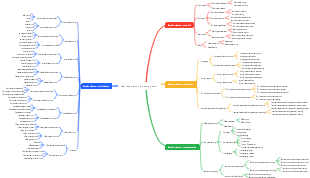
MindMap Gallery Panoramic analysis of aircraft dismantling and remanufacturing and derivative industry chain
A panoramic analysis of aircraft dismantling and remanufacturing and derivative industrial chains, including the current situation of the industry, the significance of retired aircraft, the significance of aircraft dismantling and remanufacturing, the links of aircraft dismantling and remanufacturing industrial chain, industrial chain analysis table, industry outlook, waste treatment, etc.
Edited at 2025-01-02 16:07:27Rumi: 10 dimensions of spiritual awakening. When you stop looking for yourself, you will find the entire universe because what you are looking for is also looking for you. Anything you do persevere every day can open a door to the depths of your spirit. In silence, I slipped into the secret realm, and I enjoyed everything to observe the magic around me, and didn't make any noise. Why do you like to crawl when you are born with wings? The soul has its own ears and can hear things that the mind cannot understand. Seek inward for the answer to everything, everything in the universe is in you. Lovers do not end up meeting somewhere, and there is no parting in this world. A wound is where light enters your heart.
Chronic heart failure is not just a problem of the speed of heart rate! It is caused by the decrease in myocardial contraction and diastolic function, which leads to insufficient cardiac output, which in turn causes congestion in the pulmonary circulation and congestion in the systemic circulation. From causes, inducement to compensation mechanisms, the pathophysiological processes of heart failure are complex and diverse. By controlling edema, reducing the heart's front and afterload, improving cardiac comfort function, and preventing and treating basic causes, we can effectively respond to this challenge. Only by understanding the mechanisms and clinical manifestations of heart failure and mastering prevention and treatment strategies can we better protect heart health.
Ischemia-reperfusion injury is a phenomenon that cellular function and metabolic disorders and structural damage will worsen after organs or tissues restore blood supply. Its main mechanisms include increased free radical generation, calcium overload, and the role of microvascular and leukocytes. The heart and brain are common damaged organs, manifested as changes in myocardial metabolism and ultrastructural changes, decreased cardiac function, etc. Prevention and control measures include removing free radicals, reducing calcium overload, improving metabolism and controlling reperfusion conditions, such as low sodium, low temperature, low pressure, etc. Understanding these mechanisms can help develop effective treatment options and alleviate ischemic injury.
Rumi: 10 dimensions of spiritual awakening. When you stop looking for yourself, you will find the entire universe because what you are looking for is also looking for you. Anything you do persevere every day can open a door to the depths of your spirit. In silence, I slipped into the secret realm, and I enjoyed everything to observe the magic around me, and didn't make any noise. Why do you like to crawl when you are born with wings? The soul has its own ears and can hear things that the mind cannot understand. Seek inward for the answer to everything, everything in the universe is in you. Lovers do not end up meeting somewhere, and there is no parting in this world. A wound is where light enters your heart.
Chronic heart failure is not just a problem of the speed of heart rate! It is caused by the decrease in myocardial contraction and diastolic function, which leads to insufficient cardiac output, which in turn causes congestion in the pulmonary circulation and congestion in the systemic circulation. From causes, inducement to compensation mechanisms, the pathophysiological processes of heart failure are complex and diverse. By controlling edema, reducing the heart's front and afterload, improving cardiac comfort function, and preventing and treating basic causes, we can effectively respond to this challenge. Only by understanding the mechanisms and clinical manifestations of heart failure and mastering prevention and treatment strategies can we better protect heart health.
Ischemia-reperfusion injury is a phenomenon that cellular function and metabolic disorders and structural damage will worsen after organs or tissues restore blood supply. Its main mechanisms include increased free radical generation, calcium overload, and the role of microvascular and leukocytes. The heart and brain are common damaged organs, manifested as changes in myocardial metabolism and ultrastructural changes, decreased cardiac function, etc. Prevention and control measures include removing free radicals, reducing calcium overload, improving metabolism and controlling reperfusion conditions, such as low sodium, low temperature, low pressure, etc. Understanding these mechanisms can help develop effective treatment options and alleviate ischemic injury.
Panoramic analysis of aircraft dismantling and remanufacturing and derivative industry chain
1. Introduction
Background: Global aviation industry develops, and the increase in retired aircraft
Core topic: How to maximize the value of retired aircraft
Conclusion: Aircraft dismantling and remanufacturing is an important issue
2. Current status of the industry
worldwide:
The market size is huge, and the European and American developed countries dominate
Participants: dismantling enterprises, repair enterprises, parts suppliers
China:
Starting late, small in scale, immature industrial chain
Concentrated dismantling business, low technical level
Old aircraft have limited sources and rely on domestic scrapping and small imports
3. Retired aircraft
Service life: generally 25-30 years, 15 years to enter the retirement stage
China: Forced to retire for 20 years
Future forecast:
Global demand for more than 44,040 new aircraft in 20 years, half of which are used for replacement
Over 15 years, the world's average annual retirement will be over 1,000 aircraft
China's fleet size exceeds 10,000 aircraft in 2050, and it faces aging problem within ten years
In the next 20 years, China will retire more than 5,000 aircraft, with an average of more than 200 aircraft per year.
The impact of the new crown epidemic, 1,500-2,600 aircraft are retired every year worldwide
4. The significance of aircraft dismantling and remanufacturing
Green Revolution: Recycling, improving resource utilization
Industrial value: exceeds the market value of retired aircraft
Industrial chain: necessary links in aircraft design, manufacturing, use and retirement
Policy support: "Law on Promoting Circular Economy", "Civil Aviation Development Plan for the 14th Five-Year Plan"
Strategic significance: Important content of "strengthening chains and supplementing chains" in the aviation industry
5. Aircraft dismantling and remanufacturing industry chain links
Section 1: Plane parking
Type: grounded, accident aircraft, abandoned aircraft
Causes: malfunction, business adjustment, epidemic, accident, retirement, etc.
Parking location: It needs to meet the conditions of large space, ideal environment, low cost, etc.
Business: aircraft storage, maintenance, parts management, modification, recycling, etc.
Case:
Cathay Pacific grounded 150 aircraft, 83 aircraft at Alice Springs
Boeing 737-MAX is grounded worldwide
Airbus provides services to two subsidiaries, TARBES and TERUEL
Revenue composition: 75% of aircraft are parked and 25% of aircraft are recovered
Section 2: Disassembly and repair
Content: Disassembly and repair of components such as fuselage, cabin, avionics, engines, landing gears, etc.
Purpose: Provide parts for remanufacturing
Key: intensive technology and requires professional operation
Section 3: Disassembly and remanufacturing
Content: Disassembly and remanufacture of components such as engines, avionics equipment, landing gears, and modification and remanufacture of aircraft
Core: Recovering structural and functional characteristics
Forms: inspection, repair, troubleshooting, regular inspection, renovation, modification, upgrade
Section 4: Recycling and Reuse
Content: Recycling and reuse of available parts and materials such as aluminum skins and frames in the non-aerospace market
type:
Metal material recycling: aluminum metallurgy recycling
Composite material recycling: glass fiber, carbon fiber, etc.
Aviation training and reuse of crafts
Training aids: simulation equipment, teaching cabin section
Artwork: Aviation culture theme products, installation art, furniture
Rehearsal aids: fire fighting, ice removal and snow removal, safe escape
Section 5: Waste treatment
Content: Harmless treatment of solid and liquid waste such as hazardous materials and aviation oil and sale of residual waste
Process: disposal suggestions, departmental licensing, environmental protection declaration, environmental protection department supervision
Goal: Environmentally friendly and harmless treatment
6. Industrial chain analysis table
Dimensions:
Related procedures
Participant
Main profit model
Related industries
For specific information, please refer to the attached table (please refer to the original text)
7. Aircraft disassembly key components
engine:
Recycling value: 50%-85%
Disposal: Transfer or disassemble to obtain LRU and time controls
landing gear:
Recycling value: more than 5%
Disposal: Full-time landing gear is easy to sell
Auxiliary power unit (APU):
Recycling value: more than 2.5%
Disposal: Similar to landing gear
Avionics components:
Recycling value: more than 2.5%
Disposal: Good storage, pass the test
Flight control components:
Recycling value: more than 2.5%
Disposal: Get several times the original price profit under urgent demand
Disassembly and maintenance business: mainly including disassembly working hours income and aviation materials processing income
8. Disassembly and remanufacturing classification
Engine repair and remanufacturing: deep repair, performance recovery, high value
Body repair and remanufacturing: repair fatigue cracks and extend service life
Parts and accessories repair and remanufacturing: airborne electronics and mechanical equipment, performance recovery
Aircraft modification and remanufacturing: structure, cabin, system transformation and upgrading
9. Recycling and Reuse
Metal and non-metallic materials:
Aluminum: Metallurgical recycling
Composite materials: pyrolysis recovery, etc.
Aviation training and crafts:
Training: simulation equipment, teaching cabin section
Crafts: Aviation culture theme, installation art
Rehears: Fire fighting, safety escape, etc.
10. Waste treatment
Category: Electronic components, hazardous goods, liquid materials, etc.
Process: Harmless treatment under the supervision of environmental protection departments
Remaining: carpets, plastics, etc. can be sold as waste products
11. Industry Outlook
Emerging industries: huge potential, valued by Boeing, Airbus and others
Pull related industries: aircraft maintenance, aviation logistics, aviation materials trading, etc.
future:
Europe and the United States are mature
China is starting and has broad prospects