MindMap Gallery computer
This is a mind map about computers, which explores the birth process of computers gradually developing from early ideas to actual equipment, and has an in-depth understanding of the era background, technical needs and driving factors of the birth of the world's first electronic digital computer, ENIAC, and clarifies its key significance in the history of computer development.
Edited at 2025-02-26 20:07:26Rumi: 10 dimensions of spiritual awakening. When you stop looking for yourself, you will find the entire universe because what you are looking for is also looking for you. Anything you do persevere every day can open a door to the depths of your spirit. In silence, I slipped into the secret realm, and I enjoyed everything to observe the magic around me, and didn't make any noise. Why do you like to crawl when you are born with wings? The soul has its own ears and can hear things that the mind cannot understand. Seek inward for the answer to everything, everything in the universe is in you. Lovers do not end up meeting somewhere, and there is no parting in this world. A wound is where light enters your heart.
Chronic heart failure is not just a problem of the speed of heart rate! It is caused by the decrease in myocardial contraction and diastolic function, which leads to insufficient cardiac output, which in turn causes congestion in the pulmonary circulation and congestion in the systemic circulation. From causes, inducement to compensation mechanisms, the pathophysiological processes of heart failure are complex and diverse. By controlling edema, reducing the heart's front and afterload, improving cardiac comfort function, and preventing and treating basic causes, we can effectively respond to this challenge. Only by understanding the mechanisms and clinical manifestations of heart failure and mastering prevention and treatment strategies can we better protect heart health.
Ischemia-reperfusion injury is a phenomenon that cellular function and metabolic disorders and structural damage will worsen after organs or tissues restore blood supply. Its main mechanisms include increased free radical generation, calcium overload, and the role of microvascular and leukocytes. The heart and brain are common damaged organs, manifested as changes in myocardial metabolism and ultrastructural changes, decreased cardiac function, etc. Prevention and control measures include removing free radicals, reducing calcium overload, improving metabolism and controlling reperfusion conditions, such as low sodium, low temperature, low pressure, etc. Understanding these mechanisms can help develop effective treatment options and alleviate ischemic injury.
Rumi: 10 dimensions of spiritual awakening. When you stop looking for yourself, you will find the entire universe because what you are looking for is also looking for you. Anything you do persevere every day can open a door to the depths of your spirit. In silence, I slipped into the secret realm, and I enjoyed everything to observe the magic around me, and didn't make any noise. Why do you like to crawl when you are born with wings? The soul has its own ears and can hear things that the mind cannot understand. Seek inward for the answer to everything, everything in the universe is in you. Lovers do not end up meeting somewhere, and there is no parting in this world. A wound is where light enters your heart.
Chronic heart failure is not just a problem of the speed of heart rate! It is caused by the decrease in myocardial contraction and diastolic function, which leads to insufficient cardiac output, which in turn causes congestion in the pulmonary circulation and congestion in the systemic circulation. From causes, inducement to compensation mechanisms, the pathophysiological processes of heart failure are complex and diverse. By controlling edema, reducing the heart's front and afterload, improving cardiac comfort function, and preventing and treating basic causes, we can effectively respond to this challenge. Only by understanding the mechanisms and clinical manifestations of heart failure and mastering prevention and treatment strategies can we better protect heart health.
Ischemia-reperfusion injury is a phenomenon that cellular function and metabolic disorders and structural damage will worsen after organs or tissues restore blood supply. Its main mechanisms include increased free radical generation, calcium overload, and the role of microvascular and leukocytes. The heart and brain are common damaged organs, manifested as changes in myocardial metabolism and ultrastructural changes, decreased cardiac function, etc. Prevention and control measures include removing free radicals, reducing calcium overload, improving metabolism and controlling reperfusion conditions, such as low sodium, low temperature, low pressure, etc. Understanding these mechanisms can help develop effective treatment options and alleviate ischemic injury.
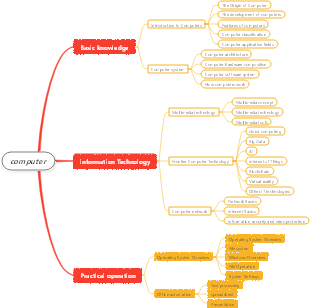
computer
Basic knowledge
Introduction to Computers
The Origin of Computer
Explore the birth process of computers gradually developing from early ideas to actual equipment, and gain an in-depth understanding of the era background, technical needs and driving factors of the birth of the world's first electronic digital computer, ENIAC, and clarify its key significance in the history of computer development.
The development of computers
According to the time context, we have sorted out the technological changes in computers from the era of electronic tubes to transistors, to the era of integrated circuits and large-scale integrated circuits, as well as the significant improvement in performance such as computing speed and storage capacity, showing the ever-changing development trend of computer technology.
Features of computers
Analyze the characteristics of computer high-speed computing, accurate computing, powerful storage, logical judgment and automated processing, and compare other equipment to clarify how these characteristics make computers occupy a core position in the field of information processing.
Computer classification
According to different standards such as computer computing speed, storage capacity, functional use, and price, the characteristics and applicable scenarios of various computers such as supercomputers, mainframe computers, small computers, microcomputers, and servers are introduced in detail.
Computer application fields
Comprehensively list specific application examples of computers in many industries and daily life scenarios such as scientific computing, data processing, process control, artificial intelligence, education, medical care, finance, and entertainment, reflecting the far-reaching impact of computers on modern society.
Computer system
Computer architecture
Explain the basic architecture of computer systems, such as the five major components of the von Neumann architecture: operators, controllers, memory, input devices and output devices, as well as the collaborative working mechanisms and data transmission methods between them.
Computer hardware composition
Detailed description of the functions, working principles and roles of various components of computer hardware, including the central processing unit (CPU), memory, hard disk, motherboard, graphics card, sound card, input and output devices, etc.
Computer software system
It introduces the classification of computer software, the functions of system software such as operating systems, language processing programs, database management systems, etc., as well as the role of application software in meeting user specific needs, and analyzes the relationship between the two.
How computers work
In-depth explanation of how a computer can work together through the instruction system, using hardware and software to achieve data input, storage, processing and output, and understand the basic process of the computer's tasks.
information Technology
Multimedia technology
Multimedia concept
Accurately define multimedia, clarify its characteristics of integrating various media forms such as text, graphics, images, audio, video, etc., as well as the unique advantages and scope of application of multimedia in information expression and dissemination.
Multimedia technology
It introduces digital processing technologies of multimedia information, such as audio encoding, video encoding, image compression, etc., as well as multimedia data transmission, storage and synchronization technologies, to realize the effective utilization of multimedia content.
Multimedia tools
List commonly used multimedia creation tools, such as Adobe series software (Photoshop is used for image processing, Premiere is used for video editing, Audition is used for audio processing, etc.), multimedia playback tools (such as Windows Media Player, VLC, etc.) and their main functions and application scenarios
Frontier Computer Technology
cloud computing
Explain the concept of cloud computing, introduce its three service models: infrastructure as a service (IaaS), platform as a service (PaaS), and software as a service (SaaS), and analyze the advantages of cloud computing in reducing enterprise costs, improving resource utilization and flexibility.
Big Data
Explain the characteristics of big data such as Volume, Velocity, Variety, and Value, and introduce the processing technologies such as big data acquisition, storage, analysis and visualization, as well as the application value of big data in business decision-making, medical research, and traffic management.
AI
Introduce the basic concepts of artificial intelligence, including machine learning, deep learning, natural language processing, computer vision and other major technologies, as well as the application cases and development prospects of artificial intelligence in the fields of smart home, intelligent transportation, intelligent medical care, financial risk control, etc.
Internet of Things
Explain the three-layer architecture of the Internet of Things: perception layer, network layer and application layer, introduce the key technologies of the Internet of Things such as sensor technology, RFID technology, communication technology, etc., as well as the practical application of the Internet of Things in smart home, smart industry, smart agriculture and other fields.
Blockchain
Explain the principles and characteristics of blockchain such as decentralization, distributed ledger, immutability, encryption security, etc., and introduce typical application scenarios of blockchain in the fields of digital currency, financial transactions, supply chain management, copyright protection, etc.
Virtual reality
Introduce the technical principles of virtual reality (VR), including display technology, interaction technology, modeling technology, etc., as well as the application scenarios and current development status of VR in the fields of gaming, education, medical care, architectural design, etc.
Other IT technologies
Briefly mention the basic concepts, development trends and potential application value of other important information technologies such as quantum computing, edge computing, and 5G communication.
Computer network
Network Basics
IP, UDP, etc.) and network classification (local area network, metropolitan area network, wide area network
. Internet Basics
Introduces the origin (ARPANET), development history, and basic services provided by the Internet, such as the World Wide Web (WWW), email (E-mail), file transfer (FTP), remote login (Telnet), etc.
Information security and virus protection
Explain the importance of network information security, including data confidentiality, integrity, availability, controllability and undeniability, and introduce common network security threats (such as viruses, Trojans, hacker attacks, etc.) as well as methods and technologies to prevent viruses and ensure network security.
Practical operation
operating system
Operating System Overview
It introduces the definition of the operating system. As the core software of the computer system, it manages computer hardware and software resources, provides human-computer interactive interfaces, and explains the functions of the operating system (process management, storage management, device management, file management, etc.) and classification (batch operating system, time-sharing operating system, real-time operating system, network operating system, distributed operating system, etc.).
File system
Explain the structure of the file system, including the logical structure of the file (sequential files, index files, index sequence files, etc.) and physical structure (continuous allocation, link allocation, index allocation, etc.), as well as file management and operations, such as file creation, opening, closing, reading and writing, deletion, and renaming.
Windows Overview
Explain the characteristics of the Windows operating system, such as graphical interface, multitasking, extensive software compatibility, etc., and introduces the main versions of Windows (Windows 95, Windows XP, Windows 7, Windows 10, etc.) and their basic operations, such as desktop management, taskbar use, window operations, etc.
File Operation
This detailed introduction to the basic operations such as creating, deleting, copying, moving, renaming, and property setting of files and folders in the Windows operating system, as well as the search and sorting methods of files.
System Settings
Explain the settings of system parameters in the Windows operating system, such as display settings, sound settings, power management, user account management, etc., as well as system optimization and maintenance methods, such as disk cleaning, disk defragmentation, etc.
Office automation
Text processing
Taking Word software as an example, we introduce the basic functions of word processing software, such as text entry, editing, layout (font format, paragraph format, page layout, etc.), document printing, as well as advanced functions such as directory generation, email merging, document protection, etc.
spreadsheet
Taking Excel software as an example, we will explain the data processing functions of spreadsheet software, such as data input, editing, calculation (formula and function application), data sorting, filtering, pivot table production, and chart production (bar chart, line chart, pie chart, etc.), for data visual analysis.
Presentation
Taking PowerPoint software as an example, we will explain the production process of presentation software, such as slide creation, layout selection, text and picture addition, as well as editing skills, such as animation effect settings, switching effect settings, hyperlink addition, etc. Finally, we will introduce the presentation skills and precautions of presentation.