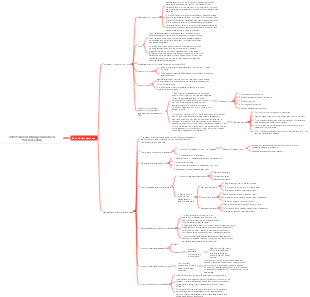
MindMap Gallery 946 Financial Manager Advanced Practical Camp (III)
This is a mind map about the 946 Financial Manager Advanced Practical Camp (III), the main contents include: 04 Fund Management. The content is detailed, clear and easy to understand.
Edited at 2025-02-26 15:35:29Rumi: 10 dimensions of spiritual awakening. When you stop looking for yourself, you will find the entire universe because what you are looking for is also looking for you. Anything you do persevere every day can open a door to the depths of your spirit. In silence, I slipped into the secret realm, and I enjoyed everything to observe the magic around me, and didn't make any noise. Why do you like to crawl when you are born with wings? The soul has its own ears and can hear things that the mind cannot understand. Seek inward for the answer to everything, everything in the universe is in you. Lovers do not end up meeting somewhere, and there is no parting in this world. A wound is where light enters your heart.
Chronic heart failure is not just a problem of the speed of heart rate! It is caused by the decrease in myocardial contraction and diastolic function, which leads to insufficient cardiac output, which in turn causes congestion in the pulmonary circulation and congestion in the systemic circulation. From causes, inducement to compensation mechanisms, the pathophysiological processes of heart failure are complex and diverse. By controlling edema, reducing the heart's front and afterload, improving cardiac comfort function, and preventing and treating basic causes, we can effectively respond to this challenge. Only by understanding the mechanisms and clinical manifestations of heart failure and mastering prevention and treatment strategies can we better protect heart health.
Ischemia-reperfusion injury is a phenomenon that cellular function and metabolic disorders and structural damage will worsen after organs or tissues restore blood supply. Its main mechanisms include increased free radical generation, calcium overload, and the role of microvascular and leukocytes. The heart and brain are common damaged organs, manifested as changes in myocardial metabolism and ultrastructural changes, decreased cardiac function, etc. Prevention and control measures include removing free radicals, reducing calcium overload, improving metabolism and controlling reperfusion conditions, such as low sodium, low temperature, low pressure, etc. Understanding these mechanisms can help develop effective treatment options and alleviate ischemic injury.
Rumi: 10 dimensions of spiritual awakening. When you stop looking for yourself, you will find the entire universe because what you are looking for is also looking for you. Anything you do persevere every day can open a door to the depths of your spirit. In silence, I slipped into the secret realm, and I enjoyed everything to observe the magic around me, and didn't make any noise. Why do you like to crawl when you are born with wings? The soul has its own ears and can hear things that the mind cannot understand. Seek inward for the answer to everything, everything in the universe is in you. Lovers do not end up meeting somewhere, and there is no parting in this world. A wound is where light enters your heart.
Chronic heart failure is not just a problem of the speed of heart rate! It is caused by the decrease in myocardial contraction and diastolic function, which leads to insufficient cardiac output, which in turn causes congestion in the pulmonary circulation and congestion in the systemic circulation. From causes, inducement to compensation mechanisms, the pathophysiological processes of heart failure are complex and diverse. By controlling edema, reducing the heart's front and afterload, improving cardiac comfort function, and preventing and treating basic causes, we can effectively respond to this challenge. Only by understanding the mechanisms and clinical manifestations of heart failure and mastering prevention and treatment strategies can we better protect heart health.
Ischemia-reperfusion injury is a phenomenon that cellular function and metabolic disorders and structural damage will worsen after organs or tissues restore blood supply. Its main mechanisms include increased free radical generation, calcium overload, and the role of microvascular and leukocytes. The heart and brain are common damaged organs, manifested as changes in myocardial metabolism and ultrastructural changes, decreased cardiac function, etc. Prevention and control measures include removing free radicals, reducing calcium overload, improving metabolism and controlling reperfusion conditions, such as low sodium, low temperature, low pressure, etc. Understanding these mechanisms can help develop effective treatment options and alleviate ischemic injury.
946# Financial Manager Advanced Practical Camp (III)
04 Fund Management
The importance of funds to finance
What is fund management: It is a general term for the source of funds and the planning, control, supervision, assessment and other work of fund use; it is an important part of financial management
Source of funds: paid-in capital, income, government subsidies, bank loans, funds from non-bank financial institutions, bond issuance, equity financing
Fund use: purchase various assets, pay various expenses, investment, etc.
Funding results (watch them every day)
The first arithmetic relationship: source of funds - use of funds = balance of funds, use of funds = source of funds - balance of funds
The second different source relationship: own funds and borrowed funds
The manifestation of capital management
Own funds management
Own funds are funds that enterprises often hold and can control themselves in order to carry out production and operation activities. Generally, it includes: paid-in capital (equity capital), capital reserve, undistributed profit, and surplus reserve. In addition, accounts payable, prepaid, tax payable, etc.
Fundraising management
Investment Management
Debt management
Core: Pre-prevention, during-process remediation, and after-reflection. Key factors: not management model, but collection intensity
Debt Management
Factors to be considered: First, the reasonable ratio of the total debt to the total assets; second, the term of the debt matches the purpose of income and capital use; third, the reasonable ratio of short-term debt to long-term debt
asset Management
Fund management refers to the management of current assets, fixed assets and intangible assets. Focus on the liquidity of current assets and the depreciation losses of fixed and intangible assets
Profit management
Profit is a measure of a company's ability to make money
First, when the net profit is >0, increase undistributed profits; second, there is profit but not necessarily cash flow; third, profit or cash flow depends on the development stage of the company
Risk Management
The importance of fund management
1. The key driving force for the sustainable and stable development of the enterprise
2. Effectively prevent various fraudulent behaviors
3. Accelerate capital turnover and realize capital value-added
4. Improve capital gains and efficiency
Methods of fund management
Overall idea of fund management
1. Open the entrance
2. Tighten the exit
3. Keep the bottom line
4. Make a balance
1. Based on financial statements
Source of funds (right of the balance sheet): paid-in capital, unallocated profits, accounts payable, prepaid, short-term loans, long-term loans (long-term receivables), bonds payable, equity, capital reserves
1. Paid-in capital: It is the capital invested by investors received by the enterprise
According to the investment entities, it is divided into: state, collective, individual, Hong Kong, Macao and Taiwan, and foreign capital.
Form of expression: monetary funds, physical objects, intangible assets
Focus: The larger the amount of cash, the better, because paid-in capital is the buffer against company risks. For newly established companies, the only source of funds is paid-in capital, and financial attention is: timely and in full payment.
2. Undistributed profit: It is the profit distributed or to be distributed by the enterprise in the future years.
Two meanings: first, profits left to be processed in the future; second, profits that have not specified specific uses
From the perspective of quantity, undistributed profits in this period = the beginning of the period Net profits in this period - various surplus reserves extracted - the distributed profits
Focus: First, increase net profit; second, reduce profit distribution. Both can increase undistributed profits and increase the source of funds.
3. Accounts payable: refers to debts incurred due to the purchase of materials, goods or the acceptance of labor supply.
This is a liability arising from the time in the purchase and sale activities of both the buyer and the seller to obtain materials and pay the goods.
In essence, it is the funds of the supplier that the company uses free of charge during the credit period.
Focus: First credit period; second amount
On the premise of not affecting the business and relationship between the two parties, make full use of the credit period, try to extend the turnover days of accounts payable, and contribute to the cash cycle.
4. Advance payment: refers to a liability formed by the purchaser and the seller in advance, based on the contract between the buyer and the seller.
In essence: It is the customer funds used by the enterprise free of charge within the time specified in the contract.
Focus: Generally stipulated in the contract that the product is in different stages and the contribution of prepayments to funds is different.
5. Short-term (long-term) loans: refers to funds borrowed by enterprises from banks or other financial institutions according to the needs of production and operation. According to the return period, it is divided into short-term loans and long-term loans.
In essence: While obtaining funds, you need to pay the cost of funds (financial expenses)
Focus: comprehensively consider factors such as fund structure, financing method, capital cost, repayment method and term
Where funds go (left side of the balance sheet): monetary funds, accounts receivable, inventory, prepaid accounts, projects under construction, fixed assets, intangible assets
1. Money funds: funds expressed in the form of money. Including: cash in stock, bank deposits and other monetary funds.
Function: It plays a link and link role in the process of corporate capital circulation and turnover. The amount of cash ownership directly affects the company's debt repayment ability and payment ability
Focus: Too little money will cause the company to break the capital chain due to difficulties in capital turnover
2. Accounts receivable: It is the amount that an enterprise should collect from the purchaser unit due to selling goods, providing services and other businesses during normal operation, including taxes that should be borne by the purchaser or the labor unit, and transportation and miscellaneous fees that should be paid by the purchaser or the labor unit.
In essence: funds occupied by customers free of charge during the credit period
Focus: First, a reasonable credit period; second, strictly control expectations; third, familiarize yourself with customers' trading habits. (Sometimes it has nothing to do with trading ability)
3. Inventory: refers to finished products or commodities held by enterprises for sale in daily activities, materials and materials consumed during the production process, production process or labor service process, etc. Including: raw materials, in-house products, semi-finished products, finished products, turnover materials, etc.
Focus: First, total quantity control; second, increase turnover rate. Inventory not only occupies funds, but also prone to impairment (expired, theft, disasters)
2. Control speed through operation
1. Business cycle: refers to the time it takes to start the whole process from paying cash to purchase goods or services, until the product or services are sold and cash is recovered.
Operating cycle = Inventory cycle Accounts receivable cycle
2. Cash cycle: refers to the time it takes from paying cash to receiving cash in the business operation. The cash cycle directly affects the operating capital of the enterprise.
Cash cycle = operating cycle - accounts payable cycle = inventory cycle Accounts receivable cycle - accounts payable cycle