MindMap Gallery Methods to improve time management
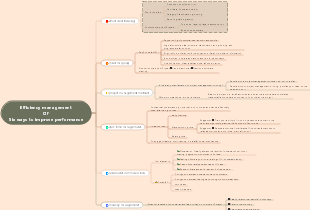
This is a mind map about Methods to improve time management, Main content: 3. Adjust task arrangements and optimize workflows according to the results of efficiency analysis, 2. Analyze software data, identify inefficient time periods and find out the reasons, 2. Use efficiency analysis software to identify interference factors, formulate specific strategies to reduce interference, such as setting focus periods, closing notifications, etc., to improve work efficiency, 3. Use automation tools to simplify repetitive work, 2. Use calendar applications to arrange similar tasks in batches.
Edited at 2025-03-01 10:17:56Rumi: 10 dimensions of spiritual awakening. When you stop looking for yourself, you will find the entire universe because what you are looking for is also looking for you. Anything you do persevere every day can open a door to the depths of your spirit. In silence, I slipped into the secret realm, and I enjoyed everything to observe the magic around me, and didn't make any noise. Why do you like to crawl when you are born with wings? The soul has its own ears and can hear things that the mind cannot understand. Seek inward for the answer to everything, everything in the universe is in you. Lovers do not end up meeting somewhere, and there is no parting in this world. A wound is where light enters your heart.
Chronic heart failure is not just a problem of the speed of heart rate! It is caused by the decrease in myocardial contraction and diastolic function, which leads to insufficient cardiac output, which in turn causes congestion in the pulmonary circulation and congestion in the systemic circulation. From causes, inducement to compensation mechanisms, the pathophysiological processes of heart failure are complex and diverse. By controlling edema, reducing the heart's front and afterload, improving cardiac comfort function, and preventing and treating basic causes, we can effectively respond to this challenge. Only by understanding the mechanisms and clinical manifestations of heart failure and mastering prevention and treatment strategies can we better protect heart health.
Ischemia-reperfusion injury is a phenomenon that cellular function and metabolic disorders and structural damage will worsen after organs or tissues restore blood supply. Its main mechanisms include increased free radical generation, calcium overload, and the role of microvascular and leukocytes. The heart and brain are common damaged organs, manifested as changes in myocardial metabolism and ultrastructural changes, decreased cardiac function, etc. Prevention and control measures include removing free radicals, reducing calcium overload, improving metabolism and controlling reperfusion conditions, such as low sodium, low temperature, low pressure, etc. Understanding these mechanisms can help develop effective treatment options and alleviate ischemic injury.
Rumi: 10 dimensions of spiritual awakening. When you stop looking for yourself, you will find the entire universe because what you are looking for is also looking for you. Anything you do persevere every day can open a door to the depths of your spirit. In silence, I slipped into the secret realm, and I enjoyed everything to observe the magic around me, and didn't make any noise. Why do you like to crawl when you are born with wings? The soul has its own ears and can hear things that the mind cannot understand. Seek inward for the answer to everything, everything in the universe is in you. Lovers do not end up meeting somewhere, and there is no parting in this world. A wound is where light enters your heart.
Chronic heart failure is not just a problem of the speed of heart rate! It is caused by the decrease in myocardial contraction and diastolic function, which leads to insufficient cardiac output, which in turn causes congestion in the pulmonary circulation and congestion in the systemic circulation. From causes, inducement to compensation mechanisms, the pathophysiological processes of heart failure are complex and diverse. By controlling edema, reducing the heart's front and afterload, improving cardiac comfort function, and preventing and treating basic causes, we can effectively respond to this challenge. Only by understanding the mechanisms and clinical manifestations of heart failure and mastering prevention and treatment strategies can we better protect heart health.
Ischemia-reperfusion injury is a phenomenon that cellular function and metabolic disorders and structural damage will worsen after organs or tissues restore blood supply. Its main mechanisms include increased free radical generation, calcium overload, and the role of microvascular and leukocytes. The heart and brain are common damaged organs, manifested as changes in myocardial metabolism and ultrastructural changes, decreased cardiac function, etc. Prevention and control measures include removing free radicals, reducing calcium overload, improving metabolism and controlling reperfusion conditions, such as low sodium, low temperature, low pressure, etc. Understanding these mechanisms can help develop effective treatment options and alleviate ischemic injury.
Methods to improve time management
Develop clear goals and plans
Set SMART targets
Make sure the goals are specific and measurable
Set specific measurable goals, clarify directions, and facilitate tracking progress and ensure clear and operationality.
The goals must be reachable, relevant and clear time limits.
The goals need to be in line with capabilities, long-term planning, set clear time limits, and improve execution efficiency.
Break down big goals into small steps
Disassembly the big goal into small steps, reduce the difficulty, and gradually achieve the final goal.
Regularly review and adjust goals
Review goals regularly, adjust flexibly, and maintain timeliness and adaptability.
Develop a detailed schedule
Set specific tasks for daily, weekly and monthly
To ensure the achievement of goals, long-term goals should be broken down into daily, weekly and monthly specific tasks to make the plan more actionable.
Arrange work and rest time reasonably
Rationally planning work and rest time can improve efficiency, avoid fatigue, and maintain a good working state and quality of life.
Reserve buffer time for emergencies
Leaving buffering time for possible emergencies in the timetable can reduce the risk of disruption in the plan and maintain flexibility in the plan.
Regularly assess the effectiveness of schedules
Regularly review and evaluate the effectiveness of the timetable and adjust it according to actual conditions to ensure that the time management strategy always meets the target needs.
Priority sorting and task classification
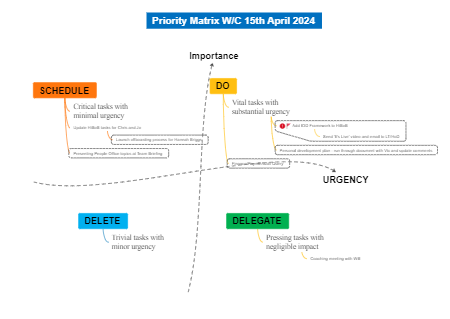
Distinguish between urgent and important tasks
Classification using Eisenhower Matrix
Use the Eisenhower matrix to efficiently classify, distinguish urgent and important tasks from general affairs, and optimize time management.
Prioritize important but not urgent tasks
Prioritize important but non-urgent tasks to prevent crises and improve efficiency.
Avoid getting caught in an urgent but unimportant task cycle
Avoid falling into a vicious cycle of constantly dealing with urgent but unimportant matters to keep your energy focused on truly critical tasks.
Task classification and batch processing
Improve efficiency of similar tasks
Classifying similar tasks, such as scheduling all conference calls on the same day, can reduce task switching time, increase concentration, and thus improve work efficiency.
Process specific tasks regularly
1. Set a fixed time period every day to process emails and communications to improve reply efficiency.
2. Project planning and task allocation are carried out at a fixed time every week to ensure work progress.
Learn to reject low-priority task requests
Learn to reject low-priority task requests: clarify your work goals and priorities, and refuse politely and firmly for requests that do not meet these standards, avoid distracting energy and ensure that time is used for more valuable tasks.
Use technical tools to assist in task classification
1 Use project management software to classify tasks.
2. Use the calendar application to batch schedule similar tasks.
3. Use automation tools to simplify repetitive work.
Overcome procrastination and improve concentration
Identify the causes of procrastination and take countermeasures
Analyze the psychological roots of procrastination, such as fear of failure or pursuit of perfection
Explore the psychological motivations of procrastination, such as the fear of failure and the tendency to pursue perfection over the quest for perfection.
Set small rewards to motivate yourself to complete tasks on time
Set small rewards to motivate yourself, ensure that tasks are completed on time and efficiently, and improve enthusiasm and execution.
Establish a supportive environment to reduce disruption factors
Build a supportive environment to effectively weaken various interference factors and improve efficiency and concentration.
Improve concentration skills
Focus for 25 minutes
Use the Pomodoro working method and set a 25-minute focusing period to improve efficiency.
Meditation relaxation and anxiety reduction
Master meditation and relaxation techniques to effectively relieve anxiety.
Clean and interference-reducing
Keep the work area tidy to reduce visual clutter and interference.
Rest reasonably to prevent fatigue
Scientifically arrange rest to prevent the accumulation of excessive fatigue caused by continuous labor.
Learn to refuse and entrust tasks
The art of learning to say "no"
Clarify your ability and time limits
Setting clear personal boundaries and understanding the amount of work you can accomplish in a specific time can help avoid overcommitment. By assessing the urgency and importance of the task, time is allocated reasonably to ensure that the quality of work or personal well-being is not affected by the ability. Learn to refuse in time, protect your time and energy, and focus on what is really important.
Assess whether the task matches the value of your own goal
The core of assessing the consistency of tasks with personal goals and values is whether they contribute to long-term goals and conform to core values. No matter how urgent a mismatched task can waste resources and distract energy. Learn to refuse, stay focused, make sure time is used to what is really important, and improve efficiency and satisfaction.
Reject requests in a tactful and firm tone
Thank you so much for thinking of asking me to help, but unfortunately, I am currently full of work and need to focus on the tasks at hand. I hope you can understand. I am not unwilling to help, but I am really unable to do anything. Thank you for your understanding.
Effective entrusted tasks
Tasks that can be entrusted: daily and auxiliary work.
In daily work, repetitive tasks such as data entry and file organization can be entrusted to focus on decision-making and creative work.
Select the delegation object and focus on ability and interest matching.
When choosing a delegation, you should consider skills and interests to ensure efficient completion of tasks, while improving team enthusiasm and member career growth.
Clarify expectations and deadlines for entrusted tasks
When entrusting tasks, the expected results and deadlines must be clarified to ensure the implementation of the plan, and the entrusted objects must be clarified to the responsibilities and schedule.
Track the progress and results of delegated tasks
Regularly check the task progress and evaluate the results after completion, so that problems can be discovered in a timely manner, accumulated experience, and improved task quality.
Use technical tools to assist management
Digital calendar and reminder functions
Use a digital calendar to plan your schedule and set reminders
Using the synchronization function of the digital calendar, work, study and personal activities are integrated on one platform. By setting up different types of reminders (such as reminders of 15 minutes before meetings, birthday reminders, etc.), we ensure that important matters are not missed, and the efficiency and accuracy of daily time management are improved.
Synchronize calendars to share information with team members
Through the sharing function of the digital calendar, team members can view each other's schedules in real time, effectively avoid meeting conflicts, synchronize work plans, and improve team collaboration efficiency.
Use the reminder function to avoid missing important events
Set up an advance notice of important events in the digital calendar to ensure adequate preparation. Enable repeated reminders for periodic events to prevent omissions. Customize the reminder ringtone or notification method according to the importance of the event and ensure that it is not ignored.
Time tracking and efficiency analysis software
Track time and record task progress
Using time tracking software to record work time and task completion can help individuals and teams understand time allocation more clearly and identify efficiency bottlenecks. By recording the time spent on each task in detail, users can analyze which activities are the most productive and which may require optimization or reduction. In addition, regular review of these data can help develop a more reasonable time management plan and improve overall work efficiency.
Find the source and reduce time waste.
By analyzing efficiency data, software can reveal which activities users spend too much time, thereby helping to identify the source of time wasted. For example, users may find that they spend much more time on social media than expected, or that inefficient links in certain workflows lead to unnecessary time consumption.
Optimize planning method response results
1. Based on time tracking data, identify inefficient time periods and activities, re-schedule work priorities, and arrange important tasks in the most energetic period.
2. Use efficiency analysis software to identify interference factors and formulate specific strategies to reduce interference, such as setting focus periods, closing notifications, etc., to improve work efficiency.
Optimize time periods and improve efficiency
1 Use software tracking records to compare the efficiency differences between peak and low periods of work.
2. Analyze software data, identify inefficient time periods and find out the cause.
3. Adjust task arrangements and optimize workflows based on the results of efficiency analysis.
Develop good time management habits
Go to bed early and get up early, keep enough sleep
Regular work and rest
In order to cultivate good time management habits, a regular schedule should be established first. Sleeping and getting up on time every day can help the body form a biological clock and improve sleep quality, thus providing sufficient energy for the next day of work and study.
Do not use electronics later
Excessive use of electronic devices at night can interfere with normal sleep patterns. The blue light emitted by the screen will inhibit the secretion of melatonin and affect the speed of falling asleep. Therefore, you should try to stay away from mobile phones, computers and other devices one hour before going to bed to promote better sleep quality.
Create a quiet and dark environment
A good sleep environment is the key to ensuring adequate sleep. Light and noise levels in the room should be minimized, and tools such as blackout curtains and earplugs are used to create a quiet, dim sleep environment that helps to fall asleep quickly and improves sleep depth.
Regular review and self-reflection
Weekly review time management
Review weekly/monthly to evaluate time allocation and task progress.
Refining success or failure requires effective methods.
Improve efficiency is to clarify goals and optimize processes; avoid delays and redundancy.
Adjust strategies to adapt to time changes
Adjust time management, synchronize target environment, and improve efficiency.
Actively improve and manage time.
We are also positive when encountering setbacks, and regard time management as the learning process.