MindMap Gallery Chip War
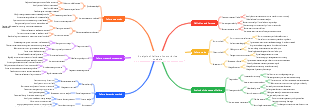
This is a mind map about "Chip War", which mainly includes: the impact and challenges of chip war, the competitive landscape of the global chip industry, the development history of the chip industry, and the foundation of the chip industry.
Edited at 2025-02-28 22:56:04Rumi: 10 dimensions of spiritual awakening. When you stop looking for yourself, you will find the entire universe because what you are looking for is also looking for you. Anything you do persevere every day can open a door to the depths of your spirit. In silence, I slipped into the secret realm, and I enjoyed everything to observe the magic around me, and didn't make any noise. Why do you like to crawl when you are born with wings? The soul has its own ears and can hear things that the mind cannot understand. Seek inward for the answer to everything, everything in the universe is in you. Lovers do not end up meeting somewhere, and there is no parting in this world. A wound is where light enters your heart.
Chronic heart failure is not just a problem of the speed of heart rate! It is caused by the decrease in myocardial contraction and diastolic function, which leads to insufficient cardiac output, which in turn causes congestion in the pulmonary circulation and congestion in the systemic circulation. From causes, inducement to compensation mechanisms, the pathophysiological processes of heart failure are complex and diverse. By controlling edema, reducing the heart's front and afterload, improving cardiac comfort function, and preventing and treating basic causes, we can effectively respond to this challenge. Only by understanding the mechanisms and clinical manifestations of heart failure and mastering prevention and treatment strategies can we better protect heart health.
Ischemia-reperfusion injury is a phenomenon that cellular function and metabolic disorders and structural damage will worsen after organs or tissues restore blood supply. Its main mechanisms include increased free radical generation, calcium overload, and the role of microvascular and leukocytes. The heart and brain are common damaged organs, manifested as changes in myocardial metabolism and ultrastructural changes, decreased cardiac function, etc. Prevention and control measures include removing free radicals, reducing calcium overload, improving metabolism and controlling reperfusion conditions, such as low sodium, low temperature, low pressure, etc. Understanding these mechanisms can help develop effective treatment options and alleviate ischemic injury.
Rumi: 10 dimensions of spiritual awakening. When you stop looking for yourself, you will find the entire universe because what you are looking for is also looking for you. Anything you do persevere every day can open a door to the depths of your spirit. In silence, I slipped into the secret realm, and I enjoyed everything to observe the magic around me, and didn't make any noise. Why do you like to crawl when you are born with wings? The soul has its own ears and can hear things that the mind cannot understand. Seek inward for the answer to everything, everything in the universe is in you. Lovers do not end up meeting somewhere, and there is no parting in this world. A wound is where light enters your heart.
Chronic heart failure is not just a problem of the speed of heart rate! It is caused by the decrease in myocardial contraction and diastolic function, which leads to insufficient cardiac output, which in turn causes congestion in the pulmonary circulation and congestion in the systemic circulation. From causes, inducement to compensation mechanisms, the pathophysiological processes of heart failure are complex and diverse. By controlling edema, reducing the heart's front and afterload, improving cardiac comfort function, and preventing and treating basic causes, we can effectively respond to this challenge. Only by understanding the mechanisms and clinical manifestations of heart failure and mastering prevention and treatment strategies can we better protect heart health.
Ischemia-reperfusion injury is a phenomenon that cellular function and metabolic disorders and structural damage will worsen after organs or tissues restore blood supply. Its main mechanisms include increased free radical generation, calcium overload, and the role of microvascular and leukocytes. The heart and brain are common damaged organs, manifested as changes in myocardial metabolism and ultrastructural changes, decreased cardiac function, etc. Prevention and control measures include removing free radicals, reducing calcium overload, improving metabolism and controlling reperfusion conditions, such as low sodium, low temperature, low pressure, etc. Understanding these mechanisms can help develop effective treatment options and alleviate ischemic injury.
"Chip War"
The chip industry foundation
Definition and Principles of Chip
Definition: Chips, i.e. integrated circuits (ICs), are microelectronic devices that integrate a large number of microelectronic components (such as transistors, resistors, capacitors, etc.) on micro semiconductor chips. They can be called the "brain" of modern electronic devices and are responsible for information processing and storage. In the book, Chris Miller emphasizes that chips, as the cornerstone of modern technology, have a profound impact on the global industrial structure. From consumer electronics to high-end national defense, chips are everywhere, and their importance is self-evident.
Working principle: Based on the characteristics of semiconductor materials, information is processed and stored by controlling the flow of current in components such as transistors. In a digital circuit, the transistor conduction and off states correspond to the binary "0" and "1" respectively, and data calculation, storage and transmission are realized through state combination and control. Miller pointed out that this basic principle seems simple, but supports a complex modern technology system and is the root cause of countries' competition for dominance in the chip industry.
Chip classification
Classified by function
Microprocessor (CPU): As the computer system computing and control core, it executes computer program instructions and performs data processing and operations. Such as Intel Core series and AMD Ryzen series CPUs, they are widely used in personal computers, servers and other devices. The book mentions that the improvement of CPU performance has promoted the rapid development of computer technology and played a key role in the global informatization process. Countries are competing fiercely for the research and development of high-performance CPUs.
Memory chip: used to store data and programs, divided into random access memory (RAM) and read-only memory (ROM). Dynamic random access memory (DRAM) is a common RAM used for computers to run memory and can read and write at any time, but the data is lost when powered off; Flash Memory is a ROM, which is often used to store operating system and user data of mobile phones, solid-state drives and other devices, and the data is not lost when powered off. Miller analyzed that the memory chip market is huge, and its technological innovation affects data storage and processing efficiency, and is an important area of competition in the chip industry.
Application-specific integrated circuits (ASICs): Customized designs for specific application scenarios, such as artificial intelligence chips for image recognition, security chips for mobile payments, etc., with strong targeted and optimized performance. Miller believes that with the development of emerging technologies, the demand for ASIC has increased significantly, which has promoted the intelligent and secure upgrades of various industries and has become the direction of differentiated competition in the chip industry in various countries.
Classified by manufacturing process
Silicon-based chip: Silicon is the main semiconductor material and is currently the most widely used. Manufacturing processes continue to improve, from the early micron-level development to today's 5-nanometer, 3-nanometer and other nano-level processes, chip integration continues to improve, performance is improved and power consumption is reduced. Miller pointed out that breakthroughs in silicon-based chip manufacturing processes are the key to promoting chip miniaturization and high performance, and are also the focus of countries investing a lot of resources in research and development.
Compound semiconductor chips: manufactured with compound semiconductor materials such as gallium arsenide (GaAs), gallium nitride (GaN), and have obvious advantages in high-frequency and high-power application scenarios, such as 5G communication base station radio frequency chips, power chips in power electronics fields, etc. The book emphasizes that the application of compound semiconductor chips in emerging communications and energy fields has made them an important layout direction for countries to seize the future industrial highland.
The development history of the chip industry
Early Development (Mid-20th century - 70s)
The invention of transistors: In 1947, scientists from Bell Laboratory invented transistors, which was an important milestone in the development of chips. The transistors are small in size, low in power consumption and high reliability, and gradually replace electronic tubes, laying the foundation for the development of integrated circuits. Miller emphasized that the invention of transistors has opened the door to miniaturization and high performance of electronic devices, which is a key step in the rise of the chip industry and has triggered a global wave of technological research and development.
The birth of integrated circuits: In 1958, Jack Kilby of Texas Instruments and Robert Noyce of Fairchild Semiconductor respectively invented integrated circuits independently, integrating multiple transistors and other components on a semiconductor chip to achieve miniaturization and high performance of electronic devices, opening a new era in the chip industry. Miller pointed out that the birth of integrated circuits is a revolutionary event in the development of the chip industry, which has prompted electronic devices to move from large-scale to miniaturization, and has promoted changes in the computer, communication and other industries.
Rapid development period (1980s - 1990s)
Advances in chip manufacturing processes: manufacturing processes such as lithography and etching technology are constantly improving, and the chip integration is greatly improved. From the early 10-micron process to the 1-micron process, the number of integrated transistors on the chip has increased exponentially, and the chip performance has been significantly improved. Miller believes that the progress of manufacturing process during this period was the core driving force for the rapid development of the chip industry. Countries compete fiercely in process research and development, which promoted the initial formation of the global division of labor in the chip industry.
The rise of personal computers and the Internet promotes chip demand: the popularity of personal computers and the rise of the Internet have put forward higher requirements on chip computing power and storage capacity. Intel launched x86 architecture processors, becoming the mainstream CPU of personal computers, and promoting the rapid development of the chip industry. At the same time, the demand for chips in network communication equipment has increased, promoting the development of communication chips. The book mentions that the popularity of personal computers and the Internet has enabled chips to move from professional fields to mass consumer markets, and market demand has exploded, accelerating the development of the chip industry.
Global division of labor and diversified development (early 21st century - to present)
The global division of labor system for the chip industry is formed: chip design, manufacturing, packaging and testing are gradually separated, forming a global division of labor system. The United States is leading in the field of chip design, with well-known companies such as Intel and Nvidia; TSMC and Samsung are leading in chip manufacturing; Taiwan, China and mainland China are in strong competitiveness in chip packaging and testing. Miller elaborated on the process of forming a global division of labor system, pointing out that countries participate in division of labor based on their own advantages, and at the same time, they also created a complex geopolitical game due to division of labor.
Drive chip innovation in emerging application fields: emerging application fields such as smartphones, Internet of Things, artificial intelligence, and big data are developing rapidly, and diversified demands for chip performance, power consumption, and functions are put forward to promote diversified innovation in the chip industry. For example, smartphones have high requirements for chip integration, graphics processing capabilities, and power consumption management, which has prompted chip companies to develop new architectures and processes; the field of artificial intelligence has strong demand for dedicated chips with powerful computing power, which has promoted the development of artificial intelligence chips. Miller emphasized that emerging application fields have become new engines for innovation in the chip industry, and countries have invested hugely in the research and development of emerging application chips and have fierce competition.
Competitive landscape of the global chip industry
Industrial advantages of major countries and regions
USA
Leading chip design: It has obvious advantages in the field of chip design, bringing together top companies such as Intel, Nvidia, and Qualcomm, leading in many fields such as microprocessors, graphics processors, and communication chips, and mastering core technologies and intellectual property rights. Miller pointed out that with its strong scientific research strength and innovation ecosystem, the United States has long been leading in the research and development of cutting-edge chip design technologies, consolidates its advantages through intellectual property protection, and occupies a high-end position in the global chip industry value chain.
Strong technical R&D capabilities: It has world-class scientific research institutions and universities such as Stanford University and MIT, providing strong technical R&D support for the chip industry. The US government attaches importance to investment in the chip industry R&D and promotes technological innovation through policy support and financial support. The book mentions that the US government, universities and enterprises have formed a close cooperative innovation system, and have made efforts in the entire process of basic research, applied research and product development, maintaining the United States' leading position in the field of chip technology.
China
Huge market demand: As the world's largest electronic product consumer market, China has huge demand for chips, providing broad market space for the development of the chip industry. The demand for chips by many domestic electronic equipment manufacturing companies such as Huawei, Xiaomi, and OPPO have promoted the development of the local chip industry. Miller believes that China's huge market demand is an important factor in attracting global chip companies, and it also provides a growth soil for local chip companies, and market demand feeds back to technology research and development and industrial development.
The industrial ecology is gradually improving: in recent years, China has made significant progress in chip design, manufacturing, packaging and testing. In terms of chip design, companies such as HiSilicon Semiconductor and Unigroup Zhanrui emerged; in terms of chip manufacturing, the technical level of companies such as SMIC has been continuously improving; in the field of packaging and testing, companies such as Changdian Technology and Tongfu Microelectronics have strong international competitiveness. The domestic system has also established and improved the supporting system for the semiconductor industry chain to provide strong guarantees for the development of the chip industry. The book introduces the process of China's chip industry ecosystem construction in detail, pointing out that China is moving from a big chip industry to a strong country, and the gradual improvement of the industrial ecosystem will enhance China's voice in the global chip industry.
South Korea
The advantages of chip manufacturing and memory chips are outstanding: Samsung and SK Hynix are highly competitive in the fields of chip manufacturing and memory chips. Samsung is one of the world's largest chip manufacturers. It is on par with TSMC in advanced process technology. In the field of memory chips, Samsung and SK Hynix occupy most of the global market share, leading the production and technology research and development of DRAM and NAND flash memory chips. Miller analyzed that through long-term technology accumulation and large-scale investment, Korean chip companies have formed strong competitive advantages in the fields of chip manufacturing and memory chips, and occupy an important position in the global chip industry.
Vertical integration industry model: Korean chip companies adopt vertical integration industry model, forming a complete industrial chain layout from chip design, manufacturing to packaging and testing. This model is conducive to enterprises controlling the production process, improving production efficiency and product quality, reducing costs, and enhancing market competitiveness. The book points out that the vertical integration model is one of the key factors for the success of Korean chip companies, giving them unique advantages in the competition of the global chip industry.
Competition situation for major enterprises
Intel: a world-renowned chip company, leading the field of microprocessors for a long time. With its strong technical R&D capabilities and extensive market share, Intel x86 architecture processors have a very high market share in personal computers and servers. However, in recent years, as competitors develop rapidly in chip manufacturing processes and emerging applications, Intel lags behind companies such as TSMC and Samsung in advanced process processes, and faces huge competitive pressure. Miller conducted an in-depth analysis of Intel's development history and pointed out that Intel faces challenges in the period of technological transformation. How to make breakthroughs in emerging application fields and advanced process technologies is the key to maintaining its competitiveness.
TSMC: The world's largest chip foundry manufacturer, focusing on chip manufacturing. Leading the world in advanced process technology, it is the first to achieve mass production of advanced process technology such as 5nm and 3nm, and provides manufacturing services to many chip design companies such as Apple, Huawei, and Nvidia. Strong manufacturing capabilities and high-quality services have made it occupy an important share in the global chip manufacturing market and have a significant impact on the development of the global chip industry. The book emphasizes that TSMC's leading position in the field of chip manufacturing not only changed the global chip industry structure, but also further separated the chip design and manufacturing links, promoting the deepening of the global division of labor in the chip industry.
Nvidia: It has absolute advantages in the field of graphics processors (GPUs), and GPU products are widely used in games, artificial intelligence, scientific computing and other fields. With the development of artificial intelligence technology, Nvidia has become an important participant in the field of artificial intelligence with its powerful GPU computing power, providing powerful computing support for artificial intelligence algorithm training and application. Through continuous technological innovation and product upgrades, Nvidia maintains its leading position in the GPU market and expands into fields such as autonomous driving chips. Miller analyzed that Nvidia seized the opportunity of artificial intelligence development and achieved business expansion through technological innovation, becoming a model of innovative development of the global chip industry. Its development model is of reference significance for other chip companies.
The impact and challenges of chip war
Impact on the global technology industry
Promote innovation and upgrading of the science and technology industry: The chip war has prompted countries to increase investment in chip technology research and development, and promote innovations in chip manufacturing processes, chip architectures, chip design, etc. These innovative achievements are not only applied to the chip industry itself, but also drive the upgrading and development of the entire technology industry. For example, artificial intelligence, Internet of Things, 5G communication and other fields will benefit from the advancement of chip technology and achieve performance improvement and application expansion. Miller pointed out that the competitive pressure brought by the chip war has become a catalyst for innovation in the technology industry, and the breakthroughs in chip technology research and development by various countries will push the global technology industry into a new period of rapid development.
Reshaping the global science and technology industry structure: Chip war may lead to changes in the global science and technology industry structure. As competition in various countries in the chip industry intensifies, some emerging countries and regions may make breakthroughs in the chip field and break the original industrial structure. For example, China's rapid development in the chip industry is expected to occupy a more important position in the global technology industry and change the competitive trend of the global chip industry. The book analyzes the possibility of emerging countries and regions rising in the chip industry, pointing out that the chip war will reshape the global science and technology industry map, and countries need to re-examine their status and development strategies in the global science and technology industry.
Challenges to national economic security
Chip supply risks: Chip wars may lead to interruption or instability in chip supply, which will have a serious impact on countries and enterprises that rely on chip imports. For example, during the Sino-US trade friction, the United States imposed a chip ban on Chinese companies such as Huawei, restricting Huawei's chip supply, which brought huge challenges to Huawei's business development. For some countries' critical infrastructure, such as communications, energy, finance, etc., chip supply issues may affect national economic security and social stability. Miller elaborated on the impact mechanism of chip supply risks on national economic security in detail, pointing out that countries need to build a diversified chip supply system to reduce supply risks and ensure national economic security.
Technology blockade and independent innovation pressure: In the chip war, some countries may impose technology blockade on other countries, restricting chip technology exports and exchanges. This brings huge difficulties to the development of the chip industry in restricted countries, forcing these countries to increase their independent innovation efforts and improve the independent and controllable capabilities of chip technology. However, chip technology research and development is difficult, high investment and long cycle, and it faces many challenges in achieving independent innovation. The book analyzes the paths and challenges of independent innovation in various countries under the background of technological blockade, and emphasizes that independent innovation is the only way to enhance the competitiveness of the national chip industry and ensure national economic security.
Outlook on future technological development
Development of emerging technologies such as quantum chips: In order to gain advantages in the chip war, countries have increased their investment in the research and development of emerging chip technologies, and quantum chips have become a research hotspot. Quantum chips use the principles of quantum mechanics to process information, with faster computing speed and stronger computing power, which is expected to trigger a revolution in the field of computing in the future. In addition, emerging technologies such as carbon-based chips and neuromorphic chips are also constantly exploring and developing, which may bring new breakthroughs to the future chip industry. Miller analyzed the development trends of emerging chip technology and pointed out that emerging chip technology will bring unlimited possibilities to future technological development, and the competition among countries in the research and development of emerging technologies will determine the future development direction of the global chip industry and technology industry.
International cooperation and competition coexist: Although chip wars are fierce, international cooperation is still necessary in some areas. The chip industry has a high degree of globalization and involves enterprises and scientific research institutions from many countries and regions. In the fields of basic research and common technologies, international cooperation can integrate resources and accelerate technological innovation. At the same time, the competition among countries in the chip industry will also encourage enterprises to continuously improve their competitiveness and promote the sustainable development of the chip industry. The book emphasizes that in the context of chip war, all countries should correctly handle competition and cooperative relations, improve technological innovation capabilities through international cooperation, and achieve high-quality development of the chip industry in competition.