MindMap Gallery Retrospective papers
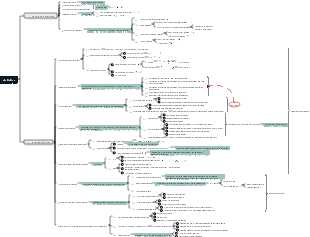
This is a mind map about a retrospective paper, which mainly introduces the relevant content and steps of writing a retrospective paper, including: submission, writing methods, statistical methods, and topic selection.
Edited at 2025-03-02 13:22:21Rumi: 10 dimensions of spiritual awakening. When you stop looking for yourself, you will find the entire universe because what you are looking for is also looking for you. Anything you do persevere every day can open a door to the depths of your spirit. In silence, I slipped into the secret realm, and I enjoyed everything to observe the magic around me, and didn't make any noise. Why do you like to crawl when you are born with wings? The soul has its own ears and can hear things that the mind cannot understand. Seek inward for the answer to everything, everything in the universe is in you. Lovers do not end up meeting somewhere, and there is no parting in this world. A wound is where light enters your heart.
Chronic heart failure is not just a problem of the speed of heart rate! It is caused by the decrease in myocardial contraction and diastolic function, which leads to insufficient cardiac output, which in turn causes congestion in the pulmonary circulation and congestion in the systemic circulation. From causes, inducement to compensation mechanisms, the pathophysiological processes of heart failure are complex and diverse. By controlling edema, reducing the heart's front and afterload, improving cardiac comfort function, and preventing and treating basic causes, we can effectively respond to this challenge. Only by understanding the mechanisms and clinical manifestations of heart failure and mastering prevention and treatment strategies can we better protect heart health.
Ischemia-reperfusion injury is a phenomenon that cellular function and metabolic disorders and structural damage will worsen after organs or tissues restore blood supply. Its main mechanisms include increased free radical generation, calcium overload, and the role of microvascular and leukocytes. The heart and brain are common damaged organs, manifested as changes in myocardial metabolism and ultrastructural changes, decreased cardiac function, etc. Prevention and control measures include removing free radicals, reducing calcium overload, improving metabolism and controlling reperfusion conditions, such as low sodium, low temperature, low pressure, etc. Understanding these mechanisms can help develop effective treatment options and alleviate ischemic injury.
Rumi: 10 dimensions of spiritual awakening. When you stop looking for yourself, you will find the entire universe because what you are looking for is also looking for you. Anything you do persevere every day can open a door to the depths of your spirit. In silence, I slipped into the secret realm, and I enjoyed everything to observe the magic around me, and didn't make any noise. Why do you like to crawl when you are born with wings? The soul has its own ears and can hear things that the mind cannot understand. Seek inward for the answer to everything, everything in the universe is in you. Lovers do not end up meeting somewhere, and there is no parting in this world. A wound is where light enters your heart.
Chronic heart failure is not just a problem of the speed of heart rate! It is caused by the decrease in myocardial contraction and diastolic function, which leads to insufficient cardiac output, which in turn causes congestion in the pulmonary circulation and congestion in the systemic circulation. From causes, inducement to compensation mechanisms, the pathophysiological processes of heart failure are complex and diverse. By controlling edema, reducing the heart's front and afterload, improving cardiac comfort function, and preventing and treating basic causes, we can effectively respond to this challenge. Only by understanding the mechanisms and clinical manifestations of heart failure and mastering prevention and treatment strategies can we better protect heart health.
Ischemia-reperfusion injury is a phenomenon that cellular function and metabolic disorders and structural damage will worsen after organs or tissues restore blood supply. Its main mechanisms include increased free radical generation, calcium overload, and the role of microvascular and leukocytes. The heart and brain are common damaged organs, manifested as changes in myocardial metabolism and ultrastructural changes, decreased cardiac function, etc. Prevention and control measures include removing free radicals, reducing calcium overload, improving metabolism and controlling reperfusion conditions, such as low sodium, low temperature, low pressure, etc. Understanding these mechanisms can help develop effective treatment options and alleviate ischemic injury.
Retrospective papers
Topic selection
Important points
novel
New technologies, new drugs, new surgeries-targeting therapeutic research
New targets, new molecules, new diagnosis-targeted diagnostic research
New models, new evaluations, new predictions-targeted predictive research
New methods, new experiments, new scales - new methods, new designs or larger-scale clinical research
feasible
Research is feasible
Is there any data for the topic selection
Is the sample sufficient?
Is the data complete?
it works
Research has clinical application value
How to choose a topic
Standing on the boss's shoulder
Utilize new surgical techniques, treatment methods and clinical drugs in the department
Standing on someone else's shoulders
Find the latest literature, understand the latest prediction models and targets, and change your thinking
eg. CNS score predicts prognosis of patients with pimcos against non-small cell lung cancer
Literature search and management
Commonly used databases
Abstract Database
English: Pubmed, Web of Science, EMBASE
Chinese: Wanfang, CNKI, VIP, CBM
Full-text database
Chinese: Full-text database of Chinese journals
English: GeenMedical (Sci-hub), ScienceDirect, SpringerLink
Search Strategy
Reading strategies
Intensive reading of literature
Comply with most keywords - full text reading - article structure, references
Rough reading of literature
Comply with a few keywords - Select to read - Method table references
Read extensive literature
Conform to one keyword - abstract reading - background discussion, reference
Read more Chinese magazine literature
Search Method
Full text search
Pubmed, Web of Science, SCI-Hub, Geenmedical recommendations, original delivery or email request
Topic selection
Magazine method: Search professional field magazines and browse the latest literature
Determine the disease method
Determined type method: Search for articles of a certain type
Comprehensive method
Check new
or and
Literature grading reading
Endnote
Article structure
Core elements
Research objects
Include exclusion criteria and clinical data
Research Methods
Intervention measures, comparison measures
Evaluation measures
Major endings, secondary endings
Statistical Methods
General statistics, special statistics
Architecture Methods
Treatment research
Target research
Statistical Methods
Data collection and entry
Research object list: baseline data, laboratory data, targets, etc.
Intervention: Treatment data
Evaluation measures: outcome indicators, follow-up results
Statistical methods and variable types
Continuous variables - input numerical value, binary classification variable - input whether (Yes=1, NO=0), multi-categorical variables - define variable names, ordered variables - level data, survival data - status time
application
Data used in all non-randomized studies/research data with confounding factors
SPSS data entry
Automatic import (recommended) - File - Import data - Excel - Select data set - Adjust variable name and variable information
Manual entry: File - New - Data - Variable View - Define variables according to Excel - Enter data
Proneness score matching PSM
concept
It means screening the experimental group and the control group through certain statistical methods, so that the selected objects are comparable in terms of certain important clinical characteristics.
principle
Usually, grouped variables are used as dependent variables, and the confounding factors that may affect the results are constructed as covariates, to obtain the tendency scores of multiple covariates of each observation model, and then match according to the proximity principle.
Testing method after PSM
Sub-theme 1
Sub-theme 1
Use SPSS for PSM
Medical Statistics
Data Type
Measuring data: The measurement is the size of the value, generally there are units
Continuous variables: height, weight
Discrete variables: pregnancy, diarrhea
Description method: Normal distribution: mean ± standard deviation (discrete size); does not conform to normal distribution: median, percentile (upper and lower quartiles), median (interquartile spacing)
Counting data (categorized data): Grouped by characteristics, counting the number, generally no unit of measurement
Disordered classification data: each item is incompatible, and it is divided into two-item classification and multiple-item classification data: such as ABO blood type
Orderly classification data: All kinds of seeds have hierarchical order relationship: NYHA cardiac function grading
Description method: relative comparison, composition ratio, rate (morbidity, mortality, prevalence): number of cases (constitution ratio)
Confidence interval:
Estimate the range of possible existence of unknown overall parameters based on certain probability (confidence)
Hypothesis test
Probability of H0
Normal test method
Histogram of frequency distribution
Analysis - Description Statistics - Frequency - Chart Type) Histogram (Show normal curves in histogram—); Frequency - PP graph, Q-Q graph
KS Inspection
Nonparametric test - Old dialog - Single sample K-S, list of test variables
Exploratory test method (recommended): including histogram, Q-Q graph, K-S test
Descriptive statistics-exploration-Figure-factor-level juxtaposition, stem and leaf graph, normal graph with test
Homogeneity test of variance
Levine Inspection
For example, the homogeneity test of variance during t-test: Analysis - Comparison mean - Independent sample t-test - Select the first row result when the homogeneity of variance (p>0.05), and select the second row result when the homogeneity of variance (P<0.05).
How to deal with uneven variance
Select Nonparametric Test
Select the correct value of Brown-Forsythe or Welch
Operation: Single-factor ANOVA test-option-statistics (homogeneity test, Brown-Forsyth, Welch), case excluding according to specific analysis
When comparing two pairs, Tamhane's T2 or Dunnett's T3, etc. under the assumption of unequal variance.
Univariate ANOVA test-post hoc comparison-not assumption of equal variance (Tamheni, Dunnett T3), significant level 0.05
Measuring data inspection method
Parameter test (normal distribution)
Two groups-T tests (conditions: metrological data, single sample or two samples, normal distribution, equal variance)
Single sample t test: Comparison of whether there is any difference between the mean and the population mean of a sample
Example: Is the age of a CAD patient older than 60 years old?
Operation: Analysis - Comparison of mean - Single sample T test
Independent t test (independent sample): Comparison of whether there are differences in the mean of the two samples
Comparison of age between CABG and PCI groups
Operation: Analysis - Comparison of mean - Independent sample T test
Paired t-test (paired samples): Comparison of whether there are differences in the mean number of two paired samples
Sample: 1. Two homogeneous subjects received two different treatments; (patients of the same gender, the same condition, the same age, or paired patients after PSM; 2. Two parts of the same subject received different treatments (different drugs were given separately on the left and right arms) 3. The same subject received some treatment before and after receiving certain treatment (blood pressure before and after taking antihypertensive drugs)
Example: Comparison of age between CBG and PCI groups after PSM
Multi-group-analysis of variance (conditions: metrological data, two samples or multiple samples, normal distribution, variance)
One-way ANOVA: Comparison of whether there are differences in the mean number of samples in multiple groups
Example: Comparison of metrological data of 4 groups of patients
Operation: Analysis - Comparison of mean value - Single-factor ANOVA test - dependent variable selection measurement data to compare, factor selection group - option check description, variance homogeneity test, Brown-Forsyth, Welch)
Comparison between the mean in multiple groups: further comparison of the differences between the groups
Common tests: SNK-q test (no p-value is displayed, only if there is a statistical difference), LSD-t test (the P value is small, but it is prone to type I errors), Dunnett-t test (comparison with the control group), Bonfferoni method (conservative, available when the comparison is not many times)
Random block design (compatibility group design): Ensure that the characteristics of the observed objects in each block are as close as possible
Comparison of the measurement data of the four groups of patients, and observed whether there was a difference in the total cholesterol reduction value between the four groups and the zone groups.
Operation: Analysis - General linear model - Univariate - Select the observation indicators into the dependent variable, select the group and block group into the fixed factor - Select the construction item in the model, select the group and block group into the main effect - multiple comparisons after the event, and select the factors that need to be compared - result output, Group P < 0.01, SEX p = 0.073, indicating that there are significant differences in TOTALreduction between different groups, but no differences between different genders.
Analysis of variance of repeated measurement data: Comparison of changes in the same indicator at different time points of multiple groups of samples.
Example: Total cholesterol indexes before, after treatment, 1 month and 2 months of 4 groups of patients
Operation: Analysis - General linear model - Repeat measurement - Definition factor TIME, Number of levels 3 - Definition - Select variables at different time points - Select Group into intersubject factor - Results Analysis - Spherical test, P> 0.05, conforming to spherical distribution - TIME, P < 0.001, there are significant differences between different time points, affected by time, TIME Group, P < 0.001, there are interactions between time and group-subject effect Group, P < 0.001, there are significant differences between different groups
Nonparametric test (non-normal distribution)
Mann-Whitney U Test (Independent Sample)
Operation: Analysis - Nonparametric Test - Old Dialog Box - 2 independent samples - Select the group and comparison variables into the group variable and the test variable respectively - Options - Statistics (check description, quartiles) Exclude cases according to the test-
Wilcoxon rank sum test (paired samples)
Operation: Analysis - Non-parametric test - Old dialog box - 2 related samples - Select two paired variables in respectively - Click option, (check description, quartile) Exclude cases according to the test
Nonparametric tests for multiple independent samples
Kruskal-Wallis rank sum test
Operation: Analysis - Nonparametric Test - Old Dialog Box - K independent samples - Select group variables and test variables into the - Click options, (check description, quartiles) Exclude cases according to the test
A pair of comparisons of independent samples in multiple groups
Analysis - Nonparametric test - Independent sample - Target constant - Field (select group variables and test fields) - Settings (select custom test - Kruzkar-Wally, all in pairs) - Select Adj significance
Multiple paired samples (random zone) non-parametric test
Friedman M test (non-satisfied normal distribution and variance)
Operation - Analysis - Nonparametric Test - Old Dialog Box - K Related Samples - Select the test variables (note the grouping), test type - Fu Leedman - Statistics - Check description, quartile
Counting data inspection method
Nonparametric testing method (level data): applicable to unknown data of the overall distribution, does not conform to normal distribution, and homogeneity of variance; level data
Kruskal-Wallis rank sum test (independent sample)
By comparing the average rank of the two groups of samples, we can test whether the mean values of the two populations are significantly different. The measurement data and counting data of two independent samples are suitable for the measurement data of two independent samples.
Friedman M test (paired samples
Chi-square inspection (non-grade information)
Nonparametric test method
Survival analysis
Correlation and regression analysis
Diagnostic studies and ROC curves
Statistical inference and sample size estimation
Writing method
Submit
Free Theme
Proneness Matching Rating PSM