 Wondershare EdrawMind
MindMap Gallery The Legend of Elon Musk
- 116
The Legend of Elon Musk
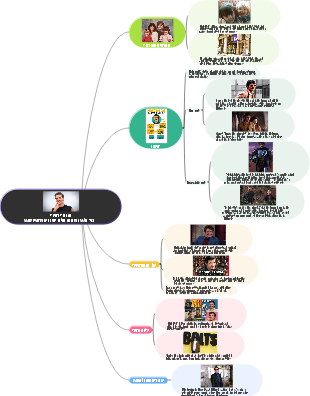
This is a mind map about "The Biography of Elon Musk", which mainly includes: influence and controversy, family and emotional life, entrepreneurial journey, study path, and Musk.
Edited at 2025-03-02 19:47:12
- Rumi 10 spiritual high-dimensional awakenings
Rumi: 10 dimensions of spiritual awakening. When you stop looking for yourself, you will find the entire universe because what you are looking for is also looking for you. Anything you do persevere every day can open a door to the depths of your spirit. In silence, I slipped into the secret realm, and I enjoyed everything to observe the magic around me, and didn't make any noise. Why do you like to crawl when you are born with wings? The soul has its own ears and can hear things that the mind cannot understand. Seek inward for the answer to everything, everything in the universe is in you. Lovers do not end up meeting somewhere, and there is no parting in this world. A wound is where light enters your heart.
- Pathophysiology - Heart failure
Chronic heart failure is not just a problem of the speed of heart rate! It is caused by the decrease in myocardial contraction and diastolic function, which leads to insufficient cardiac output, which in turn causes congestion in the pulmonary circulation and congestion in the systemic circulation. From causes, inducement to compensation mechanisms, the pathophysiological processes of heart failure are complex and diverse. By controlling edema, reducing the heart's front and afterload, improving cardiac comfort function, and preventing and treating basic causes, we can effectively respond to this challenge. Only by understanding the mechanisms and clinical manifestations of heart failure and mastering prevention and treatment strategies can we better protect heart health.
- Pathophysiology - ischemia - reperfusion injury
Ischemia-reperfusion injury is a phenomenon that cellular function and metabolic disorders and structural damage will worsen after organs or tissues restore blood supply. Its main mechanisms include increased free radical generation, calcium overload, and the role of microvascular and leukocytes. The heart and brain are common damaged organs, manifested as changes in myocardial metabolism and ultrastructural changes, decreased cardiac function, etc. Prevention and control measures include removing free radicals, reducing calcium overload, improving metabolism and controlling reperfusion conditions, such as low sodium, low temperature, low pressure, etc. Understanding these mechanisms can help develop effective treatment options and alleviate ischemic injury.
The Legend of Elon Musk
- Rumi 10 spiritual high-dimensional awakenings
Rumi: 10 dimensions of spiritual awakening. When you stop looking for yourself, you will find the entire universe because what you are looking for is also looking for you. Anything you do persevere every day can open a door to the depths of your spirit. In silence, I slipped into the secret realm, and I enjoyed everything to observe the magic around me, and didn't make any noise. Why do you like to crawl when you are born with wings? The soul has its own ears and can hear things that the mind cannot understand. Seek inward for the answer to everything, everything in the universe is in you. Lovers do not end up meeting somewhere, and there is no parting in this world. A wound is where light enters your heart.
- Pathophysiology - Heart failure
Chronic heart failure is not just a problem of the speed of heart rate! It is caused by the decrease in myocardial contraction and diastolic function, which leads to insufficient cardiac output, which in turn causes congestion in the pulmonary circulation and congestion in the systemic circulation. From causes, inducement to compensation mechanisms, the pathophysiological processes of heart failure are complex and diverse. By controlling edema, reducing the heart's front and afterload, improving cardiac comfort function, and preventing and treating basic causes, we can effectively respond to this challenge. Only by understanding the mechanisms and clinical manifestations of heart failure and mastering prevention and treatment strategies can we better protect heart health.
- Pathophysiology - ischemia - reperfusion injury
Ischemia-reperfusion injury is a phenomenon that cellular function and metabolic disorders and structural damage will worsen after organs or tissues restore blood supply. Its main mechanisms include increased free radical generation, calcium overload, and the role of microvascular and leukocytes. The heart and brain are common damaged organs, manifested as changes in myocardial metabolism and ultrastructural changes, decreased cardiac function, etc. Prevention and control measures include removing free radicals, reducing calcium overload, improving metabolism and controlling reperfusion conditions, such as low sodium, low temperature, low pressure, etc. Understanding these mechanisms can help develop effective treatment options and alleviate ischemic injury.
- Recommended to you
- Outline




"The Legend of Elon Musk"
Musk
Growth background
Home environment
Father: Errol Musk, as an engineer, has a complex and multi-faceted personality. He has extraordinary imagination, such as imagining a formula to calculate the winning rate of 21 points, which reflects his bold and innovative way of thinking, but at the same time, he is extremely unstable, sometimes furious, lacks due care and respect for his family, and often uses verbal or physical violence to his wife Meyer. This harsh family environment left indelible psychological trauma in the young Musk's heart, making Musk both eager for care and stability during his growth, but also had to learn to protect himself and become tenacious and independent. However, the father's traits of taking risks and bold imagination also had a profound impact on Musk in a subtle way, sowing the seeds for his future bold innovation in the fields of business and technology.
Mother: Mayer Holdman, from Canada, has both nutritionist and model identities. His beauty and elegance are eye-catching. He was also shortlisted for the South African beauty pageant finals. In a difficult family situation, Meyer demonstrated admirable independence and strength. Although she failed to find the best way for Musk in her early years when it comes to educating her children, she always worked hard to develop her career and provide financial support to her family. Her perseverance has become the spiritual pillar of Musk's growth path, allowing Musk to learn to persevere and strive for progress in difficulties.
Ancestors: Grandfather Joshua Holdman is an adventurous man who resolutely decided to lead his family to immigrate to South Africa. This courage to challenge the unknown and open up a new life is deeply imprinted in the family's genes. As a cryptographer and military intelligence official, grandfather Walter Musk's rigorous thinking and exploring spirit of unknown fields have also injected a unique temperament into the family's inheritance. The family's adventure genes and exploration spirit continued to ferment during Musk's growth, prompting him to be curious about the unknown world, laying a solid foundation for him to start a business boldly and explore the cutting-edge fields of science and technology in the future.
Childhood experience
School bullying: Musk's childhood in South Africa was full of pain and hardship. He often suffered from school violence, and in school he became the target of bullying, with great damage to both his body and his mind. This unbearable experience deeply shaped his character. On the one hand, he became extremely strong and indomitable when facing difficulties. This kind of tenacious quality became an important support for him to deal with entrepreneurial challenges in the future. On the other hand, long-term bullying also made him become fragile and sensitive inside, and had a very high tolerance for risks, because he knew the difficulty of surviving in difficulties. At the same time, he longs for a grand mission full of drama and can change the course of human civilization in order to prove his value and get rid of the shadow of painful past experiences.
The budding interest: Musk was lonely and introverted in his youth, and books became his best partner. He is addicted to reading various books, especially science fiction books. These imaginative works are like a key, opening up a brand new world for him, greatly expanding his thinking space, and inspiring his infinite imagination of future technology. In the 1980s, computer technology sprung up like mushrooms after a rain, and Musk keenly captured the charm of this emerging thing. With his strong curiosity and self-study ability, he began to teach programming by himself and successfully developed computer games. This experience not only demonstrated his talent in technology, but also made his enthusiasm for exploring new technologies increasingly high, laying a solid foundation for him to devote himself to the field of science and technology in the future and carry out a series of pioneering careers.
Characteristic traits
Innovation and Adventure: Musk has a heart that dares to break through the shackles of traditional thinking. His mind is always full of all kinds of fantasy ideas, and he has the courage to put these seemingly fantasy ideas into practice. In the field of electric vehicles, traditional fuel vehicles dominated at that time, and electric vehicles were regarded as an unrealistic fantasy. However, Musk firmly believed that electric vehicles would lead the future development direction of transportation, and resolutely devoted himself to it, founded Tesla, committed to building high-performance and long-range electric vehicles, and promoted the transformation of the global automobile industry to sustainable energy. In terms of space exploration, he founded SpaceX with the goal of realizing human immigration to Mars and making humans an interstellar civilization. He dared to challenge traditional aerospace models and developed reusable rocket technology, which greatly reduced the cost of space exploration. In addition, he is also involved in brain-computer interfaces, solar energy and other fields. Every project is full of innovation and adventure. He constantly challenges the inherent models of the industry and promotes the technological boundaries to continue to expand.
Tough and persistent: During Musk's entrepreneurial journey, he encountered countless difficulties and setbacks, but he consistently maintained his perseverance and unswerving belief. Taking SpaceX as an example, in the early stages of rocket development, many launches ended in failure. From 2006 to 2008, the first three launches of the Falcon 1 rocket on Kwajalin Island were declared failure due to the corrosion of cheap B-nuts, the lack of installation of preventing fuel from shaking, and engine cooling system problems. However, Musk was not defeated by these failures. He and his team learned lessons from each failure, constantly improving their technology and adjusting their plans. Finally, in September 2008, the fourth launch was successful, followed by a series of major achievements such as NASA's $1.6 billion contract. Tesla also faced many difficulties in its early stages of development, such as technology research and development bottlenecks, shortage of funds, low market recognition, etc., and even on the verge of bankruptcy. However, with its tenacious perseverance, Musk tried every means to raise funds, overcome technical problems, and gradually opened up the market, making Tesla a leading company in the global electric vehicle industry.
Forward and tough: Musk's style of acting is direct and decisive, he never speaks in a roundabout way, and he is not good at considering the feelings of others. At work, he has almost strict requirements on team members and pursues the ultimate work quality and efficiency. He firmly believes that only by high standards and strict requirements can we build the top products and teams. For example, during the production process of Tesla cars, he strictly checked the quality of every component and every production process. Once problems were found, he would point them out and ask for immediate rectification. Although this straightforward and tough management style has caused some controversy to a certain extent, some employees may think that he is too cruel and ruthless, it is also this style that prompts team members to constantly challenge themselves, achieve their goals efficiently, and promote the rapid development of the company.
The road to study
Queen's College (1990 - 1991)
Academic and Social: Musk spent his freshman and sophomore years at Queen’s University, and this experience had a significant impact on his growth. At school, he met his dormitory classmate Nawad Farouk. The two of them have like-mindedness and often play strategy games together. These strategy games not only train their thinking and decision-making abilities, but also accumulate valuable experience for their future competition and cooperation in the business field. During this period, Musk received a rare internship in the financial industry, and he joined the bank's strategic planning team. During the internship, he gained an in-depth understanding of the operating model of the traditional financial industry, including financial product design, risk assessment, marketing promotion and other links. This internship experience gave him a more intuitive and in-depth understanding of the traditional financial industry, and also laid the groundwork for his future innovation in the field of financial technology.
Change of thought: Through internships in banks, Musk has profound doubts about the operating model of the traditional financial industry. He found that the traditional financial industry has many disadvantages, such as inefficient efficiency, inconvenient service, and low acceptance of innovation. These questions made him realize that the traditional financial industry needed a change, and he hoped to be the promoter of this change. At the same time, during the internship, he also received some valuable suggestions. Some people suggested that he start a business first, accumulate practical experience before going to a master's degree. This suggestion made him firm his mind. He decided not to work for others, but to start his own business and achieve innovation and change in the financial industry through his own efforts. So, after completing his sophomore year, he resolutely decided to transfer to the University of Pennsylvania to find a broader development space for his entrepreneurial dream.
University of Pennsylvania (1992 - 1994)
Academic Development: After transferring to the University of Pennsylvania, Musk ushered in a further broadening of his knowledge horizon. The University of Pennsylvania has rich academic resources and excellent faculty, which provides him with a good learning environment. During his junior year's summer vacation, he took into account both jobs in Silicon Valley and made full use of his holiday time to improve himself. During the day, he focused on "supercapacitors", an energy storage device with huge potential that can provide efficient energy for electric vehicles and space weapons, among others. During the research process, he studied in-depth knowledge of materials science, electrochemistry and other related knowledge, and constantly explored how to improve the performance and stability of supercapacitors. At night, he solved program problems at the game company, used his programming skills to optimize the game's algorithms and user experience. This experience not only allowed him to explore in his professional field in depth, but also planted the seeds of studying electric vehicles in his heart. He saw the application prospects of supercapacitors in the field of electric vehicles, and also developed a strong interest in the development of electric vehicles, laying the technical foundation for him to start Tesla in the future.
Social Growth: At the University of Pennsylvania, Musk became roommates with social expert Adeo Resci. Adeo Resci is good at socializing, has extensive networking resources and excellent interpersonal skills. Musk realized his shortcomings in social interaction and actively learned from Adeo Resci. They held parties together, and by organizing and participating in these social activities, Musk gradually learned how to communicate with people, how to build and maintain relationships. He began to actively communicate with people from different backgrounds to understand their ideas and needs, which not only made up for his own social skills, but also accumulated valuable social experience for him to lead the team and expand his business territory in the future. He learned how to motivate team members and build good relationships with partners, and these social skills played a major role in his future entrepreneurial career.
Entrepreneurship history
Zip2 (1995 - 1999)
Project concept: Musk keenly understands people's demand for information integration and convenient travel in the Internet era, and puts forward an innovative concept that combines enterprise lists and maps. He envisioned developing a platform where users could query detailed information of various companies and plan the route to the company through the map function to understand the traffic conditions in advance, providing great convenience for people's travel and business activities. This idea was forward-looking at the time, combining traditional corporate information with emerging Internet map technology to create a new service model.
Development history: In the early stage of entrepreneurship, the conditions were extremely difficult. Elon and his younger brother Kimball worked together to work together. They devoted themselves to project development, worked day and night, and overcame many difficulties such as technical difficulties and shortage of funds. By 1997, their products had made significant progress, adopted by 140 newspapers, gradually emerging in the market. However, with the continuous development of the company, internal contradictions gradually emerge. Musk and investors have serious differences in the company's development strategy and equity distribution. Investors prefer conservative development strategies, while Musk hopes to boldly innovate and quickly expand the market. This disagreement eventually led to Musk being expelled from the board of directors and being cut off his rights in the company. Despite the setbacks, Musk did not give up. He learned lessons from this experience and accumulated valuable experience for his future entrepreneurship.
Final Results: In 1999, Zip2 was acquired for a high price of $307 million, and the news shocked the industry. The Musk brothers earned a generous return with their stake in the company, Elon earned $22 million and Kimball received $15 million. This fund provides Musk with important startup capital for his subsequent entrepreneurial plan, giving him more sufficient funds to pursue his dreams and embark on a new entrepreneurial journey.
X.com/PayPal (1999 - 2002)
Original intention of founding: In the context of the booming Internet era, Musk envisioned a one-stop store that can meet all financial needs. He saw the limitations of traditional financial services in the Internet era, such as cumbersome transaction procedures, high fees, and inconvenient services. He hopes to use the innovative financial service model to break the barriers of traditional finance through Internet technology and provide users with more convenient, efficient and low-cost financial services. The platform he envisioned not only can realize convenient payment functions, but also can provide comprehensive financial services such as savings, loans, and investment to meet people's needs for convenient financial transactions in the Internet era.
Development twists and turns: After X.com was founded, it encountered many challenges in its development process. First, Musk and partner Harris Flick had serious differences on the direction of the company's development. Harris Flick pays more attention to short-term interests, while Musk focuses on the long-term development of the company and hopes to invest more resources in technology research and development and market expansion. This disagreement led to the collective resignation of Frick and most of his employees, which brought a heavy blow to the company's development. However, Musk was not intimidated by the difficulties, and he quickly adjusted his strategy and actively looked for solutions. Subsequently, X.com merged with PayPal and continued to promote under the PayPal brand. During the merger integration process, we faced a series of problems such as technological integration, team collaboration, and cultural conflicts. However, with its outstanding leadership skills and firm belief, Musk led the team to gradually overcome these difficulties.
Listing and Acquisition: After a series of efforts and developments, PayPal successfully went public in 2002, marking the company's recognition in the capital market. In July of the same year, PayPal was acquired by eBay for $1.5 billion, and Musk received a return of about $250 million. This acquisition not only allowed Musk to accumulate huge wealth, but more importantly, he has accumulated valuable experience in the field of financial technology. He has a deep understanding of the operating model, market demand and competitive trend of the financial payment industry, providing him with rich experience and reference for his future entrepreneurship in other fields.
SpaceX (May 2002 - present)
Creation goal: Musk's goal of founding SpaceX is grand and ambitious. He is committed to making humans immigrate to Mars and making human civilization an interstellar civilization. He is well aware that the earth's resources are limited and mankind is facing many challenges, such as environmental deterioration, population growth, resource shortage, etc. For the long-term development of mankind, he believes that it is necessary to find a new survival home and expand human survival space. As the closest neighbor of the earth, Mars has relatively suitable environmental conditions and has become his ideal goal for human immigration. He hopes to reduce the cost of space exploration through SpaceX's efforts, realize the settlement of human beings on Mars, and open up a new path for the continuation and development of human civilization.
Key Process
Technical breakthrough: SpaceX's team adheres to a unique concept in the process of technical research and development. Based on the first principles, they start from basic physics, and deeply question and re-examine every requirement of rocket manufacturing. They do not blindly follow traditional rocket design and manufacturing methods, but instead boldly innovate and explore better solutions based on the most basic principles. For example, in the selection of rocket materials, they have adopted a lot of experiments and research and selected new lightweight and high-strength materials. While ensuring the strength of the rocket's structural strength, they have greatly reduced the weight of the rocket and improved the rocket's carrying capacity. In terms of engine design, they continuously optimize the engine's combustion efficiency and thrust regulation technology to improve the engine's performance and reliability. Team members adhere to a sense of fanatical urgency and race against time to conduct technical research and development and testing. They know that every technological breakthrough is related to the future of the company and the process of human exploration of space. They constantly learn from failures, summarize experiences and lessons, and optimize and improve technical solutions. For example, after a rocket launch failed, they quickly organized a team to conduct troubleshooting. Through the analysis of rocket flight data and research on rocket wreckage, they found out the causes of the failure, and made targeted technical improvements, and finally successfully achieved the launch of the rocket.
Launch setbacks: During the 2006-2008 period, the Falcon 1 rocket suffered a failure in its first three launches on Kwajalin, putting huge pressure on SpaceX. The first launch failed because the cheap B-nut was corroded, causing structural failure of the rocket during flight; the second launch failed because the partition plate was not installed to prevent fuel from shaking, causing the rocket to shake during flight, affecting the stability of the rocket; the third launch failed because there was a problem with the engine cooling system, which caused the engine to overheat and shut down. These failures did not defeat Musk and his team, but instead made them more united and inspired their fighting spirit. They regard every failure as a valuable learning opportunity, analyze the causes of failure in depth, and continuously improve technology and processes.
Breakthrough and Achievement: After many failures, the fourth launch of the Falcon 1 Rocket was finally successful in September 2008. This news made the entire team cheer and allowed the world to see SpaceX's strength. Subsequently, in December, SpaceX received a $1.6 billion contract for NASA to conduct 12 round trips between the space station and the earth, marking a major breakthrough in commercial space and recognized by the international aerospace community. In May 2020, SpaceX successfully sent two NASA astronauts to the International Space Station, which is another important milestone in the history of human spaceflight, further demonstrating SpaceX's technical strength in the field of manned space. In addition, SpaceX has also launched the Starlink program, which will build a global satellite Internet network by launching a large number of communication satellites, providing high-speed Internet access services to people in remote areas on the earth, and also providing financial support for the trip to Mars program. As of now, the Starlink program has launched thousands of satellites, and some regions have begun to try Starlink Internet services, achieving good results.
Tesla (2003 - present)
Industry Vision: The original intention of Tesla was to reshape the field of new energy vehicles, create fully autonomous electric vehicles, and promote the transformation of the global automotive industry toward sustainable energy. Musk is well aware of the energy crisis brought about by the environmental pollution and dependence on oil resources by traditional fuel vehicles. He firmly believes that electric vehicles will be the future development direction of the automobile industry. He hopes that through Tesla's efforts, electric vehicles will become the first choice for people's daily travel, reduce their dependence on traditional fuel, reduce carbon emissions, and deal with global climate change. He is committed to building high-performance, long-range and intelligent electric vehicles, changing people's inherent perception of electric vehicles, and promoting the continuous progress of electric vehicle technology.
Development stage
Initial start: Tesla was officially founded in 2003. In the early stages of starting a business, Tesla faced many difficulties. First of all, in terms of technological research and development, the core technologies of electric vehicles, such as battery technology, motor technology, autonomous driving technology, etc., all require a lot of capital investment and long-term R&D exploration. At that time, the low energy density and short range of batteries became the key factors restricting the development of electric vehicles. The Tesla team has invested a lot of energy to research new battery materials and battery management systems, striving to improve battery performance. At the same time, in terms of motor technology, the motor design and control algorithms are continuously optimized to improve power output and efficiency. In terms of autonomous driving technology, since the relevant technologies were still in their infancy at that time, Tesla needed to establish its own R&D system, which faced huge challenges from sensor R&D, algorithm training to system integration. Secondly, raising funds is also a big problem. The electric vehicle industry has invested huge in the early stage and has a long return cycle. Investors have doubts about its prospects and it is difficult to raise funds. Tesla has difficulty obtaining start-up capital by actively communicating with investors and demonstrating its technological advantages and development potential. In addition, low market recognition is also a dilemma faced by Tesla. Consumers are concerned about the performance, safety and reliability of electric vehicles, and traditional automakers are also on the wait-and-see attitude towards the electric vehicle market, which has put Tesla in many difficulties in marketing.
Product Breakthrough: After years of hard work, in 2009, Tesla launched the landmark model - Model S. The design of this car is simple and smooth, full of technology, subverting people's perception of traditional cars. In terms of performance, the Model S is equipped with advanced battery technology and motor system, with excellent endurance and strong power output. Its maximum range reached a remarkable level at that time, far exceeding similar electric vehicles. At the same time, the Model S is equipped with an intelligent driving assistance system. Although it could not achieve full autonomous driving at that time, it has improved the convenience and safety of driving to a certain extent. In June 2012, Model S was mass-produced and officially launched on the market. With its excellent performance, stylish appearance and advanced technological configuration, the Model S quickly attracted the attention of consumers, gradually opened up the market, changed people's inherent perception of electric vehicles, and established a good brand image for Tesla in the electric vehicle market.
Continuous Innovation: After the success of the Model S, Tesla has not stopped innovating. In order to meet the needs of different consumers, Tesla has continuously expanded its product line and launched a variety of models such as Model 3, Model X, Model Y. The Model 3 is positioned as a mid-sized luxury sedan with a relatively affordable price, aiming to allow more consumers to enjoy the advantages of electric vehicles. It continues Tesla's technological genes, while maintaining high performance, further optimizes the cost structure and improves cost performance. The Model X is a luxury electric SUV with a unique eagle wing door design, which not only increases the recognition of the vehicle, but also provides passengers with a more convenient experience of getting on and off the vehicle. In terms of performance, the Model X has strong power and excellent off-road capabilities, and is also equipped with a higher-level intelligent driving assistance system. As a compact luxury SUV, Model Y combines the advantages of Model 3 and Model X, and has the characteristics of flexibility in space and strong practicality. In addition, Tesla continues to invest in R&D resources to improve the level of autonomous driving. By continuously improving sensor technology and optimizing algorithms, Tesla's autonomous driving function has gradually evolved from basic assisted driving to higher-level autonomous driving, laying the foundation for the future realization of fully autonomous driving. Today, Tesla occupies an important position in the global electric vehicle market, ranks first among car companies in market value, leading the development trend of the global electric vehicle industry.
Other projects
SolarCity (Solar Energy): In 2006, Musk founded SolarCity with his cousins Linden Lev and Peter Rev. The company focuses on the solar energy field and is committed to promoting the widespread use of solar energy in energy supply. At that time, the use of traditional energy caused serious pollution to the environment and faced the problem of gradual depletion of resources. Solar energy, as a clean and renewable energy, had huge development potential. SolarCity provides one-stop solar power generation solutions for homes and businesses, including solar panel design, installation, maintenance and energy management services. Through innovative business models, such as solar leasing and power purchase agreements (PPA), the company has lowered the threshold for consumers to use solar energy, allowing more people to enjoy the benefits brought by solar energy. In terms of technology, SolarCity continues to develop and apply advanced solar energy technologies to improve the conversion efficiency of solar panels and reduce costs to improve the competitiveness of solar energy in the energy market. Through these efforts, SolarCity has rapidly risen in the solar energy market and has become a leading solar service provider in the United States. It has made important contributions to the popularization of sustainable energy. It has jointly built a sustainable energy ecosystem with Tesla's electric vehicle business, and promoted the process of global energy transformation to clean energy.
Neuralink (Brain-Computer Interface Company): In 2016, Musk founded Neuralink with the goal of implanting small chips into the brain and realizing the mental integration of humans and computers. Musk has seen the rapid development of artificial intelligence technology and the limitations of the human brain in information processing and cognitive capabilities. He believes that through brain-computer interface technology, human cognitive boundaries can be expanded, human interaction capabilities can be enhanced, and humans can be interacted with machines, and even prevent the risks that humans may be surpassed by artificial intelligence in the future. In terms of technology research and development, Neuralink faces many challenges, such as how to accurately implant tiny chips into specific areas of the brain without damaging the brain; how to achieve efficient communication between chips and brain neurons, accurately read and interpret brain signals; and how to ensure the long-term stability and security of chips in the brain. The Neuralink team continues to advance technological breakthroughs by developing advanced surgical robots and microelectrode technologies. For example, the surgical robots they developed can accurately implant extremely thin electrode filaments into the brain, reducing damage to brain tissue. At the same time, progress has been made in signal processing algorithms, which can more accurately interpret complex signals emitted by the brain. Although brain-computer interface technology is still in the research and experimental stage, Neuralink's exploration has opened up new directions for the future development of human-computer interaction and neuroscience, and is expected to bring revolutionary changes in the fields of medical care, education, entertainment, etc.
The Boring Company: In December 2016, Musk founded The Boring Company to solve urban traffic congestion. With the acceleration of urbanization, urban population continues to increase, and traffic congestion has become a problem that plagues major cities. Musk proposed an innovative solution, namely, to develop three-dimensional transportation and improve urban transportation efficiency by building an underground tunnel network. The Boring Company is committed to developing efficient tunnel excavation technologies to reduce tunnel construction costs and time. Traditional tunnel excavation methods are inefficient and costly. Musk's team has adopted a series of innovative technologies, such as an improved tunnel excavator design, which can simultaneously reinforce the tunnel wall during the excavation process, reducing construction time and cost. At the same time, they also proposed the concept of "electric skateboard" traffic system. By laying electric tracks in the tunnel, vehicles can drive at high speed on the track, greatly increasing traffic flow. In addition, The Boring Company also envisions seamlessly connecting the tunnel network with existing transportation systems such as highways and subway stations to achieve efficient transfers of various modes of transportation. Although the project is still in the progress stage, pilot projects have been carried out in some areas. Its innovative tunnel excavation technology and traffic planning concepts have provided new ideas and solutions for urban transportation development, and is expected to change the city's transportation pattern in the future.
Twitter Acquisition (October 27, 2022): On October 27, 2022, Musk completed the acquisition of Twitter, a move that attracted widespread attention worldwide. Musk's acquisition of Twitter aims to create a platform with free speech and payment capabilities. He believes that as an important global social media platform, Twitter should be more open and inclusive, allowing users to express their opinions freely and reduce unnecessary censorship and restrictions. At the same time, he hopes to introduce payment function to Twitter to expand the commercial application scenarios of social media and provide users with more convenient financial services. After the acquisition was completed, Musk carried out a series of drastic reforms to Twitter. He first carried out large-scale layoffs to optimize Twitter’s personnel structure to reduce operating costs and improve operational efficiency. In terms of office policies, he asked employees to return to office work, changing Twitter's previous relatively flexible remote work model. In addition, he also adjusted Twitter's algorithm to try to improve the fairness and efficiency of information dissemination. However, these reforms have caused widespread controversy. Large-scale layoffs have caused many employees to lose their jobs, triggering discussions on corporate social responsibility; changes in office policies have also made some employees feel dissatisfied, believing that it has affected the balance of work and life; algorithm adjustments have been questioned by some users and the media, worried that it will affect the diversity and fairness of information. But Musk firmly believes that these reforms are necessary and will help Twitter achieve the direction he expects to develop and create a more innovative, open and dynamic social media platform.
Family and emotional life
First Marriage (January 2000 - 2008)
Partner: Justin Wilson, Musk's college junior. The two met and fell in love during college and entered the marriage hall in 2000. Justin is a fan of fantasy novels and a writer. She is imaginative and creative and resonates with Musk on a spiritual level.
Children: During the marriage, Justin and Musk gave birth to multiple children through artificial insemination. Their eldest son, Nevada, was born in May 2002, but unfortunately, at 10 weeks old, Nevada died of sudden infant death syndrome, which brought great grief to Musk and Justin. In 2004, Justin gave birth to twin sons Griffin and Xavier. Griffin showed a strong interest in science and mathematics during his growth, with excellent grades and good sociability, and won many awards in the school's science competitions. Xavier later chose to change his gender name and changed his name to Jenna Wilson, bravely pursuing his gender identity. In 2006, Justin gave birth to triplets, Kay, Saxon and Damian. Kai is outstanding in appearance, has an extroverted and cheerful personality, and is very active in social occasions. Saxony unfortunately suffers from autism and faces many challenges during his growth, requiring more care and support from his family; Damian is an introverted classical music prodigy with a high talent and love for classical music, and has shown extraordinary talents in mathematics and physics. He has shown a strong interest in complex mathematical formulas and physical principles at a young age.
Marriage ending: Although Musk and Justin had a good relationship in the early stages of their marriage, as Musk's career gradually became busy, he devoted a lot of time and energy to starting a business, and he spent less and less time with his family. In addition to the differences in their personalities, Musk's straightforward and tough personality is sometimes difficult to coordinate with Justin's delicate and sensitiveness, which leads to their frequent quarrels. These contradictions gradually accumulate, making the marriage tense, and in 2008, Musk and Justin chose to divorce. The end of this marriage had a certain impact on Musk, which made him begin to reflect on the balance between family and career while he was busy with his career.
Second Marriage (September 2010 - September 2015)
Partner: Talula Riley, an actor, director and screenwriter from the UK. She looks sweet, has a quiet and peaceful personality, is well-educated and has a unique artistic temperament. In the summer of 2008, Musk met Dalura, who was on the verge of collapse due to financial problems and the breakdown of his first marriage, and Dalura's appearance brought him new warmth and comfort. Two weeks later, Musk proposed to Dalula. Dalula was moved by Musk's sincerity and unique charm and agreed to his proposal.
Marriage: In September 2010, Musk and Dalula officially got married. After marriage, Dalula lived with Musk's children, and she worked hard to integrate into this big family and established a good relationship with the children. Dalula decided not to have children with Musk, but instead focused more on caring for Musk and his children. However, as time goes by, Musk's career is still in a stage of rapid development. He needs to travel frequently and be busy with company affairs, which makes the two spend relatively little time together. In 2012, Musk and Dalula's marriage were in crisis and they chose to divorce. But after the divorce, Dalula did not leave Musk's life. She continued to live in Musk's home and maintained a special relationship with him. In 2013, the two remarried and tried to rehabilitate their marriage. However, Talura restarted her film career during her marriage, hoping to stay in the UK to develop her career, while Musk needed to focus on building his business empire in the United States. This difference in the direction of career development eventually led to their marriage breaking down again. In September 2015, the two divorced again, and Dalula moved back to the UK forever, ending her marriage with Musk.
Other emotional relationships
With Amber Heard: Musk met Amber Heard in 2012, and the two did not develop further relationships at that time. They met again in 2016 and then began to develop a relationship. Amber Hilde is an actor who is independent and full of energy. During their relationship with Musk, their relationship went through ups and downs. Kimball commented on Hield as a good actor, but thought she was good at lying and able to create reality in her eyes, which was similar to Musk's father. In December 2017, Musk and Hilde broke up. Although this relationship was short, it also left a mark on Musk's emotional life.
With Grimes (Claire Boucher): In 2018, during a period of mental turmoil and career crisis, he began to have close contact with Grimes via Twitter. Grimes is a Canadian musician who is talented and has a strong personality and innovative spirit in music creation. Her curiosity about the field of knowledge is full of exploration and adventure, which is consistent with Musk's personality traits. During the relationship, although they were in a semi-separate state due to their different working cities, their relationship continued. During 2020-2022, Grimes gave birth to son X, daughter Y and son "Tawu" for Musk through artificial insemination and surrogacy. Their relationship is full of drama and twists and turns, and the two are sometimes sweet and sometimes quarrel, but always maintain a special connection. They also support each other in their careers. Grimes' music creation was influenced by Musk's innovative ideas, and Musk also gained inspiration from Grimes' artistic talents.
With Sivon Chiris: Sivon Chiris is a member of Musk's core social circle and is also a senior operation manager at Neuralink. She joined Neuralink in 2015 and previously worked for OpenAI. Chivn Zilis has excellent work skills and plays an important role in Neuralink's operations and management. In response to Musk's call for smart people to have more children, she gave birth to twins with Musk's sperm in 2021. The boy was named Stryde Seton Sejar and the girl was named Azur Astra Alice. Chivnziris and Musk maintain a special relationship. They understand and support each other in work and life, and work together for their respective careers and families.
Influence and controversy
Promotion to the technology industry
Electric Vehicle Revolution: Tesla's success triggers changes in the global electric vehicle industry. Before Tesla, the electric vehicle market was small, the technology was immature, and consumers had low acceptance of electric vehicles. Through continuous innovation, Tesla has launched a series of high-performance and long-range electric vehicles, which has changed people's inherent perception of electric vehicles. Its advanced battery technology, efficient motor system and intelligent driving assistance system have set a benchmark for the development of electric vehicles. Tesla's success has prompted major automakers around the world to increase their investment in the research and development and production of electric vehicles. Traditional auto manufacturers have begun to pay attention to the electric vehicle field and accelerated the pace of transformation to new energy vehicles. For example, traditional automobile giants such as Volkswagen, BMW, and Mercedes-Benz have formulated large-scale electric vehicle development strategies and launched their respective electric vehicle products. At the same time, Tesla's development has also driven the development of the entire electric vehicle industry chain, from battery production, motor manufacturing to charging pile construction and other related industries, all ushering in opportunities for rapid development. Battery technology is constantly improving under the promotion of Tesla, the energy density of batteries continues to increase, and the cost is gradually reduced; the construction of infrastructure such as charging piles has also received more attention and investment, laying the foundation for the popularization of electric vehicles. The emergence of Tesla has enabled electric vehicles to move from the edge to the mainstream, accelerated the transformation of the automotive industry to sustainable energy, and had a profound impact on the development of the global automotive industry.
Breakthrough in space exploration: SpaceX's breakthrough in space exploration is groundbreaking. The traditional space exploration model is expensive, limiting human in-depth exploration of space. SpaceX has achieved a significant reduction in the cost of space exploration by developing reusable rocket technology. The successful launch and recycling of the Falcon series rockets proves the feasibility of reusable rocket technology. This technological breakthrough not only gave SpaceX a leading position in commercial space, providing global customers with more affordable space launch services, but also inspires global enthusiasm for space exploration. Inspired by SpaceX, many countries and enterprises have begun to re-examine the business models and technological paths of space exploration and increase their investment in commercial space. SpaceX's Starlink program has also had an impact on the global communications industry. By launching a large number of communication satellites, a satellite Internet network covering the world is built, providing high-speed Internet access services to people in remote areas on the earth, filling the gap in ground communication networks. In addition, SpaceX's manned space technology has also made significant progress, successfully sending astronauts to the International Space Station, providing possibilities for future human interstellar travel and space settlement. SpaceX's achievements have promoted the rise of the commercial aerospace industry, changed the pattern of space exploration, and opened up a new path for mankind to explore the future of the universe.
Sustainable Energy Advocacy: Musk vigorously promotes the application of renewable energy such as solar energy through projects such as SolarCity. He is well aware of the environmental damage caused by traditional energy and the severity of the energy crisis, and is committed to promoting the transformation of the energy industry towards clean energy. SolarCity provides one-stop solar power generation solutions for homes and enterprises, from preliminary site evaluation, system design, to mid-term equipment installation and commissioning, to later maintenance and monitoring, to fully meet customer needs. The company adopts innovative business models such as solar leasing and power purchase agreements (PPAs), which greatly reduces the threshold for users to use solar energy. Under the solar energy leasing model, users do not need to bear the high equipment procurement costs, but only need to pay a relatively low rental fee to enjoy the benefits brought by solar power generation; the power purchase agreement allows users to purchase the electricity generated by solar energy at a pre-arranged price, effectively avoiding the risk of energy price fluctuations. At the technical level, SolarCity continues to invest in research and development, actively adopting efficient solar panels, and continuously optimizes the installation angle and layout of the panels to improve the capture and conversion efficiency of solar energy. At the same time, by introducing advanced energy management systems, intelligent monitoring and scheduling of solar power generation can be achieved to ensure the stability and efficiency of power supply. Under the demonstration effect of SolarCity, a global boom for renewable energy applications such as solar energy has been set off. More and more households and businesses are beginning to pay attention to and adopt solar power systems, which has promoted the rapid development of the solar energy industry. Many solar equipment manufacturers have increased R&D investment, improved product performance and quality, reduced production costs, and further promoted the improvement of solar energy's competitiveness in the energy market. In addition, SolarCity's successful experience also provides reference for other renewable energy projects, inspiring more companies to devote themselves to the development and application of clean energy fields such as wind energy, hydro energy, and bioenergy, making important contributions to the optimization and sustainable development of the global energy structure.
Controversy and criticism faced
Working style and management style: Musk was accused of being reckless and reckless at work, lacking sufficient consideration in decision-making, and sometimes he promotes extremely risky projects based on intuition and enthusiasm alone, bringing potential crises to the company. In management, his domineering and ruthlessness are more obvious. He has strict requirements on employees and extremely intense work, and the goals set are often extremely challenging and almost impractical. For example, during the peak production period of Tesla factories, employees often need to work overtime for a long time, and the work pressure is huge, and some employees even feel physically and mentally exhausted. During SpaceX's project progress, Musk often puts out extremely high technical requirements and extremely short delivery deadlines for team members, which makes it difficult for some employees to bear. Although his management style has stimulated the potential of the team to a certain extent and promoted the rapid development of the company, it has also triggered employee dissatisfaction and resignation, which has had a certain impact on the company's talent stability and team cohesion. In addition, during the decision-making process, he listened less to the opinions and suggestions of team members. His arbitrary style makes some decisions lack comprehensiveness and scientificity, increasing the risks of corporate operations.
Questioning business decisions: Some of Musk's business decisions are considered too risky and radical by the outside world. Take Tesla as an example. In the early stages of development, the company faced huge losses for a long time, but it continued to increase investment in R&D, production facilities construction, etc. Despite Tesla's significant achievements in technology and markets, long-term losses have caused investors and the market to worry about its profitability and business sustainability. In the development of SpaceX, Musk insists on investing a lot of money to develop reusable rocket technology. This technology is difficult and risky, and there is no obvious commercial return in the early stage. Although it was finally successful, during the R&D process, we faced the risk of a broken capital chain many times. In addition, he invested a lot of resources in the expansion of some emerging businesses, such as Neuralink's brain-computer interface project, The Boring Company's tunnel mining project, etc., when the market prospects are still unclear, which has led many people to question whether his business decisions are too impulsive and lack a reasonable assessment of market risks and returns.
Controversy of speech: Musk is very active on social media, but some of his remarks often cause controversy. For example, his remarks about cryptocurrencies such as Bitcoin have repeatedly affected the fluctuations in the cryptocurrency market. He sometimes expressed support for Bitcoin, driving its price to rise; sometimes he made negative views, causing the price to fall. This unstable remark has brought great uncertainty to the cryptocurrency market and also made investors feel confused and uneasy. On some political and social topics, his remarks have also caused the collision and criticism of different views. For example, his comments on some social hot events were considered by some people to lack careful consideration and have a strong personal subjective color. Not only did he fail to promote the resolution of the problem, but he instead caused more controversy and chaos in social public opinion. In addition, some of his fierce arguments with netizens on Twitter also damaged his image in the public's mind and was accused of lacking due demeanor and social responsibility.