MindMap Gallery Nonviolent communication
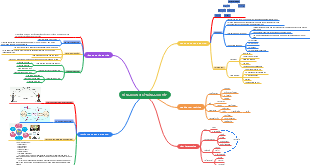
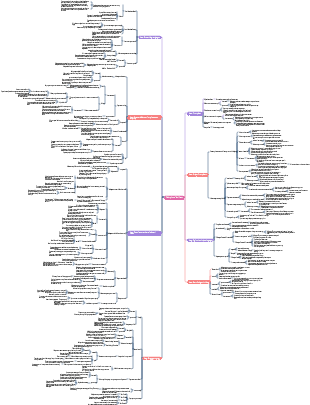
Nonviolent communication: Starting from the heart, build harmonious dialogue. Nonviolent communication is an efficient and empathetic communication method that is particularly suitable for use in a multicultural context. Through the four elements of observation, feeling, need and request, combined with practical tools such as emotional roulette and observation training card, it can play an important role in workplace, family and social services. Whether communicating with depression patients and aphasia, or in authoritative scenarios and collectivist culture, non-violent communication can be flexibly adjusted to help people better express their needs and resolve conflicts. In practice, through request checklists, demand matrix and other methods, communication quality can be effectively improved, misunderstandings can be reduced, and harmonious relationships can be promoted.
Edited at 2025-03-09 02:05:47Rumi: 10 dimensions of spiritual awakening. When you stop looking for yourself, you will find the entire universe because what you are looking for is also looking for you. Anything you do persevere every day can open a door to the depths of your spirit. In silence, I slipped into the secret realm, and I enjoyed everything to observe the magic around me, and didn't make any noise. Why do you like to crawl when you are born with wings? The soul has its own ears and can hear things that the mind cannot understand. Seek inward for the answer to everything, everything in the universe is in you. Lovers do not end up meeting somewhere, and there is no parting in this world. A wound is where light enters your heart.
Chronic heart failure is not just a problem of the speed of heart rate! It is caused by the decrease in myocardial contraction and diastolic function, which leads to insufficient cardiac output, which in turn causes congestion in the pulmonary circulation and congestion in the systemic circulation. From causes, inducement to compensation mechanisms, the pathophysiological processes of heart failure are complex and diverse. By controlling edema, reducing the heart's front and afterload, improving cardiac comfort function, and preventing and treating basic causes, we can effectively respond to this challenge. Only by understanding the mechanisms and clinical manifestations of heart failure and mastering prevention and treatment strategies can we better protect heart health.
Ischemia-reperfusion injury is a phenomenon that cellular function and metabolic disorders and structural damage will worsen after organs or tissues restore blood supply. Its main mechanisms include increased free radical generation, calcium overload, and the role of microvascular and leukocytes. The heart and brain are common damaged organs, manifested as changes in myocardial metabolism and ultrastructural changes, decreased cardiac function, etc. Prevention and control measures include removing free radicals, reducing calcium overload, improving metabolism and controlling reperfusion conditions, such as low sodium, low temperature, low pressure, etc. Understanding these mechanisms can help develop effective treatment options and alleviate ischemic injury.
Rumi: 10 dimensions of spiritual awakening. When you stop looking for yourself, you will find the entire universe because what you are looking for is also looking for you. Anything you do persevere every day can open a door to the depths of your spirit. In silence, I slipped into the secret realm, and I enjoyed everything to observe the magic around me, and didn't make any noise. Why do you like to crawl when you are born with wings? The soul has its own ears and can hear things that the mind cannot understand. Seek inward for the answer to everything, everything in the universe is in you. Lovers do not end up meeting somewhere, and there is no parting in this world. A wound is where light enters your heart.
Chronic heart failure is not just a problem of the speed of heart rate! It is caused by the decrease in myocardial contraction and diastolic function, which leads to insufficient cardiac output, which in turn causes congestion in the pulmonary circulation and congestion in the systemic circulation. From causes, inducement to compensation mechanisms, the pathophysiological processes of heart failure are complex and diverse. By controlling edema, reducing the heart's front and afterload, improving cardiac comfort function, and preventing and treating basic causes, we can effectively respond to this challenge. Only by understanding the mechanisms and clinical manifestations of heart failure and mastering prevention and treatment strategies can we better protect heart health.
Ischemia-reperfusion injury is a phenomenon that cellular function and metabolic disorders and structural damage will worsen after organs or tissues restore blood supply. Its main mechanisms include increased free radical generation, calcium overload, and the role of microvascular and leukocytes. The heart and brain are common damaged organs, manifested as changes in myocardial metabolism and ultrastructural changes, decreased cardiac function, etc. Prevention and control measures include removing free radicals, reducing calcium overload, improving metabolism and controlling reperfusion conditions, such as low sodium, low temperature, low pressure, etc. Understanding these mechanisms can help develop effective treatment options and alleviate ischemic injury.
Nonviolent communication
Core concept
observe
Definition and Features
Objective description based on specific situations
Exclude pure facts of speculation and explanation
Behavior clips that can be recorded by the camera
Common Mistakes
Confusing facts and opinions
Consider "You never cared about me" as an observation
Use evaluation tags such as "lazy"
Static language trap
"That's your personality"
"This matter can never be changed"
Emotional projection
Passing judgment through sighing and rolling eyes
Use metaphorical sentences to suggest negative comments
Training method
Fact stripping exercises
Turn commentary statements into behavioral descriptions
Example: "You are too selfish" → "You took the biggest piece of cake last time"
Observation Diary
Record 5 pure fact events every day
Mark sentences that may be mixed with evaluation
Feel
Cognitive dimension
Basic emotion recognition
Happiness: satisfaction, joy, joy
Sadness: loneliness, depression, heartbreak
Fear: anxiety, anxiety, panic
Anger: irritable, anger, irritable
Analysis of complex feelings
Contradiction: both expecting and fearing
Relieve: Easiness after the stress is lifted
Melancholy: nostalgia mixed with loss
Expression disorder
Poor vocabulary
Use "discomfort" to summarize all negative feelings
Lack of precise mood granularity
Transfer of responsibility
"You disappointed me"
"This situation makes people collapse"
Moral confusion
"I think doing this is immoral"
"This feeling is wrong"
Improvement strategy
Feel the vocabulary building
Organize emotional vocabulary list by intensity
Make a carry-on card
Body scanning method
Trace emotions through physiological reactions
Stomach tightness → Anxiety/Sweat palms → Tightness
need
Requirements classification
Survival needs
Air/water/food/safety
Relationship Requirements
Understand/Accept/Intimacy/Respect
Growth needs
Learning/creating/transcending/meaning
Identify difficulties
Strategy confusion
"Need to call every day" (strategy)
"Emotional connection is required" (real requirement)
Cultural depression
"Pursuing personal needs is selfish"
"Good people should not make any requests"
Body and mind separation
Headache may stem from recognized needs
Glut eating may be a sign of lack of security
Explore Tools
Demand Iceberg Model
Surface behavior → feeling → demand
Example: Procrastination → Anxiety → Need to be recognized
Go back to childhood
Early deletion creates strong demand
Loss of security attachment → Overseeking attention
ask
Constituent elements
Specificity
"I hope to prepare dinner together every Wednesday"
vs. "Care more about family"
feasibility
"Please listen to me in 10 minutes"
vs. "Understand me better"
Positive expression
"Please speak softly"
vs. "Don't yell"
Negotiation space
"Do you think this plan is feasible?"
"What parts need to be adjusted?"
Typical error
Disguised threat
"If not...I will..."
"This is for your own good" control
Blur expectation
"I hope you feel more responsible"
"It is necessary to increase initiative"
Time limit missing
No time node for execution
Lack of effectiveness evaluation criteria
Practical Plan
Request for refactoring exercises
Turn complaints into explicit requests
Example: "You are not at home" → "I hope you have dinner three days a week"
Situational simulation
Designing responses to different rejection scenarios
Focus on maintaining relationships rather than insisting on requirements
Application areas
Family Relationship
Couple communication
Conflict resolution steps
1. State the facts: "I went home after 23 o'clock in three days last week"
2. Express feelings: "feeling lonely and worried"
3. Clarify the needs: "More time to accompany you"
4. Make a request: "Can you arrange two days a week to spend together?"
Parent-child interaction
Adolescent communication
Convert "No mobile phone" to
"Worrying to affect vision (feeling)
Health management is required (need)
Hourly breaks (request)"
Academic stress relief
Identify the requirements behind scores
Example: Self-esteem maintenance needs when examining poor
Workplace communication
Superior and subordinate dialogue
Performance feedback model
Fact: "This month's goal is 70%"
Feeling: "Somewhat is worried about progress"
Requirements: "Project quality needs to be ensured"
Request: "Tomorrow afternoon to optimize the plan"
Collaboration of colleagues
Cross-departmental request
Error demonstration: "You never cooperate"
NVC version: "When the scheme is delayed to submit (observation),
I'm worried about affecting the progress (feelings),
Need closer collaboration (needs),
Can you create a shared progress table? (ask)"
Social Services
Crisis Intervention
Suicide prevention dialogue
Observation: "Note that you have new scars on your arm"
Feeling: "You must be in pain now"
Requirements: "need to be understood and supported"
Request: "Would you like to talk to me about the reasons?"
Public Welfare Advocacy
Fundraising request optimization
Traditional way: "Pity these kids"
NVC version: "When you see rain leaking in the mountain classroom (observation),
We feel anxious (feeling),
Need to improve the learning environment (demand),
Can I support 100 yuan per month? (ask)"
Practical Tools
Observation training card
Situational case set
20 cases of office scenes
15 cases of family interaction
10 cases in public places
Error correction exercises
Statements for identifying confounding evaluations
Rewrite biased fact descriptions
Emotional Roulette
Three-level classification structure
Core emotions → subdivided emotions → physical reactions
Example: Anger → Angry → Temples beating
User Guide
Calibrate emotions before dialogue
Real-time positioning in communication
Requirement matrix
Four-quadrant model
Emergency/Important Dimensions
Personal/Others Dimensions
Application scenarios
Conflict mediation priority determination
Assessment of rationality of self-needs
Request checklist
Validity criteria
SMART principle adaptation
Specific/testable/reachable/relevant/time limit
Cultural adaptability test
Different acceptance levels in different regions
Modify templates
Fuzzy → Specific conversion example
Command → Request Rewrite Demonstration
Cultural adaptation
Oriental context adjustment
Collectivism application
Turn "I need" to "We may need"
Needs balancing skills in family decision-making
Authoritative scenes
Strategies for expressing needs to superiors
Example: "This solution may require more data support"
→Implicit requirements: Decision-making basis is required
Special groups
Communication for aphasics
Alternatives
Picture selection method
Body Language Interpretation Guide
Patients with depression
Observation focus
Language pattern changes
The degree of social behavior withdrawal
Request adjustment
Decompose into micro-steps
Extend response time limit