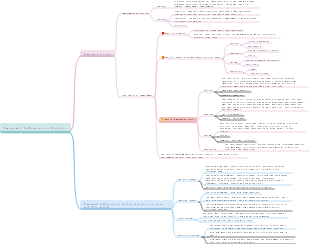
MindMap Gallery Chapter 10 Temperament
This is a chapter 10: A mind map of temperament, with detailed content, clear and easy to understand. Whether it is a beginner or a student preparing to take the exam, this brain map will be your indispensable learning assistant.
Edited at 2025-03-09 20:47:47Rumi: 10 dimensions of spiritual awakening. When you stop looking for yourself, you will find the entire universe because what you are looking for is also looking for you. Anything you do persevere every day can open a door to the depths of your spirit. In silence, I slipped into the secret realm, and I enjoyed everything to observe the magic around me, and didn't make any noise. Why do you like to crawl when you are born with wings? The soul has its own ears and can hear things that the mind cannot understand. Seek inward for the answer to everything, everything in the universe is in you. Lovers do not end up meeting somewhere, and there is no parting in this world. A wound is where light enters your heart.
Chronic heart failure is not just a problem of the speed of heart rate! It is caused by the decrease in myocardial contraction and diastolic function, which leads to insufficient cardiac output, which in turn causes congestion in the pulmonary circulation and congestion in the systemic circulation. From causes, inducement to compensation mechanisms, the pathophysiological processes of heart failure are complex and diverse. By controlling edema, reducing the heart's front and afterload, improving cardiac comfort function, and preventing and treating basic causes, we can effectively respond to this challenge. Only by understanding the mechanisms and clinical manifestations of heart failure and mastering prevention and treatment strategies can we better protect heart health.
Ischemia-reperfusion injury is a phenomenon that cellular function and metabolic disorders and structural damage will worsen after organs or tissues restore blood supply. Its main mechanisms include increased free radical generation, calcium overload, and the role of microvascular and leukocytes. The heart and brain are common damaged organs, manifested as changes in myocardial metabolism and ultrastructural changes, decreased cardiac function, etc. Prevention and control measures include removing free radicals, reducing calcium overload, improving metabolism and controlling reperfusion conditions, such as low sodium, low temperature, low pressure, etc. Understanding these mechanisms can help develop effective treatment options and alleviate ischemic injury.
Rumi: 10 dimensions of spiritual awakening. When you stop looking for yourself, you will find the entire universe because what you are looking for is also looking for you. Anything you do persevere every day can open a door to the depths of your spirit. In silence, I slipped into the secret realm, and I enjoyed everything to observe the magic around me, and didn't make any noise. Why do you like to crawl when you are born with wings? The soul has its own ears and can hear things that the mind cannot understand. Seek inward for the answer to everything, everything in the universe is in you. Lovers do not end up meeting somewhere, and there is no parting in this world. A wound is where light enters your heart.
Chronic heart failure is not just a problem of the speed of heart rate! It is caused by the decrease in myocardial contraction and diastolic function, which leads to insufficient cardiac output, which in turn causes congestion in the pulmonary circulation and congestion in the systemic circulation. From causes, inducement to compensation mechanisms, the pathophysiological processes of heart failure are complex and diverse. By controlling edema, reducing the heart's front and afterload, improving cardiac comfort function, and preventing and treating basic causes, we can effectively respond to this challenge. Only by understanding the mechanisms and clinical manifestations of heart failure and mastering prevention and treatment strategies can we better protect heart health.
Ischemia-reperfusion injury is a phenomenon that cellular function and metabolic disorders and structural damage will worsen after organs or tissues restore blood supply. Its main mechanisms include increased free radical generation, calcium overload, and the role of microvascular and leukocytes. The heart and brain are common damaged organs, manifested as changes in myocardial metabolism and ultrastructural changes, decreased cardiac function, etc. Prevention and control measures include removing free radicals, reducing calcium overload, improving metabolism and controlling reperfusion conditions, such as low sodium, low temperature, low pressure, etc. Understanding these mechanisms can help develop effective treatment options and alleviate ischemic injury.
Temperament overview
Temperament concept
Temperament is the external dynamic characteristic of individual psychological activities and thinking, mainly manifested in the speed, intensity, stability and directional characteristics of psychological activities.
Temperament speed: the speed of perception, emotion and action response speed Temperament stability: pay attention to the length of duration and emotional ups and downs Temperament intensity: the strength of emotions, the strength of will Directionality: Psychological activities tend to be external or internal
Temperament is the driving feature of a person's psychological activities. It has nothing to do with the content and motivation of a person's psychological activities. That is, temperament is generally not affected by the purpose, motivation and content of personal activities, and has strong stability (students with stable emotions will not be excited even in familiar environments and lively scenes)
Temperament is greatly affected by the innate biological factor of nervous system type, that is, innate factors occupy the main position
Temperament has a certain degree of plasticity. (It cannot be changed, it can only be changed to a considerable extent)
Psychological characteristics of temperament
sensitivity
A person's ability to feel external stimuli (representation of nervous system intensity characteristics)
Sensitivity
The speed of general psychological reactions and psychological processes, including the speed and difficulty of attention to transfer, the speed and readiness of memory, the agility and flexibility of thinking, and the flexibility and speed of movement.
Tolerability
The degree to which a person is acceptable to the time and degree when he receives external stimuli (the duration of concentration, tolerance to strong and weak stimuli, and the durability of thinking activities)
Sexuality
Is the verbal and behavioral response of psychological activities manifested in external or internal characteristics, i.e., the general term for extraversion (the excitation process of neural activity predominates) and introversion (the inhibitory process predominates)
Emotional excitement
Characteristics of emotional responses to weak stimuli at different speeds (a manifestation of nervous system intensity, also a manifestation of nervous system balance)
Including the level of emotional excitement and the intensity of emotional outward expression
plasticity
People change their adaptive behavior flexibility according to changes in external things (representing the flexibility of the nervous system, people who can quickly adapt to the environment and act decisively)
Temperament type
Body fluid theory: Ancient Greek doctor Hippocrates proposed on the basis of the "Four Roots Theory" of the ancient Greek doctor Empedocler
① Polyhema (people with blood dominance): agile and active, cheerful and enthusiastic, good at socializing, and agile (management, lawyer, athlete, journalist)
②Bile quality (yellow bile): excited and enthusiastic, straightforward, quick response, decisive behavior, courageous and daring to take responsibility, but is careless, poor self-control, and more reckless (tour guide, salesman, program host, actor)
③Muscous (mucus): quiet type. Slow and calm, strictly abide by the order of life, etc. Not easy to get angry, not easy to reveal feelings, not flexible enough (accountant, nurseryman, announcer)
④Depressive (black bile): a calm and shy, sensitive type. Like to be alone and socially restrained, have a withdrawn personality, low self-esteem, and are slow and rigid in their actions ( Proofreading, typing, typewriting, test, etc.)
Produced by the heart (blood), brain (mucus), liver (yellow bile), stomach (black bile)
Advanced Neural Activity Types Say
① Strong, unbalanced (excited or unsuppressed): The excitatory and inhibitory process is strong, but the excitatory process is slightly stronger than the inhibitory process. It is a type that is easy to be excited and unrestrained.
② Strong, balanced, flexible (active): The excitation and inhibition process are strong, both are easy to transform, quick response, and can adapt to changing external environments.
③ Strong, balanced, inflexible (quiet type): The excitation and inhibition process are stronger, and it is difficult to transform the two.
④ Weak type (inhibitory type): Both excitation and inhibition processes are weak. Excessive stimulation can easily cause fatigue and even neurasthenia. It is characterized by timidity, shrinking and slow reaction speed.
Body shape
①Krezimmer's body shape theory (German psychiatrist): It is divided into three types: plump (manic temperament, good sociality, lively and passionate), thin (schizoidal temperament, poor sociality, withdrawn, and more thoughtful) muscles and bones (mucus temperament, obsessed, serious, slow understanding, and more impulsive behavior)
② Sheldon's body shape theory (American psychologist): endodermal leaf type (internal type) obese, optimistic, slow reaction, easy-going behavior and good sleep Mesodermal leaf type (musculoskeletal type) is strong, active, competitive, arbitrary, aggressive, active and active Ecchroma (skin nerve type): thin, sensitive, quick response, poor sleep, easy fatigue, special love for art, tend to be intellectual activities, enthusiastic and responsible for work
Blood type theory (Japanese scholar Takeji Furukawa et al.)
Type A: shrewd, rational, introverted, subtle, not good at socializing, stubborn, careful in doing things, but undecisive
Type B: smart, lively and agile, good at socializing, wide range of interests, impulsive emotions, not used to being restricted, enthusiastic about work, lack of care and perseverance in doing things
Type AB: Complex temperament, smart and generous, clean and neat, not exaggerated, planned, and have a wide range of interests
O-type: outgoing, straightforward, enthusiastic and active, brave, independent, impatient, ambitious
Hormone theory (Physiologist Berman)
Thyroid type: full spirit, sensitive perception, strong willpower (those who secrete too much are considered to be human); on the contrary, slow and slow, and may occur dementia
Adrenal gland type: dry skin, thick black hair, vigorous energy, and impulsive
Pituitary gland type: thick bones, strong sexual desire, developed brain power, self-control (high secretion); on the contrary, short body and muscle atrophy
Parathyroid type: irritable to excitement, lack of control (high secretion); on the contrary, muscle weakness, mental deficiency, and lack of interest in life
Gonad type: violent offensive behavior; on the contrary, few offensive behaviors and are interested in literature, art and music
Activity Characteristics Theory (American psychologist Bass)
Active temperament type: first to welcome new tasks, love activities, tirelessness (baby manifests as constant movement of hands and feet, children cannot sit still in the classroom, and adults show a strong sense of career)
Emotional temperament type: degree of awakening and reaction intensity (babies often cry, children are prone to excitement, difficult to get along with, and adults show moodiness)
Social temperament type: desire to establish close contact with others (baby requires mothers and acquaintances to be by their side, crying when they are lonely, children are prone to education, and get along well with people around them when they are adults)
Impulsive temperament type: lack of inhibitory power (infants are unwilling to wait for their mothers to feed, children are often fidgeted, their attention is easily distracted, and adults are disgusted by waiting, and tend to act without thinking)
Application of temperament laws in education
Treat students' temperament characteristics correctly and educate them in a targeted manner
Teaching in a targeted manner according to students' temperament characteristics
Guide students to correctly understand and regulate their temperament
Character Overview
The concept of personality and the relationship between personality and ability and temperament
(I) Concept of personality: personality psychological characteristics reflected in people's attitude towards reality and their corresponding and habitual behavioral methods.
A person’s attitude towards reality is his view and evaluation of society, the collective, others and himself. It is a concentrated reflection of a person’s worldview and outlook on life (dinosaur dreams of Li, waiting for the rabbit)
Sub-theme
Sub-theme
Sub-theme
Sub-theme
Chapter 10: Temperament and character
Section 1: Overview of Temperament
Section 2: Character Overview
Section 3: Methods for evaluating temperament and personality