MindMap Gallery gather
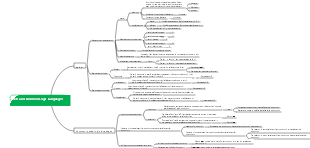
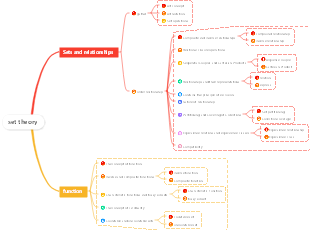
This is a mind map about sets, the main contents include: the application of sets, the properties of sets, the operation laws of sets, the relationship between sets, the types of sets, the representation methods, and definitions.
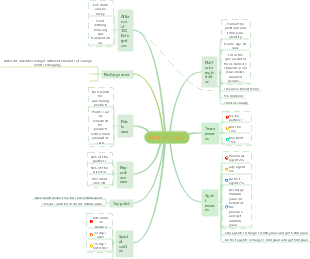
Edited at 2025-02-16 09:04:04This is a mind map about the annual work plan of the three pillars of human resources. The main contents include: strategic human resources planning, talent recruitment and allocation, employee performance management, employee training and development, employee relationships and communication, employee welfare and care, human resources information system construction, regulatory compliance and risk management, and organizational culture construction.
This is a mind map for the diagnosis and treatment of acute cerebral hemorrhage in patients with hemodialysis. The annual incidence of acute cerebral hemorrhage in patients with hemodialysis is (3.0~10.3)/1000, and the main cause is hypertension. Compared with non-dialysis patients, the most common bleeding site is the basal ganglia area, accounting for 50% to 80%; but the bleeding volume is large and the prognosis is poor, and the mortality rate is 27% to 83%. Especially for patients with hematoma >50ml, hematoma enlarged or ventricular hemorrhage on the second day after onset, the prognosis is very poor.
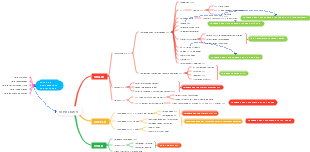
The logic is clear and the content is rich, covering many aspects of the information technology field. Provides a clear framework and guidance for learning and improving information technology capabilities.
This is a mind map about the annual work plan of the three pillars of human resources. The main contents include: strategic human resources planning, talent recruitment and allocation, employee performance management, employee training and development, employee relationships and communication, employee welfare and care, human resources information system construction, regulatory compliance and risk management, and organizational culture construction.
This is a mind map for the diagnosis and treatment of acute cerebral hemorrhage in patients with hemodialysis. The annual incidence of acute cerebral hemorrhage in patients with hemodialysis is (3.0~10.3)/1000, and the main cause is hypertension. Compared with non-dialysis patients, the most common bleeding site is the basal ganglia area, accounting for 50% to 80%; but the bleeding volume is large and the prognosis is poor, and the mortality rate is 27% to 83%. Especially for patients with hematoma >50ml, hematoma enlarged or ventricular hemorrhage on the second day after onset, the prognosis is very poor.
The logic is clear and the content is rich, covering many aspects of the information technology field. Provides a clear framework and guidance for learning and improving information technology capabilities.
gather
definition
Sets are basic concepts in mathematics
A whole composed of different elements
Elements can be numbers, people, objects, etc.
Elements in a collection are called members or elements
Each element is unique in the collection
The order of elements does not affect the definition of the set
Expression method
Listing method
List all elements in the collection directly
For example: set A = {1, 2, 3}
Elements are separated by commas and the whole is surrounded by braces.
Description
Describe elements in a collection with a property
For example: set B = {x x is a positive integer and x < 10}
The properties are separated by vertical lines, with variables first and conditions next
Types of collections
Limited Edition
A collection containing finite elements
For example: set C = {a, b, c, d}
The number of elements is called the potential or cardinality of the set
Infinite Collection
A collection of infinite elements
For example: natural number set N = {1, 2, 3, ...}
Infinite sets are divided into countable infinite sets and uncountable infinite sets
Relationship between sets
Subset
All elements in one set belong to another set
For example: If A = {1, 2}, B = {1, 2, 3}, then A is a subset of B
Use the symbol "⊆" to represent
Real subset
A subset, and the two sets are not equal
For example: If A = {1, 2}, B = {1, 2, 3}, then A is a real subset of B
Use the symbol "⊂" to represent
Collect
The two sets merge to contain all elements
For example: If A = {1, 2}, B = {2, 3}, then A∪B = {1, 2, 3}
Expressed by the symbol "∪"
Intersection
A collection of elements shared by two sets
For example: If A = {1, 2}, B = {2, 3}, then A∩B = {2}
Expressed by symbol "∩"
Difference set
A collection of elements belonging to one set but not to another set
For example: If A = {1, 2}, B = {2, 3}, then AB = {1}
Expressed by symbol "" or "∖"
Supplement
In the complete set U, a set composed of elements that do not belong to the set A
For example: If the full set U = {1, 2, 3, 4}, A = {1, 2}, then A' = {3, 4}
Use symbol "'" to represent
Set operation law
Exchange law
Unity and intersection operations satisfy the exchange law
For example: A∪B = B∪A, A∩B = B∩A
Combination law
Unity and intersection operations satisfy the law of bonding
For example: (A∪B)∪C = A∪(B∪C), (A∩B)∩C = A∩(B∩C)
Distribution Law
Unity pair intersection, intersection pair union satisfy the distribution law
For example: A∪(B∩C) = (A∪B)∩(A∪C), A∩(B∪C) = (A∩B)∪(A∩C)
DeMorgan Law
Distribution law of complementary operation
For example: (A∪B)' = A'∩B', (A∩B)' = A'∪B'
The nature of the set
Empty set
A collection that does not contain any elements
Use the symbol "∅" to represent
An empty set is a subset of any set
Power set
A collection composed of all subsets of a collection
For example: the power set of the set {1, 2} is {∅, {1}, {2}, {1, 2}}
The potential of the power set is the power of 2 of the original set potential
Single element set
A collection containing only one element
For example: the set {a} is a single element set
A single element set is a subset of any set
Complete collection
A collection of all elements within the scope of discussion
For example: In the real range, the real number set R is the full set
The complete set is a superset of any set
Collection application
Mathematical logic
Set theory is the basis of mathematical logic
Used to define concepts and theorems in mathematics
statistics
Collections are used to describe datasets and sample spaces
For example: a collection of research objects, a collection of events
computer Science
Collection types in data structures
For example: Collection data types in programming languages
Collection operations in the database
For example: UNION, INTERSECT, EXCEPT operations in SQL
Logic circuit
For example: Use logic gates to implement the union, intersection and difference operations of sets
Combination Mathematics
Collections are used to solve counting problems
For example: Selection of collection elements in combination and arrangement problems
Picture Theory
Sets are used to represent vertices and edges of a graph
For example: vertex sets, edge sets of graphs
physics
Sets are used to describe particle systems and quantum states
For example: In quantum mechanics, state space is a set of sets
economics
Collections are used to describe markets, product collections, and preference relationships
For example: utility sets in consumer choice theory
biology
Collections are used to classify and describe biodiversity
For example: species collection, gene collection
Social Sciences
Collections are used to analyze social groups and cultural phenomena
For example: Node sets and relationship sets in social network analysis