MindMap Gallery Capital Water Establish a system that is not lost.
"No Loss" covers multiple aspects of stock market investment, including investment strategies, market cycles, value evaluation, etc., and is suitable for readers with a certain investment foundation. The book not only provides theoretical knowledge, but also combines a large number of practical cases for analysis, so that readers can better understand and apply the knowledge they have learned.
Edited at 2025-02-20 16:50:26This template shows the structure and function of the reproductive system in the form of a mind map. It introduces the various components of the internal and external genitals, and sorts out the knowledge clearly to help you become familiar with the key points of knowledge.
This is a mind map about the interpretation and summary of the relationship field e-book, Main content: Overview of the essence interpretation and overview of the relationship field e-book. "Relationship field" refers to the complex interpersonal network in which an individual influences others through specific behaviors and attitudes.
This is a mind map about accounting books and accounting records. The main contents include: the focus of this chapter, reflecting the business results process of the enterprise, the loan and credit accounting method, and the original book of the person.
This template shows the structure and function of the reproductive system in the form of a mind map. It introduces the various components of the internal and external genitals, and sorts out the knowledge clearly to help you become familiar with the key points of knowledge.
This is a mind map about the interpretation and summary of the relationship field e-book, Main content: Overview of the essence interpretation and overview of the relationship field e-book. "Relationship field" refers to the complex interpersonal network in which an individual influences others through specific behaviors and attitudes.
This is a mind map about accounting books and accounting records. The main contents include: the focus of this chapter, reflecting the business results process of the enterprise, the loan and credit accounting method, and the original book of the person.
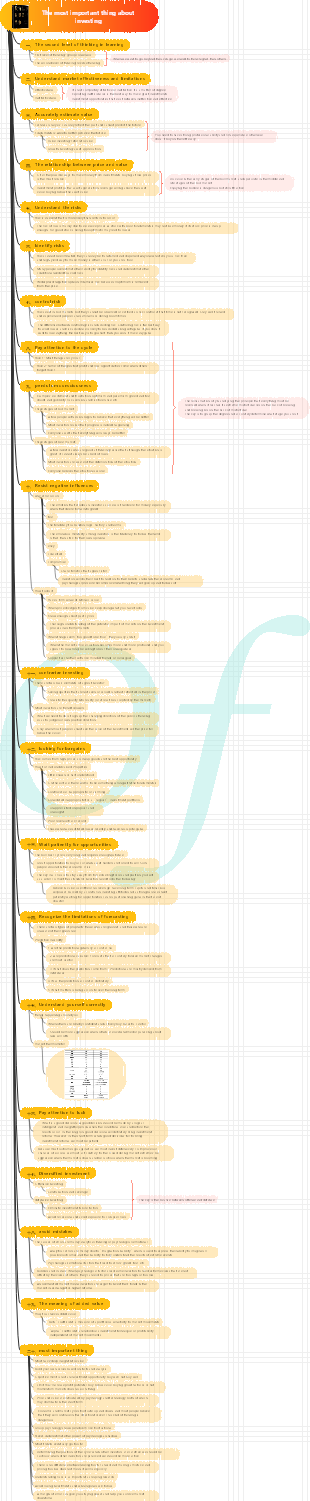
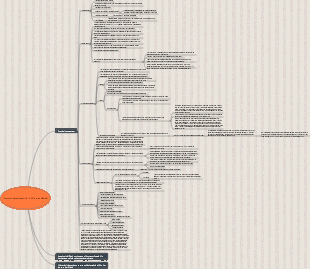
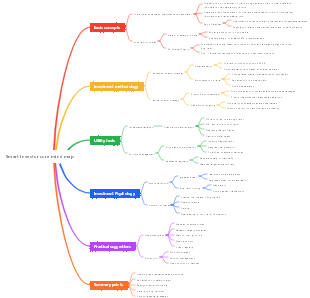
Capital Water: Establish a system that is not lost.
I. Know common sense about A-shares
一、 cycle
Everything is a cycle
The essence of A-shares is the timing of the market on a cyclical basis
Business cycle investment
Weak cycle: food and beverage, utilities, agriculture, forestry, animal husbandry, fishery, medicine and biology
Strong cycle: manufacturing, consumer discretionary products, finance
Continued in a prosperous cycle: liquor industry
Building a rotation strategy for major asset classes
Merrill Lynch Investment Clock Theory
Judge major asset cycles and avoid systemic risks
The hand behind the market
policy
Macroeconomic policies determine market trends
The market trend of industrial policy leading sectors
Keep track of national policies
Liquidity brings premium
Seize structural opportunities brought by improvement in liquidity
Beware of systemic risks caused by liquidity shrinkage
Judge the market cycle
Liquidity
Valuation
Performance Outlook
Market sentiment
Major Events
Judge industry cycles
As prices and volumes rise together, the industry enters a prosperous cycle; when prices and volumes fall together, the industry enters a depression cycle;
Prices and volumes rise and fall, and the industry is in the process of switching between economic cycles and depression cycles
二、 value
Change is more important than valuation
Companies that focus on capital entry and exit information, macro policies and industry policies, price and volume information, equity change information, and enter new fields
Changes, impacts, performance, price
三、 statistics
The essence of the K-line chart is a game of long and short
According to technical indicators, the average market return will be obtained
Verify the judgment of market trends
High leverage should consider extreme risks
Low-risk model: Use leverage tools to hedge arbitrage
四、 rule
Convertible bond rules, fund rules, financial derivative rules
-Use rules to build strategies
Using futures delivery rules to build futures and spot arbitrage strategies
Using fund subscription and redemption rules to build a fund discount and premium arbitrage strategy
Using the fund's net value calculation rules to build a fund subscription arbitrage strategy
Using the open period of closed-end funds, build arbitrage strategy for closed-end funds
-Use rules such as stock tenders, recombination and mergers to build an event-driven strategy -
Using the connectivity rules between markets to build cross-market arbitrage strategies
五、 Game
A-share market ecology
Industrial capital accounts for half of A-shares
Institution, there is a group behavior
National team, save the market during the "stock market crash"
Hot money, the most active and keen participant in the market
Retail investors pursue volatility
A-share behavioral model speculates expectations
-Get the expected difference
II. Develop a way of thinking
一、 Scientific thinking
Inductive thinking
Every day, we must summarize the stock market rules and other people's profit routines
Root thinking
Understanding the driving force of securities product trends from the root cause
Stock Market Dynamics
Verify thinking
All conclusions on the market need to be verified
Foresight thinking
Predict the situation based on a deep understanding of the social economy
Make predictions based on understanding of business management
Prediction based on philosophical cyclical law
Game thinking
Understand the pricing power funds
二、 Know yourself
Four characteristics of successful investors
How to make amateur investments -
三、 Expand the circle of competence
Observe other people's routines
The root cause behind thinking
Okura trial and error adjustment
Make profits by taking a heavy position
四、 Adjust investment mentality
Establish correct investment values
Recognize yourself and follow your emotions
Positive feedback on cognition and emotions
Use tools to control emotions
III. Follow the investment principles
一、 The principle of certainty
Finding certainty from cycles-Pencil Theory
Find certainty from the relationship between value and price
Deep value, high dividend value, long-term value, prosperity value, reverse investment
Find certainty from rules and common sense
Using discount rules of tiered funds, combined with stock index futures hedging arbitrage
-Use convertible bond maturity rules to find "guaranteed bottom and unlimited upward" game opportunities
Use the dividends of A-shares to design investment strategies
Use stock index futures discounts to make equity investment substitution
二、 The principle of possibility
Find possibilities from statistical results
For example, make investment decisions based on the A-share market cycle and use the deviation rate to make an oversold rebound
Looking for possibilities from the perspective that enterprises need to solve problems, such as borrowing, shell maintenance and other problems
Looking for possibilities from chasing hot money - in the case of abundant liquidity, conduct inter-sector rotation and internal sector rotation
三、 - Expected management of stocks
Know the bottom, know the top, know the time
Peter Lynch's six categories of stocks
Building a portfolio using asset allocation and position management
Use debt and stock assets to allocate assets
Position management
Stock equity
Debt investment
Nonlinear equity
四、 Risk control principles
Demining
Don't buy at the high point of prosperity
If there is any problem with equity structure, don't buy it
Don't buy if you don't conform to business logic
Some people questioned not to buy
The exchange repeatedly asked not to buy
Don't buy if the business is unreliable
Be careful in areas with high incidence of fraud
Be careful in industries with high incidence of fraud
If you are suspected of stocks in K-line chart, be careful
Low correlation
dispersion
Logical verification short cycle
Hedging
Building a neutral hedging portfolio and pursuing alpha returns
Timed hedging based on the prediction of the market
Fuzzy hedging based on predictions of special events
IV. Master investment strategies
一、 Cyclic strategy one
1. Rotation of major asset classes
Judging the cycles of stocks, bonds, commodities and cash management based on macroeconomic fundamentals, national monetary and fiscal policies, buy the bottom and escape the top
Buy which one
2. Commodity Futures
Judge the economic cycle of the commodity and go long or short in the commodity futures market in one direction
3. Cyclic stocks
Judge the economic cycle of a commodity or industry, buy and sell stocks in a cyclical manner
_Seize the industry's speculation cycle. For industries with commodity prices, the prosperity period is about equal to the price increase of commodities, and the ebb and tide period is about equal to the price decrease of commodities
二、 Value strategy
4. Fixed income
Buying money funds, financial products, bonds, bond funds, etc., and reverse repurchase are generally used as fund pools
Neutral hedging arbitrage
Cash subscription of financial assets
Money funds and bank financial management
Cash Enhancement Strategy
5. Underestimate
Buy when the price of a stock is much lower than its intrinsic value, but be wary of the "low valuation trap"
Research on the "Seven Views" of Corporate Fundamentals
6. Growth
Reasonable valuation and high growth”, but it is not easy to find growth stocks
Research on the "Seven Views" of Corporate Fundamentals
7. High dividend
This type of company is relatively reliable, but the industry structure is stable and you need to lower expectations when investing.
三、 Quantitative strategies
8. Fixed investment
You need to judge the water level of the market. Only when you are below a certain water level can you make a fixed investment, and if you are above a certain water level, you can make a cash-out -
9. Mesh
It should be used on index funds, not on individual stocks
10. Oversold rebound
It is necessary to conduct a large number of backtests on the oversold, rebound, and their relationship with market sentiment.
11. Rotating
Rank securities according to certain rules, adjust positions according to the latest ranking every once in a while
What is the source of profit for rotation?
How to improve rotation efficiency?
12. Factor investment
Three basic issues need to be considered
What factors can affect stock returns?
How to combine these factors?
How to rotate between factors?:
13. Index enhancement strategy
Quantitative stock selection strategy, derivative trading strategy, market value new stock issuance strategy
14. Automated transactions
Through the quantitative software platform, programmatic transactions of stocks, funds, and convertible bonds are realized. It is recommended to make good use of the conditional functions of each brokerage firm
15. High frequency trading
Market Maker Strategy and ETF Arbitrage Strategy
16. Technical Analysis
Operation according to technical indicators such as moving average, MACD, KDJ, and Bollinger Bands
17.K-line pattern
Classic theory: wave theory, trend trading, and entanglement theory, it is not recommended to be regarded as the main operating strategy. Only used for verification and judgment
18. Distribution of chips
Auxiliary strategies
四、 Rule-type policies
19. New
New entry income unique to the A-share market
20. Arbitrage
Statistical arbitrage
Rule arbitrage
21. Quick track to rush the limit
Rent a fast track to focus on such opportunities and obtain investment income -
22. Bond "bet" just redeem
After breaking the rigid and honest policy, it is no longer a mainstream strategy
23. Convertible bonds are revised
The unique weapon unique to the A-share convertible bond market depends on the value of the conversion and the procedure is complicated.
24. Offer acquisition
Research on the topic of tender offer acquisitions and look for opportunities to have an advantage in odds
25. Remove the hat
Follow the announcement of listed companies, determine whether the negative factors when wearing hats are about to be eliminated, ambush in advance, and wait for the positive news to be fulfilled
26. Reorganization
Track the announcement of listed companies, judge the strength of new shareholders and the prospects of new businesses, ambush in advance, and wait for the positive news to be fulfilled
27. Reorganization
Judge the possibility of reorganization and the time nodes of each program
五、 Game strategy
28. Event-driven
Time is controllable, investment cycle is within 3 months
Core logic: A big drop is basically not bad, and something will be solved
29. Reverse Investment
Losses caused by short-term panic are exchanged for future valuation return profits
Event-driven: Wait for the situation to improve
Cyclic stocks: Waiting for a cycle to reverse
Value Investment: Waiting for the return of valuation
30. Intraday trading in futures
Short-term trading, suitable for investors with high frequency intraday
31. Convertible bond maturity game
The company cannot repay the money, so it can only promote the conversion of shares. At this time, convertible bonds or stocks can be ambushed.
32. Do T
Judging the short-term fluctuations of stocks (within day or two or three days), sell at high points, and pick up low points, and reduce holding costs
33.Play the board
It will be released as soon as the board is opened, it will be released as soon as the volume is added, and it will be safe to put the bag in the bag.
34. Pry the board
The sudden drop in a short period of time, the mood reached its extreme, and it was not a loss that day