 Wondershare EdrawMind
MindMap Gallery pride and Prejudice
- 151
pride and Prejudice
This is a mind map about "Pride and Prejudice", which mainly includes: theme discussion, artistic characteristics, character analysis, story line, and basic information. The novel is set in the early 19th century British rural society and tells the story of the love and marriage of the five daughters of the Bennet family.
Edited at 2025-02-26 10:35:05
- Reproductive system
This template shows the structure and function of the reproductive system in the form of a mind map. It introduces the various components of the internal and external genitals, and sorts out the knowledge clearly to help you become familiar with the key points of knowledge.
- Interpretation and summary of relationship field e-book
This is a mind map about the interpretation and summary of the relationship field e-book, Main content: Overview of the essence interpretation and overview of the relationship field e-book. "Relationship field" refers to the complex interpersonal network in which an individual influences others through specific behaviors and attitudes.
- Accounting books and accounting records
This is a mind map about accounting books and accounting records. The main contents include: the focus of this chapter, reflecting the business results process of the enterprise, the loan and credit accounting method, and the original book of the person.
pride and Prejudice
- Reproductive system
This template shows the structure and function of the reproductive system in the form of a mind map. It introduces the various components of the internal and external genitals, and sorts out the knowledge clearly to help you become familiar with the key points of knowledge.
- Interpretation and summary of relationship field e-book
This is a mind map about the interpretation and summary of the relationship field e-book, Main content: Overview of the essence interpretation and overview of the relationship field e-book. "Relationship field" refers to the complex interpersonal network in which an individual influences others through specific behaviors and attitudes.
- Accounting books and accounting records
This is a mind map about accounting books and accounting records. The main contents include: the focus of this chapter, reflecting the business results process of the enterprise, the loan and credit accounting method, and the original book of the person.
- Recommended to you
- Outline
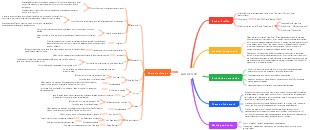
"pride and Prejudice"
Basic information
author
Biography: Jane Austen was born in 1775 in a pastoral family in Steventon, Hampshire, England. Her father, George Austin, was a pastor in the local parish. His family had a rich collection of books, which provided Jane Austin with a good reading environment and cultivated her strong interest in literature since childhood. She has not received formal school education, and mainly received her father's teaching and self-study at home, and has extensively studied books in the fields of history, literature, philosophy, etc. Life in Austin is relatively calm, and social activities are mainly concentrated among rural neighbors. Her careful observation of rural life has accumulated rich materials for future creations. She never married for life. In 1817, Austin, who was only 41 years old, passed away due to health problems, but her works left a profound mark on the history of British literature.
Creative style and achievements: Austin's creative style is unique, and is known for its delicate description, humorous language and clever plot settings. She is good at depicting the daily trivialities of rural life, integrating themes such as love, marriage, and family into it, showing the big picture from the small, and showing the life style and social aspects of the British squire class at the end of the 18th and early 19th century. Her works not only have literary value, but also provide precious materials for the study of the social culture of the time. In addition to "Pride and Prejudice", she has also created many classic novels such as "Sense and Emotion", "Mansfield Manor", and "Emma". These works are widely circulated around the world and are deeply loved by readers.
Creation time and background
Times: "Pride and Prejudice" was created in the late 18th and early 19th century, and Britain during this period was in a critical stage of social transformation. The Industrial Revolution brought about rapid economic development and profound changes in social structure, the rise of the emerging bourgeoisie, and significant changes in the distribution of wealth and social class relations. However, the traditional aristocratic class still occupies an important position in society, and their wealth, status and social influence cannot be underestimated. In such a social context, marriage has become an important way to achieve wealth and status transfer between different classes, and money and social status play a crucial role in marriage.
Personal experience and creative motivation: Jane Austen's life experience is relatively limited, mainly revolving around rural life and family social interaction. She has a keen insight into the lifestyle, emotional world and values of the people around her. Through observation and thinking, she deeply understands the utilitarian view of marriage and the dilemma of women in marriage choices. "Pride and Prejudice" is her profound reflection and artistic expression of these social phenomena. Through vivid stories and vivid characters, it shows the true face of society at that time, and also expresses her yearning for ideal love and marriage.
Literary status
"Pride and Prejudice" is one of Jane Austen's representative works and is known as a classic work in the history of British literature. With its unique narrative style, profound themes and distinctive characters, it has become an important model for the study of British society and literature in the 19th century. This novel not only attracted widespread attention at that time, but also had a profound impact on the creation of romance novels in later generations. Its narrative skills, character shaping methods and discussion on the theme of love and marriage provided valuable reference for many writers.
Main storyline
The first meeting between Bentley and Jane
Bentley stays in the Netherfield Gardens: The news that Mr. Bentley, the young, wealthy and single, rented the Netherfield Gardens was a sensation among the local squire family. Mrs. Bennet is a mother who is determined to marry her five daughters. After hearing the arrival of Bentley, she immediately regarded her as her daughters' ideal marriage partner and was full of expectations for her. She couldn't wait to arrange for her daughters to meet with Bentley, hoping to lead to a wonderful marriage.
Meeting at the dance: At a local dance, Bentley met with Jane, the eldest daughter of Bennett. Jane's gentleness, beauty, dignity and generosity immediately attracted Bentley's attention. The two talked happily and danced at the dance, leaving a deep impression on each other. Bentley fell in love with Jane at first sight, and he was moved by Jane's kindness and grace, and his feelings began to sprout in this first encounter.
Darcy's Entanglement with Elizabeth
The impression of arrogance at the dance: At the same dance, Mr. Darcy, Bentley's friend, also attended. Darcy is handsome, has huge wealth and noble social status, but he is arrogant and has a high self-esteem, and often shows a disdainful attitude towards those around him. When Bentley invited him to dance with Elizabeth, Darcy commented on Elizabeth "It's okay, but not so beautiful that I can touch me." This sentence was overheard by Elizabeth, and from then on she developed a deep prejudice against Darcy, believing that he was a arrogant and rude person.
Follow-up contact and conflict deepened: Over time, Darcy gradually became attracted by her cleverness, liveliness and unique temperament through her multiple contacts with Elizabeth. However, his arrogant attitude and the sense of superiority that he inadvertently revealed made the conflict between the two deepen. Elizabeth was always alert and disgusted with Darcy. Meanwhile, Elizabeth meets the handsome and charming officer Wickham, who tells her about her grudges with Darcy, claiming that Darcy treated him unfairly, further deepening Elizabeth's prejudice against Darcy.
Troubles and misunderstandings
Bentley leaves and Jane’s sadness: Darcy thinks that Jane’s relationship with Bentley is not passionate enough, and is worried that Bentley will fall into a marriage without a deep emotional foundation, so he persuades Bentley to leave Nigerfeld Garden and go to London. Bentley followed Darcy's advice and left suddenly, which made Jane feel extremely sad and confused. She didn't understand why Bentley suddenly left and fell into deep pain. Seeing his sister's pain, Elizabeth believed even more that Darcy was a villain who destroyed others' happiness, and his dissatisfaction with him reached its peak.
Lydia's elopement incident: Bennet's youngest daughter Lydia has a lively and simple personality, but lacks rationality and upbringing. She met Wicked by chance, bewildered by his handsome appearance and sweet words, and soon fell into a passionate love. Under Wicked by Wilderness, Lydia elopes with him despite his family's opposition. This incident puts the Bennets family in a huge dilemma and faces a crisis of disgrace. If Lydia cannot marry Wickham, the entire family will be despised by society.
Truth and reconciliation
Darcy's help and letter explanation: After Lydia's elopement incident, Darcy secretly helped the Bennet family find Lydia and Wickham, and persuaded Wickham to marry Lydia, which saved the reputation of the Bennet family. Meanwhile, Darcy wrote Elizabeth a letter explaining in detail his views on Bentley and Jane, as well as Wickham’s true character. He explained to Elizabeth the reason he persuaded Bentley to leave because he believed that Jane's relationship with Bentley was not clear enough and was worried that Bentley would be hurt. For Wickham, Darcy revealed his hypocrisy and depravity. It turned out that Wickham was a person who was greedy for money and misconduct. He once tried to abduct Darcy's sister to obtain money.
Emotional Change and Reconciliation: After receiving Darcy’s letter, Elizabeth began to reflect on her prejudice against Darcy. She realized that her previous evaluation of Darcy was too one-sided and was misled by her own subjective emotions and the one-sided words of others. Afterwards, Elizabeth met Darcy again and found that he had changed his arrogant attitude and became humble and polite. Through further contact and understanding with Darcy, she gradually discovered Darcy's kind and sincere side, and her feelings for him also undergo a fundamental change. After experiencing all kinds of twists and turns, the two finally eliminated the misunderstanding and admired each other.
Happy ending
Bentley and Jane’s engagement: Bentley returns to the Garden of Negefil after learning about Jane’s affection for him. He reconnected with Jane and his relationship heated up quickly. With the blessing of family and friends, Bentley successfully proposed to Jane, and the two got engaged and were about to enter the palace of marriage.
The union of Darcy and Elizabeth: Darcy also mustered up the courage to propose to Elizabeth, and Elizabeth happily agreed. The two held a grand wedding and lived a happy and fulfilling life. The other daughters of the Bennet family also had their own homes. Mary focused on reading and learning. Katie gradually became steady under Elizabeth's teaching. Although Lydia and Wickham were not happy in their marriage, they gradually matured after experiencing some twists and turns. The whole story ends with a happy ending, showing the beauty of love and marriage.
Character Analysis
Elizabeth
Character traits: Elizabeth is a smart, smart, lively and cheerful and opinionated woman. She is good at thinking, has a keen insight into the things around her, dares to challenge traditional concepts, and does not follow the trend. When facing love, she has her own clear pursuit and judgment, pays attention to the sincerity and mutual understanding of feelings, and is not easily influenced by others. She respects and loves herself, and firmly safeguards her dignity when facing Darcy's arrogance and rudeness, without retreating.
Character Destiny: At first, Elizabeth was full of prejudice against Darcy, believing that he was a arrogant and selfish person. However, as the story progresses, she gradually realizes Darcy's strengths and true character after a series of events. With Darcy's sincerity and efforts, her relationship with Darcy changed, and she eventually got married with Darcy, realized her love ideals, and lived a happy life.
Character Role: As the protagonist of the novel, Elizabeth's thoughts and behaviors drive the development of the entire story. Her love story with Darcy is the main line of the novel. Through her perspective, readers can gain an in-depth understanding of the views of love, marriage and the living conditions of different classes in society at that time. Her growth and transformation also reflect the power of love and the beauty of human nature, becoming a model for the pursuit of freedom and equal love in the minds of readers.
Darcy
Characteristic traits: Darcy looks cold and gives people an inaccessible feeling. At first, he was arrogant and used to being self-centered, and often showed a sense of superiority to those around him. However, under his cold appearance, he is kind and sincere in his heart, and values affection and righteousness. He is loyal to his friends and family and has a strong sense of responsibility. In his relationship with Elizabeth, he gradually realized the harm his arrogance brought to others, began to reflect on his behavior, and worked hard to change himself.
Character Destiny: Darcy encountered setbacks in love due to his arrogant attitude, and his proposal was rejected by Elizabeth. But he did not give up, but proved his change and sincerity through his actions. After helping the Bennet family solve Lydia's elopement, he won Elizabeth's trust and heart, and eventually married Elizabeth and gained a happy marriage.
Character role: Darcy’s emotional entanglement with Elizabeth is the core content of the novel. His personality changes reflect the power of love and the process of self-growth. At the same time, his wealth and noble social status also reflects the impact of social class differences on love and marriage at that time. His love story with Elizabeth shows the beauty and difficulty of love that transcends class differences.
Mrs. Bennet
Characteristic traits: Mrs. Bennet is a stupid, snobbish and nagging woman. She was only concerned about her daughters' marriage, and she regarded her daughter's marriage to a rich man as her only goal in life. She lacks rationality and cultivation, often has a disobedient behavior, and acts very vulgar in social occasions. She has a strong pursuit of money and social status, and she will do anything to get her daughters to marry into a wealthy family.
Character’s fate: The marital status of the five daughters has become the focus of her life, and her joys, angers, sorrows, and happiness are closely linked to the marriages of her daughters. After the daughters found their homes one after another, her wish was realized. Although her behavior was still a bit funny, she was also relieved of the happiness of her family.
Character role: Mrs. Bennet's words and deeds are a microcosm of some women in society at that time. She highlights the society's emphasis on women's marriage and the limitations of women in marriage choices. Her existence added a lot of comedy to the story, and at the same time it also reflected the utilitarian and realistic nature of the society at that time.
Artistic characteristics
Narrative structure
Linear narrative: The novel adopts a linear narrative method, using time as a clue to unfold the story in the order of event development. From Bentley's stay at the Nigerfeld Gardens, everyone knows each other, to going through twists and turns, eliminating misunderstandings, and then to the final happy ending, the plot is coherent and the logic is clear. This narrative method allows readers to clearly follow the protagonist's emotional development and the progress of the story, and better understand the connotation of the story.
Multi-line intertwined: In addition to the love main line between Elizabeth and Darcy, the novel also sets up multiple sub-lines, such as the emotional line between Bentley and Jane, the elopement between Lydia and Wickham, and the life experiences of other daughters such as Mary and Katie. These sub-lines and main lines intertwined, enriching the content of the story, showing the views of love and marriage of different characters, and increasing the drama and layering of the story. Through multi-line narrative, readers can have a more comprehensive understanding of the living conditions of the Bennet family and the people around them, and feel the diversity of society at that time.
Language style
Humor: Jane Austen used humorous language and satirical techniques to vividly tease and criticize characters and social phenomena. Through her delicate description of the characters' words and deeds, she shows the characters' personality traits and inner world, and also reveals the various disadvantages of society and the weaknesses of human nature. For example, the description of Mrs. Bennet, through her nagging and stupid behavior, shows her snobbery and short-sightedness, allowing readers to feel the author's satire of social reality in laughter.
Delicate description: The novel describes the characters' psychology, expression and movements in a delicate and subtle way, vividly showing the characters' personality and emotional changes. When describing Elizabeth's emotional transformation towards Darcy, the author allows readers to deeply understand her emotional ups and downs and ideological transformation through Elizabeth's inner monologue, subtle expression changes and casual actions. This delicate description makes the characters more three-dimensional and real, and enhances the appeal of the work.
Character creation
Strong personality: Each of the main characters in Jane Austen has a distinctive and unique personality, showing rich personality traits through the characters' words and deeds, psychological activities and interactions with others. Elizabeth's intelligence, Darcy's arrogance, Mrs. Bennet's snobbery, etc. all left a deep impression on readers. Even some minor characters, such as Wicked's hypocrisy and Collins' pedanticism, are portrayed vividly and vividly on paper.
Contrast and contrast: The author cleverly uses contrast and contrast techniques to highlight the characteristics of the characters. The contrast between Elizabeth and Jane’s personality, Elizabeth’s liveliness and cheerfulness form a sharp complement to Jane’s tenderness and gracefulness; the contrast between Darcy and Bentley highlights Darcy’s arrogance and Bentley’s easy-goingness; the contrast between Elizabeth and Lydia shows the differences between reason and impulse, maturity and childishness. Through these contrasts, the characters are more three-dimensional, and it also makes it easier for readers to understand the relationship between characters and the development of the story.
Topic discussion
Love and marriage
The true meaning of love: The novel emphasizes that love should be based on mutual understanding, respect and sincerity. After experiencing misunderstandings, prejudice and twists and turns, Elizabeth and Darcy gradually understood each other's inner world, discovered each other's strengths and beauty, and finally combined with true love. Their love story reflects that love needs to overcome external interference and its own shortcomings in order to find true happiness. At the same time, the novel also expresses the yearning and pursuit of pure love, believing that love should not be bound by secular factors such as money and status.
The concept of marriage: "Pride and Prejudice" shows the different concepts of marriage in society at that time. There are ideal marriages based on love, such as Elizabeth and Darcy, Bentley and Jane, who built a happy family based on mutual understanding and respect; there are also marriages combined with factors such as money and status, such as Lydia and Wickham, whose marriage lacks emotional foundation and eventually falls into trouble. In addition, there are marriages like Charlotte and Collins that are bound for the sake of life security, which are dull but also reflect the reality of society at that time. These different concepts of marriage reflect the utilitarian view of marriage and the helplessness of women in marriage choices, and also trigger readers' thinking about the nature of marriage.
Social class and prejudice
Class Difference: The novel vividly depicts class differences in British society in the early 19th century. The aristocratic class represented by Darcy has huge wealth, noble social status and superior living conditions. Their words, deeds, values and concepts are different from those of ordinary people; while the gentry class represented by the Bennet family also has certain social status and wealth, there is still a gap compared with the aristocratic class. This class difference is not only reflected in material life, but also in social circles, marriage concepts, etc. Interactions and marriages between different classes are often subject to many restrictions, and class differences have become obstacles to love and marriage.
The emergence and elimination of prejudice: Pride and prejudice are one of the important themes of the novel. Darcy's pride originated from his wealth and social status, which made him disdain for others; Elizabeth's prejudice originated from Darcy's pride and Wickham's misleading. This arrogance and prejudice stems from class differences, misunderstandings and preconceived ideas, which brings many difficulties to their love. However, through the relationship and understanding between the two, they gradually realized their mistakes, let go of their arrogance and prejudice, and finally got together. The novel reveals the importance of breaking class barriers and eliminating prejudice. Only by abandoning prejudice and understanding others with an open mind can we truly understand a person and achieve harmonious coexistence between people.
Female consciousness
Women's Pursuit: As a woman with independent thinking, Elizabeth pursues equal love and marriage and is not satisfied with the passive marriage choices of traditional women. She adheres to her principles and values, has her own judgment and pursuit of love, and is unwilling to sacrifice her happiness for money and status. Her behavior reflected the awakening of women's self-awareness and pursuit of freedom and equality at that time, and became a representative of women's pursuit of independence and autonomy.
Women's Dilemma: In the social environment at that time, women had a low social status, economically dependent on men, and lacked independent sources of economic resources and space for social activities. Marriage is almost the only way for them to change their destiny. Their future is often determined by family and society, and personal wishes and pursuits are often ignored. For example, in order to obtain a stable life, Charlotte chose to marry the ridiculous Collins. She did not out of love, but to seek economic security and social status, which deeply reflects the helplessness and dilemma of women in their marriage choices.
Breakthrough of the traditional shackles: Despite facing many difficulties, female characters such as Elizabeth and Jane still break through the traditional shackles to a certain extent. Elizabeth dared to refuse Collins' proposal and insisted on waiting for true love; Jane was sad and sad when facing Bentley's departure, but she still maintained her self-esteem and independence. Their behavior shows that women began to challenge traditional concepts of marriage and social norms, and strive to pursue their own happiness and values. This breakthrough laid the foundation for women to fight for equal rights and free development.