MindMap Gallery Nine Caryas
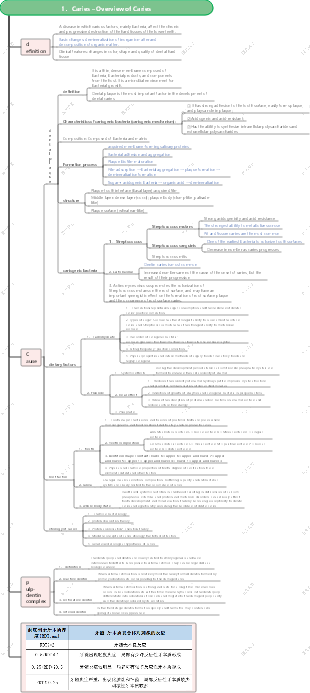
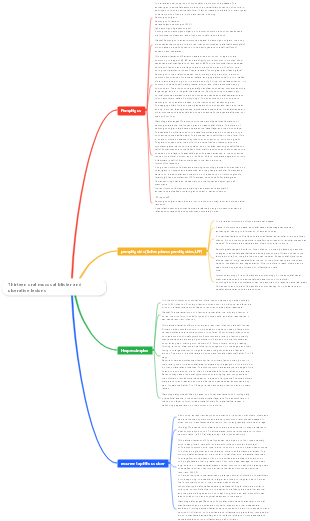
This is a mind map about Nine Caries, which defines: an infectious disease of hard dental tissue. It is a disease in which the inorganic substances in the dental body are demineralized and organic matter decomposed, resulting in chronic progressive destruction of hard dental tissue under the action of bacteria-based multi-factorial bacteria.
Edited at 2025-02-25 20:49:19This template shows the structure and function of the reproductive system in the form of a mind map. It introduces the various components of the internal and external genitals, and sorts out the knowledge clearly to help you become familiar with the key points of knowledge.
This is a mind map about the interpretation and summary of the relationship field e-book, Main content: Overview of the essence interpretation and overview of the relationship field e-book. "Relationship field" refers to the complex interpersonal network in which an individual influences others through specific behaviors and attitudes.
This is a mind map about accounting books and accounting records. The main contents include: the focus of this chapter, reflecting the business results process of the enterprise, the loan and credit accounting method, and the original book of the person.
This template shows the structure and function of the reproductive system in the form of a mind map. It introduces the various components of the internal and external genitals, and sorts out the knowledge clearly to help you become familiar with the key points of knowledge.
This is a mind map about the interpretation and summary of the relationship field e-book, Main content: Overview of the essence interpretation and overview of the relationship field e-book. "Relationship field" refers to the complex interpersonal network in which an individual influences others through specific behaviors and attitudes.
This is a mind map about accounting books and accounting records. The main contents include: the focus of this chapter, reflecting the business results process of the enterprise, the loan and credit accounting method, and the original book of the person.
Nine caries
Overview
1. Definition: An infectious disease of hard dental tissue is a disease in which the inorganic substances in the dental body are demineralized and organic matter decomposed, resulting in chronic progressive destruction of hard dental tissue under the action of bacteria.
2. Epidemiology Incidence Very common dental diseases, widely seen around the world. High incidence and progressive damage can lead to the gradual loss of human chewing function - WHO is listed as one of the three major diseases
3. Good hair parts
Permanent teeth: mandibular first molar, mandibular second molar, maxillary first molar, maxillary second molar, premolar, third molar, third molar, maxillary anterior teeth, mandibular anterior teeth
Deciduous teeth: second jaw molar, second jaw molar, first jaw molar, maxillary anterior teeth, and anterior teeth of maxillary anterior teeth of maxillary anterior teeth of maxillary anterior teeth of maxillary anterior teeth of maxillary anterior teeth of maxillary anterior teeth of maxillary anterior teeth of maxillary anterior teeth of maxillary anterior teeth of maxillary anterior teeth of maxillary anterior teeth of maxillary anterior teeth of maxillary anterior teeth of maxillary anterior teeth of maxillary anterior teeth of maxillary anterior teeth of maxillary anterior teeth of maxillary anterior teeth of maxillary anterior teeth of maxillary anterior teeth of maxillary anterior teeth of maxillary anterior teeth of maxillary anterior teeth of maxillary anterior teeth of maxillary anterior teeth of maxillary anterior teeth of maxillary anterior teeth of maxi
Good tooth noodles: Gaps of the occlusion surface Below the contact point of the adjacent surface Near gingival margins and buccal buccal gaps on the lip and cheeks
4. Process:
Early decalcification → Decomposition and disintegration of organic matter → Caves - Endal disease -Jinzhou disease -Inflammation of the jaw and its surrounding soft tissue -Tooth loss
Pathogenesis and etiology
1. Chemical bacterial theory (original theory of acid, chemical parasitic theory) Bacteria → sugar and carbohydrates in food, acid production → dental demineralization → organic matter damage → caries
2. Protein lysis theory Bacteria produce protein lytic enzymes → destruction of organic matrix in enamel → dissolution of mineral salts → caries disease
3. Protein lysis—Chemistry theory Bacteria → Protein lysis enzymes destroy organic components in teeth, and their products combine with dental minerals through chelation → Solubility Chelating → Teeth destruction
4. Causes
(I) Bacteria and bacterial spots
1. Bacteria
Experimental verification: (1) Caries only occur in teeth exposed to the mouth (2) Feed sterile animals with cariogenic foods to prevent cariogenic effects (3) Antibiotics can reduce the incidence and severity of caries in experimental animals (4) Bacteria can be found in caries tissue
Bacterial species: (1) Streptococcus mutans (2) Lactobacillus (3) Actinomycetes (4) Hemostridium stenosis
2. Bacterial plaque (key point):
Definition: A form of bacteria exists on the dental surface, which is a thin membrane-like bacterial plaque composed of bacteria, salivary glycoproteins and bacterial extracellular polysaccharides; it is a microecological environment for bacterial growth, and its existence is directly related to the occurrence of caries.
Basic structure of plaque: base: also known as plaque--dental interface, a cell-free homogeneous structure, composed of salivary glycoprotein (acquired film).
Intermediate layer: Main part Dense microbial layer: 3-20 cocci at cell depths. Plaque layer: filamentous bacteria arranged in a fence and the cocci and breobacteria interspersed between them. Surface layer: loose structure, composed of various bacteria, bacteria residues, shed epithelial cells, etc.
Plaque formation 1. Formation of acquired films 2. Adhesion and aggregation of bacteria 3. Fungus adjustment 4. Plaque maturation
Acquired film acquired pellicle Also known as salivary membrane, salivary pellicle, is a biofilm formed by selective adsorption of salivary glycoprotein on the tooth surface.
Features: When removed by mechanical means, it can be reformed within 20 minutes. After the film is formed for several minutes or hours, bacteria invade into colonies, and then plaques can be formed.
<Principle of caries in plaque> Bacteria in plaque use sugar to produce acid. The pH value of bacteria metabolized acid production is lower than 5.5, crystal dissolution----------------------------------------------------------------------------------------------------------------------------------------------------------------------------------------------------------------------------------------------------------------------------------------------------------------------------------------------------------------------------------------------------------------------------------------------------------------------------------------- Demineralization is greater than remineralization, causing caries
(II) Food factors
Ingredients of food: Sucrose is more likely to cause caries; Properties of food: Sticky foods are prone to caries, and are rich in fiber and not prone to caries; Lack of VitD, A, B, and the incidence of caries is high; Deficiency of calcium and phosphorus, and the incidence of caries is high; Malnutrition is prone to caries and proteins; Poor health throughout the body can easily cause caries. Fluoride ions promote remineralization and can resist caries
(III) Host Factors
teeth: (1) Different parts: (2) The structure of the teeth: (3) The development status of enamel and mineralization status
saliva: The function of saliva: 1 It can wash away the sugar that adheres to the teeth; 2. It can buffer the acid produced in plaque; 3. Contains IgA and lysozyme have antibacterial and anti-carious effects. Quantity: The secretion volume decreases and caries are affected in a short period of time; Quality: Increased viscosity can easily cause caries.
Nine Histopathology of caries
According to the speed of progress
Acute caries
Rapid progressive, cumulative of many teeth or all eruptions, which is rare. More common in children and adolescents; Schegren's syndrome; radiotherapy Features: Light color, soft and moist texture.
Chronic caries
It is more common in adults and the elderly; there is restorative dentin formation and the symptoms are mild. Features: Tan, hard texture.
Static caries
Due to changes in the surrounding environment, the lesion tends to be static. Features: It is light dish-shaped, brown, and has a hard texture.
By invasion site:
Fences and grooves Smooth surface caries Root caries
By degree of damage:
-Shallow caries: Gaps and grooves, no obvious caries -Medium caries: reach the shallow layer of dentin -Deep caries: Lesion is close to tooth pulp
Post it first or after repair:
-First caries -Second caries
By involved organizations:
-Enamel caries —Smooth surface caries —Funnel caries -Dentin caries -Cortical caries
1. Smooth surface caries
More commonly found on the neck of the teeth below the contact point of the adjacent surface of the teeth and above the gingival edge of the lip, cheek, tongue and tongue
process Mild demineralization---chalk opaque area with continuous Continue to develop -----Brown Pigmentation Surrounding expansion---Tissue disintegration and caries formation
Light mirror (longitudinal grinding sheet) The transverse lines and growth lines in the lesion area can be seen in the early stage. Pigmentation Triangle---the first and most active at the top, towards EDJ
Triangular layering (deep to shallow)
1. Transparent layer The initial manifestations of enamel caries caused by mild demineralization of enamel, transparent. Approximately 50% of the lesions Transparent layer: Early mild demineralization of enamel ↓ Loss of minerals such as magnesium ions and carbonates ↓ Small pores appear around the glaze column ↓ Gum (1.52) similar to enamel hydroxyapatite refractive index (1.62), filled with small holes ↓ Light-transmitting area
2. Dark layer Immediately following the transparent layer, demineralization, remineralization---produces small gaps---represent as dark black. Seen in 80% to 90% of the lesions Dark layer: the result of further decalcification and remineralization Gum cannot enter the micropore ↓ The micropore is filled with air (1.0) ↓ Light scattering ↓ Dark layer
3. Disease body parts The main part of caries lesions Severe demineralization ----large pores, sealant can be used ------more transparent Highly straits and growth lines Seen in all lesions
4. Surface It is located at the most surface of enamel caries and is relatively complete and firstly eroded by acid, but its demineralization degree is lighter than that of its deep lesions. Some scholars believe that this is due to the different structural components of the enamel surface and the deep layer. It is currently believed that remineralized ions can come from minerals in surface saliva and plaque, and can also be re-deposited on the surface by mineral ions released after demineralization of deep lesions.
2. pit and fissure caries
The gaps and grooves on the occlusal surface are the best places for caries. Compared with smooth surface caries, it has its own characteristics
(1) Form: It is also triangular, with a smooth surface, but the base is facing the enamel dentin boundary and the top is facing the wall of the gutter. (2) Formation: First, two small flat caries are formed on the two walls of the pit and groove in an annular shape, extending to the deep part, and then expanding, and then converge at the bottom of the pit and groove into a cone (bottom is at the enamel boundary); (3) Hazard Finally, potential caries with small mouth and large bottom are formed. Not easy to detect, there are no obvious large cavities, but the inner surface is damaged more (4) Progress: The bottom of the pits and grooves is thin. The bottom of the pits and grooves is wide. The lesions can easily progress to dentin. The pits and grooves and grooves are progressive quickly and have a serious degree.
2. Dentine caries
Most of them are caused by the further development of enamel caries, and some can also be caused by cementum caries at the roots of teeth.
Has its own characteristics:
(1) Dissolution of inorganic substances and enzymatic decomposition of organic substances. (2) Progress along dentin tubules and develop faster. (3) The pulp dentin is a complex. Before the caries reach the dentin, the pulp tissue can have a defensive reaction; the restorative dentin is formed. (4) The formed dentin caries are triangles with the bottom facing outward and the tip facing inward.
Pathological morphological stratification (deep and shallow)
1. Translucent zone is the deepest and earliest changes in dentin
Because the lumen of the dentin tube becomes narrower and mineral salts are deposited in the lumen, free inorganic salt ions in the surface demineralization layer are deposited in and around the protrusions of the dentinocytes. The lumen of the dentin tube becomes narrower. Crystal deposition gradually increases Completely blocked tubular The refractive index in the lumen is similar to that in the surrounding interstitial mass Transparent Because of its remineralization, it is also called a hardened layer. However, microhardness analysis shows that the hardness of this layer is lower than that of normal dentin, and there is inorganic salt dissolution between and around the tubes, and demineralization to a certain extent. It's just that remineralization is greater than demineralization
2. Demineralization is located on the surface of the transparent layer. It is a demineralization change caused by the diffusion of acid before bacteria invade the dentin tubes.
Features There is basically no bacterial invasion in the tube, just the diffusion of acid. There is demineralization and remineralization of dentin peritus and inter-tube dentin, but the former is greater than the latter. The morphology of dentin tubules is still relatively complete, and the collagen fibers are basically intact. The formation of a deep transparent layer blocks the source of nutrients of the tubules. The distal part of the dentin cells protrude and denaturate, and the tubules are empty and filled with air. The dentin grinding sheet is observed under transmitted light. This area is dark black and opaque, which is called a dead zone. Since the demineralization layer has been demineralized, it is checked that this layer has been softened, and these softened dentins do not need to be removed during clinical cave preparation.
3. Bacterial invasion layer bacterial invasion Located on the surface of the demineralization layer. Bacteria invade the dentin tubules and even enter the tubular branches. Extend downwards within the tubules and reproduce
Features: The wall of the tubules softens due to demineralization and protein dissolution. The local tubules swell and deform the wall of the tubes due to bacterial reproduction, and blue appears under the light microscope. As demineralization worsens and organic matrix decomposition, the tubules fuse to each other to form liquefied necrotic foci, which is filled with bacteria and necrotic matrix residues. The broken foci can be parallel to the direction of the small tube, sometimes making the small tube beaded, or it can form transverse cracks perpendicular to the small tube.
4. Necrotic disintegration layer zone of destruction is located at the most surface layer, the dentin is completely disintegrated and destroyed, leaving only necrotic disintegration tissue and bacteria
Under the light microscope, the pulp dentin is a physiological complex. When dentin caries occur, pathological stimulation can be transmitted to the pulp tissue through dentin tubules and dentinoblast cell protrusions, resulting in different reactions in the pulp tissue.
3. Cementum caries
Features:
Conditions: Mostly occur in gingival atrophy and cementum exposure
Progress: Develop deeper along the sand fibers; progress up and down the laminate.
Potential cementum caries: Inorganic salt ions released after demineralization can be re-deposited on the surface of cementum, and mineral ions in saliva and plaque can also be deposited on the surface of cementum, causing relatively higher surface mineralization. The lesions at this time are