MindMap Gallery Lifting technology
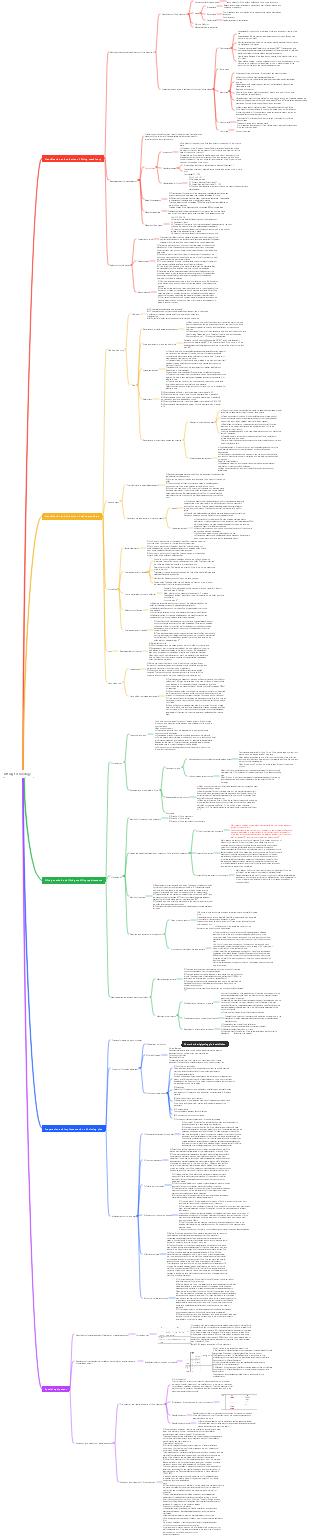
This is a mind map about lifting technology, the main contents include: classification and selection of rigging, mobile cranes, mast cranes, commonly used cranes, ground anchors, mast stability, lifting stability (14, 19 cases), lifting using structures (18 cases), commonly used lifting methods, winches, pulley assembly wire rope winding method, basic crane parameters, and lifting plans.
Edited at 2025-02-17 18:48:19Ceci est une carte mentale sur la carte mentale des experts en bourse (version détaillée).

This is a mind map about the mind map of stock trading experts (detailed version). The main contents include: 1. Mindset management, 2. Basic knowledge, 3. Technical analysis, 4. Fundamental analysis, 5. Trading strategy, 6. Risk control, 7. Continuous evolution.
Questa è una mappa mentale sulla mappa mentale degli esperti di trading azionari (versione dettagliata).
Ceci est une carte mentale sur la carte mentale des experts en bourse (version détaillée).
This is a mind map about the mind map of stock trading experts (detailed version). The main contents include: 1. Mindset management, 2. Basic knowledge, 3. Technical analysis, 4. Fundamental analysis, 5. Trading strategy, 6. Risk control, 7. Continuous evolution.
Questa è una mappa mentale sulla mappa mentale degli esperti di trading azionari (versione dettagliata).
Lifting technology
Commonly used cranes
Flowing crane
Strong mobility and wide use range, it can easily transfer the site and must be on a flat and hard ground to work normally
Tire crane
Consistent allotropic turnover stability
Perform full-week operation within 360°
Drive with load, great operational adaptability
Crawler crane
It has high ground adhesion, strong climbing ability and small turning radius
No need for leg support, can be loaded
Mast crane
Mast body, power-lifting system, stability system composition
Suitable for lifting operations with special weight, ultra-high and special restrictions on the site
Basic parameters of crane
Lifting load, rated lifting weight, maximum amplitude, maximum lifting height (13 cases, more than 21, more than 22)
Lifting load
The weight of the object to be held (equipment or component) in the lifting state and the weight of the lifting and rigging (the flow crane includes the weight of the lifting wire rope that hangs down from the head of the boom to the hook
Rated lifting capacity
The lifting weight should not exceed 75% of the total lifting weight allowed by the two lifting machines. The load of each lifting machine should not exceed 80% of its safe load.
Flowing crane
Characteristic curve
The curves that reflect the lifting capacity and maximum lifting height of the mobile crane change with the arm length and amplitude are called lifting weight characteristic curves and lifting height characteristic curves respectively.
Basic processing
The treated foundation is subject to stress resistance test (usually used pressure and weight method or ask a third-party testing agency to conduct the test)
The foundations of lifting and crane positions on horizontal and hard ground need to be processed
Based on the measured ground pressure resistance, the treatment is carried out using a suitable method. When lifting heavy equipment on complex foundations, professionals should be asked to design the foundation specifically and prepare foundation treatment plans.
Classification and selection of slings
Wire rope
Specification
6×19 1: Cable wind rope, cable
6×37 1: It is used as a lifting rope in the pulley set, and can also be used as a sling rope
6×61 1: Good flexibility, suitable for pulley sets, slings and bundled hanging objects
The safety factor of the sling wire rope and the precision (important) degree of the components of the sling equipment and the binding method of the sling Related (24 orders)
Safety factor (20 cases)
≥3.5 when used as a drag rope, ≥5 when used as a hoist, ≥6 when used as a binding rope buckle, ≥5 when used as a lanyard buckle, ≥14 when used as a manned hanging basket
Hanging beam
The role of hanging beams (balance beams) (more than 20 cases, 22 cases)
Reduce the squeeze pressure when lifting equipment (components) to avoid damage to the equipment
Shorten the height of the sling and reduce the lifting height of the moving pulley
The component stiffness is not met and requires multiple lifting points to balance and distribute loads at each lifting point when lifting stress.
Convert hanging point
Design factors of hanging beams (18 singles)
The hanging beam should be based on the shape characteristics, size and weight of the part to be hoisted, the performance of the lifting machinery and the lifting method. Design with conditions
How to penetrate wire rope for pulley set
Generally, the 3 doors and below should be used for smooth travel; the 4 to 6 doors should be used for flower travel; the 7 doors should be used for smooth travel
The distance between the pulley and the fixed pulley: the minimum distance shall not be 1.5m, and the deflection angle of the running rope entering the pulley shall not be greater than 5°
hoist
Basic parameters
Rated traction tension, working speed, and capacity of rope (the actual wire rope diameter is different from the diameter on the nameplate, the capacity of rope is verified ~ 17 or 18 singles)
Common lifting methods
Hydraulic lift
Pull-up type (lift type)
Suitable for overall lifting of components in situations where the projection area is large, the weight is heavy, and the lifting height is relatively low (more than 14)
Climbing type (pole climbing type)
Lifting of upright components when lifting height, general projection area and relatively light weight
Hoisting with structures (18 cases)
The strength and stability of the load-bearing structure should be verified under stress conditions
The selected stress points and schemes should be approved by the designer.
For bearing parts that are directly bound through anchor points or directly bound, local reinforcement measures should also be taken, such as using large steel plates, sleepers, etc. for local reinforcement, and angle steel or wooden squares should be used to protect the beam or column angle.
A special person should be set up to monitor the structure of the stress point
Lifting stability (cases 14, 19)
The instability of lifting machinery
Overload, leg unstable, mechanical failure, lifting boom elevation angle exceeds limit (45°~78°)
Unstable lifting system
The load distribution of multi-machine lifting is not uniform in multiple machine lifting capacity; the command and coordination errors of multiple actions and multiple positions, and the mast system cable and wind rope and ground anchor are instable
Unstable lifting equipment or components
The design is inconsistent with the lifting force, and the stiffness of the equipment or components is relatively small
Mast stability
The setting of the top cable wind ropes of the upright single-mast should be 6 to 8. The rear main cable wind rope should be added to the masts that are lifted inclinedly, and the number of main cable wind ropes for the back should not be less than 2.
The angle between the cable wind rope and the ground should be 30°, and the maximum must not exceed 45°; the horizontal angle between adjacent cable wind ropes of the upright single mast shall not exceed 60°.
Ground anchor
Fully buried ground anchor: with larger pulling and training suitable for heavy lifting
Movable ground anchor: It bears little force and has a high reuse rate, which is suitable for renovation and expansion projects.
Use existing buildings as ground anchors: written approval from the building design unit. When in use, the edges and corners of the foundation and column should be protected.
Ground anchor setting and use requirements (more than 22)
The ground anchor structure should be designed and selected based on the stress conditions and the geological conditions of the construction area; the production and setting of ground anchors should be calculated and verified according to the provisions of the special lifting construction plan.
In front of the buried ground anchor foundation pit, there should be no trenches within a range of 2.5 times the depth of the pit in the direction of the cable wind rope. Cables, underground pipelines, etc.
When backfilling the embedded ground anchor, it is compacted or compacted by pure land layer, and the backfilling height should be higher than the surroundings of the foundation pit. The ground is above 400mm and must not be immersed in water. Records of hidden projects should be made after the ground anchor is set up.
After the embedded ground anchor is set up, the stressed rope buckle should be pre-tightened.
Lifting plan
Project Overview
Project characteristics; Equipment parameter table: equipment name, quantity, equipment position number, main body material, etc.; construction plan layout; state before lifting
Lifting parameter table (24 cases)
Equipment specifications, total equipment weight, total lifting weight, center of gravity elevation, lifting point orientation and elevation
Program content
Preparation instructions, project overview, lifting process design, machinery, lifting points and reinforcement, process drawings, ground anchor construction drawings, and foundation treatment measures for lifting area
change
For changes in lifting methods, changes in types of lifting equipment, and replacement of main machine rigging and materials, the lifting plan implementation unit (or plan preparer) should write a written change application, attach necessary calculations and explanations, and report to the original lifting plan approval unit and personnel. Only after approval can it be implemented according to the changed content.
Organization
Finalize the plan
Based on the content of the lifting plan and design drawings, the focus is on project characteristics, lifting procedures, process methods, technical keys and safety measures.
Process inspection (hidden project)
Construction of embedded ground anchors, foundation treatment, compaction and reinforcement of lifting sites
Test and test hang
Before lifting major equipment, lifting capacity tests should be carried out on newly designed and manufactured masts and other lifting machinery, homemade lifting beams, and slings to determine their maximum load capacity. Such as tensile test of embedded ground anchor, pressure test of foundation, operation and braking test of winch, etc.
During the trial lifting, special personnel must be set up to observe and monitor some important lifting links and parts, and special attention should be paid to the occurrence of some abnormal situations. The trial hanging time should not be controlled at about 10 minutes too long. The distance between the equipment leaving the ground during the trial lifting should not exceed 100mm. After the trial lifting, a comprehensive inspection of each lifting machine rigging must be carried out. Measures should be taken to resolve the abnormal situations that occur, and another trial lifting should be carried out if necessary.