 Wondershare EdrawMind
MindMap Gallery Basic accounting mind map
- 147
- 1
Basic accounting mind map
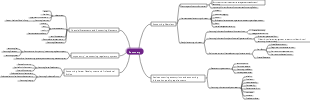
Explore the core mysteries of accounting and management! From the difference between accounting subjects and legal subjects, to the in-depth analysis of the four basic assumptions, to the comparison of accounting goals and information quality characteristics, this outline comprehensively covers the basic and advanced knowledge of accounting. You will understand the relationship between owner's equity and creditor's rights, grasp the differences between the accrual system and the collection and payment realization system, and deeply explore the various characteristics and classifications of assets, liabilities, and owner's equity. In addition, there is a detailed analysis of specific accounting elements such as financial assets, inventory, long-term equity investment, and fixed assets. Whether beginners or senior practitioners, they can gain valuable knowledge from it.
Edited at 2025-03-11 09:43:03
- bacteria
This is a mind map about bacteria, and its main contents include: overview, morphology, types, structure, reproduction, distribution, application, and expansion. The summary is comprehensive and meticulous, suitable as review materials.
- Plant asexual reproduction
This is a mind map about plant asexual reproduction, and its main contents include: concept, spore reproduction, vegetative reproduction, tissue culture, and buds. The summary is comprehensive and meticulous, suitable as review materials.
- Reproductive development of animals
This is a mind map about the reproductive development of animals, and its main contents include: insects, frogs, birds, sexual reproduction, and asexual reproduction. The summary is comprehensive and meticulous, suitable as review materials.
Basic accounting mind map
- bacteria
This is a mind map about bacteria, and its main contents include: overview, morphology, types, structure, reproduction, distribution, application, and expansion. The summary is comprehensive and meticulous, suitable as review materials.
- Plant asexual reproduction
This is a mind map about plant asexual reproduction, and its main contents include: concept, spore reproduction, vegetative reproduction, tissue culture, and buds. The summary is comprehensive and meticulous, suitable as review materials.
- Reproductive development of animals
This is a mind map about the reproductive development of animals, and its main contents include: insects, frogs, birds, sexual reproduction, and asexual reproduction. The summary is comprehensive and meticulous, suitable as review materials.
- Recommended to you
- Outline
Central theme
Accounting
The difference between accounting subject and legal subject
The accounting entity is the subject of the accounting report confirmation measurement report, and the spatial scope
The legal entity is usually an accounting entity, but the accounting entity is not necessarily a legal entity. For example, a car company has multiple workshops.
Four basic assumptions
Accounting entity
Continue to operate
In the long-term expected future, enterprises will continue to operate according to their current operating conditions and scale.
Accounting installment
Dividing the production and operation activities of the enterprise's continuous operation into several continuous and same length ranges is the time range
Currency measurement
Accounting entities measure in currency when confirming, measuring and reporting financial accounting, reflecting their production and operation activities.
Comparison of accounting goals
Trusteeship responsibility concept
Reflect the performance of the entrusted party
The reaction content is centered on the business performance of the company
Focus on objectivity and reliability
Useful view of decision making
The goal of financial reporting is to provide effective information to existing or potential financial reporting users, such as creditors and investors, to help them make economic decisions.
Relevance Usefulness
Accounting information quality characteristics
objectivity
Authenticity/reliability
Accounting information is real //Record accounting information without bias and objective
Relevance
Comparability
Understandability
Substance over form
Financing leasing
Economic substances are more important than legal form
Caution
Don't overestimate assets or income
Don't underestimate liabilities and expenses
Accelerated depreciation //Estimated liabilities
importance
Error changes
Timely record and report
Timely
The relationship between owner's equity and creditor's equity //The relationship between equity and liabilities
Different properties
Owner's equity is a residual equity, and creditor's equity takes precedence over the owner
Different risks
Different periods
Different impacts
Accrual vs. Payment and payment implementation system
Accrual system
Any income that has been realized during the schedule
Payment and payment system
All funds received in the current period, regardless of whether they belong to this period, will be included in this period.
Characteristics of assets
It is expected to bring economic inflows to enterprises
Resources for actual control of enterprises
Formed by past transactions or events
Classification of assets
Liquidity
Current assets
The meaning of having assets
It is expected to be realised, sold or consumed within one fiscal year or more
Non-current assets
Have assets
Money in more than one year
Liability Characteristics
Current obligations
Legal obligations
Definition tasks
Expected loss of economic interests
The formation of past transactions or events
Source of owner's equity
paid-in capital paid-in capital
Capital premium
Directly included in the owner's equity and losses//other comprehensive income
Other comprehensive income of invested units
Foreign currency financial statement conversion
Sub-theme
Retained income
Surplus reserve
undistributed profit
Economic business with the unchanged sum of owner's equity
Increase capital
Withdraw surplus reserves
Concept and characteristics of income
The formation of daily activities leads to the inflow of economic benefits, which has nothing to do with the owner's capital investment, and leads to an increase in owner's equity.
The difference between income and lide
Profits and losses
Non-operating income included in profit and loss
Other comprehensive income is included in owner's equity
Measuring attributes of accounting elements
Historical cost
Fair value
Current value
Net realizable value
Reset Cost
Double accounting method
For each brokerage transaction, it must be registered in two or more related accounts with an equal amount.
Financial assets
Classification
Business Model
Sell financial assets
Contract cash
Contract cash flow
Is it a pure debt?
Inflows of principal and interest based on outstanding principal
Amortized cost
Collect contract cash flow, pure debt
Calculation of amortized cost = - principal repaid - interest adjustment - loss provision
Changes in fair value and their changes are included in other comprehensive income
Collect contract cash flow Sell financial assets Pure bonds
Changes in fair value
Sub-theme
Changes in fair value and their changes are included in current profit and loss
Initial measurement of financial assets
In addition to fair profit and loss, the other two are included in the initial recognition amount.
Transaction fees include incremental fees, handling fees, commissions, related taxes, etc.
stock
concept
Finished products or commodities held in the daily activities of enterprises for sale; finished products in the production process, materials and materials consumed during the production process or the provision of labor, etc.
Confirmation conditions
Probably reliable
Initial measurement
Inventory costs include procurement costs, related taxes and fees, direct costs
Inventory Cost
The inventory cost of purchase mainly includes
Purchase price Related taxes and fees Other fees (transportation/warehousing necessary valid
Inventory cost of self-produced
Raw materials invested
Direct artificial
Manufacturing costs
Various indirect expenses incurred by enterprises in producing products or providing services
Not counted
Abnormal consumption of materials
Warehousing (excluding to reach the next stage
Can't belong
Final measurement principle
Which is lower in cost or net variability
Asset impairment loss//Inventory impairment provision
Net realizable value
Estimated selling price - sales expenses - related taxes and fees
Long-term equity investment
Long-term equity investment formed through control
Under the same control
Under different control
Long-term equity investment formed by non-control
Associate Enterprises
Joint venture
Initial measurement
Long-term equity investments obtained through cash payment
Actual price, including handling fees and other necessary expenses
Long-term equity investments obtained from issuing equity securities
Fair value of securities
Long-term equity investment invested by investors
Contract consideration, except for unfair
Initial measurement of long-term equity investment formed by the merger of holding shares under the same control
The share of the book value of the net assets of the consolidated party in the financial statements of the consolidated party in the final control of the
Intermediary fees, transaction fees processing
Included in current profit and loss
Reduce capital reserve premium
Debt instruments are found and included in the initial recognition amount
Enterprise merger under non-unified control
Fair value
Subsequent measurement
To subsidiaries
Cost method
Pricing is based on initial investment cost. When additional investment, add additional book value according to the fair value of the cost paid for additional investment and related transaction fees.
The invested unit declares the distribution of cash dividends or profits, and is included in the current profit and loss
Joint venture, joint venture
Equity Law
Investment cost //Profit and loss adjustment / Other comprehensive income / Other equity changes
Changes in the equity of the invested unit, as the changes
Impairment
Which is the lower of the recoverable amount or the book value?
Borrowing z asset impairment loss
Credit: Preparation for impairment of long-term equity investment
No redirection
Fixed assets
Cost of purchasing fixed assets
Purchase price Related taxes and fees Other reasonable and necessary fees
If you need to install it, first borrow the project under construction. When the installation is completed, transfer it to the fixed assets when it reaches the predetermined usable state.
Fixed assets for depreciation
Space range
The enterprise reserves depreciation of all fixed assets
Except for land that has been depreciated but is still in use or separately calculated and recorded
Time range
By month
Depreciation method
Average method of years
Double balance decreasing method
Year sum method
Workload method
Changes in depreciation methods are accounting estimate changes
Principles for handling subsequent expenditure of fixed assets
If the fixed asset recognition conditions are met, the fixed asset cost will be included, and the book value of the replaced part will be deducted.
If the fixed asset recognition conditions are not met, it shall be included in the current profit and loss
Accounting treatment of fixed asset disposal
Fixed asset cleaning
The enterprise sells and transfers and scrapped fixed assets or causes damage to fixed assets, and the difference is included in the current profit and loss
Intangible assets
Initial cost
Purchase price Related taxes Other notes
Internal research and development costs
Research stage
Expenditures during the research phase should be included in current profit and loss
Development stage
The cost of intangible assets when the amount expenditure in the development stage meets the capitalization conditions
Estimated service life of intangible assets
The service life is limited, and the service life should be estimated and amortized
If the period of economic benefits brought to enterprises by intangible assets cannot be foreseen, the service life is uncertain, and there is no need to be amortized, and impairment tests will be conducted at the end of each year.
Amortization
Intangible assets increased in the month begin amortization of the month
Intangible assets that have decreased in the month will no longer be amortized in the month
Liabilities
How to deal with consumption tax after the enterprise commissions processing taxable consumer goods to be recovered
Directly used for sales, consumption tax is included in the cost of entrusted processing of taxable consumer goods
Used for continuous production, deductions are granted in accordance with tax regulations, and included in taxes and fees payable - the borrower of consumption tax payable
How to deal with the commission for bond issuance
The initial accounting amount included in the liabilities is reflected in the interest adjustment details
Owner's Equity
Capital reserves to increase capital
Borrow: Capital reserve-equity premium
Credit: Stock
Impact of cash dividend distribution
Sub-theme
Stock dividends
Reduce the value per share
Stabilize stock prices
Capital premium (equity premium)
The part of the investor's investment received by an enterprise exceeds its share in registered capital or equity shall be included in the capital premium (equity premium)
Transaction fees, commissions and other transaction fees directly related to the issuance of equity securities
Borrow: Capital reserve-capital premium
Credit: Bank deposit
The fair and book difference between the invested enterprise under the same control can also be reduced
Recognition, measurement and accounting of other comprehensive income
All lides and losses not recognized in current profit and loss
Four situations
Measured at fair value and its changes are included in other comprehensive income
Investment real estate
The order of distribution of net profit
Legal provident fund
Any provident fund
Distribute profits or dividends
Undistributed profits to increase capital
Borrow: Profit distribution
Credit: Stock
Income, expenses and profits
Definition and classification of income
Formed in daily activities, resulting in an increase in owner's equity and a total inflow of economic benefits that are not related to the owner's investment capital
Contract assets, accounts receivable/contract liabilities, accounts payable
Contract assets have conditions and face credit risk and performance risk //Unconditional right to collect, only credit risk
Contract liabilities are related to contract performance obligations
Steps to recognize and measure revenue
Identify contracts signed with customers
Receive income when the customer obtains control of the relevant products
Dominate the use of the commodity and obtain almost all its economic benefits from it
Customers have current rights
Customers have the ability to dominate the use of this product
Customers can get almost all their financial benefits
Identify the individual performance obligations of the contract
What can clearly distinguish products / What can't be clearly distinguished?
It can clearly distinguish products
Products can be clearly distinguished
Promise to clearly distinguish
It is not clear to distinguish products
Highly correlated
Integrate with other products
Determine the transaction price
Variable home
Major financing components
Amortize transaction prices to individual performance obligations
Recognize income after the fulfillment of obligations
Conditions for revenue recognition
Five-step method of income
The parties to the contract have approved the contract and promised to fulfill their respective obligations
Clarify the rights and obligations of the parties to the goods transferred
Have clear payment terms related to the goods transferred
The contract has commercial substance, and the performance of the contract will change the risk, time distribution or amount of the company's future cash flows.
The consideration that the customer is entitled to obtain for the transfer of goods is likely to be recovered
Sales return
When a customer obtains control of the relevant goods, he can regain the consideration as expected and recognize the income according to the amount returned by the expected sales.
At the same time, according to the expected book value of the goods to be returned to, the balance after deducting the expected cost of the goods to be recovered, is recognized as an asset
The net carry-over cost of deducting the above capital costs
Period fee
Administrative expenses
Administrative Management
Sales expenses
Financial expenses
Various profits
Operating profit = operating income - operating costs - taxes and surcharges - sales expenses - administrative expenses - financial expenses - asset impairment loss Profit and loss of fair value changes Investment income Profit and loss of asset disposal
Total profit = operating profit Non-operating income - non-operating expenses
Net profit = total profit - income tax expense
Financial Reports
Four major reports
Balance sheet
Accounts receivable, long-term loans, transactional financial assets
Profit statement
Owner's Equity Statement
Cash flow statement
Cash received from selling goods and providing services
Cash paid for purchases and services
Recover cash received from investment
Cash received from obtaining investment income
Distribute dividend payments
Cash flow statement
Business Activities
Inflow
Cash received from selling goods and providing services, taxes and fees received
Leak out
Cash paid for purchases of goods, acceptance of labor, cash paid to employees, cash paid for employees, and various taxes paid
Investing Activities
Inflow
Obtain cash received from investment, obtain investment income, and handle fixed assets
Leak out
Building fixed assets/investment payments
Fundraising activities
Inflow
Absorbing investment/acquisition of loans/others
Leak out
Debt repayment/distribution of cash dividends/others
According to the payment and payment system
Reclassify other comprehensive income into profit and loss
The share of the invested unit enjoyed by the share of the profit and loss in the equity method.
Other bond investments make profits and losses
Amortized cost measurement is classified into fair comprehensive
Foreign currency financial statement conversion
Valid part of cash flow hedging profit and loss
Cash equivalent
Investments with short term, strong liquidity, easy to convert, and low risk of value change
Owner's Equity Statement
Directly included in the owner's equity and losses
Changes in fair value of other bond investments
Changes in the equity of other owners of invested companies under the equity law
Owner investment and capital reduction
Profit distribution
Internal carriage of owners' equity
There are any issues
concept
Formed by past matters or transactions
Determine by future occurrence
Uncertainty
feature
Formed by past transactions or events
It will be confirmed in the future
Uncertainty
Understanding of contingent liabilities
It refers to the potential obligations formed by past transactions or matters, and must be confirmed by future events.
Current obligations formed by past transactions or matters are not expected to lead to the outflow of economic benefits or the amount cannot be reliably measured.
Disclosed only in note
Contingent assets
The potential assets formed by past transactions or events must be determined by the occurrence of uncertain future events.
Conversion
Potential-current
Unreliable measurement - Reliable measurement
Impossible - very likely
What are the expected liabilities?
More than 50% chance
The amount can be estimated reasonably
Only fulfill this obligation
Measuring of estimated liabilities
Determination of the best estimate
Two methods
There is a range
There is a probability
Pending lawsuits
The difference is included or offset by non-operating expenses
Serious inconsistencies are handled according to the method of correcting major early errors
There are any issues
Pending lawsuits
Debt Guarantee
Product quality assurance
Loss contract
Possible items are reported
Disclosed contingent liabilities
Types and causes of formation
Explanation of uncertainty in the outflow of economic interests
Contingent assets disclosure
Businesses should not normally disclose or have assets. However, if contingent assets are likely to bring economic benefits to the enterprise, the reasons for their formation should be disclosed and the expected financial impact should be generated.
Events in the balance sheet
Refers to favorable or adverse matters that occur between the balance sheet date and the financial report approval date, including adjustment matters and non-adjustment matters
Adjustments
Matters that provide new or further evidence on the existing situation on the balance sheet date
It has existed on the balance sheet date and will be confirmed later
It will have a significant impact on financial statements
Non-adjustment matters
Although the matters that occur after the balance sheet date do not affect the existence of the balance sheet date, the failure to explain will affect the users of financial report making correct estimates and decisions.
Give an example
What needs to be adjusted in the future
A table
2nd year
Three notes
Non-adjustment matters in the future
Financial statements on the balance sheet date are not adjusted
Disclosure of nature, content and impact in note
Give an example
Major lawsuits that will occur in the future
In the future, major property losses will occur due to natural disasters
In the future asset price, tax policy, foreign exchange rate change
In the future, stocks or bonds and other huge debts were issued
Accounting policies, accounting estimate changes, accounting errors
Accounting Policy
assets
Classification of financial assets
Liabilities
Conditions for capitalization of loan fees
Measuring of estimated liabilities
Owner's Equity
income
cost
Changes in accounting policies
The company adopts new accounting policies to measure the original same transaction or matter
Regulations stipulate
Response information is more reliable
If the nature of the matter or the transaction has changed drastically, it does not belong to
Give an example
Long-term bond investment is classified as bond investment and amortized according to the actual interest rate method
Long-term equity investment in subsidiaries has been changed from equity method to cost method
Calculation method of cumulative impact number
Future Applicable Law
The changed accounting policy is applied to transactions or matters that occur on the date of change and later
No need to recalculate the cumulative impact
Traceability adjustment method
How to deal with changes in accounting policies
Laws and regulations
Able to provide more reliable and relevant information
The concept of accounting estimation
A business's judgment on transactions or matters with uncertain results based on recent available information
Net realizable value of inventory
Estimated liabilities
Fair value
Amortization of intangible assets
Give an example
Fair value
Amortization method
Estimated liabilities determined due to contingent matters are adjusted based on the latest information
The concept of accounting estimate change
The amount of periodic loss has been adjusted as the current conditions of assets and liabilities and expected economic benefits and obligations have changed.
Estimation basis changes
Obtain new information and accumulate new experience
Adopt future applicable law
Error correction
unimportant
Applicable in the future
important
Traceability adjustment
management accounting
General
Differences and connections between financial accounting and management accounting
Financial accounting is for external information
Management Accounting
Internal information user
No clear range
Sub-theme
connect