MindMap Gallery Scrum bites
Scrum Bites is a concise and engaging content series focused on delivering quick, actionable insights about Scrum—the popular Agile framework for product development. Designed for busy professionals, each “bite” covers key concepts, roles, ceremonies, tools, or best practices in under a minute, helping teams improve collaboration, productivity, and delivery speed without overwhelming information. Perfect for daily learning, team onboarding, or refreshing your Agile knowledge on the go.
Edited at 2025-05-07 08:17:38This is a mind map about Pedro Pascal life, covering his personal experiences and events. Why does everyone love him? You will love him too.

This is a mind map about his Cleopatra life, covering his personal experiences and important events.Did she win Rome with beauty—or was she a strategist history misunderstood
This is a mind map about Donald J. Trump’s Life in a Nutshell, Main content: Real Estate Empire 🏙️, entertainment industry 🎬, political life 🏛️, Judicial challenges ⚖️.
This is a mind map about Pedro Pascal life, covering his personal experiences and events. Why does everyone love him? You will love him too.
This is a mind map about his Cleopatra life, covering his personal experiences and important events.Did she win Rome with beauty—or was she a strategist history misunderstood
This is a mind map about Donald J. Trump’s Life in a Nutshell, Main content: Real Estate Empire 🏙️, entertainment industry 🎬, political life 🏛️, Judicial challenges ⚖️.
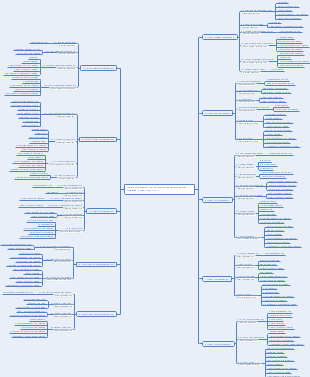
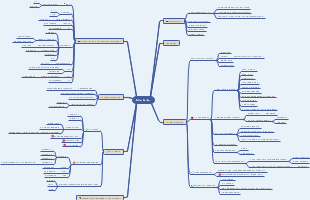
Scrum bites
Scrum is a Framework, not a methodology
Scrum is a framework of rules, roles and principles
The framework helps people and organizations discover what works best for them
Lean
Is founded on empiricism and lean thinking
delivering superior customer value by eliminating waste - continuous improvement.
Delivers
Adaptive Products of highest value to solve complex problems in volatile environment. It's the opposite of the waterfall process.
Empirical process
Test and feedback oriented
Knowledge comes from experience.
Each element of the framework serves a specific purpose
Value
It helps to generate value through adapative solutions for complex problems
3 Pillars
Transparency
Inspection
Adaptation
5 Values
Courage
Do it right. Courage facilitates empiricism and collaborative teamwork.
Scrum Team members have courage to do the right thing and work on tough problems
Focus
Focus on the overall outcome.
Everyone focuses on the work of the Sprint and the goals of the Scrum Team
Commitment
Scrum Team commits to goals. "It will be done no matter what"
People personally commit to achieving the goals of the Scrum Team
Respect
Respect people, accountabilities, dedication, accomplishments.
Scrum Team members respect each other to be capable, independent people
Openness
Facilitates teamwork and collaboration
The Scrum Team and its stakeholders agree to be open about all the work and the challenges with performing the work
Scrum Team
Small team of people
Scrum Master
to foster the organizational environment
Product Owner
orders the work for a complex problem into a Product Backlog
Developers
Cohesive unit of professional
Focused on one objective at a time
The Product Goal
Integrated Increment
Multiple Scrum Teams working on the same product must deliver at least one integrated increment at the end of the Sprint.
Size
Scrum Team (ST)
Typically 10 or fewer
Product Owner (PO)
1 per Product. Can also work as a Dev
Developers (Devs)
Typically 10 or fewer
Scrum Master (SM)
1 per Scrum Team. Can also work as a Dev
Multiple Teams working on a Product (Nexus / Scaled Scrum)
Scrum Teams (ST)
Frequent increments' integration. Coordinate, minimize or suppress dependencies. In Nexus: 3-9 STs
Product Owner (PO)
1 PO for all Scrum Teams.
Remember : 1 product = 1 Product Owner = 1 Product Backlog
Scrum Master (SM)
1 per Scrum Team maximum
1 Scrum Master can be in many Scrum Teams
Developers (Devs)
Integrate often
Accountabilities
Scrum Team
Commitment
The product goal
Composed of a Product Owner, a Scrum Master and Developers.
No hierarchies
No dependencies
Self-managing and cross-functional
The Scrum Team delivers valuable and usable increment every sprint
All product-related activities. Creating a valuable, useful Increment every Sprint
Improves every Sprint (via the Sprint Retrospective)
Optimizes flexibility, creativity, and velocity
Receive feedback from users and stakeholders
Product Owner
Commitment
The maximum of value for the Product
1 person, not a committee
Stakeholders and users representative
Visionary
Maximizes the Value of the Product built by the Developers
Developers (Devs)
Commitment
The Sprint Goal
Cross-functional, no titles
Multi-skilled
Build the usable increment that meets the Definition of Done
Create the Sprint Backlog
Ensure the increment meets the DoD
Product Backlog Items estimation
Monitor the progress of the Sprint (Daily Scrum)
Scrum Master
A true leader, facilitator and a coach
Supports the Scrum Team.
Promotes Scrum as it is described in the Scrum Guide ™within the organization
Accountable for Scrum Team’s effectiveness
Facilitates Scrum Events and ensures to keep them within time-boxes
Key concepts
Technical debt
The result of prioritizing speedy delivery (quick and dirty) over perfect code (long term stability). Maintenance and fixing will be required.
Changes vs performance
When a change of people occurs within the Scrum Team, coordination and training will be required in a first place which will lower the short-term velocity. The same principle apply to adding a new Scrum Team on a product (for Nexus / Scaled Scrum)
No special Sprints
All the Sprints must deliver an increment ready to be released in production whenever needed.
No hardening sprint or Sprint 0.
Scrum Team self-management
The Scrum Team is responsible for executing the tasks and monitoring and managing process and progress.
Integrated Increment
Multiple Scrum Teams working on the same product must deliver at least one integrated increment at the end of the Sprint.
Scaling vs Sprint lengths
Multiple Scrum Teams working on the same product may have different Sprint length and start/end dates (not recommended though). Nevertheless, they must integrate the increment by the Sprint Review.
Start the first Sprint
Scrum requires a Scrum Team and a Product Backlog with enough items for a first Sprint.
Definition of Done
Scrum Team defines DoD. The Devs apply it.
DoD must follow organizational standards as minimum
Multiple Scrum Teams have one DoD
Includes testing
Scrum Events
Sprint
Time-box
1 month max
Purpose (outcome)
Build a new increment
Participants
The Scrum Team
Sprint Planning
Time-box
8 hours max
Purpose (outcome)
Define the Sprint Goal (why, what & how) and the Sprint Backlog
(why, what & how)
Participants
The Scrum Team (+invitees if needed)
Daily Scrum
Time-box
15 mins max
Purpose (outcome)
Inspect and adapt the progress toward the Sprint Goal
Update the Sprint Backlog if needed
Talk about the current activity and impediments.
Other benefits
improve communications
identify impediments
promote quick decision-making
eliminate the need for other meetings
Participants
The Developers only (invitees can attend the Daily Scrum as silent observers)
Sprint Review
Time-box
4 hours max
Purpose (outcome)
Inspect Increment and adapt the Product Backlog
Receive feedback in terms of changes, new requirements, new ideas...
Participants
The Scrum Team + Stakeholders.
Sprint Retrospective
Time-box
3 hours max
Purpose (outcome)
Inspect the Scrum Team in terms of people, relationships, process, tools and plan improvements for the next Sprint
Review the Definition of Done that the Developers will have to apply to the next increments
Participants
The Scrum Team only
Scrum Artifacts
Scrum’s artifacts represent work or value. They are designed to maximize transparency of key information. Thus, everyone inspecting them has the same basis for adaptation.
Product Backlog
Description
List of Product Backlog items (PBIs) which will compose new increments with the maximum of value
Dynamic and never complete
It's owned by the PO and frequently refined by the PO + the Devs
There is 1 Product Backlog for 1 product owned by 1 PO
Commitment
Product Goal
Sprint Backlog
The Sprint Backlog is composed of the Sprint Goal (why), the set of Product Backlog items selected for the Sprint (what), as well as an actionable plan for delivering the Increment (how). The Sprint Backlog is a plan by and for the Developers. It is a highly visible, real-time picture of the work that the Developers plan to accomplish during the Sprint in order to achieve the Sprint Goal. Consequently, the Sprint Backlog is updated throughout the Sprint as more is learned. It should have enough detail that they can inspect their progress in the Daily Scrum.
Description
Selected Product Backlog items (PBIs) for the Sprint (at the Sprint Planning) which will compose the new increment and reach the Sprint Goal
It's owned and managed by the Developers and can be updated during Daily Scrums (with the agreement of the PO)
There is 1 Sprint Backlog for 1 Scrum Team
On Scaled Scrum, there are as many Sprint Backlogs as Scrum Teams but still 1 Product Backlog for 1 product
Why
is composed of the Sprint Goal (why)
What
the set of Product Backlog items selected for the Sprint (what),
How
an actionable plan for delivering the Increment (how)
Commitment
Sprint Goal
Increment
Description
Standard of quality for the Increment
DoD is part of the standards of the organization which all Scrum Teams must follow at a minimum
In case of Scaled Scrum, all Scrum Teams working on the same product must define and comply with a mutual DoD
Commitment
Definition of Done
Ludovic Larry Courses
Product Owner Certification Mock Exams
Scrum Master Certification Mock Exams
Scrum Master Certification Level II Mock Exams