MindMap Gallery ACT Preparation Guide
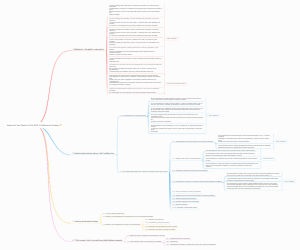
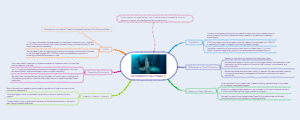
This is a mind map about ACT Preparation Guide, Main content: What is ACT, What to test for, How to take the exam, Each subjectbasic strategies, Recommended Preparation Resources, Detailed explanation of registration process, , , Short term preparation plan, Daily learning framework, Preparation tools, Precautions before the exam, Exam room strategy, .
Edited at 2025-08-27 06:53:37This infographic, created using EdrawMax, outlines the pivotal moments in African American history from 1619 to the present. It highlights significant events such as emancipation, key civil rights legislation, and notable achievements that have shaped the social and political landscape. The timeline serves as a visual representation of the struggle for equality and justice, emphasizing the resilience and contributions of African Americans throughout history.
This infographic, designed with EdrawMax, presents a detailed timeline of the evolution of voting rights and citizenship in the U.S. from 1870 to the present. It highlights key legislative milestones, court decisions, and societal changes that have expanded or challenged voting access. The timeline underscores the ongoing struggle for equality and the continuous efforts to secure voting rights for all citizens, reflecting the dynamic nature of democracy in America.
This infographic, created using EdrawMax, highlights the rich cultural heritage and outstanding contributions of African Americans. It covers key areas such as STEM innovations, literature and thought, global influence of music and arts, and historical preservation. The document showcases influential figures and institutions that have played pivotal roles in shaping science, medicine, literature, and public memory, underscoring the integral role of African American contributions to society.
This infographic, created using EdrawMax, outlines the pivotal moments in African American history from 1619 to the present. It highlights significant events such as emancipation, key civil rights legislation, and notable achievements that have shaped the social and political landscape. The timeline serves as a visual representation of the struggle for equality and justice, emphasizing the resilience and contributions of African Americans throughout history.
This infographic, designed with EdrawMax, presents a detailed timeline of the evolution of voting rights and citizenship in the U.S. from 1870 to the present. It highlights key legislative milestones, court decisions, and societal changes that have expanded or challenged voting access. The timeline underscores the ongoing struggle for equality and the continuous efforts to secure voting rights for all citizens, reflecting the dynamic nature of democracy in America.
This infographic, created using EdrawMax, highlights the rich cultural heritage and outstanding contributions of African Americans. It covers key areas such as STEM innovations, literature and thought, global influence of music and arts, and historical preservation. The document showcases influential figures and institutions that have played pivotal roles in shaping science, medicine, literature, and public memory, underscoring the integral role of African American contributions to society.
ACT Preparation Guide
What is ACT
ACT (American College Test), also known as the American College Entrance Examination, is a qualification exam for students applying to study undergraduate courses. It is one of the admission requirements for undergraduate programs in the United States and an important basis for scholarship distribution
Grades are accepted as undergraduate admission standards by over 3000 universities across the United States, including Ivy League schools such as Harvard University.
What to test for
subject
Quantity of questions
time
content
full marks
English (required exam)
50 questions
35 minutes
Grammar, punctuation, and discourse structure; Add question stem and argumentative essay topics
36 points
Mathematics (required exam)
Question 45
50 minutes
Algebra, geometry, trigonometric functions, etc; Reduce context dependent questions and lower the proportion of high-order question types
36 points
Reading (required exam)
Question 36
40 minutes
4 reading articles, adding the "integration of knowledge and viewpoints" question type, introducing literary memoir themes
36 points
scientific reasoning (Optional Exam)
40 questions
45 minutes
7 scientific articles; Add articles on engineering design themes and increase the number of question types related to background knowledge in disciplines such as physics and chemistry
36 points
Writing (optional exam)
1 article
40 minutes
Analyze three viewpoints and present arguments
12 points
Note: This is the exam subject after the reform in 2025, which will be implemented starting from September 2025
How to take the exam
Each subject basic strategies
English
Key mastery: sentence structure, punctuation, rhetorical skills
Daily Practice: Real Exam+Error Analysis
Pre exam reinforcement: fixed collocations and memorization of grammar points
Exam technique: Based on understanding the entire text, do questions and pay attention to details
mathematics
Knowledge sorting: Reviewing easily forgotten exam points such as vectors, matrices, and trigonometric functions
Term accumulation: Organizing a vocabulary list for mathematics majors
Practice strategy: timed training+organizing error books
Exam room skills: Clearly understand the requirements of the questions and grasp key information
read
Vocabulary accumulation: using the APP for memorization+loop review
Practice frequency: 2-3 sets of new questions per week+in-depth analysis
Answering skills: Optimize the order of answering questions, based on the positioning of the original text
scientific reasoning
Terminology preparation: Review relevant scientific terms
Question type training: Focus on practicing experimental questions and viewpoint conflict questions
Model exam suggestion: timed training+organizing wrong question thinking
Exam Response: Analyzing Sentence Structure with Long Options
Writing (optional exam)
Material accumulation: Collecting viewpoints from multiple perspectives
Structural training: Building a clear article framework
Language Enhancement: Accuracy and Fluency Practice
Recommended Preparation Resources
Official information
The Real ACT Prep Guide contains real exam questions
ACT official website provides free study materials and practice questions
OTHER RESOURCES
Familiar with past exam question types and difficulty levels
Error checking and filling in gaps in the question book
Detailed explanation of registration process
Registered Account
login https://www.act.org/ Create MyACT Account
Use a valid email address, name and date must match passport
Pay attention to distinguishing between first name and last name
Exam registration
After completing registration, log in again
After logging in, click Register
Choose whether to take the science/writing exam
Selection of Exam Points
Enter the exam center code of your school
Only ACT GAC authorized schools and GAC students are allowed to choose their own exam centers
Other candidates need to choose regions outside of mainland China
Choose the appropriate time and examination venue
Confirm Payment
Check the registration information and pay the exam fee
International candidate fees: Excluding writing 181.5/Including writing 206.5
Short term preparation plan
The first month (Basic consolidation) Special breakthrough
Subject specific
English: High difficulty grammar/rhetoric
Mathematics: Breakthrough in Difficult Problems+Error Books
Reading: Intensive Reading of Complex Articles
Science: Experimental Data Analysis
Weekend Plans
Saturday: Relaxing English Activity
Sunday: Complete Rest
The second month (Strengthen and improve) Comprehensive simulation
Core Transformation
General Practice Exam (2-3 times a week)
Score tracking analysis
Tackling weak links
Time management training
Each subject in the mock exam is strictly timed; Adjust daily routine to synchronize with exam time
The third month (Sprint adjustment) Leak filling
final phase
Practice Exam (Over the Past 3 Years)
Rework incorrect questions (with a focus on high-frequency mistakes)
Exam Skills
Rhythm training for answering questions;
Guessing strategy;
stress management
Daily learning framework
Time Allocation
Morning (2h)
Vocabulary Recitation (30 minutes)
Specialized Exercise (90min)
Afternoon (3h)
General Practice Simulation/Error Analysis
Scientific Experiment Special Project
Evening (1h)
English Extensive Reading/Listening
review notes
Principle of Rest Days
Completely detached from ACT content once a week
Maintain language sense through English media
TED talk (without subtitles)
Short stories from The New Yorker
English Podcast
Preparation tools
error management
Error type classification
Reason annotation
Spaced Repetition
Simulated Exam Record Form
Three days before the exam
Stop new questions
Review the wrong questions
Item preparation
Precautions before the exam
Essential items
Paper admission ticket, valid ID card, prescribed calculator
Preparation before the exam
Confirm examination room information, plan routes, and travel methods
Prepare snacks, water, and a watch (carry as needed)
Final suggestion
Maintain a positive mindset and believe in your own preparation
Exam room strategy
Prioritize the types of questions
Top 40 Math Questions Guaranteed Accuracy
Starting with good articles for reading
Maintain a positive mindset and believe in your own preparation
—— American College Test ——