 Wondershare EdrawMind
MindMap Gallery Principles of Business Model
- 21
Principles of Business Model
"Business model determines the success or failure of a company! This outline system disassembles business logic: from transaction principles (Chapter 2), six-element model (Chapter 3) to positioning/business system/profit model (Chapter 46), revealing the value core of cash flow (Chapter 8) and symbiosis (Chapter 9) focuses on analyzing three types of business systems (Chapter 12): the chain model reduces customer search costs, the intermediary model reduces negotiation costs, and online payment breaks through bank restrictions and covers practical methodologies such as innovation (Chapter 11), design principles (Chapter 10), helps you master the business evolution path from unilateral platform to soft integration."
Edited at 2025-08-01 10:45:08
- New Employee First - week Onboarding Plan
Mappa mentale per il piano di inserimento dei nuovi dipendenti nella prima settimana. Strutturata per giorni: Giorno 1 – benvenuto, configurazione strumenti, presentazione team. Secondo giorno – formazione su policy aziendali e obiettivi del ruolo. Terzo giorno – affiancamento e primi task guidati. Il quarto giorno – riunioni con dipartimenti chiave e feedback intermedio. Il quinto giorno – revisione settimanale, definizione obiettivi a breve termine e integrazione culturale.
- Analisi del campo di allenamento inglese
Mappa mentale per l’analisi della formazione francese ai Mondiali 2026. Punti chiave: attacco stellare guidato da Mbappé, con triplice minaccia (profondità, taglio, sponda). Criticità: centrocampo poco creativo – la costruzione offensiva dipende dagli attaccanti che arretrano. Difesa solida (Upamecano, Saliba, Koundé). Portiere Maignan. Variabili: gestione infortuni e condizione fisica dei big. Ideale per scout, giornalisti e tifosi.
- Analisi della lineup francese
Mappa mentale per l’analisi della formazione francese ai Mondiali 2026. Punti chiave: attacco stellare guidato da Mbappé, con triplice minaccia (profondità, taglio, sponda). Criticità: centrocampo poco creativo – la costruzione offensiva dipende dagli attaccanti che arretrano. Difesa solida (Upamecano, Saliba, Koundé). Portiere Maignan. Variabili: gestione infortuni e condizione fisica dei big. Ideale per scout, giornalisti e tifosi.
Principles of Business Model
- New Employee First - week Onboarding Plan
Mappa mentale per il piano di inserimento dei nuovi dipendenti nella prima settimana. Strutturata per giorni: Giorno 1 – benvenuto, configurazione strumenti, presentazione team. Secondo giorno – formazione su policy aziendali e obiettivi del ruolo. Terzo giorno – affiancamento e primi task guidati. Il quarto giorno – riunioni con dipartimenti chiave e feedback intermedio. Il quinto giorno – revisione settimanale, definizione obiettivi a breve termine e integrazione culturale.
- Analisi del campo di allenamento inglese
Mappa mentale per l’analisi della formazione francese ai Mondiali 2026. Punti chiave: attacco stellare guidato da Mbappé, con triplice minaccia (profondità, taglio, sponda). Criticità: centrocampo poco creativo – la costruzione offensiva dipende dagli attaccanti che arretrano. Difesa solida (Upamecano, Saliba, Koundé). Portiere Maignan. Variabili: gestione infortuni e condizione fisica dei big. Ideale per scout, giornalisti e tifosi.
- Analisi della lineup francese
Mappa mentale per l’analisi della formazione francese ai Mondiali 2026. Punti chiave: attacco stellare guidato da Mbappé, con triplice minaccia (profondità, taglio, sponda). Criticità: centrocampo poco creativo – la costruzione offensiva dipende dagli attaccanti che arretrano. Difesa solida (Upamecano, Saliba, Koundé). Portiere Maignan. Variabili: gestione infortuni e condizione fisica dei big. Ideale per scout, giornalisti e tifosi.
- Recommended to you
- Outline
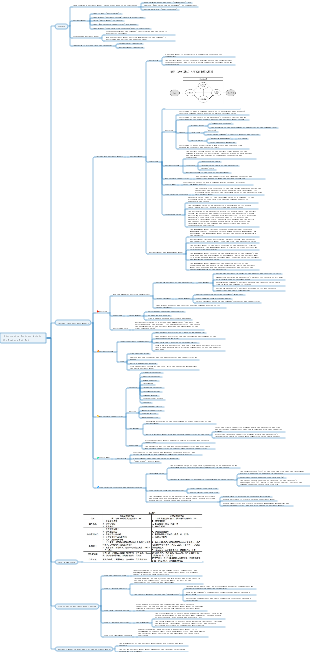
Principles of business model
Chapter 1 Introduction
1.1 Definition of business model
Definition: Business model is the transaction structure of stakeholders engaged in business activities
Business activities: Direct value-added activities engaged in by enterprises, such as R&D, production, and sales
Stakeholders: including external customers, suppliers, partners, internal shareholders, employees, etc.
Transaction structure: Activities that stakeholders will divide and reorganize the rights of their resources and then allocate them based on their own needs.
Early views:
Schumpeter: Emphasizes creative destruction and believes that business model innovation is an important part of corporate business behavior
Kozner: Thinking the role of entrepreneurs is to perceive and capture market opportunities
Economic Rent Theory: Enterprises obtain economic rent through business model innovation
1.2 Discipline evolution and formation of business models
Early views:
Timmers: Business model is a complex concept with multiple aspects, including the architecture of products, services and information flows
Weill and Vitale: Define business models as roles and relationships between company customers, allies and suppliers
System perspective:
Tapscott: Propose the concept of "b-webs" and emphasize the role of the Internet in business activities
Afuah: Define business model as the architectural configuration of activity components
Corporate operation perspective:
Applegate: Thinking that business model is a description of complex business, revealing the relationship between business structure and structural elements
Magretta: Business Model Describes How Business Works
Value Perspective:
KMLab: Business model is a description of how enterprises create value
Linder and Cantrell: Defining the core logic of business models creating value for organizations
Financial and profit perspective:
Afuah: Business model describes how companies use the Internet to make money
Hawkins: Business model is the way to construct various cost and revenue streams
Strategy and marketing perspective:
Jing Linbo: The business model is the market positioning and profit target of an enterprise in a certain field of operations
Lei Jiaxuan: The business model is a solution for how companies provide the final goods and services to customers, recover investment and make profits
Trading structure perspective:
Wei Wei and Zhu Wuxiang: Business model is essentially a stakeholder transaction structure
Complex system perspective:
Wang Shouyang: The business model is rooted in its industry, social environment and technological development, and is a complex system that matches and integrates with the organization's own conditions.
1.3 Research scope and research objects of business model
Relationship with other disciplines:
Strategy: Strategy focuses on the positioning of market, products, and industrial value chains, and business model focuses on the transaction structure and transaction value of stakeholders.
Value Chain Theory: Porter's value chain theory is based on established industrial division, while business model theory reorganizes and splits the industrial value chain
Management model: The management model focuses on execution and control within the enterprise, and the business model focuses on the selection of business activities and the design of transaction structure.
Research subjects:
Transaction subject:
Who to trade with, including external stakeholders and internal stakeholders
Transaction method:
How to trade, such as leasing, authorization, information processing, etc.
Transaction pricing:
How to allocate value, including orientation, qualitative, quantitative and timing
1.4 Classification of business models
By type of transaction: B2B, B2C, C2C, B2G, etc.
By business system type: hard integration, soft integration, platform type, focus type, all-round type, partner business model, etc.
By trading method: offline mode, online mode, O2O mode, etc.
Leverage ratio based on own resource capabilities: light asset and heavy asset model
According to key resource capabilities: resource-based, user-based, technical-based, capability-based, etc.
Differences by profit model: fixed income model, residual acquisition model, income sharing model, auction model, etc.
1.5 Research on business model innovation
Innovation momentum:
Technology promotion: New technologies promote business model innovation
Demand pull: Meeting unmet needs of consumers
Competitive force: cope with the pressure of innovation from competitors
Corporate executives promote: Executives attach importance to business model innovation
System perspective: Enterprises need to cope with industry competition and changes in customer needs
Innovation ways:
Directional Research: Transformation from traditional business model to e-commerce model
Based on the degree of innovation: mining type, adjustment type, expansion type, brand new type
Factor innovation: changing value propositions, target customers, distribution channels and other factors
1.6 Evaluation of business model
Evaluation purpose: Comparison of competitive advantages, identify risks, and judge feasibility
Evaluation criteria: efficacy, uniqueness, appropriateness, profit drive, etc.
Evaluation method:
Hamel: Four factors that determine the profit potential of business models
Weill and Vitale: Key factors include customer relationships, data ownership, channel conflicts, etc.
Afuah and Tucci: Measured from three levels: profitability, predictors, and components
Gordijn: Evaluating economic feasibility by evaluating participants' value and income statement
Dubosson-Torbay: Using the Balanced Scorecard Method
Osterwalder: Evaluating the rationality of business model architecture
Zott and Amit: Analyzing the degree of matching product market strategy and business model
Clark: Detecting the applicability of business models in international markets
Chapter 2 The Basic Principles of Transaction
2.1 Basic concepts of trading
Definition of transaction:
Marketing: The behavior of value exchange between buyers and sellers
Economics: The process of allocating resources among production factor owners through price mechanisms
Business model research: The transaction pattern formed by stakeholders cutting and reorganizing the rights of resource capabilities based on their own needs
Stakeholders and stakeholders:
Stakeholder: Independent subject with resource ability endowment in transactions
Stakeholder: A subject with a transaction relationship with a stakeholder
Focus Enterprise: Target Enterprises for Business Model Research
Activities, abilities, resources, efficiency, roles:
Activities: Business and Management Activities
Business Activities
Direct value-added business activities
Workflow
Information flow
Physical logistics
Fund flow
Manage activities
Management activities carried out to achieve business activities
ability
Effect
The output scale of resources
efficiency
Input-output ratio
Resources: tangible resources (such as equipment, funds) and intangible resources (such as brands, technology)
Efficiency: Input-output ratio
Role: The function of stakeholders in the transaction structure
Exchange, cooperation, transaction
The form of transaction
exchange
cooperate
Calculation formula
The residual value of a party = the transaction value of a party (price × sales volume) − the transaction cost of a party − the currency cost of a party
The content of the transaction
Business transaction relationship
Mainly targeted at transaction content
Governance of transaction relations
It means that one trading entity owns the ownership of the other trading entity, including the remaining right of income and residual control
Level of transaction
Market transactions
Market-based transactions between focus companies and stakeholders
It has the characteristics of investments without specific relationship assets, low degree of interdependence, trading with minimal information, and fully reflecting transaction information.
Bureau transactions
Generally occur among stakeholders within the enterprise
The main feature is that transactions are completed under command, command, and control.
Mixed transactions
It is a transaction between bureaucratic transactions and market transactions
It has the characteristics of investment in specific relationship assets, exchange and sharing of data and knowledge, complementary resource capabilities, and effective governance mechanisms.
2.2 Transaction structure: transaction value, transaction cost and transaction risk
Basic concepts:
Transaction Value: Total Revenue from Trading Ecosystem
Transaction cost: the cost incurred for the conclusion of a transaction
Trading risk: uncertainty in transaction results
Case analysis:
Unmanned smart restaurants: through different transaction structures, cost reduction and efficiency improvement
Business model value and efficiency:
Value space: The difference between transaction value and transaction cost
Business model efficiency: the ratio of value space to transaction value
Corporate value: a comprehensive reflection of business model efficiency, strategic space and management control capabilities
2.3 Maximize value space
Business model classification of value dimensions:
High creation, high dissipation
High creation, low dissipation
Low creation, high dissipation
Low creation, low dissipation
Good business model standards: high value creation, low value dissipation, value sharing
Business model strategy selection:
Same demand, different models: minimizing transaction costs or maximizing value space
Different needs, the same model: Maximizing value-added
Same requirements, same model: Maximize management efficiency
Different needs, different models: Maximizing value of focus enterprises
2.4 Dynamic evolution characteristics of business model
The driving force of evolution:
Exogenous factors: market, environment, economy, policy changes
Endogenous factors: stakeholders' interest demands and resource capacity endowments
Evolution and stakeholder strength:
Resource capacity endowment: affecting the strength and interest demands of stakeholders
Differences in interests: May lead to the evolution or reconstruction of transaction structures
Evolution and business ecology evolution:
Ecosystem Perspective: Coordinate transaction structure from the overall perspective of symbiosis
Value-added in ecosystems: Maximizing the value of ecosystems
Chapter 3 Six-Factor Model of Business Model
3.1 Business model design parameters
Transaction design parameters: When an enterprise innovates its business model, it needs to design the transaction structure to answer the question of how resources are traded among multiple stakeholders.
12 parameters:
Transaction subject: stakeholders participating in the transaction
Transaction content: specific objects of transactions, such as products, services, production factors, etc.
Resources: attributes of transaction objects, such as funds, technology, brand, etc.
Transaction method: a way to meet demand, such as leasing, authorization, etc.
Configuration: The network topology formed by stakeholders due to transactions
Role: The function of stakeholders in the transaction structure
Capability: role output scale and input-output efficiency
Relationship: Business transactions and governance transaction relationships between stakeholders
How to obtain income and distribute costs
Sources of income and expenditure: What stakeholders or resources are coming from?
Cash flow structure: the distribution pattern of cash flow on time series
Price: The basis for the division of transaction value
Parameter changes: Different combinations of parameters form different business models and strategies
3.2 Definition of transaction parameters
Transaction subject, transaction content and resources:
Transaction subject: can be internal departments of the enterprise, external customers, suppliers, etc.
Transaction content: It can be divided into four categories: products or services, production factors, business resources, and business capabilities.
Resource: As the basis or investment of the transaction object, it can also be the output of the transaction.
Roles and abilities:
Role: The function of the stakeholder in the transaction structure determines its value increase in transactions
Capability: Measuring the output size and input-output efficiency of a role
Transaction method:
Traditional method: such as selling products or services directly
Innovative methods: such as leasing, authorization, information processing, etc., can reduce transaction costs and increase transaction value
Configuration:
Bilateral platform: Connecting two types of stakeholders, such as Taobao and Facebook
Unilateral platform: a business-centric entity that converts business links to the center, such as the "Extreme 4 1" model of laundry
Software integration: No ownership gains but increases control over both ends of the industrial chain
Hard integration: extending to both ends of the industrial chain by obtaining ownership
relation:
Business transaction relationship: the specific business activity relationship between the company and stakeholders
Governance transaction relationship: the allocation of rights bundles such as control and residual income claim rights
Source of income and expenditure:
Source of income: can come from product sales, service charges, authorization fees, etc.
Cost source: can be production costs, marketing costs, management costs, etc.
Revenue and expenditure method:
Fixed income: such as rent, wages
Remaining income: such as equity, dividends
Share income: such as sales commission, profit share
Cash flow structure:
Time series: Distribution of cash flow over different time periods
Distribution pattern: such as one-time investment, multiple income, or multiple investments, and years of cash inflow
price:
Pricing strategy: the basis for segmentation that reflects transaction value
Price forms: such as fixed price, dynamic pricing, auction pricing, etc.
3.3 Six-element Model of Business Model
Definition: The business model consists of six elements: positioning, business system, key resource capabilities, profit model, cash flow structure and enterprise value.
Six elements
Positioning: The way to meet the needs of stakeholders is the starting point of the business model
In the definition of positioning, keywords are neither stakeholders nor demands, but ways of demand satisfaction
Positioning determines what characteristics of products and services should be provided by the enterprise to realize customer value
What kind of way does a company choose to trade with a certain type of stakeholder? The influencing factors are transaction value and transaction cost.
Transaction Cost
Search Cost
Bargaining costs
Execution Cost
The chain model increases contact points with customers and reduces customer search costs; The intermediary model reduces the scale of negotiation targets for customers on both sides of the transaction and reduces the bargaining cost; Online payment breaks through the bank's time and location restrictions, reducing execution costs for customers
Business system: The configuration, role and relationship of the transaction structure are the core of the business model
Three perspectives of business system construction
Industry value chain
Internal value chain of enterprises
Roles of internal and external stakeholders
Such a business system for internal and external stakeholders to cooperate with each other around the enterprise positioning will form a value network. This value network defines the role played by customers, suppliers and other partners in the process of gaining value through their business models.
Key resource capabilities: Important resources and capabilities to support transaction structure
Profit model: source of income and expenditure and method of income and expenditure are the manifestation of corporate interests
Cash flow structure: the structure of enterprise cash inflows and cash outflows divided by stakeholders, as well as the time series distribution of cash flows
Corporate value: The goals and results of the business model are the embodiment of the value of the enterprise's investment
Model Features:
Independence: Each element has its own unique definition and role
Systematic: Each element influences each other and forms a complete business model
Transaction structure orientation: develop around the transaction structure of stakeholders
3.4 Business model canvas legend
Business system diagram:
Configuration: The network topology formed by stakeholders due to transactions
Role: The function of each stakeholder in the transaction structure
Relationship: Business transactions and governance transaction relationships between stakeholders
Six-element business model canvas:
Case analysis:
American fresh food e-commerce website Famigo: Showcase the various elements of their business model through canvas
Chapter 4 Positioning
4.1 Concept of positioning
Key issues in positioning
Who are the customers of the company, or what market does the company face?
What are the customer needs of the company?
What products or services does the enterprise use to meet customer needs?
What is the value proposition of a company’s products or services?
In the eyes of customers, what value does the product or service bring to them?
Positioning in the field of strategy and marketing:
Strategic positioning: What the company chooses to do and what it does not do, determines the development direction and path
Marketing positioning: Focus on customer needs and cognition, and shape a unique brand image
Common points: They all emphasize customer needs and design products and services that meet their needs
Difference: Strategic positioning focuses more on corporate direction, and marketing positioning focuses more on customer awareness
Business model positioning:
Definition: Ways to meet the needs of stakeholders
Difference from strategy and marketing positioning: Business model positioning focuses on transaction methods, that is, how to meet demands
Importance: Business model positioning is at the heart of the stakeholder transaction structure and business activity value network
4.2 Dimensions of business model positioning
Transfer of ownership:
Property rights: The owner's bundle of rights to the assets can be cut vertically and horizontally
Property division: allocate property rights to different stakeholders to maximize transaction value
Case: Michelin Tire's "Fleet Solution" will give ownership and income rights to Michelin through property rights division. The fleet will obtain the right to use and pay by kilometers.
Property Rights Classification
Right to use, right to profit, right to transfer, right to possession, right to development, right to improve, right to change, right to consumption, right to sell, right to donate, right to mortgage, right to lease, right to lend
Different cutting will bring about different business model innovation
Transaction process:
Three stages of the trading process:
Mutual search process before transaction: customers look for products and services
Value perception process in transactions: Customers evaluate the value of products and services
Post-transaction execution process: Customers purchase and use products and services
Case: New retail model, combined with the advantages of online and offline, provides a better shopping experience
Products, services, solutions and money-making tools:
Products: Directly sell products, such as air conditioners
Services: Provide services such as installation and maintenance of central air conditioners
Solution: Provides overall solutions, such as information system integration
Money-making tools: Provide tools to help customers make money, such as chain franchise brand owners
Case: GE provides holistic solutions to industry partners, including products, services and financial tools
Value proposition curve:
Definition: Design a way to meet demands by analyzing the value points of customer needs
Four actions of value point analysis and reconstruction:
Exclusion: Exclude value points that customers take for granted
Reduce: Reduce value points that customers think are not important
Add: Increase the value points that customers consider important
Creation: Create new value points
Case: Wooden House BBQ provides low-priced products by increasing safety, hygiene and service value
4.3 How to Position Business Model
Resource Capacity:
Definition: The resources and capabilities that the enterprise owns are the basis of positioning
Case: Pegasus Travel Agency repositions as a service provider that provides “experience” by leveraging its experience and knowledge on the Aegean Sea tour line
Real customer needs:
Definition: Deeply understand the real needs of customers and design ways to meet their needs
Case: Netflix transforms from DVD rental to streaming service provider, and then becomes a homemade content producer, always grasping customer needs
Comparative Advantages:
Definition: Find out your own unique advantages by comparing your competitors
Case: Southwest competes with long-distance buses and trains through point-to-point short-range services, rather than other airlines
Product Positioning:
Definition: Product positioning and business model positioning complement each other
Case: Green Mountain Coffee has changed the business model of coffee consumption by partnering with Keurig to launch a single-cup coffee machine and K-cup
Repositioning:
Definition: Redefine how to meet demands when factors affecting the environment and business model change
Case: Company N redefined the business model of central air conditioning by providing central air conditioning equipment for free and signing a long-term fee contract.
Summarize
The importance of positioning: Business model positioning is the way companies meet the needs of stakeholders and is the core of the business model.
Dimensions of positioning: property transfer, transaction process, product/service/solution/money-making tools, value proposition curve
Positioning methods: resource capabilities, customer real needs, comparative advantages, product positioning, repositioning
Case analysis: The concept and method of positioning are demonstrated through Taoli Chunfeng Town Mini Villa
Chapter 5 Business System
5.1 Concept of business system
definition:
Business system refers to the business activities involved in the enterprise to achieve positioning, the role played by internal and external stakeholders, and the status of business transactions and governance transaction relationships between stakeholders.
Constituent elements:
Configuration: The network topology formed by stakeholders and their connection methods
Role: Stakeholder who engages in one or more business activities
Relationship: Transaction relationship between a company and various internal and external stakeholders
Case
Coca-Cola's business system changes
Franchise Model》Equity Investment Model》Bottler Franchise Model
5.2 Business system construction space
Three-layer spatial perspectives of corporate competition:
The construction of business systems is based on different levels of perspectives. Enterprises can find themselves in different business spaces at the same time at different levels. The cognitive differences from different perspectives are often the source of innovation in corporate business model
Strategic Space:
Definition: A competitive space from the perspective of the enterprise, focusing on three dimensions: customers, competitors and the company itself
Core task: Find the best competitive positioning, including market segments, resource capabilities and competitive advantages
Classic Theory: Trout's positioning theory, blue ocean strategy, Porter's value chain analysis, etc.
Business model space:
Definition: A competitive space from the perspective of the business ecosystem, composed of the freedom of enterprises to choose different business models
Core questions: In the existing ecosystem, whether the transaction method between stakeholders is optimal, whether there is potential value not being tapped, and whether new stakeholders can be introduced
Case: Different business models such as direct sales, franchise and brand output of chain hotels
Symbiosis Space:
Definition: A competitive space from the perspective of business ecological groups (clusters), composed of the freedom of enterprises to choose different symbionts.
Core question: Does the symbiont in which the company is located need to adjust the logic of value creation, and whether new symbionts can be created
Case: The difference between Internet e-commerce and traditional retail, and Uber's innovation in travel symbionts
Every company should clearly know which space they are in and what dimensions they compete around. Only by clearly delineating the competitive landscape of the three types of spaces in which enterprises are located can they find a way to deal with competition.
Redefine the competition space:
Importance: Through perspective transformation, enterprises can discover new competitive space and break through the limitations of traditional competition
Case
Competition in the mobile phone industry has changed from competition among traditional mobile phone manufacturers to competition from Apple to competition from innovation through ecosystems to competition from Xiaomi through the Internet model.
Qualcomm's Challenges and Innovation in Three Spaces
Wood's summary:
The broader your vision will make the stage bigger. This may be the inspirational meaning of the "three-layer space".
I liken the three-layer space to a forest ecology from small to large:
Strategic Space: This is tree thinking. You treat yourself as a tree and think about the relationship between upward growth, that is, the relationship between the earth and the sky, and also the relationship between the company and customers. This is the core relationship between corporate development and it is also a general focus of most companies.
Tree thinking
Business Model Space: This is the Woods Thinking. You are no longer limited to treating yourself as a tree, but thinking about how to cooperate with the surrounding tree roots to form a natural growth relationship, that is, to satisfy the relationship between customers. This determines the resource status you have to meet customer needs, and only a few companies have ecological thinking and platform capabilities.
Woods Thinking
Symbiosis Space: This is forest thinking. Your vision is no longer limited to the surrounding groves, but is enlarged to the entire industry, that is, the entire forest, to think about the value positioning of you and the surrounding groves in this big ecology. This is even beyond the original industry, looking for answers from customer satisfaction rather than the current situation of the industry, and your vision boundaries are unintentionally expanded.
Forest thinking
5.3 How to build a business system
Selection based on three types of spaces:
Strategic space: Choose a strategic positioning suitable for corporate resource capabilities and market needs
Business model space: a business model that matches design and strategic positioning
Symbiote space: Select or innovate symbionts suitable for enterprise development
Construction method:
Wide-angle lens:
Definition: Starting from existing stakeholders, discover more stakeholders and broaden the space for value discovery
Case: Zenefits obtains commissions by providing HR cloud services to businesses while serving as an insurance broker
Prism:
Definition: Discover and utilize sleepy resource capabilities in business ecosystems
Case: Medifast converts customers into health coaches and expands business through fission-based communication
Focusing mirror:
Definition: Design roles and transaction structures of different stakeholders to improve the efficiency of the business ecosystem
Case: Dell reduces inventory costs and improves cash flow efficiency through direct sales model
accelerator:
Definition: Use financial tools and other accelerators to break the ceiling of value space and efficiency bottlenecks
Case: CapitaLand Group quickly replicates and expands its commercial real estate model through PE REITs model
Trading role (A), wide-angle mirror adds value (V) by discovering more trading roles; All resources (R) within the business ecosystem, discover more and potential resources through polyprism; The needs of various stakeholders (D), the second function of polyprism is to explore the deeper and broader needs of various stakeholders in the business ecosystem.
Structural design method:
step:
Triple-mirror scan: Identify stakeholders, resources and needs
Evaluation sorting: Building role-demand assessment matrix and role-resource assessment matrix
Priority Match: Determine priority based on the degree of matching resources and requirements
Business system design: Design specific business systems according to priority
Filter and evaluation: filter and evaluate the designed business system and select the optimal solution
Innovation in symbiosis space:
Way:
Utilizing revolutionary technologies: such as the subversion of traditional energy vehicle symbionts by electric vehicles
Resetting the logic of value creation: such as the reconnection of existing assets and market demand by sharing economy platforms
Trend force changes: such as population structure, social culture, and policy changes to give birth to new symbiosis
Summarize
The core of the business system: The business system is the key to the enterprise's positioning, consisting of configuration, role and relationships.
Building a space: Enterprises need to build a business system from three levels: strategic space, business model space and symbiosis space
Construction method: Systematically design business systems through tools such as wide-angle mirrors, polyprisms, focus mirrors and accelerators
Innovation method: In the symbiosis space, promote innovation in business systems through technology, logic resets and trend changes
Chapter 6 Profit model
6.1 Definition of profit model
Definition: The source of income and expenditure of an enterprise and its corresponding structure, that is, how the enterprise obtains income, distributes costs, and earns profits
Importance: A good profit model can not only bring benefits to the company, but also build a stable and win-win value network
Design of profit model
Quantitative Problems
Prices of products and services
Directional issues
Determination of the source of corporate profit
Qualitative Questions
What profitable means does a company obtain income
6.2 Targeted issues of profit model: revenue and expenditure sources
Traditional profit model: companies provide products or services and charge customers directly
Modern profit model: Revenue and cost structure do not necessarily correspond, and may involve multiple stakeholders.
Source of profit:
Own business and its upgrades: gradually expand through core products or services, such as from product sales to providing solutions
Unique resource capabilities: Use the unique resource capabilities of enterprises to conduct business, such as Amazon's cloud services
Relationship between stakeholders: Finding a closed loop of value among stakeholders, such as Google's advertising model
Source analysis matrix of income and expenditure:
Cost payment: enterprise, third-party partners, zero variable costs
Source of income: direct customers, third-party customers, third-party partners
12 profit models: from PM0 (traditional production and sales model) to PM11 (Internet model with zero marginal cost)
6.3 Qualitative issues of profit model: revenue and expenditure method
6.3.1 Single product/service pricing
Fixed, residual and divided
Fixed Income:
Definition: Revenue remains the same regardless of output
form:
Buyout (one-time, total amount)
Rent (by time, by area)
Piece wages (by output)
Step-by-step wages (linked to output)
Case: When renting a factory, the landlord obtains a fixed rental income.
Remaining income:
Definition: After paying a fixed cost, the remaining portion is used as income.
form:
Equity
Pure redemption
Options
Commitment
Case: The remaining income of the factory owner after paying fixed costs (such as rent, wages).
Share income:
Definition: Revenue is distributed proportionally.
Form: Party A and Party B share the profits according to the agreed proportion.
Case: Jialantu Design Company collects an authorization fee based on the actual output of the customer through design authorization.
Fixed and variable contributions of resource capabilities
Fixed contributions:
Definition: The input of resource capacity does not affect output
Case: The contribution of the factory to output is fixed. As long as the production capacity does not exceed the production capacity, the contribution of the factory remains unchanged.
Variable contributions:
Definition: The input of resource capacity affects output
Case: The degree of effort of the designer directly affects the quality and quantity of design results
Stakeholder willingness to invest
Definition: The degree to which stakeholders are willing to invest in a transaction
Factors influencing:
Transaction value: Stakeholder expectations of transaction value
Transaction Cost: Transaction Costs borne by stakeholders
Risk tolerance: stakeholders' ability to bear risks
Case: The lease contract system, wage contract system and share contract system in agricultural production. The farmers' investment intentions are different under different contract methods.
6.3.2 Transaction Value
Definition: Value achieved by cooperation between the two parties
Factors influencing:
Investment in resource capacity: The more resource capacity is invested, the higher the transaction value
Trading structure: A reasonable trading structure can improve transaction value
Stakeholder behavior: Stakeholder behavior directly affects transaction value
Case: In agricultural production, the cooperation between enterprises and farmers increases transaction value through reasonable income distribution
6.3.3 Transaction Cost
Definition: Costs incurred for closing a deal
type:
Search Cost: The cost of finding a transaction object
Negotiation Cost: The cost of negotiating the terms of the transaction
Execution cost: The cost during the execution of the transaction.
In the wage contract system of agricultural production (enterprises obtain surplus), there is information asymmetry between enterprises and farmers, such as farmers' skills are not proficient. When this information asymmetry is serious, companies tend to choose new contract objects and adopt a share method. When supervisors and technical instructors can reduce this information asymmetry, the company will continue to maintain its original form of wage contract. If the supervisors are unreliable and may cause supervision to fail, the transaction costs caused by supervision will be greater than the benefits, and the company will give up the wage contract form and choose to share the contract form.
6.3.4 Risk tolerance
Definition: Businesses and stakeholders need to invest in transactions, and the returns of investment are uncertain, which is a risk that companies and stakeholders need to take.
Factors influencing:
Subjective aspect:
Risk preference: If the risk preference is high, the business or stakeholder will choose to increase investment to gain more profits
The importance of income: The higher the importance of income to the enterprise, the harder the enterprise can bear the risk, and stakeholders are more likely to choose fixed income.
Objective aspect:
Financial constraints: The financial situation of an enterprise affects its risk tolerance
Skills to resist risks: If companies have higher skills to resist risks, they may choose higher risk profit models under the same financial conditions.
Case:
In agricultural production, under the same natural conditions, farmers are more capable of taking measures to reduce the risk of production reduction than enterprises, but if farmers can only get fixed wages, they do not need to take measures to reduce the risk of production reduction. In order to promote farmers' efforts, the additional supervision costs of enterprises are often not worth the effort. This is why in the planting and breeding process, agricultural enterprises rarely use fixed wages, but instead use surplus or share transactions.
6.3.5 Other factors
Opportunity Cost:
If the opportunity cost of resource capabilities a certain stakeholder has is greater, then even if a fixed contribution is provided, the stakeholder may compensate for this opportunity cost in the form of residual income. Which model to adopt depends on the opportunity cost (will to default) and supervision cost (difficulty to correct default). On the contrary, if a certain stakeholder has a weak market power and a small opportunity cost, then even if it provides variable contributions, the stakeholder may only receive fixed income.
Resource capacity contribution ratio:
If the contribution proportion of resource capacity is high, the stakeholder will either require a high fixed income or a residual income
Cash flow timing:
Since fixed income is generally paid in the current period, while remaining income will be paid out on a deferred basis, stakeholders with tight cash flow may want to convert the remaining income into fixed income. On the contrary, stakeholders with abundant cash flow are willing to convert payments of one-time fixed income into fixed bonus shares or share shares (all manifestations of residual income) in cooperation.
Uncertainty management:
Due to the uncertainty of future outputs that can be brought about by resource capabilities, and there is information asymmetry between cooperatives and stakeholders, stakeholders may be more willing to choose a residual return method with higher returns but greater risks to gamble, thereby reducing transaction uncertainty.
6.3.6 Billing method of transactions
Admission fee:
Definition: Only by paying this fee can you be eligible or allowed to conduct business activities, such as compulsory vehicle traffic insurance
Case: The entry fee of the mall, the merchant needs to pay a certain fee to obtain the qualification to operate in the mall.
Toll:
Definition: billed according to the number of uses, such as tolls, bridge fees, etc.
Case: Tolls on highways, vehicles need to pay a certain fee every time they pass through the toll station.
Parking Fee:
Definition: billed according to the time period used, such as parking fees
Case: Parking fee in parking lots. The longer the vehicle is parked, the higher the fee you need to pay.
Oil costs:
Definition: Charges based on consumption volume or consumption value, such as the refueling fee of a car
Case: Gas station refueling fees are charged according to the amount of refueling
Sharing fee:
Definition: Pricing based on the value of the product, such as the franchise fee charged based on the income ratio
Case: EMC (Energy Management Contract) is a sharing fee based on the energy consumption saving value that can be created for corporate customers.
6.4 Design a good profit model
6.4.1 Resource capability and business system
Resource capacity distribution:
If Party A and Party B have strong resource capabilities (expressed by "high", then it is a strong alliance, and initial transaction allocation tends to choose to share the shares. Party A and Party B work together, invest together, and share income
If one party has strong resource capabilities and the other party does not have a competitive advantage (expressed by "low"), then the initial transaction allocation tends to allocate fixed returns to the latter, and the former retains the remaining returns and bears most of the investment and risks.
If Party A and Party B have neither competitive advantages, then the cooperation between the two parties is relatively fragile and they tend to choose not to cooperate.
Transaction Cost:
Different transaction configurations themselves will result in different transaction costs. If the transaction cost of the preliminary transaction configuration is huge, the final profit model will change; and if the preliminary transaction configuration is proven to be low in transaction costs, the profit model will remain unchanged
Decision Matrix:
Under the same risk tolerance, the business model of profit model designed according to the above principles is generally relatively efficient.
6.4.2 Stakeholders
High-value stakeholders:
If a stakeholder can bring other high-value stakeholders, then not only can the stakeholder be charged, but the compensation will be given.
Opportunity Cost:
The more opportunity cost a stakeholder has to pay, the harder it is to reach a deal, or the more compensation he will be given
Unused value:
Is there an unused value to trade with this stakeholder? In other words, can the transaction value of this stakeholder be exchanged for the lower transaction costs?
Case:
Zhang Yimou's "Impression" series of landscape stage performances has weaved an ecological value network by using local farmers, fishermen and girls as actors, as well as tourists as audiences. The transaction value is great, but the additional cost of each participant is very low.
6.4.3 Ecological Value Network
definition:
When designing a profit model, you should not only consider the company itself, but also consider whether there is a possibility of transactions among corporate stakeholders, and whether the transactions between them have become more valuable, lower cost or less risk due to the existence of the focus company.
Case:
Sichuan Airlines' free pick-up and drop-off service has built a win-win ecological value network for all parties through cooperation with travel agencies and drivers. Travel agencies purchase vehicles in bulk and resell them to drivers. Drivers earn income by providing pick-up and drop-off services. Airlines improve customer experience by providing free pick-up and drop-off services, attracting more passengers to choose Sichuan Airlines.
6.4.4 Combination of profit models
Changeable fixed income:
The rents in the new business districts are generally relatively low during the cultivation stage. With the increase in advertising investment and the increase in brand influence, the real estate developers and chambers of state gradually increase rents in a step-by-step manner. At this time, although the rent seems to be a fixed income, it is actually a fixed income of change.
Guaranteed share:
A chain retail enterprise agreed with the merchant in the store to withdraw a certain proportion of commission after the merchant meets the performance requirements; If the merchant does not meet the performance requirements, the chain retail enterprise will charge a fixed fee. This is what is called guaranteed share
Design different profit models for different stakeholders:
A shopping mall generally has three profit models: fixed, surplus and divided into three types, which correspond to fixed rental counters, self-operated sales and cooperative sales counters.
Add different profit models to the same stakeholder:
Some franchised franchise stores adopt a model of fixed franchise fees plus service fees based on turnover, which is the superposition of different profit models.
6.4.5 Competition in profit model
definition:
There may be multiple profit models in the same industry, and different profit models have different requirements for enterprise resource capacity allocation and risk tolerance. Competition in profit model is often decisive in the changes in the market structure, and its role is far greater than competition at the business management strategy level.
Case:
When Sony entered the game market, facing Nintendo's strong profit model, Sony attracted a large number of third-party game developers by selling game consoles at a loss and collecting premiums, and finally successfully counterattacked. Sony's profit model has successfully incorporated third-party game developers and game console companies into the game ecosystem, expanding the boundaries of the ecosystem and realizing the value of their respective value.
Summarize
The importance of profit model: A good profit model is the key to enterprises obtaining profits and building value networks
Targeted Issues: Designing profit sources through own business, unique resource capabilities and stakeholder association
Qualitative Questions: Consider fixed, surplus and share gains, as well as transaction value, cost and risk
Design method: Design multiple profit models in combination with resource capabilities, stakeholders and ecological value network
Combination and competition of profit models: Enterprises may adopt multiple profit models, and different models have their own advantages in competition
Chapter 7 Key Resource Capabilities
7-11 Convenience Store
Cooperation with franchise stores
Its key resource capabilities include IT systems, big data backend, data analysis capabilities, suppliers and logistics provider resources, store comprehensive management capabilities, etc.
Cooperation with suppliers
Its key resource capabilities include large-scale order requirements, product R&D capabilities, lean production management capabilities, etc.
7.1 Concept of key resource capabilities
definition
Key resource capabilities: Important resources and capabilities that support the transaction structure are necessary conditions for the effective operation of the business model.
Business system: determines the activities that the enterprise wants to carry out, and key resource capabilities are the basis for completing these activities.
As long as the business model is the same, companies in different industries may also need to have the same resource capability combination.
The reason why many industries have collective losses in competition in the end is related to the mutual imitation of business models that lead to excessive competition for key resource capabilities.
Case
Xerox's key resource capabilities lie in its service capabilities and financial resources to major customers Canon's key resource capabilities lie in the equipment design capabilities, simple service capabilities and the ability to maintain strategic alliances
Resources and effective resources
resource
The characteristics and attributes controlled by the enterprise can improve business results and efficiency.
Including financial resources, physical resources, human resources, information, intangible resources, customer relationships, corporate networks, and strategic real estate.
Effective resources
Resources that can be split and reconfigured in the transaction structure.
Resources that can improve transaction efficiency, increase transaction value, reduce transaction costs and reduce transaction risks.
Ability and effective ability
ability
The internal characteristics and attributes of the enterprise's ability to collaborate and utilize other resources are the functions of a series of activities.
Including organizational ability, material ability, trading ability, and knowledge ability.
Effective ability
The ability to split and participate in transactions for reconfiguration in transaction structure.
Ability to improve transaction efficiency, increase transaction value, reduce transaction costs and reduce transaction risks.
Effective resources and effective capabilities:
Effective resources: Resources that can be split and participate in transactions in the transaction structure, or can improve transaction efficiency, increase transaction value, reduce transaction costs and reduce transaction risks.
Effective ability: The ability to split and participate in transactions in the transaction structure, or improve transaction efficiency, increase transaction value, reduce transaction costs and reduce transaction risks
Key resource capabilities:
Definition: Indispensable resource capabilities in business models
Different business models require different resources and capabilities.
VRIO framework:
Value: Whether resource capabilities can respond to environmental threats and opportunities
Rarity: Is resource capacity scarce
Inimitability: Is resource capabilities difficult to imitate by competitors
Organization: Whether an enterprise can effectively organize resource capabilities to gain competitive advantages
Resource Capacity Classification:
resource
Financial resources: monetary resources, financial assets, etc.
Physical resources: technology, equipment, geographical location, etc.
Human Resources: Employee experience, professional skills, etc.
Information resources: Market information, professional knowledge, etc.
Intangible resources: brand, patent, goodwill, etc.
Customer relationship: customer reputation, interactive ability, etc.
Company Network: Corporate Relations Network
Strategic Real Estate: Cost Advantages of Entering New Markets
ability
Organizational competence: The ability to undertake specific business activities
Material capacity: raw material supply, production and manufacturing, etc.
Trading capabilities: order processing, inventory management, etc.
Knowledge ability: product design, brand management, etc.
7.2 Endowment, acquisition, transformation and application of resource capabilities
Resource ability endowment:
Definition: The initial resource capability status of the enterprise
Impact: The choice of a company's business model is based on resource capacity endowment, but excessive dependence may lead to path dependence and limit innovation
The choice of key resource capabilities of an enterprise is related to the construction of the enterprise's resource capability endowment.
The choice of the business model of an enterprise is based on the comparative advantages of resource capacity endowments.
After an enterprise develops to a certain stage, if it cannot break through path dependence, its resource capacity endowment will restrict business model transformation and innovation.
Case: Labor costs are rising, and traditional labor-intensive enterprises need to transform.
Resource capability acquisition:
Internal accumulation: Enterprises accumulate resource capabilities through their own development
External acquisition: Enterprises acquire external resource capabilities through mergers and acquisitions, cooperation, etc.
Strategic driving force:
Resource capability-oriented: formulate strategies based on enterprise resource capability status
Environmental opportunity adaptation type: seize market opportunities and quickly obtain resource capabilities
Target-driven concept: oriented towards the corporate vision, combining internal accumulation and external acquisition
How to obtain:
Resource-capable oriented enterprises: tend to accumulate resource capabilities internally.
Environmental external opportunity adaptive enterprises: tend to obtain resource capabilities from the outside.
Target-driven enterprise: internal accumulation and external acquisition at the same time.
Case: Geely Group’s resource capabilities are acquired.
Transformation of resource capabilities and value creation:
Transformation of resource capabilities: Transform resource capabilities into competitive advantages through business model innovation
Value creation: Transform resource capabilities into high corporate value by optimizing transaction structure
Effective advantages: strong resource capabilities and high compatibility.
Key disadvantages: weak resource capabilities but high degree of fit.
Ineffective advantages: strong resource capability but low compatibility.
Non-related resources: weak resource capacity and low fit.
Case: Blackstone Group reorganizes and optimizes real estate assets through the "buy-repair-sell" model to create high value
Utilization of resource capabilities: Evaluation and configuration:
Evaluation: Through systematic analysis, identify key resource capabilities and evaluate their role in business models
Prerequisites for the application of resource capabilities: both stakeholders and resource capabilities are reorganized.
Configuration: allocate resource capabilities to different stakeholders and optimize transaction structure
Split and reorganization method:
Introduce new stakeholders.
The purpose of changing the original stakeholders and original resource capabilities.
Package and allocate several resource capabilities to a certain stakeholder.
Matching key resource capabilities with stakeholders:
Through systematic analysis and evaluation, the matching of all key resource capabilities can be obtained.
Trade-off principle: When the transaction risk is controllable, maximize the difference (value space) between transaction value and transaction cost and maximize the enterprise value.
Case: Alibaba transforms internal capabilities into external services through big data computing platform, such as Alibaba Cloud, providing "Internet capabilities" to traditional industries.
Case: 7-11 Convenience store resource capability matching.
background
The name of the 7-11 convenience store appeared in 1946. Among the nearly 19,000 7-11 stores in the Japanese market, there are only more than 500 direct stores, and most of the rest are franchised by scattered couple stores integrated with 7-11.
The net profit margin is as high as 20.5%, and the inventory turnover days are only 10 days, making the efficiency comparable to Alibaba.
Business model
Key resource capabilities
IT system, big data backend, data analysis capabilities.
Supplier and logistics provider resources.
Comprehensive store management capabilities.
Value Chain Integration
Choose a husband-and-wife store with a superior location and a large flow of people.
Provide IT systems, obtain terminal data, and analyze data in the area where the store is located.
Provide data analysis results for the store, including regional consumer portraits, characteristics, demand preferences, etc.
Supply and logistics: Assist in arranging reasonable distribution lines and reduce the average distribution costs.
Personalization of business districts: Personalized recommendations and product displays are carried out according to the customer needs of each store area and business district.
Financial support: Help when the store owner needs funds.
Store Manager: Always assist with any problems that may arise.
Profit model
The main method of sharing is to share 57% of the gross profit to the store. After 5 years of operation, the store can also increase its share by 1% to 3% based on its performance.
Chapter 8 Cash Flow Structure and Corporate Value
8.1 Definition: Free cash flow structure and corporate value
Cash flow structure
Distribution of cash inflows and outflows on time series by stakeholders
It is the cross-section of the business model at a specific point in time
Three typical cash flow structures
One-time investment One-time income (traditional manufacturing)
One-time investment Multiple income (infrastructure franchise)
Multiple investments, years of cash inflow (platform, subscription)
The impact of cash flow structure on business model
Can be used as a starting point for design
Test the value of investment
As the basis for designing financial instruments
8.2 Functions of cash flow structure
8.2.1 Measuring corporate value
Three leverages for value enhancement
Expand transaction value
Determining financial strength can leverage resources
Four types of enterprises and cash flow design principles
Reduce transaction costs
Installment payment, financial leasing, sales of services but not products
Avoid hidden costs caused by ineffective diversification
Reduce transaction risks
Prepayment, membership value storage, supply chain financing, project financing isolation
8.2.2 Diagnostic transaction structure
Positioning and cash flow structure
Changxiang.com B2B travel advance model vs Treasure House SaaS no advance model
Business system and cash flow structure
Apple's light asset design: outsourcing manufacturing Authorization channel → zero interest-bearing liabilities
Shuanghui Heavy Asset Breeding: Self-built pig farm → High cash flow pressure
Profit model and cash flow structure
Contract energy management: advance funding, long-term share
Free value-added: lose first and then make profits, rely on subsequent cash flow
8.2.3 Designing financial tools
Two major financing routes
Fixed income based on secured mortgage
Credit, trust, leasing
Remaining/sharing income based on investment value
Open Market, VC/PE
Four enterprise scenarios match financial instruments
Case: Disneyland Financing Design
High loss during the construction period → General partnership of development company tax loss transfer
Operating Company Limited Partnership Government Investment Disney Management Rights
10-year lease repurchase realizes investor exit
8.3 Build a good cash flow structure
Whole capital free cash flow
8.3.2 Free cash flow structure from the perspective of business model (five types of models)
8.3.3 Corporate value assessment from the perspective of business model
Growth efficiency: Business model determines investment scale, operating costs, and revenue growth
Three major levers
Asset/Resource/Capacity Leverage: Light Asset Integration
Liability leverage: low inventory, low receivable, low interest-bearing liabilities
Value leverage: high capital return, rapid value realization
8.4 Discussion case: Luckin Coffee
Business model
Cache shop takeout high subsidies
Self-operated heavy assets, rapid scale expansion
Cash flow structure
Huge operating cash outflow (store opening, subsidy, marketing)
Multiple rounds of financing, listing blood transfusion
Value Assessment Dispute
Price-to-sales valuation vs profit sustainability
Reevaluation of user scale and data value
Chapter 9 Symbiosis and Business Model
9.1 Concept of symbiosis
9.1.1 Symbiosis and Business Ecology
definition
Symbiosis: Focus Enterprise All internal and external stakeholder roles Metalogical of value creation of business activities
Business ecosystem: Examples of symbionts, manifested as transactional relationships between real subjects
Three-layer space model
Focus business model (intest solid coil)
Only focus companies and direct stakeholders
Example of symbiotic (middle dotted coil)
Incorporate stakeholders of direct, indirect and potential transactions
Example: DG Company Fertilizer Company Bank Sugar Factory Farmer
Business Ecological Group (Cluster) (Extraordinary Dotted Coil)
A collection of competitors, alternative manufacturers, upstream and downstream symbiosis
The principle of boundary dynamics
Boundaries depend on innovation vision, transaction value, transaction cost, transaction risk
9.1.2 Expanding business model innovation from the perspective of symbiosis
Transaction relationship expansion
From "customer's customer" to "supplier's supplier" and even the third level stakeholders
Transaction configuration expansion
Vertical value chain Re-cut and reorganization of horizontal business chains
Expand value space
From Enterprise-Customer Zerosum → Maximize Total Residue of Symbiosis
Three paths: increase the total transaction value, reduce transaction costs, and reduce monetary costs
Stakeholder expansion
Introduce new entities to leverage their key resource capabilities (e.g. government, agricultural brokers)
Enterprise value expansion
From scale profit → transaction value, transaction cost, transaction risk unified optimization
9.1.3 Cut, reorganization and evaluation of business activities
Three elements of cutting
Resources (input) | Capacity (processing) | Output (attribution)
Three criteria for restructuring evaluation
Transaction value increases, transaction costs decrease, transaction risks decrease
Typical practices
Agriculture: Enterprise seed supply and fertilizer supply Farmer planting Enterprise repurchase → Scale and professional
9.1.4 Three major laws of symbiosis
9.2 Business model design based on symbionts
9.2.1 Technical process flow/business activity process network and symbiosis
Basic role structure (architectural layer)
Farmers → Agricultural investment → Planting → Acquisition → Processing → Distribution → Consumers
Example of derivative symbionts
Traditional serial (A symbiont): independent transactions in each link
Trader control variety (B symbiont): Trader directly harvests seeds and commissioned planting
Retailer-led (C symbiont): Retailer direct control seeds commissioned logistics finance
9.2.2 Symbiosis and business model (governance layer selection)
9.2.3 Method summary (three-step method)
Determine the industrial technology process flow → clarify the transaction boundaries
Add role information → Build multiple symbionts
Focused companies choose role combinations → Form specific business models
9.3 Evolution of Symbiosis Business Model Thinking
9.3.1 Expand the value space of ecosystems
Introduce multi-stakeholder
Help existing entities grow
9.3.2 Enhance the influence of enterprises on the ecosystem
Business activity control
Absolute control (self-operated)
Relative control (patent authorization, technical standards)
No control (complete market)
Tencent Evolution Case
Absolute hard control before 2011 → Post-2011 strategic investment, soft control of traffic entrance (JD.com, Didi, Dianping)
9.3.3 Balance the relationship between enterprises and ecosystems
Minimum ecosystem milestone
Able to complete value creation without external force-realization of closed loop
Milestones for rapid growth in scale
New businesses, new roles, and new capital continue to influx
The art of collecting and releasing
Early stage: Business-led construction
Maturity stage: Weak absolute control and amplify the overall value of the ecosystem
9.4 Discussing cases
Xiaomi smart hardware ecosystem chain
Symbiosis construction
Xiaomi: Users/Brands/Supply Chain/Traffic
Eco-chain enterprise: Startup hardware team
Non-controlled investment Incubation accelerates = "Symbiosis but not consolidation"
Value-added mechanism
Business income: Xiaomi channel sales share
Investment income: equity value-added
Synergistic effect: enrich the IoT ecosystem and acquire customers at low cost
Why don't Gree and Midea copy
Heavy asset path dependency
Lack of Internet traffic entrance and ecological operation genes
9.5 Key terms
Symbiosis / Role Structure
Business ecosystem
Cutting/recombination
Industrial technology process
Business activity process network
Chapter 10 Economic Explanation of Business Model and Business Model Design
10.1 Three major engineering principles of business model design
10.1.1 Principle 1: When the same resource capacity is owned by different stakeholders, the opportunity cost is different
Core logic
The difference in value evaluation between different subjects → Value-added through transactions
Key concepts
Opportunity cost: The "suboptimal use value" of the same resource to subjects A and B is different
Choice Income / Choice Cost / Choice Income = Choice Income - Choice Cost
Operation tools
Resource capability and stakeholder pairing table
List existing resources, missing resources, and surplus resources
Corresponding to potential trading entities, exchangeable resources, and choice of returns
Case of China-Africa Photovoltaic Fund
Government-guided Policy Banks China-Africa Fund
Photovoltaic products sold for credit → Mineral Resources Pledge → Bank Financing Closed Loop
Sources of opportunity cost differences
Differences in resource endowment
Differences in constraints (such as Alibaba's microfinance risk control advantages)
Differences in trading opportunities collection (software developers choose large platforms)
10.1.2 Principle 2: When the stakeholder trades in different ways, the value appreciation is different
Seven parameters of transaction structure: Satisfaction method | Configuration | Role | Relationship | Revenue and expenditure method | Source of income and expenditure | Cash flow structure
Examples of three trading modes for energy-saving enterprises
Direct sales: one-time revenue follow-up maintenance
Fixed-year leasing: Reduce user initial investment and long-term service income
EMC contract energy management: energy saving sharing, high returns and high risks
Cutting and recombining four dimensions
Resource Capacity | Business Activities | Management Activities | Rights Boundary | Time
SolarCity's three financial transaction structures
Partnership: Establish a joint venture with the fund to share taxes/subsidies/depreciation
Sublease: Fund main leasing → Sublease terminal customer, SolarCity collects the difference
Sold Rent Rebate: One-time Buyout of Funds → Rebate SolarCity → Secondary Sub-Lease
10.1.3 Principle 3: Trading in the same way, the trading attributes are different, and the value-added value is different
Five-dimensional pricing for trading attributes
Directional (object), qualitative (attribute), quantitative (quantity), timing (time), pricing (price)
Attribute fragmentation two paths
Static cutting: components, relationships, value to others
Dynamic cutting: potential ↔ manifestation, stock ↔ traffic
Octone Record Case
Two-stage transaction: ① Sign up for low-priced bands and promote them → ② After sales reach 75,000 copies, joint venture with a large record company at 50:50
Risk allocation in stages, potential value and visible value pricing in stages
Five relationships of attribute aggregation
Superposition, companion, complementary, multiplier, exponent
Overlay refers to the addition relationship between two attributes
Focus Media’s acquisition of framework media and Juzhong Media is a kind of superposition of attributes
Compatibility refers to the relationship between two attributes that occur simultaneously and overlap in time.
Search behavior has at least two attributes, one is that the customer wants to obtain information, and the other is that the merchant wants to get attention.
Complementary means that the combination of two attributes can produce the effect of "1 1>2", but it will not achieve multiple effects.
There are always many designated drivers waiting outside the restaurant. The better the restaurant business, the more designated drivers there are. Conversely, because there are many designated drivers and it is very convenient for guests to drink, the consumption of alcohol in the restaurant will also increase.
Multiplier refers to the relationship between two attributes put together, which is a zoom-in (or shrinking) relationship.
If a company with leading patented technology meets a company with very strong market capabilities, technical capabilities and market capabilities are the relationship between multipliers.
The index refers to the two attributes put together, and their value can produce a magnitude jump.
For example, if 100 people and the Internet social behavior, these two attributes will be put together, and the value increase of geometric series will be generated, which is also the reason why Facebook, WeChat and other people are sought after by many people.
Attribution and Remaining Distribution
Reduction: Only transaction core attributes (Apple software integration)
Extension: Multi-point locking customers (iPhone iTunes iCloud)
Remaining benefits should be allocated to the entities with the greatest impact on output and the highest opportunity cost
10.2 Business model design rules
Adding and decreasing stakeholders can achieve different value-added value
Adding and decreasing the resource capabilities of stakeholders can achieve different value-added value
Nickname
Famous teacher Lecturer
Cut down the stakeholders and their resource capabilities to achieve different value appreciation
Cutting and reorganization of feed farming industry
Reconfigure the resource capabilities owned by stakeholders in different transaction methods can generate different value-added value
Make full use of the existing resource capabilities of stakeholders instead of building resource capabilities combinations from scratch, value appreciation can become larger
Allocate the remaining income to stakeholders who have a great impact on the results, and increase the value of the value
Six major business model design rules
10.3 Discussion case: Procter & Gamble Open Innovation
Pain points: US$2.5 billion per year before 2000, only 10% of the patents were commercialized
measure
R&D Department→MedTech Department (Connect & Develop)
Creative Market Website: 500,000 researchers around the world submit solutions
50% external innovation target is achieved 4 years ahead of schedule
Patent “sold without use for three years” mechanism
result
R&D share dropped from 3.1% to 2.6%
Innovation success rate increases by 2 times, cost decreases by 20%
Corresponding rules
Rule 1: Introducing external innovation subjects
Rule 2: Cut internal R&D resources and superimpose external creativity
Rule 5: Utilize global scientific research stock resources
Rule 6: Remaining income (patent sale revenue) feeds back to high-impact teams
10.4 Chapter Summary
Three major engineering principles reveal the value amplification logic of the four layers of "resource-subject-trading method-attributes"
Six major rules provide a list of actions that can be applied directly
Any business model design must meet the same time:
Profits of each entity > Opportunity Cost
Total Value Added > Total Transaction Cost
Remaining returns tilt towards key influencers
Chapter 11 Business Model Innovation, Evolution and Reconstruction
11.1 Business model innovation and evolution
The evolution phase of the business ecosystem
Phase 1: Role Differentiation and Fusion
Transaction roles, value creation links, and value conversion levels increase
The logic of value acquisition changes accordingly
Example: Early e-commerce → Alibaba (platform payment), JD.com (seller platform logistics)
Phase 2: Saturation of value space
Decreased incremental value space
Each value point is filled with existing roles
The ecosystem is becoming stable and difficult to shake
The third phase: Structural optimization and change
Improve efficiency within the boundary
Reconfiguration of value links (example: Cainiao Logistics and SF Express are sellers)
Phase 4: Cross-border expansion
Break through the original boundary and enter a new ecosystem
New battlefields such as catering, travel, cloud, and big data
Business model innovation path
Definition: Redefining the boundaries of enterprises
Market Transaction ↔ Non-market Transaction Swap
Role ownership and positioning
Example: Miniso (design, retail), HaiLan Home (supplier design)
Fill in the gap: fill in the ecological gap
Add new roles to improve transaction efficiency
Example: Alipay solves the initial credit loss of e-commerce
Reconstruction: Reorganization of elements within the structure
Redesign of cost, profit, revenue and cash flow structure
Example: Pinduoduo Group Purchase Social Alternative Search
Search for new information: Introducing external resource capabilities
Transactions on undeveloped resources or cross-ecological grafting
Example: E-commerce data empowers traditional enterprises
11.2 The background and timing of business model reconstruction
Reconstruct the background
Rapid changes on the demand side
Consumption concept and behavior iteration
Enterprises need to reposition customer value
Technical Environment Revolution
Internet, big data, and AI reshape the industrial chain
Change the boundaries and operating conditions of the enterprise
The financial system changes greatly
Diverse financial instruments and evaluation criteria
Opportunities for cash flow structure reconstruction
Traditional strategies fail
Cost-leading, differentiated, and focus are difficult to sustain
Business models must be restructured to break out of the diminishing return on scale trap
Enterprise life cycle
The life cycle of an enterprise can be divided into six growth stages: the starting stage, the increasing stage of scale income, the decreasing stage of scale income, the integration stage of mergers and acquisitions, the increasing stage of monopoly income and the decreasing stage of monopoly income.
Among the six growth stages of the enterprise life cycle, there are three main opportunities to reconstruct the business model: the starting stage, the diminishing return on scale, and the diminishing monopoly return on monopoly.
11.2 The background and timing of business model reconstruction
Initial stage
Example: VIPKID’s early recruitment of foreign teachers failed → Reputation Parent Recommendation → Exponential Growth
Diminishing returns to scale
Market growth slows down, profit margins decline
Example: Marriott Real Estate REITs manage asset light
The phase of diminishing monopoly returns
1. Reconstruct existing resource capabilities
IBM
From simply selling equipment to providing an overall hardware solution
Based on years of IT operation experience, PwC consulting business has been acquired to realize knowledge integration based on software and hardware integration.
2. Pursuing irrelevant diversified operations
Unrelated diversified operations are not an improvement in transaction structure, but an overflow of resource capabilities. They are reconstructing new business forms in new businesses and entering new industries to return to the early stage of scale returns.
However, the examples of unrelated diversified operations worldwide are notorious.
3. Corporate venture capital within the enterprise
Intel invests in thousands of companies to find new growth points
11.3 Elements and methods of business model reconstruction
Elements of business model reconstruction
1. Reconstruction Positioning: Reduce transaction costs
Seeking to minimize transaction costs is the driving force behind the company's choice of positioning
Transaction costs consist of three parts: search cost, bargaining cost and execution cost. Good positioning can reduce one or several transaction costs.
The chain model increases contact points with customers and reduces customer search costs;
The intermediary model reduces the scale of negotiations for customers on both sides of the transaction and reduces the bargaining cost;
The online payment model breaks through the limitations of bank operation time and location, reducing execution costs for customers;
The overall solution model reduces the number of dealers for customers, while reducing search costs, bargaining costs and execution costs.
Example: General Electric from manufacturing → “Product System Design Financing Maintenance” overall service
2. Business system reconstruction: stakeholder reconfiguration
Example: 51 Credit card from billing tool → financial ecology (credit card promotion → loan → risk control platform)
3. Reconstruction of profit model: Redesign of income structure and pricing method
Example: Zhubajie.com has no commission →Intellectual property/financial taxation/financial value-added services monetization
4. Reconstruction of key resource capabilities: Capability upgrade and elimination
Example: Google Search Ads → Alphabet Incubation Platform (X Labs, Verily, Nest, etc.)
5. Reconstruction of cash flow structure: cash flow redistribution on the timeline
Example: Miniso franchisees "heavy asset pre-emptive operation and light asset operation" P2B loan supplement
11.3.2 Refactoring method
Fixed cost → variable cost
R&D outsourcing, pay according to results
Example: Suwei Pharmaceutical R&D outsourced to Kuntai; Procter & Gamble’s open innovation C D platform
Heavy assets → light assets
Sell assets, REITs, manage outputs
Example: Marriott REITs franchise model
Diversified profit sources
New revenue outside of main business
Example: Hertz Car Rental’s “new car rental, manufacturer repurchase, advertising sharing” multiple profits
Stakeholder role diversification
Farmers are also lessors, workers, shareholders and insured persons
Example: "Five Golden Flowers" model in Sansheng Flower Township
From rigid → flexibility
Cut rigid links to the outside, retaining core flexibility control
Integrated integration of information flow, capital flow and service flow
11.4 Challenges of Reconstructing Business Model
11.4.1 Ideological barriers
Corporate Essence Knowledge
From closed organizations → stakeholder contract network
Value concept
From asset size → Maximize future free cash flow discount
Management and control concept
From equity hard control → value sharing, dynamic contract soft control
Business Ecology Concept
From exclusive market → Symbiosis and win-win to expand the total cake
11.4.2 Capacity barriers
Path dependency
Successful experience solidifies → Reject changes
Example: Kodak and Nokia stick to the old model
Break the convention
Industry practice is not the only viable path
Example: IBM PC open architecture channel sales disrupt Apple's closed model
From familiar to stranger
Radical Frontier vs. Steady Following
Authorization and chain franchise reduce entry risk
11.5 Discussion case: Xinhu Business Community Elderly Retirement
9073 pattern background
90% at home, 7% in communities, 3% in institutions
"Old Partner" plan design
Volunteers of "little elderly" under 65 years old ↔ Senior elderly people over 70 years old
Services: chat, housework, medical care
Incentive: Time points for physical examination/tourism/red envelopes, non-cash
Reconstructing elements
Positioning: Home-based elderly care alternative institutions
Business system: Community service station Volunteer network Government/public welfare funds
Profit model: Public welfare donations, government subsidies, low-value-added services
Cash flow: advance volunteer points cost, and later brand and scale leverage resources
Continuous Challenge
Volunteers' long-term motivation, standardized service quality, and sustainable funding
Chapter 12 Business System Types and Typical Business Models
12.1 Classification of business systems
Business system concept
The business activities involved in achieving positioning, the roles played by internal and external stakeholders, and the status of business transactions and governance transaction relationships between stakeholders.
Business system classification
According to business transaction relationships and governance transaction relationships, the business system is divided into five basic forms:
Focused
The focus enterprises with heavy assets are only engaged in limited business activities in the industrial chain.
Features: The transaction structure is simple and clear, and there are fewer stakeholders.
Example: OEM enterprises in Dongguan City.
Bilateral/multilateral platform
Focus companies engage in fewer business activities and have lighter assets in the industrial chain.
Features: Platform-based enterprises serve bilateral or multilateral markets and play a neutral role.
Examples: Taobao, Facebook.
Hard integration
Focus companies with heavy assets engage in more business activities in the industrial chain.
Classification:
Hard vertical integration: extending to the upstream and downstream of the industrial chain.
Hard horizontal integration: integrating business activities of first-tier suppliers.
Example: Traditional manufacturing giants.
Soft integration
Focus companies engage in more business activities and have lighter assets in the industrial chain.
Classification:
Soft vertical integration: manages upstream and downstream links of the industrial chain, but does not own ownership.
Soft horizontal integration: manage multiple horizontal tier one suppliers.
Example: Apple's supply chain management.
One-sided platform
The business scope of a focus enterprise can be large or small, and the assets can be light or heavy.
Features: Convert business activities into business units centered on focus enterprises and match the infrastructure platform.
Example: Some management consulting firms.
12.2 Platform-based business model
The connotation of platform-based business model
Stakeholders outside the focus firm have interdependent and mutually reinforcing characteristics.
Platform-based enterprises build trading platforms to attract both supply and demand parties and form a business ecosystem.
Classification:
Bilateral platform: The main stakeholders are two parties (such as credit card companies).
Multilateral platform: There are more stakeholder types (such as mobile platforms).
Characteristics of platform-based business model
Positive feedback
Positive feedback among different types of stakeholders: the more suppliers, the more consumers; and vice versa.
Positive feedback within similar stakeholders: the more users, the more attractive new users are.
Openness and diversity
The platform needs to aggregate enough stakeholder groups, so openness and diversity are important characteristics.
"Admission ticket" standards need to be set to maintain the attractiveness of the platform.
Value logic complexity
The logic of value creation is nonlinear and requires the reduction of transaction costs through "connection" and "aggregation".
Transaction characteristics: value, cost and risk
To end consumers: provide massive products and one-stop services.
For merchants: reduce search costs, bargaining costs and execution costs.
For the platform: Reduce transaction risks and increase transaction value.
Key elements of success in platform-based business models
(1) Transaction value, cost and risk
Transaction value
A platform-based business model must first determine the transaction value it provides.
The transaction value is reflected in the following aspects:
Information transparency: The platform provides more transparent transaction information to reduce information asymmetry.
Increase transaction credit: Increase transaction credibility through the platform's rules and mechanisms.
Transaction additional services: The platform provides additional services, such as logistics, payment, after-sales services, etc.
Transaction Cost
The platform-based business model attracts users and merchants by reducing transaction costs:
Reduce search costs: The platform has expanded the range of consumer product searches, allowing consumers to quickly find products that suit them.
Reduce bargaining costs: The platform's unified rules and supervision mechanism reduce bargaining costs in transactions.
Reduce execution costs: The standardized services and processes provided by the platform reduce the execution costs of transactions.
Trading risk
The platform-based business model controls transaction risks through the following methods:
Platform scale effect: The larger the platform, the greater the customer traffic it collects, the easier it is for sellers to find customers, and the easier it is for customers to find satisfactory products, thereby reducing transaction risks.
Platform rules and supervision: The platform reduces the risk of fraud and default in transactions by formulating strict rules and supervision mechanisms.
(2) Initial user scale aggregation
The importance of initial user scale
The success of the platform-based business model depends on the aggregation of initial user scale, which is the starting point of the positive feedback effect.
The aggregation of initial user scale can attract more stakeholders to join the platform and form a network effect.
Source of initial user scale
Utilize existing resources: Platform companies can use existing customer resources or brand advantages to quickly import initial users.
For example, Suning uses its offline store customer resources to import Suning.com’s online platform.
Transfer traffic through transactions: Platform companies can divert traffic from other platforms through strategic cooperation with other platforms or pay customer acquisition costs.
For example, new platforms attract users to register through promotional links on other platforms.
Offline promotion activities: Platform companies can attract users to gather on the platform through offline promotion activities.
For example, Ctrip attracts users to register and use its platform by issuing cards at stations and airports across the country.
(3) Economy of scope
Definition of Economy of Scope
Scope economy refers to the increase in the economic benefits of unit investment when an enterprise increases its business scope.
The importance of economies of scope
The platform-based business model enhances the stickiness and competitiveness of the platform through the economy of scope.
For example, e-commerce platforms increase the dependence of users and merchants by expanding to areas such as logistics and financial services.
Realization of economies of scope
Platform-based enterprises need to consider whether their business expansion meets the economies of scope conditions:
Business relevance: Whether new businesses are relevant to existing businesses, and whether they can share resources and capabilities.
User needs: Whether the new business can meet the needs of users and increase the frequency and dependence of users on the platform.
Profit model: Whether new businesses can bring positive profit contributions and enhance the overall profitability of the platform.
(4) Profit model design
Diversity of profit models
The profit model of the platform-based business model can be very diverse, including but not limited to:
Commissions are charged by transaction amount: The platform charges a certain proportion of commissions from each transaction.
Charge a fixed admission fee: The platform charges merchants or users a fixed admission fee.
Charges for special time periods and scenarios: The platform charges higher fees for specific time periods or scenarios.
Free service Other services profit: The platform provides free core services and makes profits through other value-added services.
The key to profit model
User value proposition: The profit model needs to accurately grasp the user's value proposition and define the services or products that users are willing to pay for.
Balance of transaction value: The design of a profit model requires balancing the platform's revenue and the transaction value of users to avoid user loss due to unreasonable profit model.
Long-term sustainability: Profit model needs to be long-term sustainable and able to support the sustainable development and expansion of the platform.
12.3 One-sided platform-type business model
The concept of a one-sided platform-type business model
Transform each business link or combination of multiple links with separate factor capabilities into a business-centric business entity.
Coupled with platform companies with complementary resource capabilities.
Features: A professional platform for economies of scale, with characteristics such as unified, intensive, efficient, and high scale ceiling.
Transaction structure of unilateral platforms
Activity Cutting
Cut business activities and resources into independent business entities.
Example: The business activities of home appliance stores are divided into sales, distribution, services, etc.
Standardization of reorganization interface
The reorganized transaction interface is relatively standardized, which facilitates transactions between platform companies and business entities.
Trading risk control
The unilateral platform has stronger control over the business entity and can reduce transaction risks.
Pricing, analysis and application scope of unilateral platforms
Pricing
The income of the business entity is linked to output.
Ensure that the profits of the business entity exceed the opportunity cost.
Distinguishing
The difference between unilateral platforms and organizational forms such as business unit system and chain stores.
Unilateral platforms pay more attention to the cutting and restructuring of business activities and resources.
Scope of application
Suitable for knowledge-intensive enterprises, agricultural planting, breeding and other small professional organizations.
Suitable for business activities and resource links in any industry.
12.4 Soft integrated business model
The concept of software integrated business model
Enterprises implement professional management in their entities and focus on certain links in the value chain.
Carry out integrated operations in virtual control to leverage more resources with less investment.
Example: ARM's chip design licensing model.
Business practice and comparison of software integration model
Photovoltaic industry
Focused Model: Savi LDK focuses on silicon ingots and slices.
Hard vertical integration: Suntech Power intervenes in multiple links to improve profit margins.
Soft integration: BP Solar organizes global advantageous resources to build a low-cost, stable quality and efficient marketing component manufacturing service system.
Wind power industry
Focus: Vestas focuses on the research and development of the whole machine and the production of some parts.
Hard vertical integration: Suzlon controls multiple components links, and the investment scale and risks have increased dramatically.
Soft integration: Goldwind Technology focuses on the research and development of whole machines, provides parts through the supply chain, and has high operational efficiency.
Key resource capabilities of software integrated business model
Modularization of business links
The industrial value chain links must be relatively independent to have the possibility of decomposition.
Ensure the possibility of vertical integration and integrated collaborative business models.
Interface standardization
Adaptability and compatibility issues must be solved between the industrial chain links.
The output content, quality and rhythm of multiple partners must be consistent.
Supply chain management and logistics integration capabilities
The essence of soft integration is industrial value chain integration.
Related to the flow of resources between different regions and different enterprises.
Strong supply chain management and logistics integration capabilities are required.
12.5 Discussing cases
Handu Yishe
background
Founded in 2008, it is positioned as an Internet-based multi-brand operation group.
In 2018, sales revenue exceeded 1 billion yuan and owned 110 clothing brands.
Business model
Service Platform
Responsible for the basic work of public service nature such as brand planning, operation, production, logistics and warehousing, and customer service.
Product Group (Business Independent)
Responsible for non-standardization links such as product design, page production, inventory management, discount promotion and other non-standardization links.
Each group consists of 3 members, including designers, page production specialists, and goods management specialists.
Group system characteristics
The group leader works with the group members and assigns a commission ratio within the group.
Management and the team determine annual production and sales plans.
After completing the goal, the bonus is decided by the group.
The group has business decision-making power, including listing styles, prices, promotions, etc.
The group can apply to create its own brand and the platform will provide support.
After the group fission, the new group contributed a certain proportion of sales to the original group as training expenses.
Regular sales rankings are carried out and the last place is eliminated.
value
The relative unity of "responsibility and rights" has been achieved.
A large number of product managers and operation personnel with business thinking have been trained.
It supports a multi-brand strategy and can design 30,000 new products in a year.
Promote the efficiency improvement of platform departments and clarify the relationship between responsibilities and rights.
12.6 Key terms
Bilateral/multilateral platform-type business model
Focus companies have fewer platforms to build, and most transaction stakeholders come from outside.
One-sided platform-type business model
Business-centric activities are independently measured by economic responsibilities, and focus enterprises provide resource capabilities platforms for business sharing, economies of scale, and complementary business.
Soft integrated business model
Instead of controlling ownership, a reasonable transaction structure is designed to enhance control over both ends of the industrial chain and horizontal enterprises.
12.7 Discussion topic
In the unilateral platform-type business model, how to divide the platform and the independent business body?
The platform is responsible for providing infrastructure resource capabilities, such as brand, financial support, business information systems, etc.
The independent business entity is responsible for specific business activities, such as product design, sales, etc.
Why did Handu Yishe choose a one-sided platform business model? What is the value of this business model?
Handu Yishe chose a one-sided platform business model in order to achieve rapid expansion and multi-brand operation.
The value of this model lies in:
The unity of responsibilities and rights has been achieved, and operational efficiency has been improved.
A large number of product managers and operation personnel with business thinking have been trained.
It supports multi-brand strategy and enhances the company's market competitiveness.
What are the shortcomings of the unilateral platform-type business model? How should Handu Yishe avoid it?
insufficient
Management complexity increases, and multiple independent business entities need to be coordinated.
High requirements for the platform's resource capabilities and management capabilities.
How to avoid
Strengthen the infrastructure construction of the platform and improve management capabilities.
Establish an effective incentive mechanism to ensure the enthusiasm of independent business entities.
Regularly evaluate and optimize business processes to improve operational efficiency.
5.2 Business system construction space
Three-layer spatial perspectives of corporate competition:
The construction of business systems is based on different levels of perspectives. Enterprises can find themselves in different business spaces at the same time at different levels. Cognitive differences from different perspectives are often the source of innovation in corporate business models.
Strategic Space:
Definition: A competitive space from the perspective of the enterprise, focusing on three dimensions: customers, competitors and the company itself
Core task: Find the best competitive positioning, including market segments, resource capabilities and competitive advantages
Classic Theory: Trout's positioning theory, blue ocean strategy, Porter's value chain analysis, etc.
Business model space:
Definition: A competitive space from the perspective of the business ecosystem, composed of the freedom of enterprises to choose different business models
Core questions: In the existing ecosystem, whether the transaction method between stakeholders is optimal, whether there is potential value not being tapped, and whether new stakeholders can be introduced
Case: Different business models such as direct sales, franchise and brand output of chain hotels
Symbiosis Space:
Definition: A competitive space from the perspective of business ecological groups (clusters), composed of the freedom of enterprises to choose different symbionts.
Core question: Does the symbiont in which the company is located need to adjust the logic of value creation, and whether new symbionts can be created
Case: The difference between Internet e-commerce and traditional retail, and Uber's innovation in travel symbionts
Every company should clearly know which space they are in and what dimensions they compete around. Only by clearly delineating the competitive landscape of the three types of spaces in which enterprises are located can they find a way to deal with competition.
Redefine the competition space:
Importance: Through perspective transformation, enterprises can discover new competitive space and break through the limitations of traditional competition
Case
Competition in the mobile phone industry has changed from competition among traditional mobile phone manufacturers to competition from Apple to competition from innovation through ecosystems to competition from Xiaomi through the Internet model.
Qualcomm's Challenges and Innovation in Three Spaces
Wood's summary:
I liken the three-layer space to a forest ecology from small to large:
Tree thinking
Strategic Space: This is tree thinking. You treat yourself as a tree and think about the relationship between upward growth, that is, the relationship between the earth and the sky, and also the relationship between the company and customers. This is the core relationship between corporate development and it is also a general focus of most companies.
Woods Thinking
Business Model Space: This is the Woods Thinking. You are no longer limited to treating yourself as a tree, but thinking about how to cooperate with the surrounding tree roots to form a natural growth relationship, that is, to satisfy the relationship between customers. This determines the resource status you have to meet customer needs, and only a few companies have ecological thinking and platform capabilities.
Forest thinking
Symbiosis Space: This is forest thinking. Your vision is no longer limited to the surrounding groves, but is enlarged to the entire industry, that is, the entire forest, to think about the value positioning of you and the surrounding groves in this big ecology. This is even beyond the original industry, looking for answers from customer satisfaction rather than the current situation of the industry, and your vision boundaries are unintentionally expanded.
Mu Note: The wider your vision is, the bigger the stage will be. This may be the inspirational meaning of the "three-layer space".