MindMap Gallery Green strategic transformation under the goal of carbon neutrality
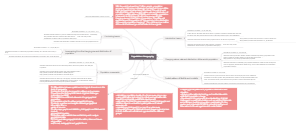
This mind map takes "green strategic transformation under the carbon neutrality goal" as the core, and builds a ten-dimensional system of "cognition-driven-frame-path-technology-case-challenge-policy-evaluation-trend" and adopts a deep hierarchical design of level seven or above, and the system covers the entire process of green transformation from theory to practice.
Edited at 2025-06-16 20:50:05Avatar 3 centers on the Sully family, showcasing the internal rift caused by the sacrifice of their eldest son, and their alliance with other tribes on Pandora against the external conflict of the Ashbringers, who adhere to the philosophy of fire and are allied with humans. It explores the grand themes of family, faith, and survival.
This article discusses the Easter eggs and homages in Zootopia 2 that you may have discovered. The main content includes: character and archetype Easter eggs, cinematic universe crossover Easter eggs, animal ecology and behavior references, symbol and metaphor Easter eggs, social satire and brand allusions, and emotional storylines and sequel foreshadowing.
[Zootopia Character Relationship Chart] The idealistic rabbit police officer Judy and the cynical fox conman Nick form a charmingly contrasting duo, rising from street hustlers to become Zootopia police officers!
Avatar 3 centers on the Sully family, showcasing the internal rift caused by the sacrifice of their eldest son, and their alliance with other tribes on Pandora against the external conflict of the Ashbringers, who adhere to the philosophy of fire and are allied with humans. It explores the grand themes of family, faith, and survival.
This article discusses the Easter eggs and homages in Zootopia 2 that you may have discovered. The main content includes: character and archetype Easter eggs, cinematic universe crossover Easter eggs, animal ecology and behavior references, symbol and metaphor Easter eggs, social satire and brand allusions, and emotional storylines and sequel foreshadowing.
[Zootopia Character Relationship Chart] The idealistic rabbit police officer Judy and the cynical fox conman Nick form a charmingly contrasting duo, rising from street hustlers to become Zootopia police officers!
Green strategic transformation under the goal of carbon neutrality
1. Basic knowledge of carbon neutrality
1. Definition and core connotation
- Definition analysis
▶ Carbon neutrality: The artificial carbon dioxide emissions reach balance with the removal amount
▶ Net zero emissions: covers all categories of greenhouse gases (CO₂, CH₄, N₂O, etc.)
- Science Theory Foundation
▶ Climate Model: CMIP6 predicts the relationship between temperature control and carbon emissions
▶ Carbon cycle principle: dynamic equilibrium of atmospheric-land-marine carbon reservoirs
- Core dimension
▶ Time dimension: short-term emission reduction, medium-term and long-term negative emissions
▶ Space dimension: decarbonization of the entire chain of production, consumption, and supply chain
2. Global strategic significance
- The urgency of the climate crisis
▶ Extreme Weather: Global losses of US$420 billion due to climate disasters in 2023
▶ Ecological impact: Sea level rise threatens 800 million coastal populations
- Opportunities for economic transformation
▶ New growth points: It is expected that the green industry will create 65 million jobs in 2050
▶ Technological innovation: spawning trillion-level markets such as hydrogen energy and CCUS
- International Game Focus
▶ Carbon discourse power: EU CBAM reshapes global trade rules
▶ Cooperation trends: 193 Parties to the Paris Agreement act together
3. China's dual carbon target system
- National strategic layout
▶ "1 N" policy matrix: 1 top-level design N industry solutions
▶ Five-year planning connection: "14th Five-Year Plan" strictly control the "two highs" projects, and deepen the transformation of the "15th Five-Year Plan"
- Local Practice Features
▶ Shenzhen: Create a global marine central city carbon exchange system
▶ Inner Mongolia: Build a tens of millions of kilowatt scenic base
- Corporate Responsibility Boundary
▶ Key industries: Eight major industries such as electricity, steel, and cement are the first to reach their peak
▶ Demonstration enterprises: Central enterprises formulate carbon peak plans before 2025
2. Drivers of green strategy transformation
1. Policy-driven system
- Domestic Policy Toolbox
▶ Legal regulation: "Environmental Protection Tax Law" "Interim Regulations on the Management of Carbon Emission Rights Trading"
▶ Administrative means: dual control of energy consumption to dual control of carbon emissions
▶ Economic incentives: Green credit interest subsidies, carbon emission reduction support tools
- Reconstruction of international rules
▶ EU CBAM: Carbon tariffs are imposed on imported steel and cement from 2026
▶ International Standard: ISO 14067 Product Carbon Footprint Accounting Specifications
- Policy transmission mechanism
▶ The central-local-enterprise three-level linkage: provincial carbon peak plan filing system
▶ Dynamic adjustment: Update emission reduction intensity requirements according to climate targets
2. Economic-driven logic
- Cost and Benefit Analysis
▶ Energy cost: Photovoltaic kilowatt-hour cost has dropped by 82% in ten years, lower than thermal power
▶ Transformation cost: high early investment, but can reduce operating costs by 30% in the long run
- Market demand change
▶ B-end: giants such as Apple and Amazon require suppliers to be carbon neutral
▶ C-end: China's green consumer market size exceeds 5 trillion yuan in 2023
- Capital flow guidance
▶ Green Bonds: Global issuance Scale exceeds US$1.5 trillion in 2023
▶ ESG Investment: The scale of A-share ESG funds has increased by 4 times in three years
3. Socially driven forces
- Public awareness upgrade
▶ Survey data: 92% of consumers are willing to pay a premium for low-carbon products
▶ Behavior change: personal carbon account users exceed 200 million (Alipay Ant Forest)
- Supply chain
▶ Multinational Enterprises: IKEA requires renewable energy power supply in the entire supply chain by 2030
▶ Domestic case: CATL promotes the traceability of the entire life cycle of lithium batteries
- Public opinion supervision pressure
▶ Media exposed: A car company's stock price fell 12% in a single day due to excessive carbon emissions
▶ Non-governmental organizations: 300 Environmental NGOs to supervise enterprises' emission reduction commitment
3. Green strategic transformation framework system
1. Strategic Planning Layer
- Top-level design methodology
▶ Five-step method of carbon disc inspection: determine boundaries → data collection → accounting emissions → verification report → disclosure and disclosure
▶ Tool application: PAS 2050 product carbon footprint accounting standard
- Target setting system
▶ SBTi scientific carbon target: set emission reduction targets based on the 1.5℃ temperature control path
▶ Grading goals: Group-level, subsidiary-level, and project-level three-level goal decomposition
- Roadmap preparation
▶ Stage division: peak period (2025-2030), deep emission reduction period (2030-2050), intermediate period (2050-2060)
▶ Case reference: BASF China's 2050 carbon neutrality roadmap
2. Energy structure transformation
- Renewable Energy Revolution
▶ Photovoltaic technology: Perovskite-silicon stacked battery laboratory efficiency exceeds 33.9%
▶ Wind power innovation: 18MW offshore fan single-unit capacity sets a world record
- Breakthrough in energy storage technology
▶ Electrochemical energy storage: The cost of sodium ion batteries has been reduced to 0.3 yuan/Wh
▶ Physical energy storage: Advanced compressed air energy storage system efficiency is increased to 75%
- Smart grid construction
▶ Virtual power plant: Aggregate distributed resources to achieve 5GW adjustable load
▶ Car-network interaction: V2G technology realizes reverse power supply for electric vehicles
3. Green transformation of industries
- Industrial field
▶ Steel Industry: Hydrogen-based vertical furnace direct iron reduction technology reduces emissions by 90%
▶ Chemical Industry: Electrocatalytic hydrogen production replaces coal-to-hydrogen production to reduce carbon emissions by 60%
- Transportation field
▶ Road transport: The penetration rate of new energy heavy trucks reaches 11.6% in 2023
▶ Air and Shipping: Sustainable Aviation Fuel (SAF) usage ratio increases to 5%
- Construction field
▶ Ultra-low energy consumption: Passive building U value as low as 0.15W/(m²·K)
▶ Photovoltaic construction: BIPV integrated system power generation efficiency has been increased to 23%
4. Technology innovation system
- Carbon reduction technology cluster
▶ CCUS full chain: from capture (adsorption/membrane separation) to storage (salted water layer/depleted reservoir)
▶ Hydrogen energy technology: The capacity of hydrogen production in alkaline electrolytic cells exceeds 10MW
- Frontiers in Carbon Negative Technology
▶ Direct air capture: Climeworks commercial device captures 4,000 tons per year
▶ Biochar carbon sequestration: The annual carbon sequestration potential of agricultural and forestry waste conversion reaches 1 billion tons
- Digital technology empowerment
▶ Carbon management platform: realizes second-level acquisition and intelligent analysis of emission data
▶ Digital twin: Simulation and optimization of energy system efficiency in industrial parks
5. Green finance support
- Innovation in financing tools
▶ Green bonds: labeled bonds, transformation bonds, and sustainable development-linked bonds
▶ Carbon futures: Guangzhou Futures Exchange carbon emission rights futures are online
- Construction of investment ecosystem
▶ Government-guided fund: National green development fund scale is 100 billion yuan
▶ Venture Capital: VC/PE investment in the clean technology field increases by 35% year-on-year
- Risk Management System
▶ Climate Risk Stress Test: Evaluating portfolio losses in the TCFD scenario
▶ Carbon accounting standards: IFRS sustainable disclosure standards for comments
6. Policy tool innovation
- Deepening of market mechanisms
▶ National carbon market: Included in 2,225 power generation companies, covering 4.5 billion tons of carbon emissions
▶ Carbon Inclusive: Shenzhen’s personal carbon account can be redeemed for public services
- Incentive policy upgrade
▶ Tax preferential treatment: New energy vehicles are exempt from purchase tax and continue to 2025
▶ Financial subsidy: Central subsidy reduction mechanism for the construction of scenery
- Strengthening of regulations and policies
▶ Energy efficiency standards: The energy efficiency of the new national air conditioner standard is increased by 30%
▶ Access management: Restrict new coal-fired power projects and strictly control the "two highs" production capacity
7. Global Collaborative System
- International Cooperation Network
▶ Multilateral mechanism: International Renewable Energy Agency (IRENA) has 164 members
▶ Bilateral cooperation: China-French Hydrogen Energy Joint R&D Center is launched
- Standard mutual recognition system
▶ Carbon Footprint Accounting: A Study on the Global Unified Product Carbon Label Framework
▶ Certification and mutual recognition: China-Europe EPD Environmental Product Statement Mutual Recognition Pilot
- Technology Sharing Platform
▶ Climate Technology Center: United Nations Climate Conference establishes a technology transfer mechanism
▶ International Hydrogen Energy Alliance: 30 countries jointly build hydrogen energy standard system
IV. Implementation path and phase goals
1. Carbon disc check and baseline setting (0-1 year)
- Implementation process
▶ Scope: clarify organizational boundaries (operational control/financial control/equity ratio)
▶ Data collection: 20 categories of data such as energy consumption, raw material use, transportation and emissions
- Tools and Methods
▶ Software Tools: WRI GHG Protocol Accounting Software
▶ Third-party certification: SGS carbon verification service
- Output results
▶ Carbon emission list: Detailed report on 1/2/3 of the sub-range
▶ Analysis of emission reduction potential: Identify key links in the emission reduction space of more than 50%
2. Short-term emission reduction measures (1-3 years)
- Energy Alternative Action
▶ Renewable energy: Distributed photovoltaic installed capacity of more than 1MW accounts for more than 60%
▶ Energy-saving transformation: The energy efficiency of the motor system is improved to IE4 standard
- Management Optimization Solution
▶ Carbon Asset Management: Establish a professional team for carbon quota trading
▶ Supply chain collaboration: Requires first-tier suppliers to disclose carbon data
- Demonstration project implementation
▶ Zero carbon factory: A certain automobile company pilots 100% green electricity production
▶ Green logistics: New energy distribution vehicles account for 30%
3. Tough technical transformation (3-10 years)
- Key technologies
▶ CCUS industrialization: build 30 100,000-ton capture projects
▶ Hydrogen energy transportation: 1,000 hydrogen refueling stations were built and 50,000 hydrogen vehicles were promoted
- Industrial structure adjustment
▶ Eliminate backward production capacity: The steel industry reduces crude steel production capacity by 100 million tons
▶ Cultivate emerging industries: The output value of energy storage equipment manufacturing industry exceeds 1 trillion yuan
- Digital Transformation
▶ Smart energy management: Real-time monitoring and optimization scheduling of energy consumption
▶ Blockchain traceability: building a carbon footprint traceability system for the whole life cycle of the product
4. Deep decarbonization stage (10-30 years)
- Zero carbon technology scale
▶ Nuclear energy utilization: small modular reactor installed capacity 5GW
▶ Biomass energy: The annual output of cellulose ethanol reaches 1 million tons
- Deepening of circular economy
▶ Resource recovery: scrap steel utilization rate increases to 90%, recycled aluminum accounts for 60%
▶ Product design: Promote removable and recyclable cycle design standards
- Deepening of international cooperation
▶ Technology output: China's photovoltaic technology overseas market share exceeds 70%
▶ Joint R&D: Participate in the International Thermal Nuclear Fusion Experimental Reactor (ITER) project
5. Carbon neutrality is achieved (30-40 years)
- Popularization of negative carbon technology
▶ DAC commercialization: 100 million tons direct air capture plants
▶ Ecological carbon sequestration: New afforestation area is 100 million hectares, increasing carbon sink by 500 million tons
- Decarbonization of the entire chain
▶ Industrial field: Steel and chemical industries achieve near zero emissions
▶ Transportation field: Hydrogen-energy aircraft and electric ships are fully commercialized
- Comprehensive social transformation
▶ Consumption model: 100% coverage rate of national carbon account
▶ International rules: Lead the formulation of global carbon neutrality technical standards
5. Key Technological Innovation Map
1. Frontiers in Energy Technology
- Breakthrough in power generation technology
▶ Fourth generation nuclear power: commercial application of high-temperature gas-cooled reactors
▶ Marine energy: Floating wave energy power generation device efficiency increases to 45%
- Energy storage technology evolution
▶ Flow battery: The energy storage time of all vanadium flow battery exceeds 12 hours
▶ Phase change energy storage: The cost of molten salt energy storage has been reduced to 0.2 yuan/Wh
2. Industrial Technology Innovation
- Green manufacturing process
▶ 3D printing: Metal 3D printing reduces material waste by 40%
▶ Biomanufacturing: Synthetic biological production of nylon reduces carbon emissions by 70%
- Circular Economy Technology
▶ Recycling of used batteries: Lithium recycling rate increases to 95%
▶ Plastic circulation: Chemical recycling technology to treat mixed plastics
3. Innovation in construction technology
- Low-carbon building materials
▶ Solid waste utilization: industrial by-product gypsum building materials consumed 200 million tons per year
▶ Bio-based materials: bamboo fiber composite material instead of wood
- Smart Buildings
▶ Energy management system: AI optimizes building energy consumption to reduce 25%
▶ Photovoltaic storage and direct soft: integrated DC power supply system for photovoltaic buildings
4. Digital technology empowerment
- Big Data Application
▶ Carbon emissions online monitoring: satellite remote sensing, real-time tracking of the Internet of Things
▶ Forecasting Analysis: AI predicts the industry's carbon emission trend error rate <5%
- Blockchain technology
▶ Carbon transaction traceability: Ensure the authenticity and uniqueness of carbon quotas
▶ Green Finance: Automatic execution of subsidies for smart contracts
6. Industry transformation case library
1. Energy industry benchmark
- Transformation Practice of National Energy Group
▶ Coal and electricity cleaning: coal consumption for power supply of million kilowatt units has been reduced to 260g/kWh
▶ New energy layout: Fengguang installed capacity exceeds 150 million kilowatts
- Denmark's experience in energy transformation
▶ Wind power proportion: Wind power meets 142% of the electricity demand in 2023
▶ Regional heating: Biomass energy heating covers 90% of cities
2. Model of the transportation industry
- BYD's full industrial chain layout
▶ Battery technology: Blade battery energy density 203Wh/kg
▶ Overseas market: Electric vehicles enter more than 70 countries and regions
- Maersk Shipping Decarbonization Path
▶ Green ship: methanol fuel container ship reduces carbon emissions by 75%
▶ Carbon capture pilot: Installing small CCUS devices on board
3. Industrial industry demonstration
- Baowu Group's low-carbon transformation
▶ Hydrogen-based vertical furnace: the world's first one million ton hydrogen energy smelting production line
▶ Carbon management platform: Realize real-time monitoring of carbon emissions in the whole process
- BASF Zero Carbon Factory
▶ Green power use: 100% renewable energy power supply
▶ Circular economy: chemical raw materials recycling rate reaches 90%
4. Innovation in the construction industry
- Longshi passive residence
▶ Energy consumption index: annual heating energy consumption ≤15kWh/m²
▶ Technical integration: ground source heat pump fresh air heat recovery system
- Zero Carbon Community Practice
▶ Energy self-sufficiency: Photovoltaic energy storage achieves 100% self-sufficiency
▶ Ecological design: Rainwater collection and reuse rate is 80%
7. Challenges and response strategies
1. Breakthrough of technical bottlenecks
- Key technical problems
▶ CCUS cost: The current capture cost is 600-800 yuan/ton, and it needs to be reduced to less than 200 yuan
▶ Hydrogen storage and transportation: The loss rate of liquid hydrogen transportation needs to be reduced from 15% to less than 5%.
- Innovation mechanism construction
▶ Industry-university-research collaboration: National Laboratory takes the lead in forming a technical research alliance
▶ Demonstration Project: Construction of 10 national zero-carbon technology demonstration zones
2. Cost pressure relief
- Economic burden analysis
▶ Transformation cost: The steel industry's investment in steel emission reduction exceeds 1,000 yuan
▶ Financing Problems: The coverage rate of green loans for small and medium-sized enterprises is less than 30%
- Solution portfolio
▶ Policy support: Establish a special carbon neutrality loan with interest rate drop of 20%.
▶ Business model innovation: Contract Energy Management (EMC) promotion and application
3. System collaborative optimization
- Analysis of collaborative difficulties
▶ Multi-energy complementary: complex coordinated scheduling of scenery, water, fire and storage
▶ Cross-domain management: regional power grid interconnection level is less than 40%
- Optimized path design
▶ Comprehensive energy services: building a regional energy Internet platform
▶ Mechanism innovation: implement market-oriented means such as green certificates and quota systems
4. Response to international rules
- Challenge Analysis
▶ Carbon tariff shock: China's export company costs are expected to increase by 5-10%
▶ Standard barriers: Europe and the United States dominate carbon label certification system
- Coping strategies
▶ Capacity building: Cultivate 1,000 international carbon negotiation experts
▶ Actively participate: Lead the formulation of more than 5 international carbon standards
8. Policy and market mechanism
1. Improved domestic policy system
- Strengthened legal protection
▶ Legislative Process: Promoting the Inclusion of the Carbon Neutrality Promotion Law into Legislative Plan
▶ Law enforcement supervision: Establish a blacklist system for carbon emission data fraud
- Economic Policy Innovation
▶ Tax Policy: Study the feasibility of carbon tax replacement carbon trading
▶ Price mechanism: Improve green electricity premium trading rules
- Industrial policy upgrade
▶ Access management: Develop a zero-carbon industry catalog to guide investment
▶ Exit mechanism: Establish a compensation mechanism for accelerated elimination of backward production capacity
2. Deepening of market mechanism
- Carbon market expansion
▶ Industry coverage: Included in steel, cement, electrolytic aluminum and other industries in 2025
▶ Product innovation: launching derivatives such as carbon futures and carbon options
- Deepening of green finance
▶ Product Innovation: Developing Carbon Emission Rights Pledge Loans
▶ Risk prevention: Establish a green project ESG rating system
3. International policy coordination
- Rule docking
▶ Data interoperability: Promote the unification of China-Europe carbon market data standards
▶ Mechanism coordination: Participation