MindMap Gallery The material basis of inheritance
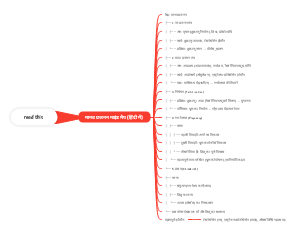
This is a mind map about the material basis of inheritance, and its main contents include: knowledge structure, value meaning, logical structure, and ability structure, which helps learners understand and master this part of knowledge from multiple angles.
Edited at 2025-09-18 10:34:25Mappa mentale per il piano di inserimento dei nuovi dipendenti nella prima settimana. Strutturata per giorni: Giorno 1 – benvenuto, configurazione strumenti, presentazione team. Secondo giorno – formazione su policy aziendali e obiettivi del ruolo. Terzo giorno – affiancamento e primi task guidati. Il quarto giorno – riunioni con dipartimenti chiave e feedback intermedio. Il quinto giorno – revisione settimanale, definizione obiettivi a breve termine e integrazione culturale.

Mappa mentale per l’analisi della formazione francese ai Mondiali 2026. Punti chiave: attacco stellare guidato da Mbappé, con triplice minaccia (profondità, taglio, sponda). Criticità: centrocampo poco creativo – la costruzione offensiva dipende dagli attaccanti che arretrano. Difesa solida (Upamecano, Saliba, Koundé). Portiere Maignan. Variabili: gestione infortuni e condizione fisica dei big. Ideale per scout, giornalisti e tifosi.
Mappa mentale per il piano di inserimento dei nuovi dipendenti nella prima settimana. Strutturata per giorni: Giorno 1 – benvenuto, configurazione strumenti, presentazione team. Secondo giorno – formazione su policy aziendali e obiettivi del ruolo. Terzo giorno – affiancamento e primi task guidati. Il quarto giorno – riunioni con dipartimenti chiave e feedback intermedio. Il quinto giorno – revisione settimanale, definizione obiettivi a breve termine e integrazione culturale.
Mappa mentale per l’analisi della formazione francese ai Mondiali 2026. Punti chiave: attacco stellare guidato da Mbappé, con triplice minaccia (profondità, taglio, sponda). Criticità: centrocampo poco creativo – la costruzione offensiva dipende dagli attaccanti che arretrano. Difesa solida (Upamecano, Saliba, Koundé). Portiere Maignan. Variabili: gestione infortuni e condizione fisica dei big. Ideale per scout, giornalisti e tifosi.
The material basis of inheritance
Knowledge Structure
The nature of genes
The structure of DNA molecules
1. The components of DNA: C, H, O, N, P
2. The basic unit of DNA: deoxyribonucleotides (4 types)
3. DNA structure:
① Two reverse parallel deoxynucleotide chains are hovered into a double helix structure.
②Outer side: Deoxyribose and phosphoric acid alternately connect to form the basic skeleton. Inner: consists of base pairs connected by hydrogen bonds.
③There are certain rules for base pairing: A = T; G ≡ C. (Base complementary pairing principle)
4. Features
① Stability: The order of alternating deoxyribose and phosphoric acid in DNA molecules remains stable
② Diversity: The arrangement order of base pairs in DNA molecules is diverse (main), the number of bases and the proportion of bases are different.
③Specificity: Each DNA in a DNA molecule has its own specific base pair arrangement order
5. Calculation
Genes are genetically effective DNA fragments
Gene definition
Genes are genetically effective DNA fragments
DNA is a condition for genetic material
① Can copy itself;
②The structure is relatively stable;
③Storage genetic information;
④Able to control traits.
Characteristics of DNA molecules
Diversity, specificity and stability.
DNA replication
Experimental evidence-semi-reserved copy
Material: E. coli
Method: Isotope Tracer
DNA replication
Place: Cell nucleus
Time: Intercellular division period. (i.e. the intermittent period of mitosis and the intermittent period of meiosis first)
Basic conditions
① Template: Two single strands of the DNA molecule that begins to unrotate (i.e. two strands of parental DNA)
② Raw materials: are 4 kinds of deoxynucleotides free in the cells
③ Energy: Provided by ATP
④ Enzymes: DNA helicase, DNA polymerase, etc.
process
① Unrotate; ② Synthesize child chains; ③ Form progeny DNA
Features
① Copy while unrolling; ② Semi-reserved copy
in principle
Base complementary pairing principle
Reasons for accurate copying
①The unique double helix structure provides an accurate template for replication;
② The principle of base complementary pairing ensures that replication can be carried out accurately.
significance
Passing genetic information from parents to offspring to maintain continuity of genetic information
DNA is the main genetic material
Evidence that DNA is genetic material
(1) Experimental process and conclusions of transformation of pneumococcal pneumoniae
(2) Process and conclusions of bacteriophage infecting bacterial experiments
DNA is the main genetic material
(1) The genetic material of certain viruses is RNA
(2) The genetic material of most organisms is DNA
Gene expression
Gene control of traits
Central Law and Its Development
1. Proposer: Crick
2. Content: Genetic information can flow from DNA to DNA, that is, the self-replication of DNA; it can also flow from DNA to RNA, and then to proteins, that is, the transcription and translation of genetic information. However, genetic information cannot flow from protein to protein, nor from protein to DNA or RNA. The two pathways of genetic information flowing from RNA to RNA and from RNA to DNA are complementary to the central law.
How genes control traits
(1) Indirect control: control the metabolic process by controlling the synthesis of enzymes, and then control the properties of organisms; such as albinism, etc.
(2) Direct control: Direct control of biological traits by controlling protein structure. Such as cystic fibrosis, sickle cell anemia, etc. [Note] Multigene factors of organism traits: genes and genes; genes and gene products; and environment have complex interactions, and jointly finely regulate organism traits.
Genes guide protein synthesis
The structure of RNA
Constituent elements: C, H, O, N, P
Basic unit: Ribonucleotides (4 types)
Structure: generally single-stranded
Gene
It is a DNA fragment with genetic effects, mainly on the chromosome.
Gene controls protein synthesis
1. Transcription:
(1) Concept: In the cell nucleus, a strand of DNA is used as a template and the synthesis of RNA is carried out according to the principle of base complementary pairing. 【Note】Chloroplasts and mitochondria are also transcribed
(2) Process:
① Unrotate ② Pair ③ Connect ④ Release
(3)
Template: A strand of DNA (template strand)
Raw materials: 4 kinds of ribonucleotides
Energy: ATP
Enzymes: helicase, RNA polymerase, etc.
(4) Principle: Principle of base complementary pairing (A—U, T—A, G—C, C—G)
(5) Products: messenger RNA (mRNA), ribosomal RNA (rRNA), Transport RNA (tRNA)
2. Translation
(1) Concept: The process of synthesizing proteins with a certain amino acid sequence using mRNA as a template. 【Note】Chloroplasts and mitochondria are also translated
(2)
Template: mRNA
Raw materials: amino acids (20 types)
Energy: ATP
Enzyme: Various enzymes
Transport tool: tRNA
Assembly machine: Ribosome
(3) Principle: Base complementary pairing principle
(4) Product: Polypeptide chain
3. Calculation related to gene expression:
Number of bases in genes: Number of bases in mRNA molecules: Number of amino acids = 6:3:1
4. Password
①Concept: Three adjacent bases on mRNA determine 1 amino acid. Every 3 such bases are also called 1 codon
② Features: Dedication, decentralization, and versatility
③Start password: AUG, GUG (64) Termination password: UAA, UAG, UGA
[Note] There are 61 codons that determine amino acids, and the stop code does not encode amino acids.
Value meaning
National level
Supports technological strategy and industrial competitiveness
Biotechnology foundation, national security guarantee, industrial development drive
Social level
Improve scientific cognition and promote harmony
Correct scientific misunderstandings, improve health awareness, and social governance services
Life level
Deepen the understanding of the essence of life
The unity, order and diversity of life
Life level
Guide healthy life and explain phenomena
Avoid health risks, use drugs rationally, and interpret life phenomena
Thinking level
Cultivate scientific thinking and core literacy
Logical reasoning ability, dialectical thinking ability, system thinking ability
College Entrance Examination Level
Break through core test points and improve test-taking ability
Focus on high-frequency test sites, improve test-taking ability, and positioning for a round of review
Logical structure
Knowledge logic
Knowledge logic within the subject
Vertical Deepening Horizontal Relationship
Vertical Deepening: Exploration of Genetic Materials → The Essence of Genes → Function of Genes
Horizontal association: Structure determines function
Knowledge logic between subjects
The intersection of biology and chemistry and physics
Chemistry: Chemical composition, chemical bonds, enzymatic reactions, ATP energy supply of DNA
Physics: isotope labeling, density gradient centrifugation, spatial configuration of DNA double helix
Thinking logic
Overall construction and local analysis
Frame first and then details
Structural and functional perspectives
Core thinking throughout the molecular level
Capability structure
Understanding ability
Key concept explanation
The relationship between genes and DNA
Genes are DNA fragments, not all DNA fragments are genes
Genes are arranged linearly on chromosomes
DNA semi-reserved replication
Two strands of parent DNA molecules are used as templates to synthesize progeny DNA strands
One strand in the progeny DNA molecule is the parent strand, and one strand is the progeny strand
Translation and translation
Template: DNA strand vs mRNA raw materials: ribonucleotide vs amino acid
Product: mRNA/tRNA/rRNA vs polypeptide chain; location: eukaryotic nucleus/prokaryotic nucleophiles vs ribosomes
The Central Rule
Direction of genetic information transmission: DNA → DNA, DNA → RNA → RNA → protein, RNA → RNA, RNA → DNA
Retrotranscription occurs only in retroviruses
Analysis of easy-to-miss concepts
DNA replication and transcription enzymes
Helicase (replication only), DNA polymerase (replication) vs RNA polymerase (transcription, both decoylation function)
Codon and anticodon
Position: mRNA vs tRNA; quantity: 64 vs 61
Spatiotemporal difference between eukaryotic and prokaryotic transcription
eukaryotic "transcription first and then translation" vs prokaryotic "translation while transcribing"
Causal deduction
Structure → Function, Condition → Results
DNA double helix structure stability → Ensure stable storage of genetic information
Codon degeneration → Reduce the effect of gene mutations on protein synthesis
Experimental Exploration Ability
Classic experimental analysis
Experimental plan design
Verify that "the genetic material of a certain RNA virus is RNA"
Experimental error analysis
Reasons for the radioactivity of the supernatant of ³²P in phage infection experiment
The reason why "heavy belt, medium belt, light belt" appeared in the third generation in DNA semi-reserved replication experiment
Ability to obtain information
Interpretation of graphics information
DNA structure pattern diagram
How to distinguish between phosphoric acid, deoxyribose and bases
Determine base pair type: A-T contains 2 hydrogen bonds, G-C contains 3 hydrogen bonds
DNA replication process diagram
Identify "replication fork", "maternal strand", "child strand", and "RNA primers"
Transcriptional translation diagram
Positioning "ribosome", "anticodon of tRNA", "start codon", "stop codon"
Table data analysis
Induction rules from data
Text information extraction
Related core knowledge from the material
Comprehensive application ability
Knowledge Transfer
Apply the knowledge of this unit to other scenarios
Contact with practical issues
Explain phenomena in life or scientific research
Cross-chapter integration
Related contents of related compulsory practices one and two