MindMap Gallery Guatemala History Timeline
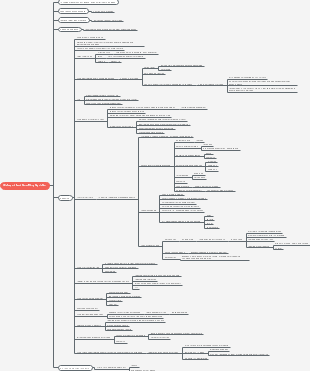
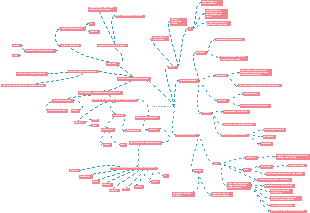
Explore the rich tapestry of Guatemala's history through its intricate timeline, tracing the evolution from ancient Maya civilizations to modern-day challenges. The journey begins with the Preclassic Maya foundations, where agricultural innovations fostered early settlements, followed by the flourishing of Classic Maya city-states known for their monumental architecture. As the Postclassic era unfolds, political dynamics shift, paving the way for Spanish conquest and colonial rule. The struggle for independence leads to the establishment of a republic, which is later marked by liberal reforms and authoritarian regimes. The timeline culminates in the civil war, revealing deep societal divisions and state violence that shaped contemporary Guatemala. Join us in uncovering this compelling narrative of resilience and transformation.
Edited at 2026-03-20 01:35:02Discover the power of derivatives, a fundamental concept in calculus that reveals how functions change! This introduction explores what a derivative is, including its definition as a measure of instantaneous rate of change and slope at a specific point. We delve into average versus instantaneous change, formal definitions using limits, and different notations. Learn what derivatives represent geometrically and in practical applications, with examples ranging from linear to quadratic functions. We also cover tangent line approximations, the relationship between differentiability and continuity, and common derivative rules for efficient computation. Finally, see why derivatives matter in understanding graphs, modeling change, and laying the groundwork for advanced calculus concepts.
Discover the fascinating world of differential equations, the mathematical tools that model change through derivatives. This overview explains what differential equations are, highlighting their core purpose of modeling how quantities evolve based on current states and inputs. It delves into key components, types, and the significance of solving these equations, whether through analytic or numeric means. The discussion also includes initial and boundary conditions, essential for defining problems accurately. Finally, learn how to build a differential equation model step-by-step, reinforced by common examples like exponential growth and Newton's law of cooling. Join us in exploring how these equations shape our understanding of dynamic systems.
Unlock the power of linear transformations with a deep dive into matrices! This comprehensive overview explores the fundamental concepts of matrices as structured tables of numbers that represent transformations between vector spaces. Discover how matrices function as linear maps, encode transformations through their columns, and visualize effects in 2D and 3D. Learn about key matrix types, including diagonal, rotation, and projection matrices, and grasp essential concepts like determinants, rank, and eigenvalues. Whether you’re interested in scaling, rotating, or projecting, this guide offers insights into the geometric and algebraic nature of matrices, making complex ideas accessible and engaging.
Discover the power of derivatives, a fundamental concept in calculus that reveals how functions change! This introduction explores what a derivative is, including its definition as a measure of instantaneous rate of change and slope at a specific point. We delve into average versus instantaneous change, formal definitions using limits, and different notations. Learn what derivatives represent geometrically and in practical applications, with examples ranging from linear to quadratic functions. We also cover tangent line approximations, the relationship between differentiability and continuity, and common derivative rules for efficient computation. Finally, see why derivatives matter in understanding graphs, modeling change, and laying the groundwork for advanced calculus concepts.
Discover the fascinating world of differential equations, the mathematical tools that model change through derivatives. This overview explains what differential equations are, highlighting their core purpose of modeling how quantities evolve based on current states and inputs. It delves into key components, types, and the significance of solving these equations, whether through analytic or numeric means. The discussion also includes initial and boundary conditions, essential for defining problems accurately. Finally, learn how to build a differential equation model step-by-step, reinforced by common examples like exponential growth and Newton's law of cooling. Join us in exploring how these equations shape our understanding of dynamic systems.
Unlock the power of linear transformations with a deep dive into matrices! This comprehensive overview explores the fundamental concepts of matrices as structured tables of numbers that represent transformations between vector spaces. Discover how matrices function as linear maps, encode transformations through their columns, and visualize effects in 2D and 3D. Learn about key matrix types, including diagonal, rotation, and projection matrices, and grasp essential concepts like determinants, rank, and eigenvalues. Whether you’re interested in scaling, rotating, or projecting, this guide offers insights into the geometric and algebraic nature of matrices, making complex ideas accessible and engaging.
Guatemala History Timeline
Preclassic Maya Foundations (c. 2000 BCE–250 CE)
c. 2000–1000 BCE: Early agricultural villages develop in the Guatemalan highlands and Pacific coast; maize cultivation expands and supports permanent settlements.
c. 1000–400 BCE: Increasing social complexity; ceremonial centers and regional exchange networks grow across the Maya area.
c. 400 BCE–250 CE: Proto-urban Maya centers consolidate; early writing and calendrical practices emerge and spread through elite interaction networks.
Classic Maya Flourishing (250–900)
250–600: Major lowland city-states expand; dynastic kingship, monumental architecture, and stelae traditions intensify.
Tikal rises as a leading power in the Petén region, engaging in alliances and rivalries with other Maya polities.
600–750: Peak era in Guatemala; large-scale construction, sophisticated astronomy/calendrics, and extensive trade networks.
750–900: Political fragmentation and population shifts; many southern lowland centers decline amid warfare, environmental stress, and disruptions to trade/authority.
Postclassic Maya Reconfiguration (900–1524)
900–1200: Power centers shift; fortified sites and new political formations appear; trade routes adapt to new regional hubs.
1200–1400: Highland Maya kingdoms strengthen (K’iche’, Kaqchikel, Tz’utujil); diplomacy and warfare shape shifting alliances.
1400–1524: Intensified rivalry among highland states; K’iche’ influence expands, then competes with Kaqchikel power before Spanish arrival.
Spanish Conquest and Early Colonial Rule (1524–1700)
1524: Pedro de Alvarado leads Spanish forces into the Guatemalan highlands; campaigns defeat key Maya polities amid alliances with Indigenous rivals.
1524–1530s: Colonial administration established; encomienda labor and tribute expand; forced resettlements (reducciones) reshape communities.
1540s–1600s: Missionary activity and parish systems expand; Catholic institutions overlay Indigenous religious life, producing syncretic practices.
1600s: Demographic decline from disease and exploitation transforms land use, labor, and settlement; colonial towns and estates consolidate.
Late Colonial Transformations (1700–1821)
1700s: Bourbon reforms strengthen imperial control, taxation, and military organization; export-oriented production increases.
1773: Major earthquakes damage Santiago de los Caballeros (Antigua Guatemala).
1776: Capital relocated to Nueva Guatemala de la Asunción (modern Guatemala City).
Late 1700s–early 1800s: Rising tensions over taxes, labor obligations, and elite power; Indigenous communities defend communal lands via petitions and resistance.
Independence and Early Republic (1821–1871)
1821: Central America declares independence from Spain; Guatemala enters a new political order.
1823–1840: Guatemala in the Federal Republic of Central America; liberal–conservative conflicts destabilize governance.
1840: Federation dissolves; Guatemala consolidates as a separate republic under conservative dominance.
1844–1865: Rafael Carrera era; Church and traditional structures strengthened; Indigenous alliances and local autonomy support political stability.
Liberal Reform and Export Economy (1871–1944)
1871: Liberal Revolution begins; modernization, secularization, and export-driven growth pursued.
1870s–1890s: Coffee becomes dominant export; land privatization and labor laws expand coercive labor systems, dispossessing many Indigenous communities.
Early 1900s: Foreign corporate influence increases (bananas, infrastructure); rail and port development ties economy to export markets.
1931–1944: Jorge Ubico dictatorship; authoritarian modernization and labor repression deepen inequality and rural coercion.
Democratic Spring and Reform (1944–1954)
1944: Ubico falls; reformist democratic period begins.
1945–1951: Juan José Arévalo presidency; labor rights, education expansion, and social reforms advance.
1951–1954: Jacobo Árbenz presidency; agrarian reform (Decree 900) pushes land redistribution and challenges entrenched interests.
1954: U.S.-backed coup ousts Árbenz; reforms reversed and repression escalates.
Civil War and State Violence (1960–1996)
1960: Civil war begins amid insurgency and counterinsurgency.
1970s: Conflict intensifies; rural organizing and repression expand; polarization grows.
1976: Devastating earthquake accelerates migration and urbanization pressures; demands for social change rise.
Early 1980s: Peak counterinsurgency; mass atrocities and village destruction disproportionately impact Maya communities; large-scale displacement and refugee flows.
1985: New constitution; gradual transition toward civilian government while conflict continues.
1996: Peace Accords signed; formal end of civil war; commitments include Indigenous rights recognition, demilitarization, and social development goals.
Modern Social Changes and Contemporary Guatemala (1996–Present)
Late 1990s–2000s: Postwar reconstruction and democratization efforts; truth-seeking and human rights advocacy expand; inequality and impunity persist.
2000s–2010s: Indigenous and community movements grow, emphasizing cultural rights, language revitalization, land/resource governance, and opposition to some extractive projects.
2015: Anti-corruption protests drive resignation and arrest of President Otto Pérez Molina; civic mobilization demands accountability.
2010s–2020s: Migration continues due to economic insecurity, violence, and climate-related shocks; remittances become central to household survival.
2020s: Contest between anti-corruption initiatives and entrenched interests; youth activism, Indigenous political participation, and debates over development, justice, and historical memory shape change.
2024–present: Continued efforts and tensions around governance reform, human rights protections, and inclusive development; civil society and Indigenous organizations remain key actors.