MindMap Gallery Dominican Republic History Timeline
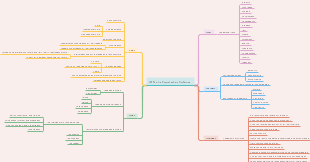
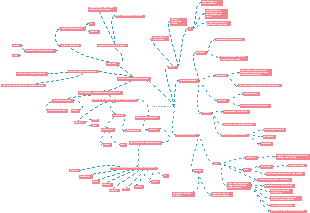
Explore the rich and complex history of the Dominican Republic, a journey from its pre-Columbian Taíno heritage to modern times. This timeline covers key eras, including the early contact and Spanish colonization, where European intrusion reshaped Indigenous life, to the transformative Haitian Revolution that influenced regional politics. Witness the struggles for independence, marked by internal conflicts and the impact of foreign powers, culminating in the Trujillo dictatorship that defined much of the 20th century. Each section reveals the profound events and figures that have shaped the Dominican Republic's identity, resilience, and national narrative.
Edited at 2026-03-20 01:35:03Discover the power of derivatives, a fundamental concept in calculus that reveals how functions change! This introduction explores what a derivative is, including its definition as a measure of instantaneous rate of change and slope at a specific point. We delve into average versus instantaneous change, formal definitions using limits, and different notations. Learn what derivatives represent geometrically and in practical applications, with examples ranging from linear to quadratic functions. We also cover tangent line approximations, the relationship between differentiability and continuity, and common derivative rules for efficient computation. Finally, see why derivatives matter in understanding graphs, modeling change, and laying the groundwork for advanced calculus concepts.
Discover the fascinating world of differential equations, the mathematical tools that model change through derivatives. This overview explains what differential equations are, highlighting their core purpose of modeling how quantities evolve based on current states and inputs. It delves into key components, types, and the significance of solving these equations, whether through analytic or numeric means. The discussion also includes initial and boundary conditions, essential for defining problems accurately. Finally, learn how to build a differential equation model step-by-step, reinforced by common examples like exponential growth and Newton's law of cooling. Join us in exploring how these equations shape our understanding of dynamic systems.
Unlock the power of linear transformations with a deep dive into matrices! This comprehensive overview explores the fundamental concepts of matrices as structured tables of numbers that represent transformations between vector spaces. Discover how matrices function as linear maps, encode transformations through their columns, and visualize effects in 2D and 3D. Learn about key matrix types, including diagonal, rotation, and projection matrices, and grasp essential concepts like determinants, rank, and eigenvalues. Whether you’re interested in scaling, rotating, or projecting, this guide offers insights into the geometric and algebraic nature of matrices, making complex ideas accessible and engaging.
Discover the power of derivatives, a fundamental concept in calculus that reveals how functions change! This introduction explores what a derivative is, including its definition as a measure of instantaneous rate of change and slope at a specific point. We delve into average versus instantaneous change, formal definitions using limits, and different notations. Learn what derivatives represent geometrically and in practical applications, with examples ranging from linear to quadratic functions. We also cover tangent line approximations, the relationship between differentiability and continuity, and common derivative rules for efficient computation. Finally, see why derivatives matter in understanding graphs, modeling change, and laying the groundwork for advanced calculus concepts.
Discover the fascinating world of differential equations, the mathematical tools that model change through derivatives. This overview explains what differential equations are, highlighting their core purpose of modeling how quantities evolve based on current states and inputs. It delves into key components, types, and the significance of solving these equations, whether through analytic or numeric means. The discussion also includes initial and boundary conditions, essential for defining problems accurately. Finally, learn how to build a differential equation model step-by-step, reinforced by common examples like exponential growth and Newton's law of cooling. Join us in exploring how these equations shape our understanding of dynamic systems.
Unlock the power of linear transformations with a deep dive into matrices! This comprehensive overview explores the fundamental concepts of matrices as structured tables of numbers that represent transformations between vector spaces. Discover how matrices function as linear maps, encode transformations through their columns, and visualize effects in 2D and 3D. Learn about key matrix types, including diagonal, rotation, and projection matrices, and grasp essential concepts like determinants, rank, and eigenvalues. Whether you’re interested in scaling, rotating, or projecting, this guide offers insights into the geometric and algebraic nature of matrices, making complex ideas accessible and engaging.
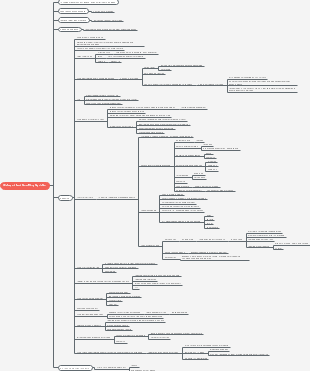
Dominican Republic History Timeline
Pre-Columbian Era (before 1492): Taíno Heritage
c. 1200–1400: Taíno consolidation across Hispaniola; cassava agriculture, fishing, canoe navigation, complex village life (yucayeques)
Late 1400s: Major cacicazgos (Marién, Maguá, Maguana, Jaragua, Higüey); caciques lead areítos; cemí-centered spirituality
Early Contact and Spanish Colonization (1492–1600)
1492: Columbus reaches Hispaniola; sustained European intrusion begins
1493–1496: Spanish settlements expand; conflict, forced labor, disease accelerate Taíno demographic collapse
1496: Santo Domingo founded (relocated 1502 to Ozama west bank); first enduring European city in the Americas; imperial administrative hub
1502–1511: Ovando governs; encomienda expands, institutionalizing forced Indigenous labor
1511: Montesinos sermon condemns Indigenous enslavement; early colonial ethics/legal debate
1510s–1520s: Enslaved Africans imported as Taíno population plummets; sugar and ranching expand; Afro-Caribbean roots deepen
1522: Major enslaved revolt near Santo Domingo signals persistent resistance
Imperial Competition, Decline, and Frontier Society (1600–1697)
1605–1606: Devastations of Osorio relocate northern/western settlements; disrupt economy; weaken Spanish control
1620s–1650s: French/English/Dutch presence expands in west; frontier economy grows (cattle, hides, contraband)
1697: Treaty of Ryswick recognizes French Saint-Domingue in western third; entrenches east–west divide
Bourbon Reforms and Shifting Colonial Fortunes (1697–1791)
1700s: Bourbon reforms reshape administration/trade; cattle ranching and smallholder farming persist
1760s–1780s: Trade and military reforms; strategic value rises amid Atlantic rivalries
1790s (pre-1791): Unease grows as Saint-Domingue’s plantation wealth and enslaved majority signal instability
Revolutionary Era and Haitian Revolution’s Ripple Effects (1791–1809)
1791: Haitian Revolution begins in Saint-Domingue; regional geopolitics transformed
1795: Treaty of Basel cedes Santo Domingo to France; uneven contested implementation
1801: Toussaint Louverture occupies Santo Domingo; abolishes slavery; seeks island-wide administration
1804: Haiti declares independence; first Black republic reshapes Caribbean politics
1808–1809: Reconquista expels French; Santo Domingo returns to Spanish rule
“España Boba” and First Independence (1809–1822)
1809–1821: “España Boba” neglect; stagnation and discontent deepen
1821 (Dec.): Núñez de Cáceres declares “Independencia Efímera”; seeks Gran Colombia union; short-lived
Haitian Unification and Dominican National Movement (1822–1844)
1822: Boyer unifies island; slavery remains abolished; taxes/land policies/conscription provoke eastern resistance
1838: Duarte founds La Trinitaria; independence organizing and nationalism consolidate
1844 (Feb. 27): Independence declared; Dominican Republic founded in Santo Domingo
1844–1856: Haitian-Dominican wars; invasions repelled; defense central to state-building
Early Republic, Internal Struggles, and Annexation to Spain (1844–1865)
1844–1861: Factional rivalry (Santana vs. Báez blocs); instability and regional power struggles
1861: Santana annexes to Spain due to security/economic pressures; sovereignty relinquished
1863–1865: War of Restoration; guerrilla warfare and broad mobilization restore independence
1865: Spain withdraws; independence restored; “Restoration” becomes core national narrative
Late 19th Century: Caudillismo, Debt, and Foreign Pressure (1865–1916)
1865–1880s: Coups and caudillo cycles; foreign loans increase fiscal vulnerability
1899–1902: End of Ulises “Lilís” Heureaux era; debt crisis and upheaval expose the state financially
1905: Customs receivership under growing U.S. influence; external control over revenues increases
U.S. Occupation and Institutional Reordering (1916–1924)
1916: U.S. military occupation begins amid instability and debt disputes
1916–1924: Centralization, infrastructure building, creation of national constabulary; nationalist resistance grows
1924: U.S. withdrawal; constitutional government returns; security apparatus remains influential
Trujillo Dictatorship (1930–1961)
1930: Trujillo seizes power; long dictatorship of repression, patronage, personality cult
1937: Parsley Massacre kills thousands of Haitians/Haitian-Dominicans; anti-Haitian racialized nationalism entrenched
1940s–1950s: Modernization and infrastructure alongside severe human rights abuses; regime amasses wealth and controls industries
1959: Exile expedition (Constanza, Maimón, Estero Hondo) sparks opposition despite defeat
1960: Mirabal sisters murdered; condemnation intensifies
1961: Trujillo assassinated; dictatorship collapses
Democratic Struggles, Civil War, and Renewed U.S. Intervention (1961–1966)
1962: Juan Bosch elected; reform agenda introduced
1963: Bosch overthrown by coup; polarization deepens
1965: Civil War between Constitutionalists and opposing forces; U.S. intervenes citing Cold War concerns
1966: Balaguer elected; long rule begins amid authoritarian practices and selective modernization
Balaguer Era and Political-Economic Transformation (1966–1996)
1966–1978: “Los doce años” public works and growth alongside repression
1978: Peaceful transfer of power; electoral legitimacy strengthened
1980s: Debt strain and social unrest; migration increases; diaspora influence grows
1994: Electoral crisis drives reforms (election administration, term limits)
1996: Balaguer era ends; competitive politics consolidate
Contemporary Dominican Republic (1996–Present)
Late 1990s–2000s: Tourism, free-trade zones, services expand; debates over inequality and corruption persist
2010: Haiti earthquake intensifies cross-border humanitarian/economic/migration pressures; relations central
2013: TC/0168/13 nationality ruling sparks controversy over citizenship, statelessness, identity
2020: New administration amid pandemic; public health and recovery dominate
2020s: Institution and infrastructure strengthening alongside corruption cases, migration governance, border policy; Taíno/African/Spanish legacies continue shaping culture (language, religion, music, foodways, community life)