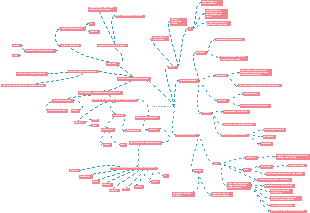
MindMap Gallery Costa Rica History Timeline
Discover the rich tapestry of Costa Rica's history, from its diverse Indigenous societies to its emergence as a beacon of democracy and environmental conservation. The timeline unfolds with the Pre-Columbian era, highlighting the cultural crossroads and agricultural advancements of Indigenous groups. Spanish contact leads to early colonial challenges and the gradual consolidation of society. Following independence in 1821, Costa Rica navigates nation-building, the coffee economy, and liberal reforms. The 20th century brings social movements, political upheaval, and the establishment of the Second Republic, marked by demilitarization and human development. Finally, Costa Rica's commitment to environmental conservation and ecotourism emerges, underscoring its unique position in Central America.
Edited at 2026-03-20 01:35:06Discover the fascinating world of integrals, a fundamental concept in calculus that encapsulates the idea of accumulation. This overview explores the core idea behind integrals, distinguishing between definite and indefinite integrals, and illustrating their applications in real-life scenarios like calculating distance, mass, and costs. We delve into the fundamental theorem of calculus, which bridges the gap between accumulation and differentiation. Key properties such as additivity and linearity are highlighted, alongside practical computation methodsboth analytical and numerical. Finally, we address common misconceptions to deepen your understanding. Join us on this journey to appreciate the power of integrals in mathematics and beyond!
Discover the fascinating world of probability, where uncertainty meets mathematical precision. This introduction explores key concepts, starting with definitions and interpretations of probabilityclassical, frequentist, and Bayesian. We delve into fundamental laws, including Kolmogorov's axioms, and essential properties like conditional probability and independence. Learn about the law of total probability and Bayes' theorem, which are crucial for updating beliefs based on new evidence. Finally, connect probability to random variables and distributions, highlighting their significance in real-world applications. Join us on this journey to understand how probability shapes our understanding of chance and decision-making.
Discover the fascinating world of Group Theory, where the elegance of symmetry meets algebraic structures. This branch of mathematics explores how groups model actions that maintain structural integrity, aiming to classify and analyze symmetries across various fields. A group, defined by specific operations and properties, encapsulates transformations that preserve shapes, equations, and more. Key concepts include finite and infinite groups, abelian versus non-abelian structures, and fundamental examples like integers and permutation groups. Group Theory also delves into internal structures like subgroups, normal subgroups, and homomorphisms, providing essential tools for understanding complex symmetry systems. Join us in exploring how this theory formalizes and describes symmetry in both abstract and tangible ways.
Discover the fascinating world of integrals, a fundamental concept in calculus that encapsulates the idea of accumulation. This overview explores the core idea behind integrals, distinguishing between definite and indefinite integrals, and illustrating their applications in real-life scenarios like calculating distance, mass, and costs. We delve into the fundamental theorem of calculus, which bridges the gap between accumulation and differentiation. Key properties such as additivity and linearity are highlighted, alongside practical computation methodsboth analytical and numerical. Finally, we address common misconceptions to deepen your understanding. Join us on this journey to appreciate the power of integrals in mathematics and beyond!
Discover the fascinating world of probability, where uncertainty meets mathematical precision. This introduction explores key concepts, starting with definitions and interpretations of probabilityclassical, frequentist, and Bayesian. We delve into fundamental laws, including Kolmogorov's axioms, and essential properties like conditional probability and independence. Learn about the law of total probability and Bayes' theorem, which are crucial for updating beliefs based on new evidence. Finally, connect probability to random variables and distributions, highlighting their significance in real-world applications. Join us on this journey to understand how probability shapes our understanding of chance and decision-making.
Discover the fascinating world of Group Theory, where the elegance of symmetry meets algebraic structures. This branch of mathematics explores how groups model actions that maintain structural integrity, aiming to classify and analyze symmetries across various fields. A group, defined by specific operations and properties, encapsulates transformations that preserve shapes, equations, and more. Key concepts include finite and infinite groups, abelian versus non-abelian structures, and fundamental examples like integers and permutation groups. Group Theory also delves into internal structures like subgroups, normal subgroups, and homomorphisms, providing essential tools for understanding complex symmetry systems. Join us in exploring how this theory formalizes and describes symmetry in both abstract and tangible ways.
Panama History Timeline: Colonial Past, Panama Canal, and Global Trade
Pre-Colonial Panama (Before 1501)
Indigenous societies (Guna/Kuna, Ngäbe-Buglé, Emberá, Wounaan) develop trade networks linking Caribbean and Pacific coasts
The isthmus functions as a natural land bridge for regional exchange long before European contact
Spanish Contact, Conquest, and the Early Transisthmian Route (1501–1600s)
1501: Rodrigo de Bastidas explores Panama’s Caribbean coast, marking early Spanish reconnaissance
1502: Christopher Columbus visits the Panamanian Caribbean during his fourth voyage, reinforcing Spanish interest
1510: Santa María la Antigua del Darién becomes the first stable Spanish settlement on the American mainland, base for expansion
1513: Vasco Núñez de Balboa crosses the isthmus and reaches the Pacific Ocean, confirming two-ocean strategic value
1519: Panama City (Panamá Viejo) is founded on the Pacific coast, becoming a crucial logistics node
1519: The Camino Real develops as a key overland corridor moving people, silver, and goods between coasts
1520s–1600s: The isthmus anchors Spain’s “transit empire,” funneling Peruvian silver and Pacific goods to the Caribbean for Europe
1520s–1600s: Nombre de Dios, later Portobelo, rise as Caribbean terminals for transisthmian exchange
Piracy, Fortification, and Colonial Trade Hub (1600s–1700s)
1600s: Trade wealth draws privateers and pirates, prompting Spanish defensive measures
1671: Henry Morgan sacks Panama City (Panamá Viejo), devastating the settlement and exposing route vulnerability
1673: Panama City is refounded at Casco Antiguo/Casco Viejo with improved defenses
Late 1600s–1700s: Spain fortifies approaches, especially around Portobelo, to protect treasure routes
Late 1600s–1700s: Portobelo fairs and the transisthmian route remain integral to Atlantic–Pacific imperial commerce
Decline of Spanish Imperial Routes and Independence Era (Late 1700s–1821)
Late 1700s: Administrative and trade-system shifts reduce the centrality of the Portobelo fair system over time
1821: Panama declares independence from Spain and joins Gran Colombia, aligning with regional independence movements
Panama in Colombia, Global Transit Ambitions, and the Railroad (1821–1880s)
1830s: After Gran Colombia dissolves, Panama remains part of New Granada (later Colombia), governed from afar while retaining transit value
1846: Mallarino–Bidlack Treaty grants the U.S. rights of transit and growing influence
1848–1855: California Gold Rush boosts demand for rapid Atlantic–Pacific transit, elevating Panama’s global movement role
1855: Panama Railroad completed, linking coasts and accelerating global trade routes
1855: Railroad becomes a corridor for passengers, mail, and high-value cargo, industrializing the transit zone
French Canal Attempt and the Case for a Sea-Level Shortcut (1880–1902)
1881: French-led canal effort under Ferdinand de Lesseps begins, aiming to replicate Suez
1880s–1890s: Engineering challenges (terrain, rainfall, landslides) and disease (yellow fever, malaria) cripple progress
1880s–1890s: Financial and political scandals erupt in France; the project collapses after heavy losses
Late 1890s–1902: Excavation and surveys persist, informing later plans and reinforcing Panama’s shipping centrality
Separation from Colombia and U.S. Canal Construction (1903–1914)
1903: Panama separates from Colombia, forming the Republic of Panama
1903: Hay–Bunau-Varilla Treaty creates the U.S.-controlled Canal Zone with broad build/admin rights
1904: U.S. takes over assets and launches a major engineering campaign
1904: Mosquito control and sanitation reduce yellow fever and malaria, enabling sustained construction
1906: Lock-based canal design is confirmed over sea-level approach, shaping feasibility
1914: Panama Canal opens, creating a transformative Atlantic–Pacific shortcut
1914: Shorter routes reduce time and cost, reshaping shipping patterns and elevating Panama as a maritime chokepoint
Canal Zone Era, Global Conflict, and Trade Expansion (1914–1960s)
1914–1918: World War I highlights canal significance for naval logistics and supply chains
1930s–1940s: Canal grows in importance to U.S. defense planning and hemispheric security
1939–1945: World War II intensifies defenses and operations; canal remains critical for naval and merchant movement
Post-1945: Expanding commerce and early containerization trends reinforce commercial relevance as ship sizes evolve
Nationalism, Sovereignty Disputes, and Treaty Negotiations (1960s–1977)
1964: Flag and sovereignty disputes trigger major unrest (Flag Riots/Martyrs’ Day), catalyzing negotiations
Late 1960s–1970s: Panama increases diplomatic pressure, framing the canal as a national and regional sovereignty issue
1977: Torrijos–Carter Treaties set transfer timeline and neutrality framework ensuring continued global access
Transition to Panamanian Control and New Trade Realities (1978–1999)
1979: Canal Zone abolished; administrative transition begins under treaty timetable
1980s: Operations continue under U.S. administration with growing Panamanian participation and handover preparation
1989: U.S. invasion (Operation Just Cause) topples Manuel Noriega; canal operations remain a core strategic concern
1994: Panama Canal Authority (ACP) established as an autonomous operator to manage operations and modernization planning
1999: Panama assumes full control on December 31, completing treaty transfer and starting sovereign management
Panama Canal Under ACP: Modernization, Expansion, and Global Supply Chains (2000–2015)
2000s: ACP professionalizes management, invests in upgrades, and positions the canal as a competitive transit service
2000s: National logistics economy deepens via ports, banking, and free-trade zones complementing canal trade
2006: Referendum approves canal expansion to accommodate larger vessel classes
2007: Expansion construction begins with new locks and widened channels
2015: Expansion nears completion; carriers prepare for “New Panamax” deployment, reshaping trade lanes
Expanded Canal Era and Contemporary Challenges in Global Trade (2016–Present)
2016: Expanded canal opens with new lock complexes, increasing capacity and allowing much larger ships
2016: Trade impact expands container flows, LNG movements, and diversified cargo routing between Asia, U.S. East Coast, and beyond
Late 2010s–2020s: Investments in digitalization, scheduling, and water-management efficiency to sustain reliability
2023–2024: Severe drought reduces freshwater for locks, causing transit restrictions, higher costs, and queues
2023–2024: Global trade response includes rerouting, inventory adjustments, and renewed focus on chokepoint resilience
Ongoing: Balancing competitiveness with sustainability and long-term water security as the foundation of future canal operations