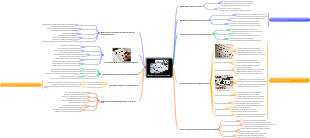
MindMap Gallery Modern Poetry Explained
How to Identify Tragic Flaw and Fate in Any Shakespearean Tragedy is an analytical toolkit for drama enthusiasts, students, and performers exploring the driving forces behind Shakespeare's tragic masterpieces. This framework explores six dimensions: Takeaway Summary captures the dual action of flaw and fate. Key Characteristics examines hamartia's definition and operation, plus fate, destiny, and supernatural elements—supernatural appearances, paradoxes, inevitability's emergence, responsibility's awakening. The Interplay reveals tragedy born from fatal collision between character flaw and external destiny. Illustrative Examples analyze Lear, Macbeth, Hamlet, Othello. Shakespearean Techniques explores Soliloquy, dramatic irony, omens intensifying tragic effect. Major Themes & Supporting Roles examines power, madness, jealousy, ambition, plus fools, messengers, prophets' functions. This guide penetrates surface plots to reach tragic engines, revealing why These four hundred-year-old works still move us to tears and thought.
Edited at 2026-03-20 01:39:03Mappa mentale per il piano di inserimento dei nuovi dipendenti nella prima settimana. Strutturata per giorni: Giorno 1 – benvenuto, configurazione strumenti, presentazione team. Secondo giorno – formazione su policy aziendali e obiettivi del ruolo. Terzo giorno – affiancamento e primi task guidati. Il quarto giorno – riunioni con dipartimenti chiave e feedback intermedio. Il quinto giorno – revisione settimanale, definizione obiettivi a breve termine e integrazione culturale.

Mappa mentale per l’analisi della formazione francese ai Mondiali 2026. Punti chiave: attacco stellare guidato da Mbappé, con triplice minaccia (profondità, taglio, sponda). Criticità: centrocampo poco creativo – la costruzione offensiva dipende dagli attaccanti che arretrano. Difesa solida (Upamecano, Saliba, Koundé). Portiere Maignan. Variabili: gestione infortuni e condizione fisica dei big. Ideale per scout, giornalisti e tifosi.
Mappa mentale per il piano di inserimento dei nuovi dipendenti nella prima settimana. Strutturata per giorni: Giorno 1 – benvenuto, configurazione strumenti, presentazione team. Secondo giorno – formazione su policy aziendali e obiettivi del ruolo. Terzo giorno – affiancamento e primi task guidati. Il quarto giorno – riunioni con dipartimenti chiave e feedback intermedio. Il quinto giorno – revisione settimanale, definizione obiettivi a breve termine e integrazione culturale.
Mappa mentale per l’analisi della formazione francese ai Mondiali 2026. Punti chiave: attacco stellare guidato da Mbappé, con triplice minaccia (profondità, taglio, sponda). Criticità: centrocampo poco creativo – la costruzione offensiva dipende dagli attaccanti che arretrano. Difesa solida (Upamecano, Saliba, Koundé). Portiere Maignan. Variabili: gestione infortuni e condizione fisica dei big. Ideale per scout, giornalisti e tifosi.
Modern Poetry Explained
Definition & Scope
What “modern” means in poetry
Late 19th to mid-20th century origins, with continued influence today
Reaction against established poetic conventions (Victorian, Romantic, classical forms)
Core aims
Capture modern life’s speed, fragmentation, uncertainty
Prioritize authenticity of voice and perception over inherited rules
Historical & Cultural Context
Industrialization and urbanization
New city rhythms, crowds, technology, alienation
World events
World War I and II shaping disillusionment and trauma
Political upheaval, shifting social orders
Intellectual currents
Freud and the unconscious
Einstein and destabilized “certainty”
Anthropology and cross-cultural myth/ritual influences
Key Shifts from Traditional Poetry
From fixed forms to flexible structures
Reduced reliance on strict meter and end-rhyme
Emphasis on organic shape: form grows from content
From elevated diction to everyday speech
Colloquial language, slang, direct address
From linear narratives to fragmented perception
Juxtaposition, montage, non-sequiturs
From public rhetoric to interiority
Stream of consciousness, psychological realism
Modern poetry shifts toward flexibility, everyday language, fragmentation, and inner life.
Experimentation with Form
Breaking or bending traditional patterns
Slant rhyme and near-rhyme
Variable line lengths and irregular stanzas
Disrupted syntax and unconventional punctuation
Visual and spatial design on the page
Enjambment used to create surprise or tension
White space as silence, pause, or fragmentation
Shaped poems and typographic play (in some modernist/avant-garde work)
Fragmentation and collage
Multiple voices, quotations, allusions
Abrupt shifts in scene, time, or tone
Parataxis: placing elements side-by-side without explicit connection
Novel structures
Prose poems (poetic intensity without line breaks)
Sequence poems and long poems built from linked parts
Dramatic monologues adapted to modern settings
Free Verse (Vers Libre)
What free verse is (and is not)
Not “no rules,” but “different rules”
Freedom from fixed meter and rhyme schemes
Still shaped by patterning: rhythm, repetition, syntax, imagery
How free verse creates musicality
Cadence based on natural speech
Repetition (anaphora, refrains, parallelism)
Line breaks controlling breath and emphasis
Sound devices beyond rhyme
Alliteration, assonance, consonance
Internal rhyme, echoes, sonic clusters
The line break as a key tool
Meaning shifts at the turn (end-of-line pivot)
Enjambment to propel momentum or create ambiguity
End-stopped lines for finality or punch
Free verse vs. blank verse
Free verse: variable rhythm
Blank verse: unrhymed but metered (often iambic pentameter)
Meter, Rhythm, and “Hidden” Structure
Retained or modified meter
Accented verse: counting stresses instead of syllables
Mixed meters within a poem for emotional effect
Rhythmic strategies
Syncopation: expected beats disrupted
Caesura: internal pauses to shape pacing
Breath-based lines (projective/organic approaches)
Why modern poets still care about form
Constraint and freedom as complementary forces
Form as meaning: structure reflects theme (fracture, speed, doubt)
Language & Imagery Innovations
Precision and compression
Dense images, fewer explanatory transitions
Imagism and clarity
Concrete detail over abstract commentary
“Show” through sensory scenes
Symbolism and ambiguity
Suggestive images that resist single interpretation
Metaphor and associative logic
Leap-based connections (surreal or intuitive)
Defamiliarization: making the familiar strange
Voice, Persona, and Perspective
Shifts in speaker and stance
Persona poems: speaker not identical to poet
Unreliable or fractured speakers
Multiplicity of voices
Polyphony: several perspectives within one piece
Found text, quotation, and pastiche
Tone experiments
Irony, understatement, satire
Sudden tonal pivots (comic to tragic, intimate to distant)
Themes Common in Modern Poetry
Alienation and isolation
Anxiety, uncertainty, and disillusionment
Urban life and technology
Time, memory, and consciousness
Identity, gender, race, and social change (in later modern and modern-influenced work)
Spiritual doubt and the search for meaning
Major Movements & Approaches (Overview)
Modernism
Fragmentation, allusion, mythic method, formal innovation
Imagism
Exact image, concise language, musical phrasing without strict meter
Surrealism and experimental avant-garde currents
Dream logic, unexpected juxtapositions, subconscious imagery
Confessional and post-war developments (modern-influenced)
Intensified personal voice, psychological candor
Techniques to Notice When Reading
Form and layout
Stanza patterns (or lack thereof)
Line length variation and white space
Sound and rhythm
Repetition, internal rhyme, sonic textures
Pace changes via punctuation and line breaks
Syntax and grammar
Inversions, fragments, long cumulative sentences
Strategic ambiguity: unclear antecedents, open-ended references
Imagery and symbolism
Recurring motifs, emblematic objects, sensory anchors
Allusion and intertextuality
References to myth, religion, literature, history, pop culture
How allusions create layered meaning or critique tradition
How Modern Poetry “Works” (Meaning-Making)
Indirection and implication
Meaning emerges from juxtaposition rather than explanation
Reader participation
Gaps invite inference and multiple interpretations
Unity through recurrence
Patterns of image, sound, or structure bind fragments together
Tension as a feature
Contradictions and unresolved endings reflect modern experience
Practical Reading Strategy (Step-by-Step)
First pass: surface understanding
Identify speaker, setting, and basic situation
Note emotional temperature (calm, urgent, bitter, playful)
Second pass: form and movement
Track shifts in thought at line breaks and stanza turns
Mark repetition and sonic effects
Third pass: imagery and associations
List key images; ask what they suggest and how they evolve
Notice contrasts and surprising pairings
Fourth pass: synthesis
Propose a central tension or question the poem explores
Connect form choices to theme (why fragmentation? why open ending?)
Common Misconceptions
“Free verse is random”
Free verse often has strong internal patterning and deliberate architecture
“If it’s unclear, it’s meaningless”
Difficulty can signal layered thinking, ambiguity, or emotional complexity
“Modern poetry rejects beauty”
Beauty may appear as precision, intensity, or honest disruption—not only harmony
Modern poetry is crafted, not chaotic; difficulty can be meaningful; beauty can be redefined.
Simple Examples of Formal Experiment (Conceptual)
Enjambment-driven suspense
Line breaks delaying key words to create surprise or double meaning
Repetition creating structure
A repeated phrase acting like a refrain in otherwise free verse
Fragment collage effect
Short, discontinuous images that accumulate into a mood or argument
Why It Matters
Expanded the possibilities of poetic expression
Reflected and shaped modern sensibilities in art and culture
Influenced contemporary spoken word, lyric essays, and hybrid forms