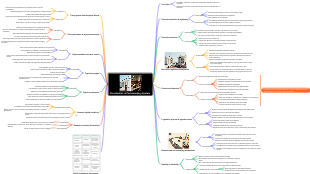
Core Idea
Focus
How executive and legislative branches are formed, empowered, and constrained
How authority is separated vs fused, and how accountability is enforced
Key Questions
Who selects the executive, and how can they be removed?
How are laws initiated, negotiated, and passed?
What happens when branches disagree (deadlock vs dissolution)?
Executive Selection & Legitimacy
Presidential System
Selection
President elected independently from the legislature (directly or via an electoral college)
Mandate
Separate democratic legitimacy for president and legislature
Term
Fixed term (generally not dependent on legislative confidence)
Parliamentary System
Selection
Executive (Prime Minister) emerges from the legislature
Head of government typically chosen by parliamentary majority/coalition
Mandate
Government’s legitimacy derives from maintaining legislative confidence
Term
Flexible term; government continues as long as it retains confidence
Presidential elections create dual mandates with fixed tenure; parliamentary governments derive legitimacy from (and can fall by) legislative confidence.
Executive Structure & Leadership
Presidential System
Head of State vs Head of Government
Usually combined in the President
Cabinet
Appointed by president; often not members of the legislature
Executive Authority
President is chief executive with independent powers defined by constitution
Parliamentary System
Head of State vs Head of Government
Typically separated (ceremonial monarch/president vs Prime Minister)
Cabinet
Cabinet ministers commonly drawn from parliament
Cabinet is collectively responsible to parliament
Executive Authority
Executive power exercised by the cabinet/PM as long as confidence is maintained
Relationship Between Executive and Legislature
Separation vs Fusion of Powers
Presidential System
Separation of personnel and survival
Executive and legislature serve independently; neither depends on the other for tenure
Checks and balances substitute for direct confidence mechanisms
Parliamentary System
Fusion of powers
Executive is embedded in and typically controls legislative agenda through majority
Confidence relationship creates direct accountability
Day-to-Day Governance
Presidential System
Negotiation between branches is required; party alignment matters but is not guaranteed
Gridlock possible when branches are controlled by different parties
Parliamentary System
If majority exists, government can usually pass its program efficiently
Minority governments require continuous negotiation with other parties
Legislative Agenda & Lawmaking
Presidential System
Bill Initiation
Legislators introduce bills; executive may propose agendas but often cannot directly introduce legislation (varies by country)
Passage Dynamics
Laws must pass through legislature; president may have veto or signature authority
Bargaining occurs across institutions
Veto Power
Often strong (full or partial veto in some systems), with possible override thresholds
Parliamentary System
Bill Initiation
Government commonly introduces most bills
Passage Dynamics
Party discipline often ensures passage if government holds majority
Government scheduling control is typically strong
Upper Chambers/Second Houses
Can revise/delay depending on design; usually less able to permanently block a majority government
Presidential lawmaking is cross-institution bargaining with veto points; parliamentary lawmaking is agenda-led by the government when majority/discipline holds.
Accountability & Removal Mechanisms
Presidential System
Removal of Executive
Impeachment or constitutional removal for legal/constitutional violations
Political dissatisfaction typically addressed via elections, not confidence votes
Legislative Accountability
Legislature accountable through elections; executive cannot dissolve legislature in most designs
Parliamentary System
Removal of Executive
Vote of no confidence or loss of confidence (explicit or constructive in some systems)
Leadership challenges within governing party may replace PM without a general election
Dissolution / Early Elections
Executive may request dissolution; rules vary (PM discretion vs fixed-term constraints)
Elections, Timing, and Political Incentives
Presidential System
Election Timing
Separate elections for executive and legislature (often staggered)
Incentives
Candidate-centered campaigns; personalization of executive power
Potential for divided government
Parliamentary System
Election Timing
Parliamentary elections determine government formation
Early elections possible depending on constitutional rules
Incentives
Party-centered competition; coalition bargaining central in multiparty settings
Party System Effects
Presidential System
Party Discipline
Often weaker legislative discipline; individual legislators may act independently
Coalition Management
Cross-party bargaining is needed; coalition building may be informal or transactional
Risk Profile
Polarization can yield sustained gridlock due to fixed terms and mutual veto points
Parliamentary System
Party Discipline
Often stronger; government survival depends on cohesive voting
Coalition Governments
Common in multiparty systems
Coalition agreements shape policy platforms and cabinet distribution
Government Stability
Can be stable with strong majority; can be unstable with fragmented coalitions
Deadlock, Crisis Management, and Stability
Presidential System
Deadlock Sources
Divided government, bicameralism, strong judicial review, vetoes
Resolution Channels
Inter-branch bargaining, court rulings, or waiting for next election cycle
Stability Tradeoff
Institutional stability via fixed terms
Policy instability can occur via executive orders and subsequent reversals
Parliamentary System
Deadlock Sources
Hung parliaments, coalition breakdowns, intra-party splits
Resolution Channels
Confidence votes, government reshuffles, coalition renegotiation, early elections
Stability Tradeoff
Policy can be enacted quickly with majority
Government turnover can be frequent in fragmented systems
Checks and Balances vs Responsible Government
Presidential System
Checks and Balances
Multiple veto points: bicameral legislature, presidential veto, judicial review, federalism (where applicable)
Oversight Tools
Hearings, investigations, budget control, confirmations (varies)
Parliamentary System
Responsible Government
Executive is accountable to parliament; can be removed politically
Oversight Tools
Question time, committees, interpellations, votes of confidence, inquiries
Constraints Beyond Parliament
Courts, constitutional limits, coalition partners, second chambers, subnational governments
Budgetary and Fiscal Powers
Presidential System
Budget Process
Often requires negotiation between executive proposal and legislative appropriation
Shutdown/Impasse Risk
Higher likelihood of budget standoffs due to separated mandates
Parliamentary System
Budget Process
Government typically controls budget drafting; passage is a confidence matter in many systems
Impasse Risk
Lower if majority; can trigger government fall if budget defeated
Role of the Head of State
Presidential System
President as Head of State
Symbolic and political leadership combined
International Representation
Often primary representative in foreign affairs
Parliamentary System
Separate Head of State
Monarch or ceremonial president performs symbolic/constitutional duties
Reserve Powers (in some systems)
Limited discretion to appoint PM, dissolve parliament, or refuse dissolution under exceptional conditions
Typical Strengths and Weaknesses (Tradeoffs)
Presidential System
Strengths
Clear executive mandate and leadership visibility
Fixed terms can reduce frequent government collapses
Strong separation can prevent rapid concentration of power
Weaknesses
Higher risk of institutional gridlock
Winner-take-all executive contests can intensify polarization
Removal mechanisms are often blunt (impeachment vs elections)
Parliamentary System
Strengths
Efficient lawmaking when majority exists
Flexible replacement of ineffective leaders without full constitutional crisis
Direct political accountability through confidence mechanism
Weaknesses
Potential for unstable coalition governments and frequent elections
Strong party discipline can reduce independent legislative scrutiny
Executive dominance possible when majority is large (“elective dictatorship” critique)
Common Variations and Hybrids
Semi-Presidential Systems
Dual executive
President plus Prime Minister sharing executive authority
Cohabitation
President and parliamentary majority from different parties can shift real power to PM
Parliamentary with Strong Presidents (Ceremonial vs Active)
Some parliamentary republics grant presidents limited but meaningful discretionary powers
Presidential with Parliamentary-like Features
Strong parties, coalition cabinets, or legislative confidence-like practices in some contexts
Quick Comparison Summary (Executive–Legislative Power)
Presidential System
Executive derives authority from separate election
Executive and legislature survive independently
Removal via impeachment/constitutional process
Higher likelihood of deadlock; stronger institutional checks
Parliamentary System
Executive derives authority from legislative majority/coalition
Executive depends on legislative confidence
Removal via no-confidence/party leadership change; early elections possible
Typically smoother lawmaking with majority; risk of government turnover in fragmented parliaments
 Wondershare EdrawMind