MindMap Gallery Are Online Degrees Credible
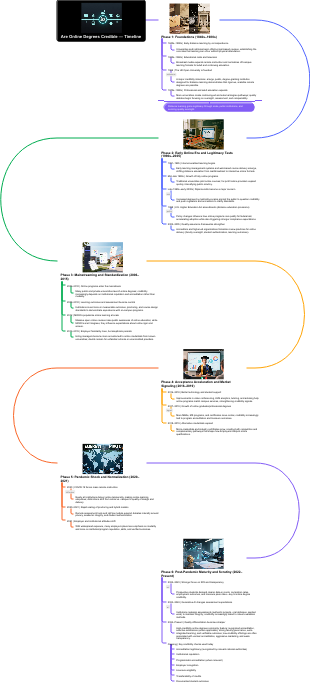
Are Online Degrees Credible is a comprehensive guide for students, working professionals, and education advisors, understanding the recognition, influencing factors, and selection strategies for online degrees. This framework explores six core dimensions: Background解析 online degrees completed remotely—credibility determined by institutional reputation, accreditation status, academic quality, and learning outcomes. Academic Rigor & Learning Quality阐释 what makes an online degree “real”: curriculum equivalent to traditional programs, faculty credentials, interaction depth, assessment standards, student support services. Choosing a Legitimate Online Program provides decision framework: verify accreditation (regional vs national vs programmatic), research institutional reputation, review curriculum and faculty, investigate graduate outcomes, watch for diploma mill warning signs. Recognition Beyond Accreditation explores additional dimensions: institutional reputation, program rankings, alumni networks, employer partnerships, professional association recognition. Employment Impact analyzes how employers evaluate online degrees: traditional university online programs generally well-received; standalone online institution acceptance varies; practical skills and experience often weighted equally; verifiable credentials enhance competitiveness. Practical Ways to Strengthen Credibility offers actionable advice: choose programs from established universities, prioritize regionally accredited institutions, build portfolio during studies, pursue internships, articulate learning experience in interviews. International Recognition explores credential evaluation services (e.g., WES), and varying visa/employment policies across countries. This guide enables systematic grasp of online degree evaluation frameworks, empowering informed choices aligned with personal goals and market recognition.
Edited at 2026-03-20 01:41:02Mappa mentale per il piano di inserimento dei nuovi dipendenti nella prima settimana. Strutturata per giorni: Giorno 1 – benvenuto, configurazione strumenti, presentazione team. Secondo giorno – formazione su policy aziendali e obiettivi del ruolo. Terzo giorno – affiancamento e primi task guidati. Il quarto giorno – riunioni con dipartimenti chiave e feedback intermedio. Il quinto giorno – revisione settimanale, definizione obiettivi a breve termine e integrazione culturale.

Mappa mentale per l’analisi della formazione francese ai Mondiali 2026. Punti chiave: attacco stellare guidato da Mbappé, con triplice minaccia (profondità, taglio, sponda). Criticità: centrocampo poco creativo – la costruzione offensiva dipende dagli attaccanti che arretrano. Difesa solida (Upamecano, Saliba, Koundé). Portiere Maignan. Variabili: gestione infortuni e condizione fisica dei big. Ideale per scout, giornalisti e tifosi.
Mappa mentale per il piano di inserimento dei nuovi dipendenti nella prima settimana. Strutturata per giorni: Giorno 1 – benvenuto, configurazione strumenti, presentazione team. Secondo giorno – formazione su policy aziendali e obiettivi del ruolo. Terzo giorno – affiancamento e primi task guidati. Il quarto giorno – riunioni con dipartimenti chiave e feedback intermedio. Il quinto giorno – revisione settimanale, definizione obiettivi a breve termine e integrazione culturale.
Mappa mentale per l’analisi della formazione francese ai Mondiali 2026. Punti chiave: attacco stellare guidato da Mbappé, con triplice minaccia (profondità, taglio, sponda). Criticità: centrocampo poco creativo – la costruzione offensiva dipende dagli attaccanti che arretrano. Difesa solida (Upamecano, Saliba, Koundé). Portiere Maignan. Variabili: gestione infortuni e condizione fisica dei big. Ideale per scout, giornalisti e tifosi.
Student Visa Process Explained
Overview
Purpose
Obtain legal permission to study in a foreign country
Align admission, funding, and compliance requirements before travel
Typical timeline (high-level)
Choose program & country → Apply to school → Receive acceptance → Prepare visa documents → Submit application → Biometrics/interview → Decision → Pre-departure steps → Arrival & compliance
Common Student Visa Categories (summary)
Degree/Full-time study visas
Used for undergraduate/graduate/full-time academic programs
Usually tied to an accredited institution and a fixed program duration
Short-term study visas
For short courses, language programs, exchange visits of limited duration
Often has stricter limits on work rights and extensions
Exchange/visiting student visas
Sponsored by home/host institutions or exchange programs
May require specific sponsor letters and mobility agreements
Vocational/technical training visas
For non-academic career programs, apprenticeships, technical institutes
Often requires evidence of practical training structure
Language study visas
For intensive language courses
May require proof of course intensity and attendance monitoring
Pathway/conditional admission visas
For foundation, bridging, pre-master’s, preparatory programs
May require proof of progression arrangements
Dependent/family accompaniment categories (related)
For spouse/children under student’s status (where allowed)
Additional financial and documentation requirements
Visa types vary mainly by program duration, sponsor structure, and allowed work/dependent rights.
Step-by-Step Student Visa Application Process
Step 1: Confirm eligibility and select the right visa type
Check
Program length and level (short course vs degree)
Institution accreditation/recognition by immigration authorities
Whether the visa permits part-time work, internships, or post-study options
Validate you meet core criteria
Genuine study intent
Financial capacity
Language or academic prerequisites (if required)
No disqualifying immigration/criminal history
Step 2: Secure admission from the institution
Submit school application
Academic records, transcripts, test scores, essays, references
Receive acceptance proof
Offer letter / admission letter / enrollment confirmation (country-specific)
Pay required deposits (if applicable)
Tuition deposit, housing deposit, enrollment confirmation fees
Step 3: Prepare financial plan and evidence
Estimate total cost of attendance
Tuition and fees
Living expenses (country-specific benchmarks)
Health insurance (if mandatory)
Books/supplies, local transport, initial setup
Provide proof of funds
Personal bank statements showing sufficient balances and history
Sponsor/parent funds with relationship evidence
Scholarship/assistantship award letters
Loan approvals from recognized lenders
Demonstrate funds are accessible and credible
Clear source of funds (salary, savings history, asset liquidation documentation)
Avoid unexplained large deposits without paper trail
Step 4: Gather required documents (core set)
Identity & travel
Valid passport (valid beyond intended stay; check required buffer)
Passport photos meeting specific size/background rules
Admission/enrollment
Official acceptance/enrollment confirmation
Course details: start/end dates, hours, program level
Financial
Bank statements, sponsor letters, scholarship letters, loan documents
Proof of income (pay slips, tax documents) for sponsors (if used)
Academic and language
Transcripts, diplomas, certificates
Standardized tests (if required)
Language proficiency results (if required)
Immigration forms
Completed visa application form(s)
Declarations, consent forms, travel history (as required)
Medical & insurance
Health insurance certificate (if required)
Medical exam results (if required)
Vaccination records (if required)
Police/security
Police clearance certificate (if required)
Intent and ties (where required)
Study plan or statement of purpose
Evidence of ties to home country (employment, family, property) when relevant
Additional supporting evidence (optional but helpful)
Accommodation proof (dorm booking/lease)
Previous visas and travel stamps
Resume/CV (especially for graduate/professional programs)
Portfolio (for design/arts programs)
Step 5: Translate, certify, and format documents
Translation rules
Use certified translators when required
Include translator certification/affidavit if needed
Notarization/legalization (if required)
Notary copies, apostille, or embassy legalization depending on country
Formatting
File naming conventions, PDF limits, scan clarity, color scans when needed
Keep originals ready for interview or arrival checks
Step 6: Create online account and complete the visa application
Enter details accurately
Personal info, passport data, travel history
Education background and planned institution
Funding and sponsor details
Upload documents and verify completeness
Pay visa fees
Application fee
Biometrics fee (if separate)
Service center fee (if applicable)
Submit application and note reference numbers
Step 7: Biometrics appointment (if required)
Provide fingerprints and photo at a visa application center
Bring
Appointment confirmation
Passport
Required receipts and document checklist
Step 8: Interview preparation (if required)
Common interview focus areas
Why this program/school/country
Funding sources and affordability
Academic background and progression logic
Career plan after study
Ties to home country (where relevant)
Strong interview practices
Consistent answers with documents
Clear, concise explanation of study plan and finances
Avoid contradictions about intent, work plans, or funding
Step 9: Application processing and possible requests
Processing
Varies widely by country, season, and background checks
Additional document requests (RFEs)
Provide quickly with clear labeling and explanations
Administrative/security checks
May extend timeline; keep travel plans flexible
Step 10: Decision and post-decision actions
If approved
Receive visa sticker/entry clearance or approval letter (format varies)
Review conditions
Validity dates, number of entries
Work limits
Institution reporting/attendance rules
Plan travel within permitted entry window
If refused
Identify refusal reasons
Insufficient funds, weak study intent, missing documents, credibility concerns
Options
Reapply with stronger evidence
Appeal or administrative review (if available)
Defer admission intake if timing is tight
Required Documents (Detailed Checklist)
Passport & photos
Passport bio page scan + original passport
Photos meeting exact specifications
Institutional documents
Acceptance/offer letter
Enrollment confirmation / sponsorship code or certificate (if applicable)
Tuition payment receipts or deposit confirmation (if applicable)
Academic calendar and program outline (helpful)
Financial evidence
Bank statements (typically recent months)
Bank balance certificates (if accepted)
Fixed deposits/investments (with liquidation terms)
Scholarship letters (full terms: amount, duration, conditions)
Student loan sanction letter and disbursement schedule
Sponsor letter (who pays, relationship, commitment)
Sponsor income proof (tax returns, pay slips, business registration)
Academic history
Transcripts and diplomas
School leaving certificates (if relevant)
Gap explanations (if there are study/work gaps)
CV/resume (especially for postgraduate)
Language proficiency
Test scores (IELTS/TOEFL/etc.) if required
Waiver letter if exemption is granted (if applicable)
Intent/supporting statements
Statement of purpose/study plan
Research proposal (for research degrees, if required)
Career plan and evidence of industry relevance (optional)
Compliance and background
Police clearance certificate (if required)
Previous visa refusal records (if asked) with explanations
Military service records (if required by country)
Medical/insurance
Medical exam results (panel physician where required)
Insurance policy proof (country-specific)
Travel and accommodation (sometimes required/optional)
Flight itinerary (avoid non-refundable bookings until approval)
Housing confirmation or address plan
Approval Steps (How Decisions Are Made)
Completeness check
All mandatory fields completed
Required documents uploaded/received
Fees paid and biometrics captured
Eligibility assessment
Enrollment at eligible institution
Financial sufficiency meets required thresholds
Academic preparedness for program level
Credibility and intent assessment
Consistency across application, interview, and documents
Genuine student assessment (where applicable)
Risk evaluation for overstaying/non-compliance
Security and background checks
Criminal, immigration, and security screening
Verification calls/emails to banks, schools, employers (possible)
Final determination
Approval with conditions
Request for more information
Refusal with stated grounds (varies in detail by country)
Key Considerations (Critical to Success)
Timing and intake planning
Apply early (peak seasons can delay processing)
Align visa timeline with program start date and housing deadlines
Keep buffer for document procurement (police/medical can take time)
Financial credibility
Show stable, traceable funds
Match funds to required cost coverage period (first year vs entire program)
Avoid inconsistent sponsor narratives or unclear funding sources
Accuracy and consistency
Names, dates, and addresses must match across documents
Disclose prior refusals or overstays when asked
Ensure translations match originals precisely
Work rights and restrictions
Understand hourly limits during term and full-time breaks
Know rules for internships, placements, and self-employment
Avoid violating conditions before or after arrival
Health insurance and medical requirements
Purchase correct coverage type and duration if mandatory
Complete medical exams only with approved providers when required
Dependents and family planning
Check eligibility rules for bringing dependents
Budget for higher financial requirements
Schooling/childcare and insurance considerations
Travel and entry rules
Entry window and port-of-entry documentation
Carry printed copies of key documents for arrival
After-arrival compliance
Register address/residence if required
Maintain enrollment and attendance
Renew/extend before expiry if continuing studies
Common Reasons for Refusal (and How to Reduce Risk)
Insufficient or unverifiable funds
Provide complete bank histories, sponsor income proof, loan details
Weak study rationale or unclear academic progression
Write a coherent study plan tied to prior education and goals
Inconsistent information or document credibility issues
Double-check all entries; avoid altered/unclear documents
Poor interview performance (where applicable)
Practice concise explanations of program choice and finances
Missing documents or incorrect formats
Follow checklists, translation rules, and upload requirements
Immigration history concerns
Explain prior travel/overstays honestly with evidence where possible
Practical Tips and Best Practices
Build a “master file”
One folder for originals; one for scanned PDFs; consistent naming
Use a document checklist and deadline tracker
Include medical, police, translations, biometrics, interview date
Avoid non-refundable bookings pre-approval
Flights and housing deposits should be flexible when possible
Keep copies of everything submitted
PDFs, receipts, appointment confirmations, reference numbers
Prepare an arrival pack
Passport, visa/approval letter, school acceptance, financial proof, housing address, emergency contacts
Glossary (Common Terms)
Acceptance/Offer Letter
Official confirmation of admission from the institution
Enrollment Confirmation / Certificate of Eligibility / Sponsorship Code
Country-specific document enabling visa application
Biometrics
Fingerprints and photo collected for identity verification
RFE / Additional Document Request
Request from the visa office for more evidence before a decision
Conditions of Stay
Rules attached to the visa (work limits, attendance, reporting)