
MindMap Gallery Java集合框架导图
Unlock the power of Java with the Collections Framework! This comprehensive guide covers the essentials of storing and manipulating groups of objects efficiently. Start with an overview of its purpose and core interfaces like Iterable, Collection, List, Set, Queue, Deque, and Map. Explore various List implementations, including ArrayList, LinkedList, Vector, Stack, and CopyOnWriteArrayList, each with unique characteristics and use cases. Delve into Set implementations like HashSet, LinkedHashSet, TreeSet, EnumSet, and CopyOnWriteArraySet, focusing on their distinct features and applications. This framework not only enhances your coding efficiency but also provides reusable data structures and algorithms, ensuring your Java applications are robust and scalable.
Edited at 2026-03-20 03:56:50小紅書(RED)における「草もみ」から購買への転換パスを徹底分析しました。まず、コンテンツの露出や認知段階に焦点を当て、最適な露出チャネルやアルゴリズム推薦の重要性を探ります。続いて、ユーザーの関与を促進する要素や、コメントやQ&Aによる信頼構築について考察。購買段階では、シームレスな決済体験や主要決済手段との連携が鍵となります。最後に、購入後のUGC生成やハッシュタグキャンペーンによるブランド資産の構築についても触れます

Naver Shoppingの転換ファネル分析図は、顧客の購買プロセスを深く理解するための重要なツールです。まず、流入・集客フェーズでは、検索トラフィックやコンテンツディスカバリーを通じてユーザーを引き寄せます。次に、関心・検討フェーズでは、コンテンツとコマースの融合を活用し、情報比較を促進します。意思決定・転換フェーズでは、購入障壁の除去や決済の利便性を重視し、リピート購入を促進する保持・拡散フェーズでは、ユーザー生成コンテンツの循環を通じて新たな顧客を引き込む仕組みを構築しています
WooCommerceの転換パス最適化は、オンラインストアの成長を促進するための重要な戦略です。このプロセスは、集客からリテンションまでの各フェーズにおいて、効果的な施策を展開します。まず、集客・流入フェーズでは、SEOや有料広告を活用し、ランディングページの最適化を行います。次に、閲覧・検討フェーズでは、商品ページの改善と社会的証明を強調します。カート投入フェーズでは、放棄率を抑制し、決済・チェックアウトフェーズでは簡素化を図ります。購入完了後は、リテンション施策を通じて顧客を再度呼び戻し、データ分析を通じて継続的な改善を実施します
小紅書(RED)における「草もみ」から購買への転換パスを徹底分析しました。まず、コンテンツの露出や認知段階に焦点を当て、最適な露出チャネルやアルゴリズム推薦の重要性を探ります。続いて、ユーザーの関与を促進する要素や、コメントやQ&Aによる信頼構築について考察。購買段階では、シームレスな決済体験や主要決済手段との連携が鍵となります。最後に、購入後のUGC生成やハッシュタグキャンペーンによるブランド資産の構築についても触れます
Naver Shoppingの転換ファネル分析図は、顧客の購買プロセスを深く理解するための重要なツールです。まず、流入・集客フェーズでは、検索トラフィックやコンテンツディスカバリーを通じてユーザーを引き寄せます。次に、関心・検討フェーズでは、コンテンツとコマースの融合を活用し、情報比較を促進します。意思決定・転換フェーズでは、購入障壁の除去や決済の利便性を重視し、リピート購入を促進する保持・拡散フェーズでは、ユーザー生成コンテンツの循環を通じて新たな顧客を引き込む仕組みを構築しています
WooCommerceの転換パス最適化は、オンラインストアの成長を促進するための重要な戦略です。このプロセスは、集客からリテンションまでの各フェーズにおいて、効果的な施策を展開します。まず、集客・流入フェーズでは、SEOや有料広告を活用し、ランディングページの最適化を行います。次に、閲覧・検討フェーズでは、商品ページの改善と社会的証明を強調します。カート投入フェーズでは、放棄率を抑制し、決済・チェックアウトフェーズでは簡素化を図ります。購入完了後は、リテンション施策を通じて顧客を再度呼び戻し、データ分析を通じて継続的な改善を実施します
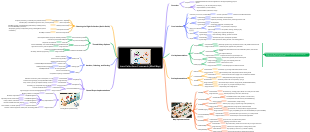
Java Collections Framework Mind Map
Overview
Purpose
Standardized APIs for storing and manipulating groups of objects
Reusable data structures and algorithms (sort, search, shuffle, etc.)
Core Interfaces
Iterable
Enables enhanced for-loop (for-each)
Collection
Basic operations: add, remove, size, contains, iterator
List
Ordered collection (preserves insertion order)
Allows duplicates
Index-based access (get/set by index)
Set
No duplicates (based on equals/hashCode or comparator)
May or may not be ordered depending on implementation
Queue
Typically FIFO processing
Specialized for holding elements prior to processing
Deque
Double-ended queue (FIFO or LIFO)
Supports stack and queue operations
Map (not a subtype of Collection)
Key-value association
Unique keys, values can repeat
List Implementations
ArrayList
Structure
Resizable array
Characteristics
Fast random access: O(1) get/set
Amortized O(1) append (add at end)
Insert/remove in middle: O(n) due to shifting
Allows null elements
Not thread-safe
Use Cases
Frequent reads / index-based access
Append-heavy workloads
When size changes but mostly grows at end
Notes
Prefer initial capacity to reduce resizing
LinkedList
Structure
Doubly-linked list
Implements List and Deque
Characteristics
Access by index: O(n)
Insert/remove at ends: O(1)
Insert/remove in middle: O(1) once node found (finding is O(n))
Allows null
Not thread-safe
Use Cases
Frequent insertions/removals at head/tail
Queue/Deque usage (offer/poll/peek)
Notes
Usually worse cache locality than ArrayList
Vector (legacy)
Characteristics
Synchronized (thread-safe via coarse locking)
Similar to ArrayList but slower under contention
Use Cases
Legacy codebases requiring Vector API
Notes
Prefer ArrayList + external synchronization or concurrent collections
Stack (legacy)
Characteristics
Extends Vector; synchronized
LIFO operations: push/pop/peek
Use Cases
Legacy stack usage
Notes
Prefer Deque (ArrayDeque) for stack behavior
CopyOnWriteArrayList (concurrent)
Structure
Copy-on-write array on mutation
Characteristics
Reads are lock-free and very fast
Writes are expensive (copy entire array)
Iterators are snapshot-based (no ConcurrentModificationException)
Allows null
Use Cases
Many readers, few writers
Listener lists, configuration snapshots
Notes
Not suitable for frequent updates or large lists
Lists trade random-access speed (ArrayList) vs end-operations (LinkedList/Deque) vs concurrency read-optimization (CopyOnWrite), with legacy types mostly for compatibility.
Set Implementations
HashSet
Backing
HashMap
Characteristics
No ordering guarantees
Average O(1) add/remove/contains
Allows one null element
Depends on correct hashCode/equals
Use Cases
Fast membership checks
De-duplication without ordering
Notes
Performance degrades with poor hashing or many collisions
LinkedHashSet
Backing
LinkedHashMap
Characteristics
Preserves insertion order
Average O(1) operations
Allows one null
Use Cases
De-duplication while preserving insertion order
Stable iteration order for predictable output
TreeSet
Backing
TreeMap (Red-Black tree)
Characteristics
Sorted set (natural order or Comparator)
O(log n) add/remove/contains
Does not allow null (when using natural ordering; generally avoid null)
Use Cases
Need sorted unique elements
Range queries (subSet, headSet, tailSet)
Notes
Elements must be mutually comparable
EnumSet
Characteristics
Specialized for enum types
Very memory-efficient (bit vector)
Extremely fast operations
No nulls
Use Cases
Sets of enum flags (permissions, states)
Notes
Prefer over HashSet for enums
CopyOnWriteArraySet (concurrent)
Backing
CopyOnWriteArrayList
Characteristics
Same trade-offs: fast reads, expensive writes
No duplicates, allows null depending on underlying list behavior (commonly avoid)
Use Cases
Many reads, few writes; small set of listeners
Queue / Deque Implementations
ArrayDeque
Structure
Resizable circular array
Characteristics
Very fast for stack/queue operations
O(1) amortized offer/poll/peek at both ends
No null elements allowed
Not thread-safe
Use Cases
Preferred stack replacement (push/pop)
High-performance FIFO queue in single-threaded contexts
Notes
Generally faster than LinkedList for Deque
PriorityQueue
Structure
Binary heap
Characteristics
Orders by priority (natural order or Comparator)
O(log n) offer/poll, O(1) peek
No null elements
Iteration order is not sorted
Not thread-safe
Use Cases
Scheduling, top-K, Dijkstra/A* frontiers
Anytime you need repeated “get smallest/largest”
Notes
Use reversed comparator for max-heap behavior
ConcurrentLinkedQueue (concurrent)
Characteristics
Lock-free, non-blocking FIFO
Weakly consistent iterators
No nulls
Use Cases
High-concurrency producer/consumer where blocking not needed
ConcurrentLinkedDeque (concurrent)
Characteristics
Lock-free deque
No nulls
Use Cases
Work-stealing queues, concurrent double-ended access
BlockingQueue (interface family)
Purpose
Producer-consumer with blocking put/take
ArrayBlockingQueue
Bounded, array-based
Optional fairness
Use Cases: fixed-capacity pipelines, backpressure
LinkedBlockingQueue
Optionally bounded, linked-node based
Typically higher throughput, more memory overhead
Use Cases: thread pools, task handoff
PriorityBlockingQueue
Unbounded, priority-ordered
Use Cases: prioritized task processing
DelayQueue
Elements become available after delay (Delayed)
Use Cases: time-based scheduling, caches with expiry
SynchronousQueue
No internal capacity; handoff directly between threads
Use Cases: direct handoff, cached thread pools
LinkedTransferQueue
Supports transfer (producer waits for consumer if desired)
Use Cases: high-throughput messaging/handoffs
BlockingDeque
LinkedBlockingDeque
Bounded/unbounded blocking deque
Use Cases: task queues with both-end operations
Map Implementations
HashMap
Characteristics
Average O(1) get/put/remove
No ordering guarantees
Allows one null key, multiple null values
Not thread-safe
Use Cases
General-purpose key-value storage
Fast lookups by key
Notes
Requires stable hashCode/equals for keys
Good for caches if eviction not needed (otherwise consider LinkedHashMap)
LinkedHashMap
Characteristics
Preserves insertion order or access order (configurable)
Slightly more overhead than HashMap
Allows null key/values
Use Cases
Predictable iteration order
LRU cache implementation (access-order + removeEldestEntry)
TreeMap
Characteristics
Sorted by key (natural or Comparator)
O(log n) operations
Does not allow null keys (generally)
Allows null values
Use Cases
Sorted key traversal
Range queries (subMap, headMap, tailMap)
Hashtable (legacy)
Characteristics
Synchronized, coarse-grained locking
No null keys or values
Use Cases
Legacy compatibility only
Notes
Prefer ConcurrentHashMap for concurrency
ConcurrentHashMap (concurrent)
Characteristics
Thread-safe with high concurrency (fine-grained/lock-striping-like behavior)
No null keys or values
Weakly consistent iterators
High-performance under contention
Use Cases
Shared maps in concurrent applications
Caches, counters, registries
Notes
Use computeIfAbsent/merge for atomic updates
WeakHashMap
Characteristics
Keys held with weak references
Entries removed when keys are no longer strongly reachable (GC-driven)
Allows null key/value
Use Cases
Caches where keys should not prevent GC
Metadata associations without memory leaks
Notes
Not predictable timing of removals
IdentityHashMap
Characteristics
Compares keys by reference (==) not equals()
Allows null key/value
Use Cases
Object graph traversal, serialization frameworks
When identity semantics are required
EnumMap
Characteristics
Keys must be enum type
Very fast and memory-efficient (array-based)
No null keys; null values allowed
Use Cases
Replace Map<Enum, V> with best performance
ConcurrentSkipListMap (concurrent)
Characteristics
Concurrent sorted map (skip list)
O(log n) operations
No null keys/values
Use Cases
Concurrent range queries and sorted traversal
Properties (legacy-ish specialization)
Characteristics
Extends Hashtable; String-to-String commonly
Supports load/store of configuration
Use Cases
Configuration files (.properties)
Choosing the Right Collection (Decision Guide)
Need fast random access by index
ArrayList
Need many inserts/removes at ends
ArrayDeque (preferred) or LinkedList
Need unique elements, fastest membership checks
HashSet
Need unique elements with stable iteration order
LinkedHashSet
Need unique elements sorted / range queries
TreeSet
Need key-value, fastest general lookups
HashMap
Need key-value with insertion/access order (LRU)
LinkedHashMap
Need key-value sorted / range queries
TreeMap
Need thread-safe key-value map with performance
ConcurrentHashMap
Need producer-consumer blocking
ArrayBlockingQueue / LinkedBlockingQueue / SynchronousQueue (depending on capacity and handoff)
Many readers, rare writers
CopyOnWriteArrayList / CopyOnWriteArraySet
Enum keys or enum sets
EnumMap / EnumSet
Iteration, Ordering, and Null Rules (Common Pitfalls)
Ordering
List: preserves insertion order
HashSet/HashMap: no guaranteed iteration order
LinkedHashSet/LinkedHashMap: insertion or access order
TreeSet/TreeMap: sorted order
PriorityQueue: head is min/max by comparator; iteration not sorted
Null Handling (typical)
Allows nulls
ArrayList, LinkedList, HashMap, LinkedHashMap
Disallows nulls
ArrayDeque, PriorityQueue, ConcurrentHashMap, most concurrent queues
Special
HashSet allows one null
TreeMap/TreeSet typically disallow null keys/elements with natural ordering
equals/hashCode and Comparator consistency
Hash-based collections require consistent equals/hashCode
Sorted collections require comparator consistent with equals to avoid “missing” elements
Performance and Complexity (Typical)
ArrayList
get/set: O(1)
append: amortized O(1)
insert/remove middle: O(n)
LinkedList
get by index: O(n)
add/remove ends: O(1)
HashMap/HashSet
get/put/contains: average O(1), worst O(n)
TreeMap/TreeSet
get/put/contains: O(log n)
PriorityQueue
offer/poll: O(log n), peek: O(1)
ConcurrentHashMap
scalable near O(1) average with contention considerations
Utilities and Helpers
Collections (utility class)
Sorting/shuffling/reversing
Unmodifiable wrappers: unmodifiableList/Set/Map
Synchronized wrappers: synchronizedList/Set/Map
Empty/singleton collections: emptyList, singletonMap
Arrays (utility class)
asList (fixed-size list backed by array)
sort, binarySearch
Immutable collections (Java 9+)
List.of, Set.of, Map.of
Characteristics
Truly immutable, disallow nulls
Use Cases
Constants, safe sharing, defensive copies
Concurrency Notes (Practical Guidance)
Prefer java.util.concurrent over legacy synchronized collections
ConcurrentHashMap vs Hashtable
ArrayDeque/BlockingQueue vs Vector/Stack
Iterators
Fail-fast (most non-concurrent collections): may throw ConcurrentModificationException
Weakly consistent (concurrent collections): reflect some changes without exceptions
Synchronization strategy
Use external locking for compound operations on non-thread-safe collections
Use atomic map methods (compute/merge) in ConcurrentHashMap for correctness