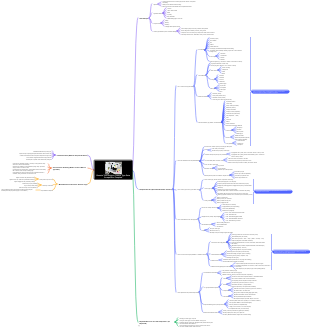
Knowledge Management Theories
Luhmann Zettelkasten
Core concepts
Atomic notes (one idea per note)
Unique IDs and dense linking
Emergent structure (bottom-up)
Writing as thinking (publish from the slip-box)
Practical skills
Creating permanent notes vs. fleeting notes vs. literature notes
Formulating note titles as claims/questions
Linking for reasoning (why/therefore/how)
Developing “lines of thought” (thread notes)
Common pitfalls
Over-indexing/taxonomy obsession
Copying sources without synthesis
Collecting without writing
Learning resources
Books
"How to Take Smart Notes" — Sönke Ahrens
"The Craft of Research" — Booth, Colomb, Williams
Articles/communities
Zettelkasten.de (guides and forum)
Andy Matuschak’s notes (evergreen notes practice)
PARA (Projects, Areas, Resources, Archives)
Core concepts
Outcome-driven organization
Actionability as the organizing principle
Lightweight maintenance (review cycles)
Practical skills
Defining Projects with clear outcomes and deadlines
Maintaining Areas (ongoing responsibilities)
Capturing Resources (reference with retrieval in mind)
Archiving completed/paused items
Best practices
Weekly review of Projects and Areas
“Just-in-time” organization (avoid premature structure)
Learning resources
Tiago Forte’s PARA materials (articles, videos, courses)
Forte Labs blog/newsletter archives
CODE (Capture, Organize, Distill, Express)
Core concepts
Progressive summarization
Knowledge compounding through expression
Turning notes into deliverables
Practical skills
Capture workflows (inbox, quick capture, read-it-later)
Distill methods (highlighting layers, key takeaways, prompts)
Express pipelines (notes → outline → draft → publish)
Learning resources
"Building a Second Brain" — Tiago Forte
Progressive Summarization guides and examples
Theory provides mental models (Zettelkasten), organizational scaffolding (PARA), and an output pipeline (CODE).
Tool Mastery
Core PKM Tooling Principles (tool-agnostic)
Data model understanding
Pages vs. blocks vs. files
Links, backlinks, embeds, transclusion
Metadata (properties/frontmatter), tags, and taxonomies
Workflow design
Capture → process → retrieve → create
Minimizing friction (templates, defaults, hotkeys)
Portability and longevity
Export formats (Markdown, JSON, HTML, CSV)
Backups, versioning, and migrations
Vendor lock-in risk management
Learning resources
“Tools for Thought” ecosystem discussions
Markdown and plain-text workflows documentation
Obsidian (Markdown vault)
Core features to master
Backlinks and graph (use selectively)
Daily notes and periodic notes
Templates, hotkeys, command palette
Search (operators), saved searches
Properties/frontmatter and Dataview concepts
PKM workflows
Zettelkasten-style permanent notes
PARA mapping via folders or tags
Content pipeline folders (Ideas → Drafts → Published)
Advanced skills
Dataview (queries, dashboards)
Canvas (visual synthesis)
Plugins governance (minimal set, evaluate regularly)
Git sync or robust backup strategy
Learning resources
Obsidian Help docs and forum
Obsidian community vault examples
YouTube: channels focused on Obsidian workflows
Notion (database-centric)
Core features to master
Databases (table, board, calendar, timeline)
Properties, filters, sorts, relations, rollups
Views for different contexts (creator, manager, learner)
PKM workflows
PARA as top-level workspace structure
Content calendar with production statuses
Resource library with tagging and retrieval
Advanced skills
Designing scalable schemas (avoid over-relations)
API automations (basic integrations)
Permissions and collaboration (team, community ops)
Learning resources
Notion Help Center and template gallery
Notion creators’ databases (content systems, course ops)
Roam Research (graph + blocks)
Core features to master
Daily notes as the default entry point
Block references and transclusion
Queries and block-level organization
Page linking and aliasing
PKM workflows
Meeting notes → projects → next actions
Evergreen notes via linked pages and block refs
Advanced skills
Query patterns for dashboards
Lightweight taxonomies to prevent chaos
Learning resources
Roam Help and community guides
Example graphs and query libraries
Tool Comparison & Selection Strategy
Decision criteria
Writing-first vs. database-first
Long-term export and ownership
Migration playbooks
Minimal viable structure before moving
Export, clean, import, and validate links
Keep a “tool-neutral” archive in Markdown when possible
Learning resources
Tool comparison essays (Obsidian vs Notion vs Roam)
Data portability guides (Markdown, JSON exports)
Methodology Building (Your PKM System)
System design foundations
Define goals and constraints
Creator goals (publish cadence, niches, products)
Time budget and maintenance tolerance
Input channels (books, papers, podcasts, web)
Define success metrics
Retrieval speed, output rate, insight frequency
Content throughput (ideas → drafts → published)
Audience outcomes (saves, shares, conversions)
Workflow architecture
Capture
Sources: web clipper, read-it-later, highlights, voice notes
Rules: capture only when action or insight is likely
Standard inbox for all inputs
Process (inbox to knowledge)
Triage: delete, defer, taskify, reference, noteify
Convert highlights to notes with your own claims
Assign next action for promising ideas
Organize
PARA/CODE hybrid mapping (choose primary axis)
Naming conventions and templates
Metadata policy (minimal, consistent)
Distill
Progressive summarization layers
“Evergreen note” refinement (make it publishable)
Synthesis notes (maps of content, topic hubs)
Express
Idea backlog and content briefs
Outlining from linked notes
Drafting, editing, publishing, repurposing
Knowledge structures for blogging
Evergreen notes library
Claims, principles, mental models, frameworks
Topic hubs (MOCs)
“PKM for students,” “PKM for creators,” “Tool workflows”
Research dossiers
Annotated bibliographies and source tracking
Experiments log
Hypotheses, setups, results, lessons learned
System maintenance
Review cycles
Daily: capture + next actions
Weekly: projects, content pipeline, backlog grooming
Monthly/quarterly: archive, refactor hubs, audit tooling
Anti-bloat rules
“If not used in 60–90 days, archive or simplify”
Template minimalism and plugin limits
Learning resources
Books
"Atomic Habits" — James Clear (systems thinking)
"The Organized Mind" — Daniel Levitin
Courses/essays
Writing process resources (outlining, editing)
Personal knowledge system case studies from creators
Content Creation (PKM Creator Craft)
Positioning and niche
Audience definition
Beginners (setup and habits)
Intermediate (workflows and frameworks)
Advanced (systems design, research, automation)
Unique point of view
Tool-first vs. theory-first vs. creator-first
“Evidence-backed PKM” vs. “creator workflow PKM”
Content pillars
Theory, tools, workflows, case studies, reviews, templates
Content formats
Long-form blog posts
Pillar articles and evergreen guides
Comparison and decision frameworks
Newsletters
Weekly prompts, curated links, lessons learned
Short-form
Threads, carousels, short videos, tips
Video/streaming
Live vault walkthroughs, setup sessions, Q&A
Podcasts/interviews
Creator workflows and PKM case studies
Editorial workflow
Idea generation
From evergreen notes and recurring questions
From personal experiments and failures
From tool updates and community trends
Planning
Content calendar and production stages
Brief template: problem, promise, outline, examples, CTA
Drafting
Note-driven drafting (links → outline → sections)
“Write to one person” clarity
Editing
Structure pass (logic, flow)
Clarity pass (examples, definitions)
Style pass (voice, concision)
Publishing
SEO basics (search intent, headings, internal links)
Visuals (diagrams, screenshots, templates)
Repurposing
Blog → newsletter → short-form → video script
Build “content atoms” (quotes, frameworks, checklists)
Credibility and research
Source hygiene
Track citations and original links
Distinguish opinion vs evidence
Demonstrations
Real vault/database examples (redacted)
Learning resources
"On Writing Well" — William Zinsser
"Everybody Writes" — Ann Handley
SEO basics: Google Search Central documentation
Course Development (Education Product Skills)
Curriculum design
Define transformation
“From scattered notes → consistent publishing”
“From tool confusion → stable PKM workflow”
Audience level and prerequisites
Learning outcomes (measurable)
Module structure
Concepts → demos → exercises → feedback → iteration
Instructional design
Adult learning principles
Practice-first, examples, templates, scaffolding
Assignments and assessments
Setup checklist, weekly review worksheet
Build a topic hub, publish a post from notes
Cohort vs self-paced
Cohort: accountability, office hours, peer review
Self-paced: clear milestones, automated feedback
Production
Assets
Slides, workbooks, templates, vaults/databases
Example libraries and prompt packs
Recording and editing workflow
Scripts, chapters, audio quality standards
Platform operations
Hosting, payments, access control, updates
Learner support
Office hours and feedback loops
Versioning (course updates with tool changes)
Learning resources
Books
"Understanding by Design" — Wiggins & McTighe
"Made to Stick" — Heath & Heath
Communities
Online course creator communities and teardown content
Community Operations (Audience → Community)
Community strategy
Purpose and promise
Accountability, troubleshooting, co-learning, networking
Ideal member profile and norms
Community structure
Channels by pillar (tools, theory, publishing, wins)
Events calendar (weekly, monthly)
Onboarding and retention
Onboarding flow
Welcome message, rules, starter kit, introductions
“First win” challenge (set up capture + weekly review)
Engagement loops
Prompts, challenges, office hours, co-working sessions
Member progression
Beginner track → intermediate track → contributor track
Moderation and governance
Guidelines and enforcement
Volunteer moderators and roles
Handling spam, conflict, and safety
Programming
Workshops (Obsidian setup, PARA implementation)
Guest sessions (authors, creators, tool builders)
Peer reviews (vault audits, content audits)
Metrics and feedback
Activation rate, participation, retention
Content requests and pain points
Qualitative interviews and surveys
Learning resources
"The Art of Community" — Jono Bacon
"Get Together" — Bailey Richardson et al.
Business Monetization (Sustainable Creator Economy)
Monetization models
Digital products
Templates, vaults/databases, prompt packs
Courses
Self-paced with community add-on
Membership/community subscriptions
Consulting/coaching
PKM system setup, workflow audits, team knowledge ops
Sponsorships and affiliate marketing
Tool affiliates, book affiliates, newsletter sponsors
B2B offerings
Workshops for teams, documentation systems, onboarding PKM
Product development pipeline
Validate
Pain-point research, surveys, pre-sales
Minimum lovable offer (small, specific)
Build
Version 1 templates + quickstart guide
Case studies and implementation examples
Launch
Email sequence, webinar, live demo
Testimonials and social proof
Iterate
Feedback-driven updates and changelogs
Pricing and packaging
Tiering
Free → entry product → flagship → premium support
Guarantees and risk reversal
Value communication
Outcome-based messaging and time saved
Operations
Payment, taxes basics, refunds policy
Customer support and ticket triage
Analytics
Conversion rates, churn, LTV, CAC (if running ads)
Ethics and trust
Disclosure for affiliates/sponsors
Evidence-based claims and honest limitations
Learning resources
Books
"The $100 Startup" — Chris Guillebeau
"Company of One" — Paul Jarvis
Practical
Creator newsletters/podcasts on product launches and pricing
Growth Stages (Skill Progression Ladder)
Stage 1: Foundation (0–4 weeks)
Outcomes
Stable capture and review habit
Basic tool setup and folder/database structure
Focus skills
Publish small notes publicly (micro-content)
Deliverables
A working PKM vault/workspace
Recommended resources
Intro guides for chosen tool
"How to Take Smart Notes" (selected chapters)
Stage 2: System Building (1–3 months)
Outcomes
Repeatable note-to-post pipeline
Clear content pillars and cadence
Focus skills
Distillation and synthesis notes
Editorial workflow templates
Deliverables
A resource library with consistent metadata
Recommended resources
CODE/progressive summarization materials
Writing/editing fundamentals
Stage 3: Authority & Community (3–9 months)
Outcomes
Recognizable point of view
Active community loop (events + engagement)
Focus skills
Case studies and experiments
Community onboarding and programming
Collaboration and guest content
Deliverables
Community space with onboarding kit
Recommended resources
Interview/podcast skills resources
Stage 4: Products & Monetization (6–18 months)
Outcomes
One or more validated paid offers
Sustainable revenue and support ops
Focus skills
Curriculum design and delivery
Launch strategy and pricing
Deliverables
Flagship course or membership
Recommended resources
Instructional design references
Launch case studies and pricing strategy materials
Stage 5: Scale & Specialization (12+ months)
Outcomes
Systems that run with low maintenance
Clear differentiation (research, automation, or niche audience)
Focus skills
Delegation (ops, editing, community moderation)
Advanced workflows/automation
Partnerships and B2B expansion
Deliverables
Enterprise workshops or licensing offers
Recommended resources
Operations and management resources for creators
Resource Library (Curated Learning Paths)
PKM Theory Path
Zettelkasten: Ahrens + Zettelkasten.de + evergreen notes examples
PARA/CODE: Tiago Forte book + articles + practical exercises
Tools Path
Obsidian: docs + templates + Dataview basics
Notion: database design + content system templates
Roam: daily note workflows + queries library
Writing & Publishing Path
Writing craft: Zinsser + Handley
Research and argumentation: "The Craft of Research"
SEO basics: Google Search Central
Teaching & Products Path
Instructional design: Understanding by Design
Messaging/pricing: creator case studies + product teardowns
Community & Business Path
Community: Jono Bacon + Get Together
Creator business: Company of One + launch playbooks
 Wondershare EdrawMind