Wondershare EdrawMind
MindMap Gallery Loki Multiverse Timeline Map
Loki Multiverse Timeline Map
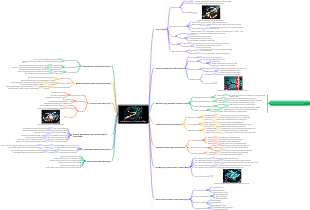
This analysis explores the intricate world of the Loki Multiverse Timeline Map, where every choice creates new realities, offering a comprehensive framework for understanding the complex temporal dynamics that define one of the Marvel Cinematic Universe’s most conceptually rich narratives. It provides valuable insights into the mechanisms of branching timelines, the enforcement of temporal order, and the philosophical implications of infinite possibility. The guide delves into core concepts that underpin the multiverse framework. Timelines represent the linear progression of events within a given reality. Branches emerge when events diverge from a predetermined path, creating new timelines that coexist alongside their origin. Nexus Events are the critical moments of divergence—choices, accidents, or interventions that create branches significant enough to threaten the stability of the Sacred Timeline. The analysis explores the Sacred Timeline and its controlled paths, a construct maintained by the Time Variance Authority (TVA) to prevent the proliferation of branches that could lead to multiversal war. The Sacred Timeline is not a single thread but a designated set of permitted outcomes, within which minor variations may occur without triggering intervention. Variants are individuals whose actions deviate from their prescribed path, creating branches that require correction. The multiverse’s vastness encompasses the infinite realities that exist beyond the Sacred Timeline—some pruned, some hidden, some waiting to be discovered. Visual elements on the timeline map illustrate the complexities of temporal branching. Branch lines represent diverging paths, their thickness and angle suggesting the significance of the deviation. Pruning markers indicate points where timelines have been erased or “pruned” by TVA intervention, removing branches deemed dangerous to the Sacred Timeline’s integrity. Control nodes represent points of enforcement—where the TVA monitors, evalu
Edited at 2026-03-25 03:36:23
- New Employee First - week Onboarding Plan
Mappa mentale per il piano di inserimento dei nuovi dipendenti nella prima settimana. Strutturata per giorni: Giorno 1 – benvenuto, configurazione strumenti, presentazione team. Secondo giorno – formazione su policy aziendali e obiettivi del ruolo. Terzo giorno – affiancamento e primi task guidati. Il quarto giorno – riunioni con dipartimenti chiave e feedback intermedio. Il quinto giorno – revisione settimanale, definizione obiettivi a breve termine e integrazione culturale.
- Analisi del campo di allenamento inglese
Mappa mentale per l’analisi della formazione francese ai Mondiali 2026. Punti chiave: attacco stellare guidato da Mbappé, con triplice minaccia (profondità, taglio, sponda). Criticità: centrocampo poco creativo – la costruzione offensiva dipende dagli attaccanti che arretrano. Difesa solida (Upamecano, Saliba, Koundé). Portiere Maignan. Variabili: gestione infortuni e condizione fisica dei big. Ideale per scout, giornalisti e tifosi.
- Analisi della lineup francese
Mappa mentale per l’analisi della formazione francese ai Mondiali 2026. Punti chiave: attacco stellare guidato da Mbappé, con triplice minaccia (profondità, taglio, sponda). Criticità: centrocampo poco creativo – la costruzione offensiva dipende dagli attaccanti che arretrano. Difesa solida (Upamecano, Saliba, Koundé). Portiere Maignan. Variabili: gestione infortuni e condizione fisica dei big. Ideale per scout, giornalisti e tifosi.
Loki Multiverse Timeline Map
- New Employee First - week Onboarding Plan
Mappa mentale per il piano di inserimento dei nuovi dipendenti nella prima settimana. Strutturata per giorni: Giorno 1 – benvenuto, configurazione strumenti, presentazione team. Secondo giorno – formazione su policy aziendali e obiettivi del ruolo. Terzo giorno – affiancamento e primi task guidati. Il quarto giorno – riunioni con dipartimenti chiave e feedback intermedio. Il quinto giorno – revisione settimanale, definizione obiettivi a breve termine e integrazione culturale.
- Analisi del campo di allenamento inglese
Mappa mentale per l’analisi della formazione francese ai Mondiali 2026. Punti chiave: attacco stellare guidato da Mbappé, con triplice minaccia (profondità, taglio, sponda). Criticità: centrocampo poco creativo – la costruzione offensiva dipende dagli attaccanti che arretrano. Difesa solida (Upamecano, Saliba, Koundé). Portiere Maignan. Variabili: gestione infortuni e condizione fisica dei big. Ideale per scout, giornalisti e tifosi.
- Analisi della lineup francese
Mappa mentale per l’analisi della formazione francese ai Mondiali 2026. Punti chiave: attacco stellare guidato da Mbappé, con triplice minaccia (profondità, taglio, sponda). Criticità: centrocampo poco creativo – la costruzione offensiva dipende dagli attaccanti che arretrano. Difesa solida (Upamecano, Saliba, Koundé). Portiere Maignan. Variabili: gestione infortuni e condizione fisica dei big. Ideale per scout, giornalisti e tifosi.
- Recommended to you
- Outline