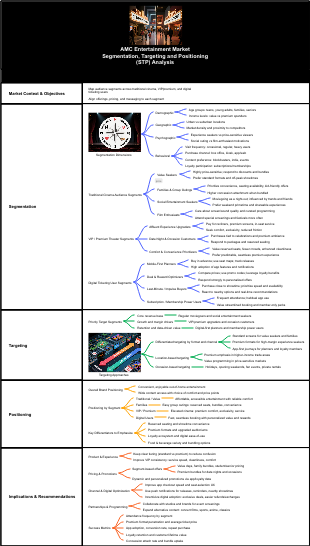
MindMap Gallery AT&T Market Segmentation, Targeting and Positioning Analysis
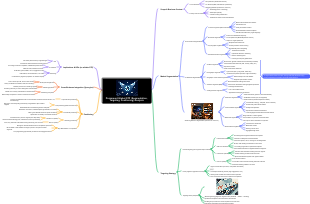
Unlock the secrets of AT&T's strategic marketing with our comprehensive analysis of Market Segmentation, Targeting, and Positioning (STP). This report delves into core markets such as Enterprise (B2B), Consumer Wireless (B2C), and Broadband (Fixed Internet). We identify distinct customer groups based on actionable needs, prioritize segments by attractiveness, and clarify value propositions. Explore detailed segmentation within the Enterprise market, covering firmographics, needs-based insights, technographics, behavioral patterns, and value-based motivations. Additionally, gain insights into Consumer Wireless segmentation, including demographics, geographic preferences, psychographics, and behavioral traits. Join us in understanding how AT&T tailors its offerings to meet diverse customer demands effectively.
Edited at 2026-03-25 14:59:34Discover how Aeon can navigate the competitive online landscape with a strategic SWOT analysis. This comprehensive overview highlights Aeon’s strengths, such as its strong brand recognition, omnichannel capabilities, and customer loyalty programs, alongside its weaknesses, including digital maturity gaps and cost structure challenges. Opportunities for growth include enhancing e-commerce competitiveness and leveraging data-driven strategies, while threats from online-first players and market dynamics require attention. Explore how Aeon can strengthen its market position through innovation and customer-centric approaches in the ever-evolving retail environment.

Discover how Aeon effectively tailors its offerings to meet the diverse needs of family-oriented consumers through a comprehensive Segmentation, Targeting, and Positioning (STP) analysis. Our approach begins with demographic segmentation, examining family life stages, household sizes, income levels, and parent age bands to identify distinct consumer groups. Geographic segmentation highlights store catchment types and community characteristics, while psychographic segmentation delves into family values and lifestyle orientations. Behavioral segmentation focuses on shopping missions, price sensitivity, and channel preferences. Finally, needs-based segmentation reveals core family needs related to value and budget considerations. Join us as we explore these insights to enhance family shopping experiences at Aeon.
Discover the dynamics of sneaker transactions with our Kream Sneaker Consumption Scene Analysis Template. This comprehensive framework aims to visualize the purchasing and consumption journeys of sneakers, identifying key demand drivers and obstacles. It covers user behavior within Kream and external influences, targeting various sneaker categories over specific timeframes and regions. The analysis defines user segments, including collectors, resellers, sneakerheads, casual trend followers, and gift purchasers, each with unique values and KPIs. It outlines the consumption journey from awareness to resale, highlighting critical touchpoints such as search, purchase, inspection, and sharing experiences. Key performance indicators are established to measure engagement and satisfaction throughout the process. Join us in exploring the intricate world of sneaker trading!
Discover how Aeon can navigate the competitive online landscape with a strategic SWOT analysis. This comprehensive overview highlights Aeon’s strengths, such as its strong brand recognition, omnichannel capabilities, and customer loyalty programs, alongside its weaknesses, including digital maturity gaps and cost structure challenges. Opportunities for growth include enhancing e-commerce competitiveness and leveraging data-driven strategies, while threats from online-first players and market dynamics require attention. Explore how Aeon can strengthen its market position through innovation and customer-centric approaches in the ever-evolving retail environment.
Discover how Aeon effectively tailors its offerings to meet the diverse needs of family-oriented consumers through a comprehensive Segmentation, Targeting, and Positioning (STP) analysis. Our approach begins with demographic segmentation, examining family life stages, household sizes, income levels, and parent age bands to identify distinct consumer groups. Geographic segmentation highlights store catchment types and community characteristics, while psychographic segmentation delves into family values and lifestyle orientations. Behavioral segmentation focuses on shopping missions, price sensitivity, and channel preferences. Finally, needs-based segmentation reveals core family needs related to value and budget considerations. Join us as we explore these insights to enhance family shopping experiences at Aeon.
Discover the dynamics of sneaker transactions with our Kream Sneaker Consumption Scene Analysis Template. This comprehensive framework aims to visualize the purchasing and consumption journeys of sneakers, identifying key demand drivers and obstacles. It covers user behavior within Kream and external influences, targeting various sneaker categories over specific timeframes and regions. The analysis defines user segments, including collectors, resellers, sneakerheads, casual trend followers, and gift purchasers, each with unique values and KPIs. It outlines the consumption journey from awareness to resale, highlighting critical touchpoints such as search, purchase, inspection, and sharing experiences. Key performance indicators are established to measure engagement and satisfaction throughout the process. Join us in exploring the intricate world of sneaker trading!
AT&T Market Segmentation, Targeting and Positioning (STP) Analysis
Scope & Context
Core markets examined
Enterprise (B2B)
Consumer Wireless (B2C)
Broadband (Fixed Internet)
Key STP objectives
Identify distinct customer groups with actionable needs
Prioritize segments by attractiveness and strategic fit
Clarify differentiated value propositions and messaging by segment
Market Segmentation
Enterprise (B2B) Segmentation
Firmographics
Company size
SMB (small and medium businesses)
Mid-market
Large enterprise
Global/Multinational accounts
Industry vertical
Healthcare
Financial services
Retail & eCommerce
Manufacturing & logistics
Public sector (federal/state/local)
Education
Media & entertainment
Energy & utilities
Geography
Domestic single-region
Multi-region national
International operations
Needs-based / Jobs-to-be-done
Secure connectivity (site-to-site, remote access)
Mobility management (device, app, policy)
Cloud connectivity (direct links, hybrid networking)
IoT connectivity and device lifecycle management
Cybersecurity (network, endpoint, identity)
Collaboration/communications (UC, voice, conferencing)
Business continuity and resiliency (redundancy, SLAs)
Technographic
IT maturity
Basic IT (outsourced, limited in-house staff)
Developing IT (some internal capability)
Advanced IT (in-house network/security teams)
Architecture orientation
On-prem heavy
Hybrid cloud
Cloud-first
Stack preferences
Microsoft-centric vs multi-vendor ecosystems
SD-WAN adoption readiness
Behavioral
Buying center complexity (single decision-maker vs committee-led)
Procurement model
Contract-based negotiated pricing
Channel/partner-led purchasing
Support expectations
Standard support
Premium managed services
Dedicated account teams
Innovation adoption
Early adopters (5G/edge/IoT pilots)
Pragmatists (proven ROI first)
Value-based
Price-sensitive cost optimizers
Reliability/SLA-driven operators
Security-risk averse buyers
Growth/innovation-led digital transformers
Consumer Wireless (B2C) Segmentation
Demographic
Age/life stage
Teens & students
Young professionals
Families with children
Empty nesters
Seniors
Income/affordability
Value seekers
Mid-tier mainstream
Premium spenders
Geographic
Urban/suburban/rural coverage priorities
Regional network performance differences and perceptions
Psychographic
Tech enthusiasts (early 5G device upgraders)
Practical reliability seekers
Budget-conscious planners
Entertainment-centric users (streaming-first)
Security/privacy-conscious users
Behavioral
Usage intensity
Light data users
Average users
Heavy data users (streaming, gaming, hotspot)
Switching behavior
Deal switchers (promo-driven)
Loyalists (sticky due to service/bundles)
Purchase channel preference
Online-first
Retail store preference
Authorized retailers
Plan preference
Unlimited plans
Prepaid
Family/multi-line plans
Device preference
Premium flagship
Midrange
BYOD (bring your own device)
Needs-based
Network reliability and coverage
Predictable pricing and bill clarity
Family controls and safety features
Device financing and upgrade flexibility
Bundled services (home internet, content, perks)
International roaming and travel add-ons
Broadband (Fixed Internet) Segmentation
Geographic/availability-led
Fiber-available households
Non-fiber households (DSL/fixed wireless/cable competitor areas)
New-build developments vs legacy neighborhoods
Household demographics
Single-person households
Families with multiple concurrent users
Multi-dwelling units (MDUs: apartments/condos)
Needs-based
Work-from-home reliability (video conferencing, VPN)
High bandwidth for streaming and gaming
Low latency use cases (gaming, real-time collaboration)
Whole-home Wi‑Fi coverage and managed Wi‑Fi
Simple install and rapid time-to-activate
Transparent pricing, minimal fees, easy cancellation
Behavioral
Churn propensity
Promo-sensitive switchers
Experience-driven loyalists
Support expectations
Self-service digital support
White-glove installation and on-site support
Bundling behavior
Internet-only
Internet + wireless bundle seekers
Technographic
Smart home adoption (security cams, IoT devices)
Gamer/streamer households with high-performance equipment
Remote worker households with managed/security needs
Segmentation is structured by who the customer is (profile), what they need (jobs), how they buy/use, and what value they prioritize—across B2B, wireless, and fixed internet.
Segment Attractiveness (Evaluation Criteria)
Market size and growth rate
Wireless penetration and upgrade cycles
Fiber expansion footprint and take-rate potential
Enterprise digital transformation and managed services growth
Profitability drivers
ARPU potential (premium plans, multi-line, managed services)
Cost-to-serve (support intensity, install complexity)
Lifetime value and churn risk
Competitive intensity
Wireless: national carrier competition and MVNO pressure
Broadband: cable incumbents and alternative access (fixed wireless)
Enterprise: multi-vendor telecom and IT services competition
Strategic fit
Network assets and coverage strengths
Fiber build economics and density advantages
Ability to bundle across wireless + broadband
Partnerships/ecosystem leverage (devices, cloud, security vendors)
Risk and constraints
Coverage gaps affecting perception
Buildout timelines and capex requirements
Regulatory and public-sector procurement complexity
Service quality variability across markets
Targeting Strategy
Enterprise (B2B) Targeting
Priority targets
Large enterprise and public sector requiring
High-reliability connectivity with SLAs
Managed network/security services
Multi-site WAN/SD-WAN transformations
Mid-market growth companies seeking
Simplified managed solutions
Scalable mobility + connectivity bundles
Vertical-led targets where compliance/security is critical
Healthcare, finance, government, education
IoT-heavy industries (logistics, manufacturing, utilities)
Targeting approach
Account-based marketing (ABM)
Vertical solutions teams and consultative selling
Channel partners for SMB reach
Land-and-expand
Start with connectivity → add security/IoT/managed services
Offer bundling and packaging
Connectivity + security bundles (managed firewall, SASE concepts)
Mobility + device management packages
Private networking/5G solutions for campuses and factories
Consumer Wireless (B2C) Targeting
Priority targets
Families/multi-line households
Emphasis on multi-line savings, reliability, safety features
Premium unlimited customers
High data usage, device upgrades, premium perks
Value-focused segments
Prepaid and promotional switchers with clear pricing
BYOD switchers
Lower acquisition friction, faster conversion
Targeting approach
Tiered plan architecture
Good/Better/Best unlimited tiers
Promotions aligned to segment
Trade-in offers for premium upgraders
Multi-line discounts for families
BYOD credits for switchers
Channel strategy
Digital-first acquisition for value/BYOD
Retail-assisted for families and device financing
Broadband Targeting
Priority targets
Fiber-available households
High-value users: WFH professionals, gamers, streamers
Households dissatisfied with cable pricing/support
MDUs with scalable deployments
Bulk/partner agreements with property managers
Wireless customers with high propensity to bundle
Convergence offers to reduce churn
Targeting approach
Hyperlocal marketing where fiber is present
Simple speed tiers and transparent pricing
Whole-home Wi‑Fi add-ons for coverage pain points
Bundle incentives with wireless plans
Positioning (Value Proposition & Differentiation)
Overall brand positioning themes (cross-market)
Reliable connectivity foundation for work, life, and business operations
Network performance and coverage as core proof points
Simplified plans/pricing and improved customer experience
Converged offerings: wireless + fiber as a unified connectivity ecosystem
Enterprise Positioning
Primary value proposition
Secure, scalable connectivity and managed services for complex operations
Differentiators to emphasize
Network reach and reliability with SLAs
End-to-end portfolio (WAN, mobility, IoT, security, UC)
Vertical expertise and compliance-ready solutions
Dedicated account management and support
Proof points (typical)
Performance metrics (uptime, latency targets, SLAs)
Case studies by industry
Security certifications and compliance capabilities
Positioning by sub-segment
SMB/mid-market
Managed simplicity: turnkey connectivity + security bundles
Large enterprise
Custom engineered: global-scale, resilient architectures
Public sector
Mission-ready: compliance, procurement alignment, resiliency
Consumer Wireless Positioning
Primary value proposition
Dependable wireless with plans that fit families and power users
Differentiators to emphasize
Coverage and reliability in everyday locations
Strong family plan economics and multi-line value
Device upgrade and financing options
Bundle benefits with home internet
Positioning by sub-segment
Families
Stay connected and protected: multi-line savings + controls
Premium users
Peak performance: high-priority data, hotspot, perks
Value seekers
Straightforward value: predictable pricing, no surprises
Switchers/BYOD
Easy to move: seamless transfer, credits, quick activation
Broadband Positioning
Primary value proposition
Fast, reliable home internet—especially where fiber is available
Differentiators to emphasize
Fiber speed, consistency, and lower latency
Whole-home Wi‑Fi solutions
Transparent pricing and easy setup
Bundle savings with wireless service
Positioning by sub-segment
WFH households
Work-grade reliability: stable video calls and VPN performance
Gamers/streamers
Low-latency performance: smooth gaming and 4K streaming
MDUs
Building-wide connectivity: simplified installs and support
Go-to-Market Implications
Product strategy
Clear tiering by performance and value
Modular add-ons
Security, device protection, international, Wi‑Fi management
Converged bundles
Wireless + fiber discounts and unified account management
Pricing and promotions
Segment-specific offers with guardrails to protect margins
Loyalty and retention pricing for high-LTV segments
Transparent fee structures to reduce bill shock
Distribution (channels)
Enterprise direct sales + partners
Consumer mix
Digital acquisition for price/BYOD segments
Retail for complex needs (family setups, device financing)
Broadband local field ops and partner property programs (MDUs)
Messaging and creative
Enterprise
ROI, security, resiliency, compliance, managed outcomes
Consumer wireless
Coverage, reliability, family value, simplicity
Broadband
Fiber performance, Wi‑Fi coverage, WFH readiness, low latency
Customer experience (CX) priorities
Simplify onboarding and activation
Proactive network/service status communication
Strong technical support for broadband installs and Wi‑Fi issues
Enterprise SLA management and escalation paths
Metrics & KPIs by Market
Enterprise
ACV/TCV (contract value), pipeline velocity, win rate
Net revenue retention (NRR), attach rate (security/managed services)
SLA compliance, time-to-install, incident resolution time
Consumer Wireless
Postpaid net adds, churn, ARPU
Upgrade rate, trade-in participation, BYOD mix
Multi-line penetration, bundle rate with broadband
NPS/CSAT by channel
Broadband
Fiber take-rate, net adds, churn
Install cycle time, first-time-right installs
Wi‑Fi add-on adoption, service call rate
Bundle conversion and retention uplift
Key Risks & Mitigations
Network perception gaps in specific regions
Mitigation: localized proof points, targeted investment, transparent coverage tools
Price competition and promo dependency
Mitigation: value-based tiering, loyalty programs, bundle economics
Broadband availability constraints
Mitigation: prioritize high-density builds, MDU partnerships, alternative access where needed
Enterprise complexity and long sales cycles
Mitigation: ABM, vertical plays, packaged solutions for mid-market, strong partner ecosystem
Customer service friction driving churn
Mitigation: digital self-service, proactive support, simplified billing and plan clarity