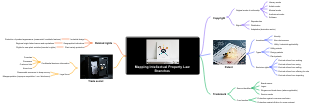
MindMap Gallery comprehensive map of intellectual property law
Unlock the complexities of intellectual property law with our comprehensive guide! This overview covers four main areas: Copyright, Patent, Trademark, and Trade Secret. Delve into Copyright, exploring the subject matter, authorship, exclusive rights, and limitations. Understand Patents, including protectable subjects, patentability requirements, and the application process. Discover Trademarks, focusing on distinctiveness, registration, infringement, and remedies. Finally, learn about Trade Secrets, defining what they protect and their legal implications. This structured map provides a clear pathway through the intricate landscape of intellectual property law, essential for creators, innovators, and businesses alike.
Edited at 2026-04-23 03:28:32Unlock the essentials of Non-Disclosure Agreements (NDAs) with our comprehensive tips! This guide covers critical aspects to ensure your confidential information remains protected. Start by defining what constitutes confidential information, including categories and exclusions. Understand the roles of the disclosing and receiving parties, alongside their obligations, such as use and access limitations. Learn about the NDA's term, permitted disclosures, and what to do with materials upon termination. Explore ownership rights and remedies for breaches, and decide between mutual and one-way agreements. Finally, grasp the importance of governing law and jurisdiction. Safeguard your sensitive information effectively!
Are you aspiring to become a lawyer? The journey begins with understanding the educational requirements, starting with earning a bachelor's degree while building essential skills like writing and critical thinking. Prepare for the LSAT with a solid study plan and utilize various prep resources. When applying to law schools, research programs thoroughly and prepare strong application materials. Once in law school, focus on core courses and practical experiences through internships and clinics. Afterward, navigate the character and fitness review, followed by the bar exam to obtain your license. Finally, commit to ongoing education and choose your specialization to shape your legal career.
Are you considering a career in law? Here's a concise guide on how to obtain a law degree. Start with a pre-law undergraduate education by choosing any major that emphasizes a strong GPA, while honing critical skills such as reading, writing, and debate. Next, explore different types of law degrees, including LLB, JD, and LLM, to find the best fit for your career goals. The law school application process involves selecting target schools, preparing standardized tests, and crafting a compelling application. Once admitted, coursework will cover foundational subjects, and practical experience through clinics and externships is essential. Finally, prepare for degree certification and navigate the licensing steps to embark on your legal career.
Unlock the essentials of Non-Disclosure Agreements (NDAs) with our comprehensive tips! This guide covers critical aspects to ensure your confidential information remains protected. Start by defining what constitutes confidential information, including categories and exclusions. Understand the roles of the disclosing and receiving parties, alongside their obligations, such as use and access limitations. Learn about the NDA's term, permitted disclosures, and what to do with materials upon termination. Explore ownership rights and remedies for breaches, and decide between mutual and one-way agreements. Finally, grasp the importance of governing law and jurisdiction. Safeguard your sensitive information effectively!
Are you aspiring to become a lawyer? The journey begins with understanding the educational requirements, starting with earning a bachelor's degree while building essential skills like writing and critical thinking. Prepare for the LSAT with a solid study plan and utilize various prep resources. When applying to law schools, research programs thoroughly and prepare strong application materials. Once in law school, focus on core courses and practical experiences through internships and clinics. Afterward, navigate the character and fitness review, followed by the bar exam to obtain your license. Finally, commit to ongoing education and choose your specialization to shape your legal career.
Are you considering a career in law? Here's a concise guide on how to obtain a law degree. Start with a pre-law undergraduate education by choosing any major that emphasizes a strong GPA, while honing critical skills such as reading, writing, and debate. Next, explore different types of law degrees, including LLB, JD, and LLM, to find the best fit for your career goals. The law school application process involves selecting target schools, preparing standardized tests, and crafting a compelling application. Once admitted, coursework will cover foundational subjects, and practical experience through clinics and externships is essential. Finally, prepare for degree certification and navigate the licensing steps to embark on your legal career.
Comprehensive Map of Intellectual Property Law
Copyright
Subject matter
Literary, musical, dramatic, artistic works
Software and databases (as applicable)
Audiovisual works, sound recordings, architecture
Exclusions/limits: ideas, facts, procedures; merger/scènes à faire doctrines
Authorship & ownership
Human authorship; joint works; collective works
Works made for hire; assignments; licenses
Duration
Life of the author + term (jurisdiction-specific)
Works made for hire/anonymous/pseudonymous: fixed term from publication/creation
Exclusive rights
Reproduction; distribution; public performance; public display
Preparation of derivative works
Digital/online transmission rights (where recognized)
Moral rights (limited/variable by jurisdiction)
Limitations & exceptions
Fair use/fair dealing
First sale/exhaustion
Library/education exceptions; accessibility exceptions
DMCA/anti-circumvention and safe harbors (where applicable)
Infringement
Copying + protectable expression; substantial similarity
Contributory/vicarious liability; inducement
Remedies: injunctions, damages, statutory damages, attorneys’ fees, impoundment
Patent
Protectable subject matter
Processes, machines, manufactures, compositions of matter
Limitations/exclusions: abstract ideas, laws of nature, natural phenomena (jurisdiction-specific)
Patentability requirements
Novelty
Utility/industrial applicability
Non-obviousness/inventive step
Disclosure: enablement, written description, best mode (where applicable)
Types
Utility patents; design patents/registered designs; plant patents (some jurisdictions)
Application process
Prior art search; drafting (claims/specification/drawings)
Filing: provisional vs non-provisional (US); priority claims
Examination; office actions; amendments; interviews
Publication; grant; maintenance/annuities
Post-grant procedures: opposition, reexamination, IPR (jurisdiction-specific)
Scope & term
Claims define scope; prosecution history/estoppel
Term from filing (commonly), adjustments/extensions (jurisdiction-specific)
Infringement
Literal infringement; doctrine of equivalents (where recognized)
Direct, induced, contributory infringement
Defenses: invalidity, non-infringement, exhaustion, license, experimental use (limited)
Remedies: injunctions, damages/royalties, enhanced damages (willfulness), fees
Trademark
What trademarks protect
Source identifiers: words, logos, slogans
Trade dress (packaging/product design), colors, sounds (as allowed)
Distinctiveness
Spectrum: generic (no protection) → descriptive (secondary meaning) → suggestive → arbitrary/fanciful
Use in commerce; priority (use vs registration systems)
Registration
National/regional filings; classification of goods/services
Examination; opposition; maintenance/renewal
Benefits: presumptions, broader remedies, customs recordation (often)
Infringement
Likelihood of confusion (similarity, channels, strength, intent, actual confusion, etc.)
Initial interest confusion (some jurisdictions); reverse confusion
Dilution
Famous marks: blurring and tarnishment
Defenses/exclusions: fair use, news commentary, noncommercial use (jurisdiction-specific)
Defenses & fair use
Descriptive fair use; nominative fair use
Genericness; abandonment; functionality; parody (limited)
Remedies
Injunctions; damages/accounting of profits; corrective advertising; destruction
Trade Secret
Definition
Information with independent economic value from not being generally known
Reasonable measures to maintain secrecy
Subject matter
Formulas, processes, customer lists, pricing, algorithms, know-how
Protection strategy
NDAs, access controls, segmentation, employee policies, audits
Contracting: confidentiality, invention assignment, non-compete/non-solicit (limits vary)
Misappropriation
Improper acquisition; breach of duty; unauthorized disclosure/use
Inevitable disclosure (recognized in some jurisdictions)
Defenses & limits
Independent development; reverse engineering; lawful acquisition
Loss of secrecy through public disclosure
Remedies
Injunctions; damages/unjust enrichment; reasonable royalty
Seizure/expedited relief in some systems; criminal penalties (jurisdiction-specific)
Overlaps and Contrasts
Copyright vs Patent
Expression vs invention/functionality
Automatic protection vs registration/examination
Longer term vs shorter but stronger exclusionary scope
Trademark vs Copyright
Brand/source identification vs creative expression
Aesthetic functionality and overlapping design protection issues
Trade Secret vs Patent
Secrecy (potentially indefinite) vs disclosure (limited term)
Risk of reverse engineering/independent discovery
Cumulative protection examples
Software: copyright (code), patents (technical inventions), trade secrets (algorithms), trademarks (brand)
Product design: design patents/registered designs, trade dress, copyright (where applicable)
International Treaties and Systems
Berne Convention
National treatment; automatic protection; minimum rights/terms for copyright
Paris Convention
National treatment; right of priority; protection of industrial property
TRIPS (WTO)
Minimum standards across IP; enforcement obligations; dispute settlement framework
WIPO framework
WIPO-administered treaties; harmonization efforts; capacity building
PCT (patent filing system) and Madrid System (trademark) as key filing routes (where applicable)
Cross-border issues
Territoriality; choice of law/jurisdiction
Parallel imports/exhaustion regimes differ by country
Treaties set minimum baselines and filing pathways, but rights/enforcement remain largely territorial.
Enforcement
Civil enforcement (courts)
Preliminary/permanent injunctions; damages; discovery; evidentiary burdens
Venue/jurisdiction; forum selection; arbitration for licensing disputes (sometimes)
Administrative and specialized forums
Trademark oppositions/cancellations; patent office challenges
ITC (US): exclusion orders for import-related patent/trade dress cases
Border measures
Customs recordation; detention/seizure of counterfeit/pirated goods
Coordination with rights holders; notice and takedown/import procedures
Criminal enforcement
Counterfeiting and willful piracy; trade secret theft (jurisdiction-specific)
Online enforcement
Platform notices, repeat infringer policies; domain disputes (e.g., UDRP)
Anti-circumvention enforcement and intermediary liability rules (vary by jurisdiction)
Enforcement spans courts, agencies, borders, and digital platforms, with remedies tailored to the right and forum.