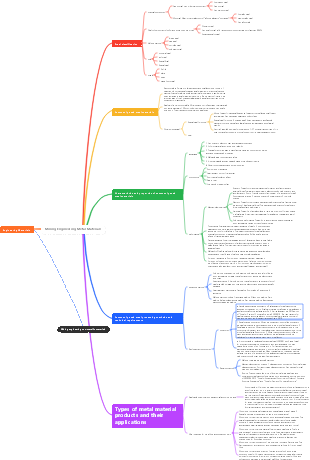
MindMap Gallery Mining engineering non-metallic materials
This is a mind map about non-metallic materials in mining engineering. The main content includes: other non-metallic materials, concrete, and cement.
Edited at 2024-02-04 00:32:28Avatar 3 centers on the Sully family, showcasing the internal rift caused by the sacrifice of their eldest son, and their alliance with other tribes on Pandora against the external conflict of the Ashbringers, who adhere to the philosophy of fire and are allied with humans. It explores the grand themes of family, faith, and survival.

This article discusses the Easter eggs and homages in Zootopia 2 that you may have discovered. The main content includes: character and archetype Easter eggs, cinematic universe crossover Easter eggs, animal ecology and behavior references, symbol and metaphor Easter eggs, social satire and brand allusions, and emotional storylines and sequel foreshadowing.
[Zootopia Character Relationship Chart] The idealistic rabbit police officer Judy and the cynical fox conman Nick form a charmingly contrasting duo, rising from street hustlers to become Zootopia police officers!
Avatar 3 centers on the Sully family, showcasing the internal rift caused by the sacrifice of their eldest son, and their alliance with other tribes on Pandora against the external conflict of the Ashbringers, who adhere to the philosophy of fire and are allied with humans. It explores the grand themes of family, faith, and survival.
This article discusses the Easter eggs and homages in Zootopia 2 that you may have discovered. The main content includes: character and archetype Easter eggs, cinematic universe crossover Easter eggs, animal ecology and behavior references, symbol and metaphor Easter eggs, social satire and brand allusions, and emotional storylines and sequel foreshadowing.
[Zootopia Character Relationship Chart] The idealistic rabbit police officer Judy and the cynical fox conman Nick form a charmingly contrasting duo, rising from street hustlers to become Zootopia police officers!
Mining engineering non-metallic materials
cement
A hydraulic cementitious material made of ground cement clinker, gypsum and mixed materials.
According to usage and performance
Universal cement
It is mainly composed of Portland cement clinker, including: 1 Portland cement: both early strength and late strength are high, the strength increases faster at low temperatures than other types of cement, and has good frost resistance and wear resistance, but High heat of hydration and poor corrosion resistance; 2 Ordinary Portland cement: Except for early strength, which is slightly lower than Portland cement, other properties are close to Portland cement; 3 Slag Portland cement: Low early strength, strength increases in low temperature environment Slow, rapid strength growth in the later period, low heat of hydration; good resistance to sulfate erosion and heat resistance, but large dry shrinkage deformation, large water separation, and poor wear resistance; 4. Pozzolana Portland cement: early strength Low, low temperature environment strength growth is slow, high temperature and humidity environment (steam curing) strength growth is fast, low hydration heat, good resistance to sulfuric acid erosion, but large dry shrinkage deformation, large water separation, poor wear resistance; 5 fly ash silicon Salt salt cement: low early strength, lower heat of hydration than pozzolana cement, good workability, good corrosion resistance, small dry shrinkage, but poor frost resistance and wear resistance; 6 Composite Portland cement: Between 2 and 4, 3 and 5, when there is a small amount of mixed materials (less than 20%), its performance is similar to that of ordinary cement. As the amount of mixed materials increases, its performance also tends to be that of the mixed materials. Material cement.
Performance
Fineness: The finer the cement particle size, the faster the hydration, and the higher the early strength and later strength.
Setting time: divided into two types: initial setting and final setting. The initial setting time should not be too short; the final setting time should not be too long;
Volume stability: refers to the uniformity and appropriateness of volume deformation of cement slurry after hardening. The reason for poor volume stability is due to the presence of free calcium oxide and magnesium oxide in the clinker or excessive addition of gypsum. Products that fail to meet the standards of stability are considered waste products and must not be used.
Strength: According to the strength measured after standard testing and maintenance, it is divided into 32.5~62.5; the 28d compressive strength of 42.5 is ≥42.5mpa
Heat of hydration: The hydration reaction of cement is an exothermic reaction, and the heat released is called heat of hydration, which is beneficial to winter construction and can promote the hydration process of cement.
Special cement
Characteristic cement
Requirements for cement types due to mining conditions
concrete
composition
water
Mix water
drinking water
Surface Water Groundwater: Before first use, should be inspected
Recycled water
Equipment washing water: available, but pay attention to the impact of cement and admixtures contained in the water on concrete, and chlorine and sulfur do not exceed standards
Seawater: can be used for plain concrete, but cannot be used for steel-concrete, prestressed concrete, and concrete with facing requirements.
Aggregate moisture content: When designing the mix ratio, consider the influence of aggregate moisture content
aggregate
Fine aggregate: The sand for concrete is divided into three grading areas according to the 0.63mm sieve hole: Area I is used for concrete with a strength level greater than C60; Area II is used for concrete with C30~C60 and frost resistance, impermeability or other requirements (preparation Concrete should be used first); Zone III is used for concrete and building mortar less than C30. When pumping concrete, medium sand should be used.
Coarse aggregate: gravel, pebbles, continuous particle size is suitable; larger particle size can save cement, but construction is difficult. Regulations: The maximum particle size of stones shall not exceed ¼ of the smallest structural section, the maximum particle size of solid slabs shall not exceed ½, and the particle size shall not exceed 50mm, and the maximum particle size shall not exceed ¾ of the minimum spacing of steel bars.
Cement: Portland cement, ordinary Portland cement, slag Portland cement, pozzolanic Portland cement, fly ash Portland cement, composite Portland cement
Admixture: The dosage generally does not exceed 5% of the cement mass, and the weighing error does not exceed 2% of the specified measurement. a. Improve flow performance: air entraining agent, water reducing agent, pumping agent; b. Adjust setting time and hardening performance: retardant, quick setting agent and early strength agent; c. Improve durability: air entraining agent, waterproofing agent, rust inhibitor; d. Other properties: air-entraining agent, expansion agent, antifreeze agent, different types of admixtures are used in combination, and should be tested to check their compatibility and impact on concrete properties.
Mineral admixtures: replacing part of cement, mainly silica and alumina, ≥5% powder materials with pozzolanic activity
skills requirement
1. Workability
Concept: A comprehensive performance of the mixture that satisfies the convenience of pouring and obtains uniform compactness under certain conditions, and is evaluated by slump. It includes three meanings: 1. Fluidity: the ability of the mixture to flow when subjected to gravity or vibration; 2. Cohesiveness: the ability of the mixture to resist segregation. 3. Water retention: the ability of the water in the mixture to prevent precipitation (bleeding).
Influencing factors: 1. Cement type; 2. Water-cement ratio: too high will reduce the cohesion of the slurry and make it easy to bleed; 3. The amount of cement and water: the amount of water has an important impact on the slump and is the basis for determining its fluidity. Factors; 4. Sand rate: sand: the total mass of the aggregate. If it is too small, the slump will be small and the stones will easily segregate; if it is too high, the mixture will be dry and the slump will also become smaller. The mix ratio adopts a reasonable sand rate and has a maximum slump.
2 intensity
The strength level is determined by the compressive strength value of a 15cm square under standard curing (20±2°C, humidity >95%) for 28 days (indicated by C).
Influencing factors: 1. Basic composition of concrete; 2. Degree of mixing and vibration; 3. Maintenance: covering and watering within 12 hours, watering and curing for not less than 7 days, pozzolana cement, fly ash cement, impermeable concrete, retarder concrete Both are 14d
Measures to improve strength: 1. Increase cement strength grade and reduce water-cement ratio. If the water-cement ratio is lowered and the workability requirements are not met, a water-reducing agent can be added; 2. Use well-graded and clean coarse sand and high-strength stones; 3. Strengthen mixing and vibration molding; 4. Strengthen maintenance to ensure appropriate temperature and higher humidity (moist heat treatment-steam curing can also be used to improve early strength); 5. Add reinforcing materials: silicon powder, steel fiber, etc.
Volume deformation includes shrinkage deformation, dry shrinkage deformation, and temperature deformation. The key to construction is to control the deformation cracks of large-volume concrete and improve the durability of the structure. Mass concrete cracks are divided into two types: 1 surface cracks and 2 penetration cracks. 1 is caused by different heat dissipation conditions on the surface and inside, mostly in the early stage; 2 is shrinkage cracks (vertical cracks) caused by the temperature drop and evaporation of excess water after a few days of pouring, and occur in the middle or middle of the structural section close to the bedrock. throughout the structure. Controlling the hydration temperature rise of concrete, delaying the cooling rate, reducing concrete shrinkage, increasing the ultimate tensile strength of concrete, and improving restraint conditions are the starting points for preventing temperature cracks in large-volume concrete.
Measures to control cracks in mass concrete: 1. Reasonably select cement varieties and concrete mix ratios. Try to use cement with low hydration heat such as slag and volcanic ash, and use admixtures or admixtures to reduce the amount of cement; 2. Adopt layered or block pouring, and rationally set horizontal or vertical construction joints; set up post-pouring belts at appropriate locations. to relax the degree of restraint; 3. Extend the curing time and formwork removal time to slow down the cooling rate; 4. Embed cooling water pipes inside the concrete, and use circulating cooling water to forcibly reduce the hydration heat temperature of the concrete.
3Durability
Including impermeability p, frost resistance F, erosion resistance, carbonization resistance, alkali aggregate reaction characteristics, etc.
Density and quality of material are key factors. Measures: 1 According to the concrete work requirements and environmental characteristics, rationally select cement, and select appropriate mixing materials and fillers; 2 Control the cement dosage and use a smaller water-cement ratio, limit the maximum water-cement ratio and the minimum cement dosage; 3 Use grade Prepare well-prepared and clean sand and gravel aggregates, and choose sand and gravel aggregates with larger or moderate particle sizes; 4. Select appropriate admixtures (water-reducing agents, air-entraining agents); 5. Increase the pouring density, including full mixing and vibration , strengthen maintenance, etc.; 6. Add a certain amount of mineral admixtures to the mix ratio.
4 Economic rationality
Characteristics of mine concrete
General requirements: Durability requirements of concrete under the corrosive effects of underground air and water; Requirements for fluidity and uniformity when using cranes or ash pipes to transport concrete in wellbore construction; Requirements for aggregates and mixtures for shotcrete anchor support; Requirements for low-temperature concrete when drilling wells by freezing method, etc.
Low-temperature concrete: The 3-day average temperature is below 5℃; the minimum temperature is below -3℃; the daily average temperature in mild areas is below 3℃. Measures for low-temperature concrete construction: 1. Use high-heat, fast-setting cement, reduce the water-cement ratio, and add accelerators and plasticizers (chlorine salt corrodes steel bars, so the amount is limited) to accelerate solidification and improve early strength; 2. Mold temperature ≥5℃. When the temperature is below 3~5℃, hot water can be used, sand and gravel can be heated, and the mixer can be preheated. The low-temperature stirring time is 1.5 times that of normal temperature. GB50511-2010 "Construction Specifications for Coal Mine Tunnel Engineering" stipulates: When drilling wells by freezing method, the appropriate temperature of concrete entering the mold is 15℃, the low temperature season is ≥10℃; the high temperature season is ≤30℃; 3. Reasonably choose the construction time and strengthen maintenance: the cold wave arrives Previously, the strength reached 50% of the design strength and was not less than 5~10mpa. Low-temperature curing included heat storage method, greenhouse method, and external heating method. The formwork can also be heated during the construction process to reduce heat loss.
Mix ratio
Two expression methods: ①. It is expressed by the mass of each component in 1m³, such as cement 336kg, sand 654kg, stone 1183kg, water 195kg; ②. Using cement as the basic number 1, it expresses the proportional relationship between each material, such as The aforementioned mass mix ratio can be combined into 1:1.95:3.52:0.58 (cement: sand: gravel: water)
1The water-cement ratio (water:cement) is an important indicator that determines strength and workability. When the amount of cementitious material is used to replace the amount of cement, the water-cement ratio is used instead of the water-cement ratio. Cementitious material = cement admixture 2 Water-cement ratio (water: mass ratio of cementing material) is an important parameter that affects the density of the concrete structure. 3. Sand rate (sand: mass ratio of the sum of sand and gravel) is an important parameter that affects concrete pouring and its working performance.
Design basis: 1. Working performance: slump, expansion, etc.; 2. Mechanical properties: compressive strength, flexural strength, etc.; 3. Durability: impermeability, anti-freeze, anti-corrosion, etc.
Calculated according to the formula given by the relevant standards, the "calculated mix ratio" is obtained → the mix ratio adjusted after passing the laboratory strength and durability test: "laboratory mix ratio" → the laboratory aggregate is water-free, and the on-site aggregate is water-containing , converted into "construction mix ratio"
Other non-metallic materials
Wall Materials
Construction mortar = sand cementing material water, performance requirements are: fluidity (consistency), water retention, strength, adhesion and shrinkage deformation
Air-hardening materials: gypsum, lime, sodium silicate (uses include configuring architectural coatings, directly painting bricks, concrete products, etc. to improve compactness and durability. Configure special mortars and concrete, such as acid-resistant, heat-resistant, waterproof, etc. Or used as an accelerator admixture to prepare grouting fluid for water blocking and reinforcement, etc.)
Waterproof material: should have high impermeability and water resistance. It should have certain strength, adhesion, flexibility and ductility, freeze resistance, high temperature resistance, corrosion resistance, durability, etc.
asphalt
Petroleum asphalt: viscosity, plasticity, temperature sensitivity, atmospheric stability
Asphalt-based, modified asphalt-based waterproofing materials: cold base oil, emulsified asphalt, used for the bottom layer of waterproofing projects; asphalt mace, resin asphalt, rubber asphalt, etc. used for waterproofing membranes or sealing materials.
other
waterproof materials
Waterproof coatings: asphalt coatings and polymer coatings. Used for waterproofing of roofs, walls, pools, trenches, sewer pipes, underground structures and other projects. To evaluate the quality of a coating, good waterproofing, moisture-proofing, anti-seepage, anti-corrosion, stability, anti-aging, etc. should be considered, and it should meet a certain strength and be easy to construct.
Building sealing materials