 Wondershare EdrawMind
MindMap Gallery 5 steps to open the way to the future (future planning)
- 32
5 steps to open the way to the future (future planning)
5 steps to open the way to the future: step 1: Believe in the possibility; step 2: Summarize the past; step 3: Design the future; step 4: Find motivation; step 5: Put it into practice; Leap principle.
Edited at 2022-05-15 14:49:32
- bacteria
This is a mind map about bacteria, and its main contents include: overview, morphology, types, structure, reproduction, distribution, application, and expansion. The summary is comprehensive and meticulous, suitable as review materials.
- Plant asexual reproduction
This is a mind map about plant asexual reproduction, and its main contents include: concept, spore reproduction, vegetative reproduction, tissue culture, and buds. The summary is comprehensive and meticulous, suitable as review materials.
- Reproductive development of animals
This is a mind map about the reproductive development of animals, and its main contents include: insects, frogs, birds, sexual reproduction, and asexual reproduction. The summary is comprehensive and meticulous, suitable as review materials.
5 steps to open the way to the future (future planning)
- bacteria
This is a mind map about bacteria, and its main contents include: overview, morphology, types, structure, reproduction, distribution, application, and expansion. The summary is comprehensive and meticulous, suitable as review materials.
- Plant asexual reproduction
This is a mind map about plant asexual reproduction, and its main contents include: concept, spore reproduction, vegetative reproduction, tissue culture, and buds. The summary is comprehensive and meticulous, suitable as review materials.
- Reproductive development of animals
This is a mind map about the reproductive development of animals, and its main contents include: insects, frogs, birds, sexual reproduction, and asexual reproduction. The summary is comprehensive and meticulous, suitable as review materials.
- Recommended to you
- Outline
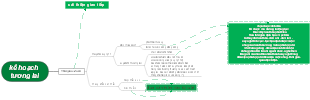
5 steps to start the road to the future
step 1: believe it is possible
1. Beliefs shape reality
The concept of self-openness helps us overcome obstacles and improve our situations.
Many realities that seem to hinder our progress are just illusions presented under the influence of our original frameworks and assumptions.
Whether you believe you can accomplish your goals is the first key factor that determines whether your goals can be achieved.
2. Replace scarcity thinking with abundance thinking
scarcity and abundance
No matter what we do, we must believe that we are ready to meet the challenge.
It's your choice
Ask yourself: What is something that your current world doesn’t have, but can and must have? What is missing right now in your relationships, health, career, or spiritual life that only you can create?
Most of the obstacles we face exist only in our imaginations.
self-limiting ideas
The first is to think that you have no ability to change your situation;
The second is to think that you don’t have enough resources.
The best way to overcome self-limiting concepts is to replace them with self-opening concepts. Upgrading your thinking is possible.
3. Concept upgrade
ability issues
First, intention. We can imagine a better life than we have now and work together with others to achieve it under existing conditions.
Second, Qian Zhan. By foreseeing the future, we can control our current behavior and guide our actions with purpose and meaning.
Third, take action. We have the ability to continue following our plans and stay motivated. And keep the plan on schedule by adapting to changes.
Finally, introspection. Not only do we act, we know what we are doing. This means that we evaluate our actions and can modify our actions and even modify our plans.
resource issues
Resources are essential, but resources are never a prerequisite for success.
The greater the determination, the greater the resources. Determined to change the outcome.
Revise ideas
First, identify self-limiting concepts.
Second, record self-limiting beliefs.
Third, reflect on self-limiting concepts.
Fourth, abandon or reconstruct self-limiting concepts.
Fifth, revise self-limiting concepts.
Finally, reorient yourself in light of new ideas.
What are your self-limiting beliefs?
Write down your limiting beliefs. Draw a vertical line in the notebook, write the self-limiting concept in one column, and write the corresponding self-opening concept in the other column. Think about your new manifesto for achieving your goals based on the self-openness column.
step 2: Summarize the past
1. Think backwards
hindsight
It is recommended to prepare a diary or notebook to record answers. Transcripts are a powerful tool for leveraging backward thinking.
State the desired outcome
First, ask yourself how you view this year. What are your plans, what are your dreams, and if you have specific goals, what are they? Don’t just focus on one or two areas. Remember, our lives consist of ten interrelated areas.
acknowledge actual results
What have you been most proud of over the past year? Dealing with the past involves more than just dealing with failures and disappointments. It also includes recognizing victory after losing and celebrating victory. Focus not just on what didn't work out, but on what did succeed, and analyze what beliefs or actions led to that success.
learn from experience
What important life lessons have you learned over the past few years?
Extract lessons from experiences and let them serve as tools for moving forward.
Adjust behavior
Simply acknowledging the disparity is not enough. If you don't change your mindset and therefore your behavior, your situation won't improve.
2. See opportunities in regrets
It's a road sign, not a roadblock
Rather than seeing regrets as obstacles to growth and development, we should see them as guides to the growth and development we most desire. Replace self-limiting concepts with self-opening concepts!
3. Learn to be grateful
The benefits of gratitude
1. Give us hope
2. Enhance our patience
3. Let us feel our power
4. Improve resilience
Gratitude principle
As long as we look at the present with a grateful heart, we will find that we have much more than we imagined. Gratitude amplifies all the good things in life. Gratitude is the best way to eliminate scarcity thinking and cultivate abundance thinking.
Keep a Gratitude Diary
step 3: Design the future
1. Seven principles of goals
The importance of writing down your goals
First, writing down your goals allows you to see your inner desires clearly.
Second, writing down goals helps you overcome obstacles.
Third, write down goals to inspire action.
Fourth, write down your goals to help you screen opportunities.
Fifth, writing down goals helps you track your progress.
Principles of goal setting
clarity
The clearer and less flexible the goal, the more likely we are to invest more attention, creativity, intelligence, and perseverance.
Measurability
Goals should have built-in standards against which you can measure yourself.
Measurable goals provide criteria for judging success.
Ability to judge progress toward goals.
Ability to track and record one’s progress
feasibility
Action is the most fundamental content of goals. Therefore, when setting goals, it is crucial to identify key actions.
risk
Our goals should have a certain degree of difficulty in order to stimulate our potential
Timing
Timing can be achieved through deadlines, frequencies, and scheduled tasks.
Motivating
Your goals need to arouse your passion.
If we are intrinsically motivated to achieve our goals, the probability of achieving them increases significantly.
Find your own excitement.
Correlation
If we want to achieve our goals, we must first ensure that our goals are consistent with the needs of life.
your own goals
The ideal number of targets is seven to ten
It is recommended to set goals on a quarterly basis to ensure that energy is evenly distributed throughout the year.
Your goals should cover several different areas of quality of life assessment.
2. Achievements and habits complement each other
two goals
Achievement goals focus on one-time accomplishments.
Habit goals target regular, ongoing activities
1. Start date. When to start building habits.
2. Frequency. How often do you do this. It could be every day, several times a week, once a week, once a month, etc.
3. Scheduled tasks. Perform a task at a fixed point in time. This might be a specific time every day of the week. Use a fixed amount of time to develop a habit, and the habit will be easier to form.
4. Habit formation point. The number of times you have done something in a row is considered to be a habit formed—that is, the activity has become second nature.
target combination
Achievement goals are suitable for plans with a clear scope and time frame.
Habitual goals, on the other hand, are suitable for plans that don’t have a clear scope or time frame. At the same time, habitual goals can also be a way to achieve achievement goals.
3. Risk is a friend
ready to go
Recognize the value of stepping out of your comfort zone
Replace self-limiting concepts with self-opening concepts.
Only by leaving your comfort zone can you grow, find a way out, and gain a sense of accomplishment.
overcome fear
Third, fear may signal danger. But fear can just as well be a sign that you're about to have a breakthrough.
avoid overanalyzing
Fourth, I always want to see the entire route. I want a map to guide me to the finish line. But I can't. It doesn't matter. You just need to know what you should do next. When you know where to go next, go boldly and trust that there will always be lights on the road.
grow on the journey
Happiness actually comes from progress and growth.
step 4: find motivation
To get out of trouble, you must make good use of your motivation. Only in this way can we gain motivation and perseverance, and not be afraid of obstacles and never give up.
1. Give your goals a reason
Identify main motivations
Autonomous motivation can objectively improve willpower, allowing people to not shrink back in the face of increasingly severe situations... If people can strive with autonomous motivation, they will have the sharpest weapon to overcome difficulties.
The charm of the engine. Such motivations arise from our hopes, values, and ambitions.
External motivation is far less lasting and practical than autonomous motivation.
If we can recognize ourselves and cherish the meaning of our goals on the way to achieving our goals, we will work harder and persevere.
Document and prioritize key motivations
Before you run out of ideas, list them all. After listing them, you need to sort them.
It’s most effective to shorten your list to just a few that really impress you.
Identifying your strongest motivations will give you several reasons to stick with it and achieve your goals.
Perceive the main motivation
First, think with your head. It’s important to come up with motivation.
Secondly, feel it with your heart. It is really important to understand what the motivation is
On the other hand, think about what will happen if you fail to achieve your goal.
2. Don’t forget your original intention
If ordinary people want to succeed, they need to put in more effort. What we call perseverance, perseverance, or courage—it’s just the desire to keep going when things get tough and we lose our passion.
Bury the harvest deep in your heart
Happiness comes from the process of doing. Because action itself is the harvest, as long as we start, we will gain something.
If you have the right independent motivation from the beginning, the expected harvest will no longer be a simple stimulus, but will be transformed into the spirit and motivation to move forward.
measure one's gains
Take a minute to look at what you've gained. See how far you have come and use your progress to motivate yourself so that you can keep going.
Setting milestones can help. Milestones not only break down ambitions into parts for easier management, but also provide a method of measurement - moving forward or backward. After measuring the gains, our perseverance will be stronger and we can gain more motivation.
3. A journey with a companion is more exciting
Success is social circle
Take the initiative to make friends
study. Surround yourself with great people and you will learn faster and become more observant. Excellent people will also help you think of ways and teach you to do better.
encourage. Whether it’s goals for business, family life, or faith, goals don’t seem to come easily. Good friends can give you the support and encouragement you need, allowing you to persevere without fear of hardships.
responsibility. We need friends who encourage us and help us make changes. Only such friends can make us aware of our responsibilities.
compete. Recalling the content of the first step, most people with ideas are not afraid of competition, and even cherish competition. Why is this? Social pressure is what really helps us achieve our goals
What types of groups are most effective?
Network Community. Running and fitness community. Communication community. Mentoring social circle. Reading study group. Accountability Team. good friend.
step 5: Put it into practice
1. Take multiple steps to success
The art of the beginning
For big goals, you probably won’t see the end. But fortunately, you don’t need to see it. You just need to see the next step. No matter what your goal is, you can only take one step at a time.
Do the simple things first
Setting goals requires thinking outside the comfort zone, but executing goals starts from within the comfort zone.
dynamic reasons
emotional reasons
Ask for help
No matter what our goal is, there is someone out there who knows how to achieve it, or at least has a more reliable intuition than you. This person might be a friend, a reliable partner, or an expert. You don't necessarily have to start from scratch.
External resources can help find solutions and speed up the process. External help can come in many forms. It doesn’t have to be professional guidance. It could be a book, an article, or a podcast. It could come from a friend or a stranger. No matter what form the resources take, eventually you'll be able to find the help you need and get started.
Must do
Try your best and God will help you. Opportunities, talents, material assistance, all these blessings that others cannot ask for will come to you from the moment you make up your mind.
2.Activation successful
Habit development
A series of trigger activation events
Find the best activation event
After formulating a goal that is consistent with the SMARTER principle, all you have to do now is to determine the activation events that are most helpful in achieving the goal. Note that the activation event must be simpler than the actual target. Only then can you take advantage of the leverage effect and accomplish difficult tasks with the help of simple tasks.
Optimize triggers
Eliminate temptations that may lead to failure in your goals.
Automate triggers with techniques.
Delegate Assistant to activate triggers for me.
Predictive Interference Preset Response
This type of "if-then" conditional statement activates events through preset triggers, eliminating the need for ad hoc decisions. "When an execution intention is formed in the mind, people will initiate (automatic) action without having to deliberately decide when to act and how to act." The hard work has been done in advance.
Adjust strategies promptly
3. Visualization is key
Regular goal review process
daily review
You can make the most of your goal review by going through your goal list every day.
The function of the daily goal review is to establish the connection between the overall goal and daily tasks. As I go through my list of goals, I think about my next steps.
If you really want to get closer to your goals every day, a quick and easy way is to break down those big goals into achievable daily tasks.
weekly review
Weekly reviews help us remember our motivations.
First, summarize the progress and list the gains and losses. Secondly, summarize the lessons learned this week and think about ways to improve. And write down how you will adjust your behavior in the future. Recording your changes can help you clarify your thinking and strengthen your determination. Third, form a rough impression of the tasks for the next week through weekly reviews. Third, subsequent steps must be designed based on the overall goal. From the overall goal to daily tasks, our purpose is to use the goal to guide our actions and ensure that we continue to move closer to the overall goal every week.
quarterly review
1. Celebrate victory
2. Start over
3. Modify the goal
4. Delete target
5. Replace target
Jump principle
Remember to take decisive action
Expect changes. If you want to change or have to change, your life has a green light. Hit the accelerator hard. Let’s set off with this in mind.
Don’t forget your original intention until things become clear. Never let your passion fade away.
Keep at it until you know how to act.
Take action - do anything
Go, start now. Once you make up your mind, take action. No need to wait.