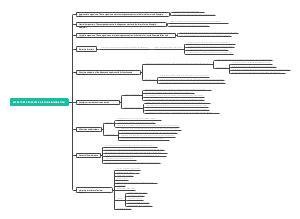
MindMap Gallery excretion care
This is a mind map about excretion care, including anatomy and physiology related to urination, assessment of urination, care for abnormal urination, etc.
Edited at 2024-03-15 20:42:56This is a mind map about bacteria, and its main contents include: overview, morphology, types, structure, reproduction, distribution, application, and expansion. The summary is comprehensive and meticulous, suitable as review materials.

This is a mind map about plant asexual reproduction, and its main contents include: concept, spore reproduction, vegetative reproduction, tissue culture, and buds. The summary is comprehensive and meticulous, suitable as review materials.
This is a mind map about the reproductive development of animals, and its main contents include: insects, frogs, birds, sexual reproduction, and asexual reproduction. The summary is comprehensive and meticulous, suitable as review materials.
This is a mind map about bacteria, and its main contents include: overview, morphology, types, structure, reproduction, distribution, application, and expansion. The summary is comprehensive and meticulous, suitable as review materials.
This is a mind map about plant asexual reproduction, and its main contents include: concept, spore reproduction, vegetative reproduction, tissue culture, and buds. The summary is comprehensive and meticulous, suitable as review materials.
This is a mind map about the reproductive development of animals, and its main contents include: insects, frogs, birds, sexual reproduction, and asexual reproduction. The summary is comprehensive and meticulous, suitable as review materials.
excretion
Urination care
Anatomy and physiology related to urination
Kidney: produces urine
Ureter: carries urine
Urethral: elimination of urine (bladder-outside the body)
Female urethra: short, straight, 3-5cm, highly distensible, more prone to urinary tract infection than male urethra
Male urethra: The urethra is 18-20cm long, with three strictures (internal urethral orifice, membranous part, and external urethral orifice) and two curves (inferior pubic curvature and anterior pubic curvature).
Physiology of urination
The primary micturition reflex is in the sacral segment of the central spinal cord, and the advanced center is in the brainstem and cerebral cortex.
It plays an important role in regulating water, electrolytes and acid-base balance and maintaining the relative stability of the human body's internal environment.
Assessment of voiding
Voiding assessment content
Frequency: 4-6 times during the day for adults, 0-2 times at night
Urine output: 200~400ml each time, 24h urine output is about 1000~2000ml, average about 1500ml
Characteristics:
color
Normally light yellow or dark yellow
Hematuria: water-washed flesh color (acute glomerulonephritis, ureteral stones, urinary system tumors, tuberculosis and infection)
Hemoglobinuria: strong tea color, soy sauce color (hemolysis, falciparum malaria, paroxysmal nocturnal hemoglobinuria)
Bilirubinuria: dark yellow, tan (obstructive jaundice, hepatocellular jaundice)
Chyluria: milky white (filariasis)
Transparency: Normal fresh urine is clear and transparent. Fresh urine discharged during urinary tract infection is white, flocculent and turbid.
Acid-base reaction
Normally it is weakly acidic, with a pH of 4.5~7.5
Acidity: Acidosis, eating a lot of meat, taking acidic drugs such as ammonium chloride
Alkaline: alkalosis, eating a lot of vegetables, taking alkaline drugs such as sodium bicarbonate
proportion
The normal specific gravity is 1.015~1.025. If it is often around 1.010, it indicates kidney function damage.
odor
Ammonia odor - urinary tract infection; rotten apple odor - diabetic pyruvate poisoning
Factors affecting urination: disease factors, examination and treatment, fluid and dietary intake, psychological factors, environmental factors, personal habits, climate change, other factors
Evaluation of abnormal urination
Polyuria: 24h urine output>2500ml
Normal situation: Drinking a lot of water, pregnancy
Pathological conditions: diabetes, diabetes insipidus, acute renal insufficiency
Oliguria: 24h urine output <400ml or <17ml per hour
Pathological conditions: patients with fever, low fluid intake, shock and other hypovolemia, as well as heart, kidney, and liver failure
Anuria or anuria: 24h urine output <100ml or no urine within 12h
Pathological conditions: severe shock, acute renal failure, drug poisoning
Bladder irritation: frequent urination, urgency, and painful urination
Pathological conditions; bladder and urethra inflammation, tuberculous cystitis, etc.
Urinary retention: A large amount of urine is stored in the bladder and cannot be discharged independently, the suprapubic bone is bulging, a cystic mass is palpable, and there is solid sound and tenderness upon percussion.
urinary incontinence
Filling (pseudoincontinence): neurological disease or lower tract urinary obstruction
Persistence: coma, paraplegia, urethral sphincter injury
Urgency: local inflammation of the bladder, inflammation of the central nervous system, etc.
Stress (incomplete urinary incontinence): reduced bladder sphincter tone and loose pelvic floor periurethral muscles and ligaments
Nursing care for abnormal urination
Care for patients with urinary retention: ① Provide a hidden environment ② Adjust body position and posture ③ Induce urination ④ Hot compress massage ⑤ Psychological care ⑥ Health education ⑦ Catheterization
Care for patients with urinary incontinence: ① Skin care ② External drainage ③ Rebuilding normal urinary function (taking in appropriate amounts of fluid, training bladder function, exercising muscle strength) ④ Indwelling urinary catheterization ⑤ Psychological care
Nursing techniques related to urination
Catheterization
Purpose
Draining urine in patients with urinary retention relieves pain
Assist clinical diagnosis
Intravesical chemotherapy for patients with bladder tumors
step
Check the explanation, set up the position and drape, preliminary disinfection, open the catheter bag, wear sterile gloves, lay the hole drape, arrange the supplies, prepare the urinary catheter, disinfect again, insert the urinary catheter, clamp the tube and pour the urine, collect the specimen, remove the catheter and organize the hand washing record
Precautions
Strictly implement aseptic techniques to prevent urinary tract infections
Pay attention to protecting patient privacy and take measures to keep warm to prevent patients from catching cold
Choose a urinary catheter that is smooth and of appropriate thickness. The intubation action should be gentle to prevent damage to the urethral mucosa.
When catheterizing a female patient, if the catheter accidentally enters the vagina, the sterile catheter should be replaced and re-inserted.
For patients with highly inflated bladders and extreme weakness, the first urination should not exceed 1000ml. A large amount of urination will suddenly reduce the intra-abdominal pressure, and a large amount of blood will be retained in the abdominal blood vessels, which may cause a drop in blood pressure and collapse: a sudden drop in intra-vesical pressure , which can lead to acute congestion of the bladder mucosa and hematuria.
indwelling urinary catheter
Purpose
When rescuing critically ill or shock patients, record hourly urine output, measure urine specific gravity, and closely observe changes in the patient's condition.
Pelvic surgery patients empty their bladders so that they remain empty. To avoid accidental injuries during surgery
A urinary catheter is left in place after surgery for certain urinary system diseases to facilitate bladder drainage and flushing, reduce the tension on the surgical incision, and facilitate the healing of the incision.
For patients who are comatose, incontinent, or have wounds on the perineum, drain urine and keep the perineum clean and dry.
Bladder function training for urinary incontinence patients
step
Check the explanation, position, disinfect the intubation, fix the urinary catheter, observe the drainage, organize the records
Place the urine collection bag lower than the height of the bladder to prevent urinary tract infection caused by reverse flow of urine
Precautions
Keep drainage smooth (avoid pressure, distortion, and blockage of the urinary catheter)
Prevent retrograde infection of urinary system
(1)Perineal care
(2) Change the catheter regularly (change the urine collection bag 1 to 2 times a week, change the urinary catheter once a week, the replacement cycle of the silicone catheter can be extended as appropriate)
(3)Health guidance
Training bladder reflex function (intermittent tube clamping)
Strengthen observation. If you find that your urine is turbid, precipitated, or has crystals, you should flush your bladder.
Flush the bladder
Purpose
For patients with indwelling urinary catheters, keep their urine drainage smooth.
Remove blood clots, mucus, bacteria and other foreign matter from the bladder to prevent infection.
Treat certain bladder conditions, such as cystitis and bladder tumors.
Commonly used solutions: ① physiological saline ② 0.02% nitrofurazone
Temperature: 38--40℃
Precautions
Strictly implement aseptic technical operating procedures to prevent infection
Instruct the patient to relax during irrigation. If the patient has abdominal pain, bloating, severe bladder contraction, etc., the irrigation should be suspended. If the patient feels severe pain or has excessive bleeding or drops in blood pressure after flushing, he or she should report to the doctor immediately for treatment.
The flushing drip rate is 60-80 drops/min, and the distance between the page inside the bottle and the bed is about 60cm.
Fixed urinary catheter
According to the balloon volume marked on the catheter, inject an equal amount of sterile solution into the balloon and gently pull the catheter until there is resistance.
When fixing, do not pull the urethra too much to avoid the inflated balloon getting stuck in the lower opening of the bladder (internal urethral opening) Produce local compression causing injury and discomfort
Disinfect again
Male: urethra, glans, coronal sulcus
Female: urethral opening, labia minora on both sides, urethral opening, from inside to outside and then inwards, from top to bottom, first contralateral and then proximal
preliminary disinfection
Male disinfection sequence: mons pubis, penis, scrotum; push the foreskin back to expose the urethral opening, rotate outward and backward from the urethral opening to wipe and disinfect the urethral opening, glans and coronal sulcus
Disinfection sequence for women: Disinfect the mons pubis and labia majora in sequence; separate the labia majora with your left hand, and disinfect the labia minora and urethral opening. Disinfection sequence: from outside to inside, top to bottom, contralateral first and then proximal