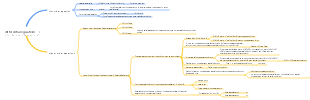
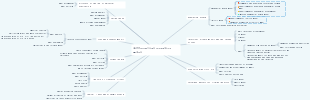
MindMap Gallery differential equations
Summary of knowledge points related to differential equations in advanced mathematics, including basic concepts of differential equations, differential equations of separable variables, variable substitution method, first-order linear differential equations, etc.
Edited at 2021-09-16 10:34:04This is a mind map about bacteria, and its main contents include: overview, morphology, types, structure, reproduction, distribution, application, and expansion. The summary is comprehensive and meticulous, suitable as review materials.

This is a mind map about plant asexual reproduction, and its main contents include: concept, spore reproduction, vegetative reproduction, tissue culture, and buds. The summary is comprehensive and meticulous, suitable as review materials.
This is a mind map about the reproductive development of animals, and its main contents include: insects, frogs, birds, sexual reproduction, and asexual reproduction. The summary is comprehensive and meticulous, suitable as review materials.
This is a mind map about bacteria, and its main contents include: overview, morphology, types, structure, reproduction, distribution, application, and expansion. The summary is comprehensive and meticulous, suitable as review materials.
This is a mind map about plant asexual reproduction, and its main contents include: concept, spore reproduction, vegetative reproduction, tissue culture, and buds. The summary is comprehensive and meticulous, suitable as review materials.
This is a mind map about the reproductive development of animals, and its main contents include: insects, frogs, birds, sexual reproduction, and asexual reproduction. The summary is comprehensive and meticulous, suitable as review materials.
differential equations
basic concept
Definitions and related concepts of differential equations
Definition: Any equation that represents an unknown function, the relationship between the derivative of the unknown function and the independent variables is called an ordinary differential equation.
Note: The derivative of the unknown function must appear
Definition: The order of the highest derivative of the unknown function appearing in a differential equation is called the order of the differential equation.
Definition: Substituting a function that makes a differential equation an identity is called the solution of a differential equation
Two different forms of solution
The solution contains any constants and the number of constants is the same as the order. Such a solution is called a general solution or a general solution.
The solution obtained by determining any constant from the general solution according to the specific conditions given by the problem is called a special solution
Differential Equations with Separable Variables
variable substitution method
homogeneous equation
can be reduced to a homogeneous equation
solution:
First order linear differential equation
linear equation
definition·
Call a first-order non-homogeneous linear equation
We call the first-order homogeneous linear equation relative to (1)
solution:
constant variation method
Method of converting constants in the general solution of homogeneous equations into undetermined functions
Bernoulli equation
When n=0, it is a linear equation
When n=1, it is a separable equation.
Solution: Although equation (10) is not a linear equation, it can be converted into a linear equation through variable substitution.
total differential equations
definition
Measure to judge
solution:
Applying curve integrals is path independent
Use indefinite integral to find u(x,y)
A method of directly summing up the differentials
integration factor
definition:
Note: The integration factor is generally not easy to obtain, but it can be observed in simple situations.
Remember to sum up the differential
Reducible higher-order differential equations
Definition: Differential equations of second order and above are called higher-order differential equations
Solution: successive integration
Structure of higher-order linear differential equations and their solutions
Structure of n-order linear differential equations and their solutions
is the coefficient function, f(x) is the free term
When f(x)¹0, it is called n-order non-homogeneous linear equation
When f(x)=0, it is called a homogeneous linear equation of order n
Characteristics of linear equations
All once
Both the coefficient function and the free term are functions of X
The concepts of linear dependence and independence of function groups
definition
A set of functions (A) defined in I: y1(x), y2(x),...,yn(x), if there are constants k1, k2,..., kn that are not all 0, such that k1y1 k2y2 ... knyn=0 xÎI, then (A) is said to be linearly dependent within I, otherwise it is said to be linearly independent
Notice
The case of two functions
y1(x), y2(x) are irrelevant
Structure of solutions to second-order linear differential equations
Structure of solutions to second-order homogeneous equations
Theorem 1
If the functions y1(x) and y2(x) are two solutions to equation (1), then y=C1y1 C2y2 is also a solution to (1). (C1, C2 are constants)
Theorem 2
If y1(x) and y2(x) are two linearly independent special solutions of equation (1), then y=C1y1 C2y2 is the general solution of equation (1)
Note
Theorem 2 can be extended to the case of n-order equations
example
Structure of solutions to second-order non-homogeneous linear equations
Theorem 3
Suppose y* is a special solution of the second-order non-homogeneous linear equation, Y is the general solution of the homogeneous equation (1) corresponding to (2), then y=Y y* is the second-order non-homogeneous linear differential equation (2 ) general explanation
example
According to Theorem 3, the steps for finding the general solution to the non-homogeneous equation (2) are:
Find the general solution Y of the homogeneous equation corresponding to (1)
Find a special solution y* of (2)
y=Y y*
Theorem 4
Assume that the right-hand side f(x) of the non-homogeneous equation (2) is the sum of several functions, such as
The special solution of , then y1* y2* is the special solution of the original equation
superposition principle of solutions
price reduction method and constant variation method
Finding linearly independent special solutions to homogeneous linear equations
Reduction method
Suppose y1 is a non-zero special solution of equation (1), let y2=u(x)y1 be brought into (1), we get
Liouville formula
The general solution of the homogeneous equation is
example
constant variation method
Solution to Homogeneous Linear Equations of Second Order with Constant Coefficients
definition
Standard form of linear differential equations with constant coefficients of order n
Standard form of second-order homogeneous linear equations with constant coefficients
Standard form of second-order non-homogeneous linear equations with constant coefficients
Solution of Homogeneous Linear Equations of Second Order with Constant Coefficients
solution
Find two linearly independent
observe
Therefore, r^2 pr q=0 (2)
characteristic equation
Roots of the characteristic equation
characteristic root
There are two unequal real roots (D>0)
Two linearly independent special solutions
The general solution of the homogeneous equation is
There are two equal real roots (D=0)
The characteristic root is r1=r2=-p/2
A special interpretation is
Another special solution is set to
The general solution to the homogeneous equation is
There is a pair of conjugate complex roots (D<0)
The characteristic root is
Regroup
The general solution to the homogeneous equation is
Note (2) In the formula, r^2, the coefficients and constant terms of r are y", y', and the coefficient of y in order
definition
The method of determining the general solution of a homogeneous linear equation with constant coefficients from the roots of its characteristic equation is called the characteristic equation method.
Write the characteristic equation of (1): r^2 pr q=0--(2)
Find the characteristic roots r1, r2 of (2)
According to the characteristic root situation, the general solution can be divided into three situations:
Solution of n-order homogeneous linear equations with constant coefficients
The characteristic equation is
Notice
Solution to non-homogeneous linear equations with constant coefficients of second order
Two forms of free term f(x)
(l is a constant)
polynomial of degree m
special shape
l=0ðf(x)=Pm(x)
Pm(x)=1ðf(x)=e^lx
l-real number aðf(x)=Pm(x)e^ax
l=a ibðf(x)=Pm(x)e^(a ib)
(a, b are real constants)
(One of them can be 0)
special shape
a=0
method
Find y* using undetermined coefficient method
Find a special solution Y* of y" py' qy=e^lxPm(x)
Let y*=Q(x)e^lx--(A)
Q(x) is a polynomial of x
If l is not a characteristic root of (2): l^2 pl q¹0
If l is the characteristic single root of (2): l^2 pl q=0
If l is a multiple root of (2): l^2 pl q=0, 2l p=0
step
Find the characteristic roots of the homogeneous equation corresponding to (1)
set up
y*=y1* y2*
points change