MindMap Gallery Conservation quantities and conservation laws of motion
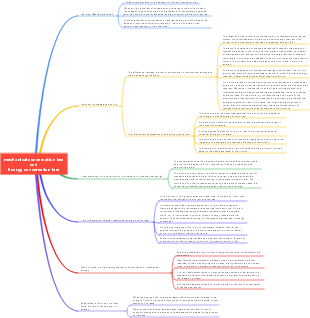
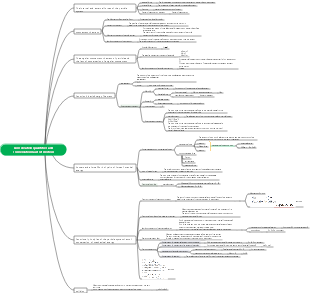
The conserved quantities and conservation laws of motion in college physics include the internal and external forces of the particle system, the law of motion of the center of mass, the law of conservation of momentum, the law of conservation of mechanical energy, etc.
Edited at 2022-04-04 19:03:11This is a mind map about bacteria, and its main contents include: overview, morphology, types, structure, reproduction, distribution, application, and expansion. The summary is comprehensive and meticulous, suitable as review materials.

This is a mind map about plant asexual reproduction, and its main contents include: concept, spore reproduction, vegetative reproduction, tissue culture, and buds. The summary is comprehensive and meticulous, suitable as review materials.
This is a mind map about the reproductive development of animals, and its main contents include: insects, frogs, birds, sexual reproduction, and asexual reproduction. The summary is comprehensive and meticulous, suitable as review materials.
This is a mind map about bacteria, and its main contents include: overview, morphology, types, structure, reproduction, distribution, application, and expansion. The summary is comprehensive and meticulous, suitable as review materials.
This is a mind map about plant asexual reproduction, and its main contents include: concept, spore reproduction, vegetative reproduction, tissue culture, and buds. The summary is comprehensive and meticulous, suitable as review materials.
This is a mind map about the reproductive development of animals, and its main contents include: insects, frogs, birds, sexual reproduction, and asexual reproduction. The summary is comprehensive and meticulous, suitable as review materials.
Conservation quantities and conservation laws of motion
Internal and external forces of the particle system Law of motion of center of mass
Centroid
quality discontinuity
Continuous quality
Several distribution types
line distribution
area distribution
body distribution
Center of mass motion theorem
Momentum Theorem Law of Conservation of Momentum
The Momentum Theorem of a Point
The impulse of the net external force experienced by an object during motion is equal to the increment of the momentum of the object
average force
Momentum theorem of particle system
In a certain period of time, the vector sum of the impulses of all external forces acting on a particle at the same time is equal to the increment of the total momentum of the particle system.
law of conservation of momentum
If the vector sum of the external forces on the system is zero, the total momentum of the system remains unchanged.
Applicable conditions
Each object in the system is not subject to external forces or the sum of the external forces is zero.
In a very short time, the external force on the system is much smaller than the internal force interacting within the system.
Inertial frame same reference frame
The angular momentum theorem of particle and the law of conservation of angular momentum
The angular momentum of the particle relative to the reference point 0
law of conservation of angular momentum
The moment of the resultant force about the reference point 0
If the external force acting on the particle has a moment of zero at a given point, then the angular momentum of the particle with respect to point 0 remains unchanged during the motion (angular momentum is a constant vector)
Kinetic energy theorem
The kinetic energy theorem of a system of particles
The sum of the work done by all external forces and all internal forces on the system of particles is equal to the increment of the total kinetic energy of the system of particles
System functional principles
When the system changes from state 1 to state 2, the increment of its mechanical energy is equal to the sum of the work of the external force and the work of the non-conservative internal force.
law of conservation of mechanical energy
If a system only has conservative internal forces that do work, and other internal forces and all external forces do not do work, then the kinetic energy and potential energy of each object in the system can be converted into each other, but the total mechanical energy remains unchanged.
Conservative force Work of pairs of forces Potential energy
conservative force
The work done has nothing to do with the path, only the starting and ending positions.
gravity
Elasticity
gravity
non-conservative force
It’s not just about the starting and ending locations, it’s also about the path
Friction
work of paired forces
Relative displacement
potential energy
The energy associated with the position of a particle in a conservative force field
The component of a conservative force along a coordinate axis is equal to the negative value of the derivative of the potential energy about this coordinate axis
Functional principles of the particle system Law of conservation of mechanical energy
achievement
constant force power
Kinetic energy theorem
The work done by the combined external force on the particle is equal to the increment of the kinetic energy of the particle
inertial frame
collision
Conservation of system momentum during collision
Newton's law of collision
perfectly inelastic collision
Mechanical energy loss is the largest
Both balls have equal mass
Small ball hits big stationary ball
Big ball hits small stationary ball
perfectly elastic collision
No mechanical energy loss
inelastic collision
There is a loss of mechanical energy
mechanical energy loss