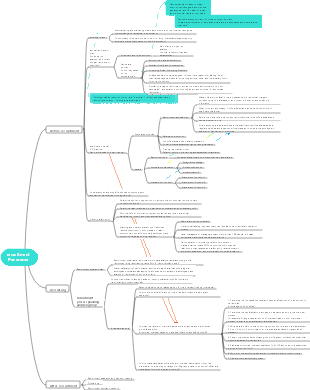
MindMap Gallery Recruitment Panorama Mind Map
This is a mind map about the recruitment panorama, including before recruitment, during recruitment, after recruitment, recruitment cycle and plan, process planning, etc.
Edited at 2023-11-07 17:56:32This is a mind map about bacteria, and its main contents include: overview, morphology, types, structure, reproduction, distribution, application, and expansion. The summary is comprehensive and meticulous, suitable as review materials.

This is a mind map about plant asexual reproduction, and its main contents include: concept, spore reproduction, vegetative reproduction, tissue culture, and buds. The summary is comprehensive and meticulous, suitable as review materials.
This is a mind map about the reproductive development of animals, and its main contents include: insects, frogs, birds, sexual reproduction, and asexual reproduction. The summary is comprehensive and meticulous, suitable as review materials.
This is a mind map about bacteria, and its main contents include: overview, morphology, types, structure, reproduction, distribution, application, and expansion. The summary is comprehensive and meticulous, suitable as review materials.
This is a mind map about plant asexual reproduction, and its main contents include: concept, spore reproduction, vegetative reproduction, tissue culture, and buds. The summary is comprehensive and meticulous, suitable as review materials.
This is a mind map about the reproductive development of animals, and its main contents include: insects, frogs, birds, sexual reproduction, and asexual reproduction. The summary is comprehensive and meticulous, suitable as review materials.
recruitment Panorama
Before recruitment
employer brand
Use marketing and marketing practices to promote on the Internet (recognize the company and remember the company)
This company is the best choice to work for (why internal employees stay, why external potential candidates choose the company)
annual recruitment plan (Including job analysis, recruitment budget, recruitment channels)
Fixed staff and fixed positions
Gain clarity through job analysis Job title, responsibilities and establishment
Candidate portrait (Job survey based on job competencies)
Bottom line: basic qualifications
Excellent Line: Basic Competencies
Underlying Rules: Underlying Qualities
Analyze people who have resigned: turnover rate, reasons for leaving, which channels have served people for the longest time, upper and lower salary limits for current positions
Simulation, analysis, recruitment: contact non-active submitters to find out candidates’ expectations, continuously adjust and optimize JD, and spread recruitment
qualification model (HR Practice, Can be improved through training)
Associated modules
Recruitment and selection
Make it clear which level in the job sequence this recruitment targets, corresponding to the release of recruitment information and screening interviews
When joining the company, it will be reviewed that the basic conditions of qualifications are met.
Before the probationary period expires, professional skills will be evaluated to decide whether to hire.
After becoming a regular employee, the qualifications will be evaluated as if they were regular employees and a decision will be made as to whether they are qualified or transferred or promoted.
Salary and promotion
Job skills standards and quality standards As performance assessment and grading standards
Training requirement input Talent promotion pre-training and assessment standards
details
Basic conditions
Educational qualifications, professional work experience
competency standards
Essential knowledge
Professional results
professional skill
standards of conduct
Standards of conduct 1
Standards of Conduct 2
Standards of Conduct 3
Competency quality model (proposed by psychologists and cannot be obtained through training)
Industry talent pool
Determine positions: key positions, highly mobile but important positions, hard-to-recruit positions
Determine talent standards: job standards, competencies, and necessary skills
With the help of information system: contact at any time, hierarchical classification, import and view resumes at any time
Planning and operating talent pool resources: resume submission, industry research, talent communities, social forums, daily employer brand promotion, targeted mining reserves
Mark talent source channels
Hierarchical labeling: key, secondary key, and least important talent operation objects
Label management: managing a team of more than 100 people, top sales, entrepreneurial experience, peer experience
Daily operations: formulating talent pool operation standards and process SOPs, continuous multi-channel relationship maintenance and talent entry, talent activation and effect evaluation, and withdrawal of unsuitable talents.
Recruiting
Recruitment cycle and plan
Recruitment cycle table, recruitment work data analysis table (according to the recruitment progress tracking table, KPIs for recruiters can be set)
Statistical analysis of performance results before and after becoming regular employees, comparative analysis of performance of new and old employees, and analysis of recruitment input-output ratio
Recruitment process planning and design sop
Conduct recruitment planning based on industry characteristics (not limited to traditional recruitment channels)
Interview planning
Responsible person and related person for the interview (training interviewer)
How to improve the efficiency of the interview process (preparing test questions)
How can the results of the interview be more objective and direct (smart principle questions, Structured interview based on basic qualifications and quality model)
1. Determine the job sequence, grade and basic qualifications for the positions to be recruited. (Knowledge, skills, qualities)
2. Determine the key elements that need to be examined during the interview process For example: Arrange several rounds of interviews, each round: interviewer, process, format, and what elements are inspected
3. Write detailed definitions and scoring instructions for each interview element (1 point, 2 points, 3 points, beginner, intermediate, advanced, highest level standard)
4. Design interview questions (background, willingness, professional, situational, pressure, adaptability, behavioral)
5. Prepare a structured interview evaluation form (HR and the hiring department jointly confirm this form)
6. Work with the employing department to determine recruitment criteria
7. Prepare interview summary sheet
How to make candidates more willing to interview (last question from the interviewer: How would you rate your willingness to take this position? What are the reasons for not scoring and scoring?)
After recruitment
Recruitment evaluation and decision-making
Onboarding
Recruitment costs and benefits
Key competency portraits, job hidden content portraits, Character benchmarks or templates, where are the candidates and where are the channels?
Each department needs to break down its business goals and propose addendums, and HR needs to review labor costs. per capita output value
Employer value proposition (corporate “persona”)—effective dissemination and communication—forming employer brand