 Wondershare EdrawMind
MindMap Gallery Single gene disease genetics mind map
- 31
Single gene disease genetics mind map
This is a mind map about single-gene diseases, including molecular diseases, inborn errors of metabolism, etc. Hope this helps! Friends who are interested can like and follow~
Edited at 2023-11-03 23:34:08
- bacteria
This is a mind map about bacteria, and its main contents include: overview, morphology, types, structure, reproduction, distribution, application, and expansion. The summary is comprehensive and meticulous, suitable as review materials.
- Plant asexual reproduction
This is a mind map about plant asexual reproduction, and its main contents include: concept, spore reproduction, vegetative reproduction, tissue culture, and buds. The summary is comprehensive and meticulous, suitable as review materials.
- Reproductive development of animals
This is a mind map about the reproductive development of animals, and its main contents include: insects, frogs, birds, sexual reproduction, and asexual reproduction. The summary is comprehensive and meticulous, suitable as review materials.
Single gene disease genetics mind map
- bacteria
This is a mind map about bacteria, and its main contents include: overview, morphology, types, structure, reproduction, distribution, application, and expansion. The summary is comprehensive and meticulous, suitable as review materials.
- Plant asexual reproduction
This is a mind map about plant asexual reproduction, and its main contents include: concept, spore reproduction, vegetative reproduction, tissue culture, and buds. The summary is comprehensive and meticulous, suitable as review materials.
- Reproductive development of animals
This is a mind map about the reproductive development of animals, and its main contents include: insects, frogs, birds, sexual reproduction, and asexual reproduction. The summary is comprehensive and meticulous, suitable as review materials.
- Recommended to you
- Outline
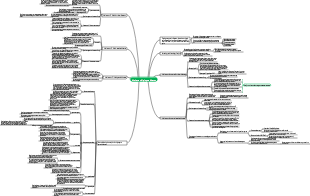
single gene disease
Mutated genes cause protein defects by changing the quality and quantity of polypeptide chains, thereby causing genetic diseases.
molecular disease
Molecular disease is a type of disease that is directly caused by abnormal molecular structure or synthesis of protein due to inherited gene mutations or acquired gene mutations, including hemoglobinopathy, plasma proteinopathy, receptor disease, and membrane transporter disease. , structural protein deficiency disease, immunoglobulin deficiency disease, etc.
Hemoglobinopathies
Hemoglobin is a protein with important physiological functions in red blood cells
Diseases caused by abnormal synthesis of hemoglobin molecules are called hemoglobinopathies
Hemoglobinopathies are customarily divided into
abnormal hemoglobin
Abnormal hemoglobin manifests as an abnormal structure of the globin peptide chain of the hemoglobin molecule. If amino acids in important functional parts are replaced, it will affect the solubility, stability and other biological functions of hemoglobin.
Thalassemia
Thalassemia is characterized by a decrease in the synthesis rate of globin peptide chains, resulting in an imbalance in the synthesis of α chain and non-α chain, which is clinically manifested as hemolytic anemia.
Structure and developmental changes of hemoglobin molecules
Molecular structure of hemoglobin
Hemoglobin is the carrier of oxygen and carbon dioxide carried by red blood cells in the blood
It is a binding protein. The polypeptide chain part is called globin, the prosthetic group is heme, and the structure is a spherical tetramer composed of two pairs of monomers.
Globin genes and their expression characteristics
The six human globin chains are encoded by the corresponding globin genes, including
α-globin-like gene
Located at 16pter-p13.3, the order in the 5'-3' direction is 5'-ζ2-Ψζ1-Ψα1-α2-α1-3', with a total length of 340kb
β-globin-like gene
Located at 11p15.5, the order in the 5′-3′ direction is 5′-ε-Gγ-Aγ-ψβ1-δ-β-3′, with a total length of 60 kb
Each globin gene contains three exons and two introns
The expression of porcine globin gene is precisely regulated and shows typical tissue specificity and time specificity.
The balance of α-like and β-like globins is required for normal physiological functions of the human body
Types of globin gene mutations
single base substitution
This is the most common type of mutation in hemoglobinopathies and is found in most abnormal hemoglobins and beta thalassemia
frameshift mutation
Due to the loss or insertion of one or two bases in the globin gene, the subsequent base arrangements are sequentially displaced, resulting in recoding, which changes the structure or synthesis rate of the globin peptide chain.
Codon deletions and insertions
Due to mismatching and unequal exchange of homologous chromosomes during cell meiosis, triplet bases in the DNA encoding codons are deleted or inserted.
nonsense mutation
Thalassemia due to premature termination of synthesis of globin chains due to unintentional mutations
stop codon mutation
Due to the mutation of the DNA sequence encoding the stop codon, the synthesis of the globin chain does not terminate at the normal position, but continues to the new stop codon, thus generating an extended abnormal globin chain.
gene deletion
Causes different globin peptide chain synthesis abnormalities and different types of thalassemia
fusion gene
The essence is the splicing of local fragments of two different genes.
Common hemoglobinopathies
Common abnormal hemoglobin
sickle cell anemia
It is a disease caused by defects in the beta gene and is inherited in an autosomal recessive manner.
Sickle cells cause an increase in blood viscosity, which can easily embolize microvessels, causing sporadic local tissue hypoxia or even necrosis, causing musculoskeletal pain, abdominal pain and other painful hazards. At the same time, the deformation ability of sickle cells is reduced. When passing through narrow capillaries, it is difficult to deform and easily rupture when squeezed, leading to hemolytic anemia.
Molecular diagnostic techniques enable genetic diagnosis of sickle cell anemia
Hemoglobin M disease also known as methemoglobinemia
In the globin gene of patients with hemoglobin M, due to the base substitution of the codon of one of the above-mentioned amino acids, methemoglobin is formed, which affects the oxygen-carrying capacity, causing insufficient oxygen supply to tissue cells and causing cyanosis symptoms.
Thalassemia
In patients with thalassemia, due to the reduction or absence of certain globin chains, some peptide chains are lacking and others are relatively excessive, resulting in an imbalance in the number of peptide chains, resulting in hemolytic anemia, called thalassemia.
alpha thalassemia
deletion alpha thalassemia
Caused by deletion of alpha porcine protein gene
Deletion alpha thalassemia can be divided into different types according to different genotypes and clinical manifestations
Hb Barts fetal hydrops syndrome
Onset occurs in the fetal period, and the genotype is homozygous for α0 thalassemia gene (--/--)
It has a high oxygen affinity and cannot easily release oxygen in tissues with low oxygen partial pressure, causing tissue hypoxia. Therefore, most of these patients die between 30 and 40 weeks of pregnancy, or die within half an hour after premature delivery.
Hb
It is a compound heterozygote of α0 thalassemia gene and α thalassemia gene, and the genotype is (--/-α)
Free β-chains cannot stably exist in red blood cells. As a result, they precipitate and accumulate, forming H inclusion bodies, which adhere to the transverse cell membranes, causing damage to the red blood cell membranes. The red blood cells lose their flexibility and are easily destroyed by the spleen, leading to chronic hemolytic anemia.
Patients with standard alpha thalassemia are heterozygotes of the α0 thalassemia gene, with a genotype of (--/αα), or homozygotes of the α-thalassemia gene, with a genotype of (-α/-α)
Silent α-thalassemia is a heterozygote of the α-thalassemia gene, and the genotype is (-α/αα)
non-deletion alpha thalassemia
Common non-deletion α-thalassemias in Chinese include Hb CS, Hb QS, and Hb WS
beta thalassemia
beta thalassemia major
Patients may be homozygous for β0/β0, β/β or δβ0/δβ0, or they may be compound heterozygotes for β0 and β-thalassemia genes. Their common feature is that patients cannot synthesize β-chains or synthesize very little.
Due to tissue hypoxia, the secretion of erythropoietin is promoted, bone marrow hyperplasia is stimulated, and the bones are damaged and become loose. Special "thalassemia faces" such as flat nose and swollen eyes, protruding maxilla, large head and forehead may appear.
beta thalassemia intermedia
Generally homozygous for the beta thalassemia gene, the patient's genotype is usually beta / beta or beta / delta beta
beta thalassemia minor
Occurring in heterozygotes of β0 or β-thalassemia genes, there are no clinical symptoms and laboratory tests are required to confirm the diagnosis.
Patients are mainly heterozygotes such as β/βA, β0/βA or β0/δβA.
Fetal hemoglobin persistence
It is because the synthesis of γ-globin chains cannot be converted into the synthesis of β-globin chains after birth, resulting in excessive and continued synthesis of γ-globin chains.
In recent years, it has been found that BCL11A, KLF1, etc. are involved in the regulation of fetal hemoglobin-adult hemoglobin switch, which lays the foundation for reactivating fetal hemoglobin to treat β-thalassemia.
Beta thalassemia combined with alpha thalassemia
Symptoms tend to lessen
X-linked alpha thalassemia/mental retardation syndrome
A series of clinical manifestations include α-thalassemia, mental retardation, abnormal development of the urinary tract and reproductive organs, and sex reversal.
plasma proteinopathies
Hemophilia A
It is an X-linked recessive blood disorder caused by lack of coagulation factor VIII in plasma.
The main clinical manifestations are repeated spontaneous bleeding or non-stop bleeding after minor injury, compression symptoms and complications caused by bleeding. Generally, slow and continuous bleeding is common, and major bleeding is rare.
Due to an inherited defect in the F8 gene, involving molecular rearrangements, deletions, nucleotide substitutions, insertions and frameshifts
Infusion of coagulation factor VIII for replacement is currently the main treatment method for this disease.
Hemophilia B
It is a coagulation disorder caused by lack of coagulation factor IX or reduced coagulation function.
Its clinical symptoms are basically the same as those of hemophilia A, but the incidence is lower
Genetic diagnosis, prenatal genetic diagnosis and pre-implantation diagnosis are currently available for hemophilia B
coagulation factor XI deficiency
A coagulation disorder caused by a lack of coagulation factor XI in the plasma. The inheritance pattern is autosomal dominant or autosomal recessive.
structural protein deficiency disease
muscular dystrophy
The more common muscular dystrophies include Duchenne type (one of the most common X-linked recessive lethal genetic diseases) (DMD) and Becker type (BMD) muscular dystrophy
DMD occurs mostly due to deletion mutations, and deletions mainly occur at the 5' end or central region of the DMD gene.
BMD and DMD belong to the same type of mutation of the same gene, but because the scope of the deletion is relatively small, a certain amount of dystrophin can be synthesized in muscle cells.
Collagenopathy
Collagen accounts for more than 20% of the total protein in the human body. It is synthesized and secreted by fibroblasts, smooth muscle cells, osteoblasts, chondrocytes and certain epithelial cells in different tissues.
Synthesis of interstitial collagen from type I, II, III collagen
Type I collagen is widely distributed, mainly found in skin, tendons and ligaments, and has strong resistance to pressure.
The distribution of type II collagen is limited to hyaline cartilage, vertebral bone marrow nucleus, and vitreous body. It has strong resistance to pressure.
Type III collagen is widely distributed in stretchable tissues, such as connective tissue, blood vessel walls and placenta.
osteogenesis imperfecta
It is a group of genetic suppressive diseases caused by abnormalities of type I collagen. Patients present with osteoporosis, easy fractures and symptoms of bone deformities. It is the most common autosomal dominant genetic disease.
Type I osteogenesis imperfecta, also known as blue scleral syndrome, involves bones, tendons, ligaments, fascia, dentin and sclera, etc.
The main clinical symptoms are osteoporosis, which increases fragility and is prone to repeated fractures, the sclera is blue, joints can be easily injured due to excessive movement and lead to limb deformities, tooth growth abnormalities, and conductive deafness.
Type II osteogenesis imperfecta, also known as congenital lethal osteogenesis imperfecta
Clinical manifestations include long bones that are short and wide, limbs that may become brittle due to osteoporosis and brittleness in utero, multiple rib fractures, blue sclera, otosclerotic deafness, and short stature.
Ehlers-Danios syndrome
Some are autosomal dominant and some are autosomal recessive
Symptoms are that the skin can overgrow and become soft, fragile and brittle. The skin heals poorly after injury, forming special "cigarette paper" scars. The joints can also be overextended, causing the hip, shoulder, elbow, knee or clavicle joints to be easily dislocated and injured.
receptor proteinopathy
The disease is inherited in an autosomal dominant manner
Receptors are a type of protein with special functions located in the cell membrane, cytoplasm or nucleus. Diseases caused by genetic defects in this type of protein are called receptor diseases.
membrane transporter disease
Diseases caused by genetic defects in membrane transport proteins are called membrane transport proteinopathies
cystic fibrosis
It is a typical membrane transporter disease and one of the most common genetic diseases in Caucasians.
CF gene mutation types include deletions, insertions, missense mutations, nonsense mutations, splicing mutations, etc.
Cystic fibrosis mainly affects the lungs, pancreas and other organs, and eventually leads to death due to lung failure, infection and malnutrition
cystinuria
The patient's renal tubules and small intestinal mucosal epithelial cells have membrane transporter defects that impede the reabsorption of cystine, lysine, arginine and ornithine by the renal tubules.
Divided into three subtypes
Type I is an autosomal recessive inheritance, and patients are unable to absorb all four amino acids.
Both types II and III are inherited with incomplete autosomal dominant inheritance, and the cystine concentration in the urine of heterozygotes is between that of normal homozygotes and patient homozygotes.
Type III symptoms are milder
Congenital glucose-galactose malabsorption
It is an autosomal recessive genetic disease
The patient develops watery diarrhea. The occurrence and extent of diarrhea are related to the time and amount of sugar eaten.
inborn errors of metabolism
Inborn errors of metabolism, also called hereditary enzyme diseases, refer to diseases caused by abnormalities in the molecular structure or quantity of enzyme proteins due to genetic reasons.
Usually divided into sugar metabolism defects, amino acid metabolism defects, lipid metabolism defects, nucleic acid metabolism defects, endocrine metabolism defects, lysosomal deposition diseases, drug metabolism defects and vitamin metabolism defects, etc.
Common patterns in inborn errors of metabolism
reason
1 Due to mutations in the gene structure encoding enzyme proteins, the enzyme protein structure is abnormal or missing.
2. The gene regulatory system is abnormal, causing it to synthesize too few or too many enzymes, causing metabolic disorders.
Enzyme defects and enzyme activity
The normal amount of enzymes is much more than what is necessary to maintain the body's metabolism
Substrate, intermediate metabolite accumulation and product deficiency
Since the physiological function of enzymes is to catalyze the conversion of substrates into products, all pathological changes caused by enzyme defects are directly or indirectly related to the accumulation of substrates, intermediate metabolites, the lack of products, or both.
Size and properties of substrate molecules
Sometimes it is systemic, sometimes it is local, depending on the size and physical and chemical properties of the substrate molecule
Clinical manifestations and enzyme deficiencies
Mutations in a certain gene can lead to changes in a variety of different enzyme activities, manifesting as a variety of complex clinical phenotypes.
In other cases, the same pathology, clinical features, can be caused by multiple different genes
genetic disease of glucose metabolism
Glucose metabolism deficiency is caused by abnormal glucose metabolism in the body due to hereditary defects in enzymes involved in glucose metabolism.
galactosemia
The main manifestations are lactose intolerance in children, vomiting and diarrhea after breastfeeding, and subsequent cataracts, cirrhosis, jaundice, ascites, and mental retardation.
Galactosemia is an autosomal recessive inheritance, and the causative gene is located at 9p13
Glucose-6-phosphate deoxygenase deficiency
It is a common X-linked recessive genetic disease
Mainly manifested as a group of hemolytic diseases, including favismosis, drug-induced hemolysis, neonatal jaundice, certain infectious hemolysis and chronic non-spheroid hemolytic anemia
Intracellular sugar metabolism is mainly anaerobic glycolysis, but a small amount is also through pentose phosphate bypass. G6PD is the first enzyme in the pentose phosphate bypass metabolic pathway and is also the first rate-limiting enzyme.
The G6PD gene is located at Xq28, and this disease is an X-linked recessive inheritance.
glycogen storage disease
It is a rare genetic metabolic cause. Abnormal changes in the enzymes involved in glycogen decomposition and synthesis cause glycogen to accumulate in the body and cause the disease.
The disease mainly affects the liver and muscles, but is sometimes accompanied by damage to the heart, kidneys and nervous system.
divided into
Type I pathogenic gene is located on 17q21
Patients are prone to hypoglycemia and symptoms such as liver and kidney enlargement. In severe cases, acidosis may occur.
Type II glycogen storage disease and its causative gene are located on 17q25.2
Generally onset in childhood, patients may die of heart failure due to myocardial weakness and enlarged heart, or respiratory failure due to weakness of respiratory muscles.
The disease is currently treated with Myozyme enzyme replacement
Mucopolysaccharidosis
Mucopolysaccharide is a glycoprotein formed by combining protein and amino acid polysaccharide. It is an important component of connective tissue matrix, mitochondria, nuclear membrane and plasma membrane.
Children with hepatosplenomegaly will have symptoms such as hepatomegaly, skeletal abnormalities, rough appearance, and mental retardation. The accumulated mucopolysaccharides can be excreted in the urine of the children.
Among them, type II is X-linked recessive inheritance, and all other types are autosomal recessive inheritance.
Amino acid metabolism genetic diseases
Due to hereditary defects in enzymes involved in amino acid metabolism, amino acid metabolism in the body is abnormal and amino acid metabolism deficiency occurs.
Hyperphenylalaninemia
classic phenylketonuria
It is a severe autosomal recessive hereditary amino acid metabolism disease.
Clinical manifestations include mental retardation, hypopigmentation of skin, hair and irises, auburn hair, epilepsy, eczema, and special rat-like smelly urine.
atypical phenylketonuria
Tetrahydrobiopterin is a necessary cofactor for the hydroxylation of phenylalanine to tyrosine
Manifestations include: mental retardation, abnormal muscle tone, convulsions and developmental delay
Albinism
It is a relatively common disease caused by the lack of melanin pigment in the eyes, skin and appendages. It is divided into non-syndromic albinism and syndromic albinism.
Oculocutaneous albinism is the most common form of albinism and is genetically heterogeneous at loci
Oculocutaneous albinism type I is caused by tyrosine
The patient's skin, hair, and eyes lack melanin, and his body becomes albino, which remains unchanged throughout his life.
The patient's eyes have no retinal pigment, the iris and pupil appear light red, photophobia, nystagmus, and often accompanied by abnormal vision.
Patients are sensitive to sunlight. Exposure to the sun can cause skin keratinization, thickening, and induce skin cancer.
Oculocutaneous albinism type II is caused by mutations in the OCA2 gene
The patient's skin, hair and eyes lack eumelanin, resulting in white skin, yellow-white or yellow-brown hair, and gray or brown irises. They are often accompanied by abnormal vision and are inherited in an autosomal recessive manner.
Oculocutaneous albinism type III is caused by mutations in the tyrosine-related protein-1 gene
Patients may have light brown skin and hair, blue-gray irises, and some patients may have nystagmus or strabismus, which is inherited in an autosomal recessive manner.
alkaptic acidosis
The urine of patients with alkaptonuria contains homogentisic acid, a substance that turns into a black color when exposed to light
This disease can manifest itself in infancy. In adulthood, a large amount of homogentisic acid is deposited in the connective tissue, causing brownish disease. Pigmentation appears on the skin, cheeks, ears, sclera, etc.
Homogenisic acid is deposited in the joints, causing brown degeneration arthritis, and in severe cases, heart disease.
Nucleic acid metabolism genetic diseases
Due to hereditary defects in enzymes involved in nucleic acid metabolism, nucleic acid metabolism in the body is abnormal and nucleic acid metabolism defects occur.
Hypoxanthine-guanine phosphoribosyltransferase deficiency
A disorder caused by a defect in the enzyme hypoxanthine guanine phosphoribosyltransferase, also known as HGPRT deficiency or self-destructive disfigurement syndrome.
Hypoxanthine-guanine phosphoribosyltransferase deficiency is inherited in an X-linked recessive manner, and the gene is located at Xq26-q27.2
xeroderma pigmentosum
an autosomal recessive inheritance
Patients lack endonuclease, and the disease can occur from birth to adolescence.
Skin is allergic to sunlight. Skin lesions such as erythema, edema, pigmentation, dryness, hyperkeratosis and atrophy may occur after exposure to the sun.
Some patients are mentally retarded, suffer from sensorineural deafness and ataxia, and are susceptible to basal cell carcinoma, squamous cell carcinoma, malignant melanoma, etc., all of which are accompanied by abnormalities in the immune system.
genetic disease of lipid metabolism
Lipid metabolism genetic diseases refer to hereditary diseases caused by the lack of specific enzymes in the lipid metabolism process.
Gaucher's disease
It is an autosomal recessive lysosomal storage disease.
This disease can be divided into
Type I is the most common type and is clinically characterized by the absence of primary central nervous system symptoms.
Patients are prone to pulmonary infection and death
Infant patients have more severe symptoms, while some adult patients have milder symptoms or even no clinical symptoms.
Prenatal diagnosis, enzyme replacement therapy, and bone marrow or cord blood stem cell transplantation have good therapeutic prospects through the detection of amniotic fluid β-GPA enzyme activity and pathogenic gene mutations.
Type II is acute central nervous system involvement.
The clinical characteristics are symptoms caused by acute liver, spleen, lung and other important organ involvement, cranial nerve abnormalities, extravertebral tract disease, etc. in infancy and early childhood. The symptoms include hepatosplenomegaly, growth retardation, repeated pulmonary infections, sucking, dysphagia, trismus, strabismus, disturbance of consciousness, neck stiffness, head tilt, increased muscle tone, and opisthotonus. Tendon hyperreflexia, progressive spasm, etc.
Type III is subacute central nervous system involvement.
The clinical characteristic is that the progression of the disease is slower than that of type II disease.
Hepatosplenomegaly initially appears, followed by ataxia, convulsions and other symptoms
Tay-Sachs disease
Clinical manifestations include retarded growth and development, sensitivity to sound, light and touch, gradual onset of irritability, and subsequent paralysis, convulsions, convulsions, dementia and blindness.
Ophthalmoscopy reveals diagnostic cherry-red zebra crossings
The HEXA gene is located on 15q23, and pathogenic mutations involve missense mutations, deletions and insertions, etc.
Rare genetic diseases caused by inborn errors of metabolism and their treatment
Rare diseases refer to diseases with a very low prevalence and a very small number of patients